

A modern sunroom elevates the traditional glass-enclosed room into something architecturally intentional — a space where clean lines, minimal ornamentation, and abundant natural light work together to create a room that feels both sophisticated and genuinely functional. The modern approach replaces excess with purpose, letting the structure, light, and a carefully edited selection of materials do all the work.
Here are 20 modern sunroom ideas spanning minimalist interiors, bold architectural details, smart technology, and contemporary materials — each one designed to help you create a sunroom that is unmistakably of its time.
1. Sleek Low-Profile Furniture with Clean Lines

A low-profile sofa and chairs in neutral grey or white with geometric silhouettes establish the modern sunroom’s visual language immediately. Black metal legs add the graphic edge that keeps the palette from feeling too soft, while the furniture’s restrained forms allow architecture and light to dominate.
- Choose furniture with slender legs to preserve visual floor space and lightness.
- Limit upholstery to one or two neutrals — grey, white, or greige — for cohesion.
- Add a single textured throw as the only soft accent to maintain the clean aesthetic.
2. Floor-to-Ceiling Glass Walls for Transparent Architecture

Wall-to-wall glazing from floor to ceiling eliminates the visual boundary between interior and exterior, flooding the space with light from every angle. Simple, low-profile furniture ensures nothing interrupts the drama of the glass envelope surrounding the entire room.
- Use thermally broken aluminum frames to maximize glass area while maintaining energy efficiency.
- Choose low-iron glass for the clearest color rendering of the outdoor view.
- Keep interior surfaces white or pale grey so the glass walls remain the undisputed focal point.
3. Concrete or Polished Tile Flooring for Industrial-Modern Elegance

Polished concrete or large-format grey porcelain tile creates a visually expansive, seamless floor that is durable, easy to clean, and perfectly suited to the modern sunroom. Natural sunroom light reflects off the polished surface, bouncing additional brightness back up into the space throughout the day.
- Choose large-format tiles (24×24 inches or larger) to minimize grout lines for a seamless effect.
- Apply a penetrating sealer to concrete annually to protect against moisture and staining.
- Add an area rug over the hard flooring to introduce warmth and define the seating zone.
4. Black Aluminum Window Frames for Graphic Impact

Black aluminum frames against white walls create a strong architectural drawing that reads as confidently contemporary — their bold dark profiles make every window feel like a precisely composed photograph. Contemporary furniture in soft neutrals complements the frames’ boldness without competing.
- Coordinate black window frames with black furniture legs and hardware throughout.
- Keep walls and ceiling white so the frame contrast is maximized and uninterrupted.
- Avoid heavy curtains — the frames deserve to be fully visible at all times.
5. Motorized Shades for Tech-Integrated Light Control

Motorized roller shades controlled by a smartphone app provide effortless light management without any cords or hardware cluttering the room’s clean lines. When raised, they disappear completely into a slim cassette above the window; when lowered, they present an unbroken fabric surface.
- Choose a solar fabric shade that reduces glare while maintaining partial view-through.
- Set automated schedules to raise shades with morning light and lower at peak afternoon heat.
- Install a recessed roller cassette above the window frame for a completely clean look.
6. Monochromatic Grey and White Palette

A palette of layered greys and whites — from pale silver textiles to mid-tone upholstery to deep charcoal accents — creates a modern sunroom of remarkable sophistication where natural light becomes the room’s most dynamic element. Texture variation within the palette — matte concrete, brushed metal, smooth ceramic — provides the depth that prevents it from feeling flat.
- Use the lightest tone on walls and ceiling, graduating to deeper values in furniture and accents.
- Introduce at least four different textures within the monochromatic palette for richness.
- Add a single black element — a frame, a lamp — as a graphic anchor for the entire scheme.
7. Geometric Patterns in Rugs and Cushions

Geometric rugs and cushions in angular or grid-based patterns add visual energy to a modern sunroom without introducing the organic irregularity that would undermine its contemporary character. Natural sunroom light sharpens pattern definition, making designs appear crisper and more resolved throughout the day.
- Coordinate rug and cushion geometry loosely — they should relate without matching exactly.
- Limit patterned surfaces to two items maximum to maintain modern restraint.
- Choose patterns within the room’s existing color palette so they integrate rather than interrupt.
8. Sculptural Statement Furniture as Living Art

A single sculptural furniture piece — a designer armchair with an unexpected form, a table with an architectural base — elevates the modern sunroom into a curated space with genuine design ambition. Minimal additional furniture ensures it receives the uncluttered setting it requires to make its full visual impact.
- Position the sculptural piece where natural sunroom light falls directly on it throughout the day.
- Surround it with simple, recessive furniture that supports rather than competes with its form.
- Invest in one genuinely exceptional piece rather than several ordinary ones.
9. Built-In Bench with Concealed Storage

A custom built-in bench in white or pale grey lacquer integrates seating and storage seamlessly into the sunroom’s architecture, creating a feature that looks designed rather than furnished. The handleless finish maintains the modern sunroom’s uninterrupted surface quality while concealing everything the space needs for everyday use.
- Use push-to-open mechanisms rather than handles to maintain the seamless built-in aesthetic.
- Paint the bench the same color as the walls for a fully integrated, architectural appearance.
- Add a removable cushion in performance fabric for practical everyday comfort.
10. Minimalist Pendant Lights for Architectural Illumination
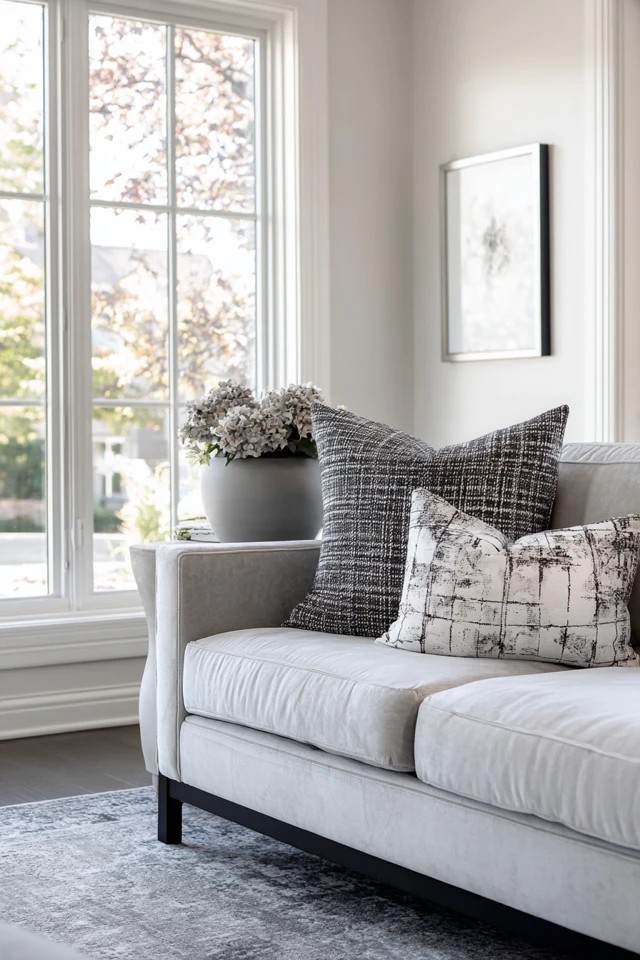
Simple geometric or globe pendants in black, brass, or brushed steel provide the modern sunroom with architectural evening illumination that complements its clean design language. A row of matching pendants at the same height creates a deliberate, graphic installation that reads as design intent rather than mere lighting.
- Hang pendants at 72 inches from the floor for clearance above seating and movement paths.
- Choose a finish that coordinates with the window frames and other metal elements in the room.
- Use warm-white bulbs (2700K) to soften the modern aesthetic comfortably after dark.
11. Single Large Potted Plant as Botanical Focal Point

One substantial plant — a tall fiddle leaf fig, monstera, or bird of paradise — makes a stronger modern design statement than a scattered collection of smaller pots cluttering the floor. Planted in a simple matte ceramic or concrete vessel, it reads as a sculptural element as much as a botanical one.
- Choose a pot with no decorative detail — simple cylinder or cube forms work best.
- Position the plant where its silhouette reads clearly against the glass wall behind it.
- Select a species with architectural foliage — large leaves, strong vertical form — for modern impact.
12. Open Floor Plan with Strategic Minimal Furniture

A modern sunroom with minimal furniture and generous open floor space demonstrates the confidence contemporary design requires — the willingness to leave space empty rather than fill it. Strategic placement of a sofa, a coffee table, and one accent chair creates clear sightlines to the glass walls and allows light to travel unimpeded across the entire floor.
- Limit furniture to three or four pieces maximum and resist adding more over time.
- Float furniture away from walls to create breathing room around each piece.
- Remove anything that interrupts the sightline from the doorway to the primary glass wall.
13. Metal and Glass Coffee Table for Visual Lightness
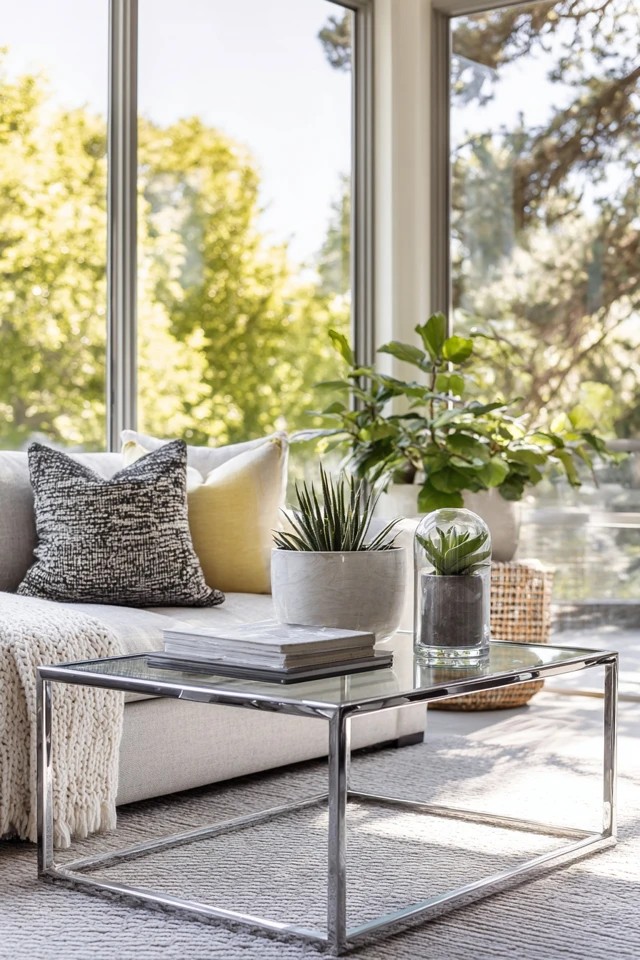
A coffee table in chrome or black metal with a glass top maintains the modern sunroom’s visual openness by allowing the floor and rug beneath to remain fully visible. The transparent surface catches and refracts natural sunroom light, adding a subtle prismatic quality to the room’s center.
- Choose tempered glass at least 10mm thick for safety and a quality feel underhand.
- Select a metal finish that coordinates with other metal elements throughout the room.
- Keep the surface clear — one tray or single object prevents the top from looking neglected.
14. Bold Accent Wall in Charcoal or Navy

A single wall painted in deep charcoal, navy, or matte black anchors the modern sunroom’s composition and prevents the all-white scheme from feeling clinical. Natural sunroom light plays interestingly across the deep-toned surface, revealing subtle texture and variation that a pale wall would never show.
- Apply the accent color to the wall facing the primary entrance for maximum visual impact on arrival.
- Choose a matte finish — it reads as more sophisticated in a modern context than satin or gloss.
- Keep all adjacent walls white so the accent wall’s drama is fully concentrated.
15. Horizontal Wood Slat Ceiling for Architectural Warmth

A ceiling clad in horizontal wood slats introduces natural warmth and dimensional texture overhead without compromising the modern sunroom’s clean aesthetic below. The wood’s warmth balances cool concrete floors and metal frames, preventing the room from feeling sterile.
- Use pre-finished wood slat panels for a consistent color and easier installation.
- Space slats with a uniform gap of 10-15mm for a clean, precise rhythm overhead.
- Choose a light or mid-tone species — pale ash, white oak, or birch — to maintain brightness.
16. Smart Home Integration for Invisible Technology

Full smart home integration — app-controlled lighting, automated climate, motorized shades, and ambient sound — allows the modern sunroom to respond to its occupants without any visible technology interrupting the clean aesthetic. The result is a room that feels effortlessly comfortable because everything ensuring that comfort is hidden.
- Install all smart controls flush with walls or ceilings to avoid surface-mounted hardware.
- Use a single app ecosystem to unify all systems under one interface for ease of use.
- Conceal all wiring during construction — retrofitting smart systems in a finished room is difficult.
17. Low-Slung Contemporary Seating for Horizontal Emphasis

Seating kept deliberately low — a sofa at 14-16 inches seat height, lounge chairs closer to the floor — creates a strong horizontal emphasis that is one of contemporary design’s most distinctive visual signatures. The low profile also clears the middle of the room visually, letting the glass walls and views beyond read as the dominant vertical element.
- Ensure seat height suits your household — very low seating can be difficult for some users.
- Pair low seating with a coffee table of equal or slightly lower height for correct proportion.
- Choose legs in a contrasting metal tone to lift the furniture visually from the floor plane.
18. Frameless Glass Doors for Seamless Indoor-Outdoor Flow
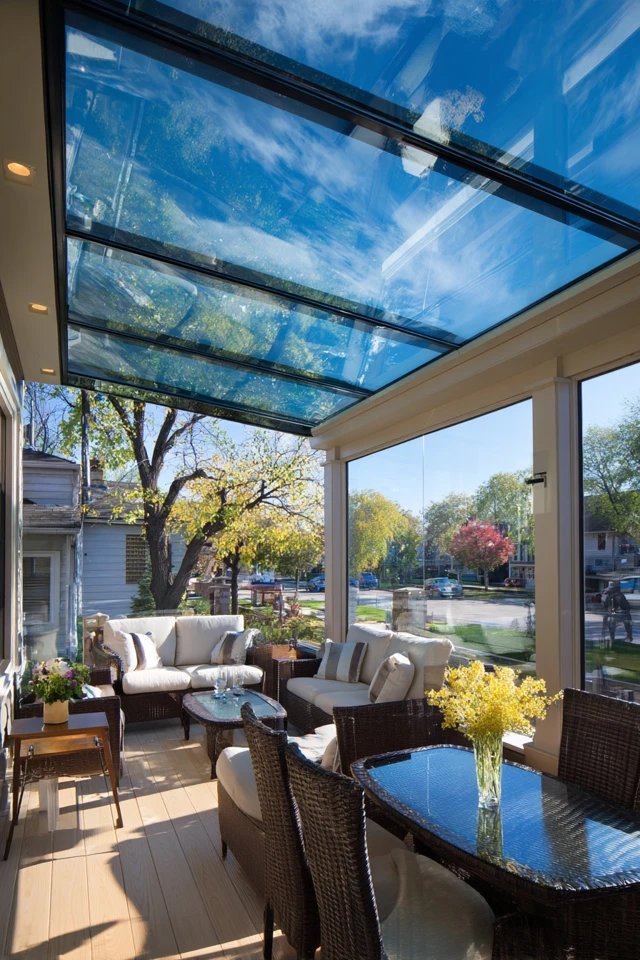
Frameless sliding glass doors that disappear into wall pockets when fully open create the seamless indoor-outdoor connection that is the ultimate expression of modern sunroom design. With doors open, the boundary between interior and exterior dissolves entirely, extending the sunroom visually and physically into the patio or garden beyond.
- Align interior and exterior flooring materials flush at the threshold for a true seamless transition.
- Choose frameless glass doors with concealed hardware for the cleanest possible aesthetic.
- Use the same furniture scale indoors and outdoors to visually unify the two spaces when open.
19. Handleless Cabinets for Clean Concealed Storage
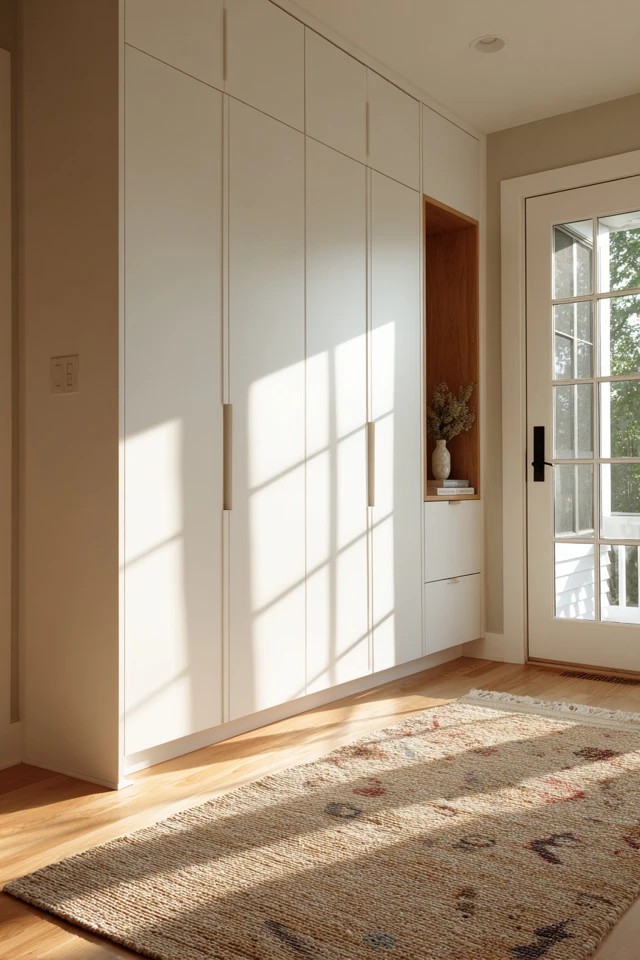
Handleless push-to-open cabinetry in white or pale grey lacquer integrates storage into the sunroom’s walls without hardware interrupting the clean surface planes. The flush cabinet fronts read as part of the wall architecture rather than furniture, maintaining the room’s uncluttered visual quality while concealing everything required for everyday use.
- Use a continuous lacquer color from cabinet to wall for maximum visual seamlessness.
- Install internal LED lighting inside cabinets so opened storage reveals a well-lit interior.
- Reserve cabinetry for one wall only — wrapping the entire room creates an overly clinical feeling.
20. Neutral Base with a Single Accent Color

A base of whites and greys with a single carefully chosen accent — mustard, warm teal, or deep terracotta — creates a modern sunroom palette of maximum sophistication and precision. The accent appears in cushions, a vase, and a piece of artwork — never more than three to four items — so its restrained use gives it genuine power throughout the space.
- Introduce the accent in odd-numbered groupings — one, three, or five items — for natural balance.
- Keep accent items small in scale so the color punctuates rather than dominates the scheme.
- Change the accent color seasonally by swapping cushions and accessories for an easy refresh.
Why These Modern Sunroom Ideas Excel
Every idea on this list serves the core principles of modern sunroom design: clarity, restraint, and the celebration of natural light. Modern design is not about emptiness — it is about intentionality, where every element present earns its place through function, beauty, or architectural necessity.
Architectural elements — black aluminum frames, floor-to-ceiling glass, wood slat ceilings, and built-in benches — carry the most design weight because they are permanent and structural. Investing in exceptional architectural details delivers results that no furniture or accessory purchase can replicate, forming the framework within which all other modern sunroom decorating decisions operate effectively.
Restraint in color and accessories separates a modern sunroom from a merely minimalist one. The monochromatic palette, the single accent color strategy, and the single statement plant all demonstrate that the modern approach is not about having less but about choosing more carefully. Each retained element must justify its presence by contributing to the room’s coherence and visual calm without distraction.
Technology integration — motorized shades, smart climate, app-controlled lighting — is central to the modern sunroom’s identity. These systems deliver maximum comfort without any visible hardware, which is the modern ideal: maximum function with minimum visual intrusion, creating a contemporary sunroom that works beautifully because it has been designed to think ahead.
Conclusion
A modern sunroom rewards the discipline to edit — one plant instead of ten, one accent color instead of five, three furniture pieces instead of eight. Start with exceptional architectural elements, add furniture with genuine restraint, integrate technology invisibly, and let the natural light finish the job. The result is a sunroom that feels confidently contemporary and genuinely timeless.

Andrew is the founder and lead writer at RoomBlossom, a home decor publication dedicated to practical, intentional interior design. With over 10 years of hands-on experience transforming real-world living spaces — from compact apartments to full attic conversions — Andrew specialises in room design that balances visual appeal with everyday function. His work spans living rooms, bedrooms, sunrooms, and attic spaces, always guided by the belief that great design should work for the people who live in it, not just look good in photographs.