
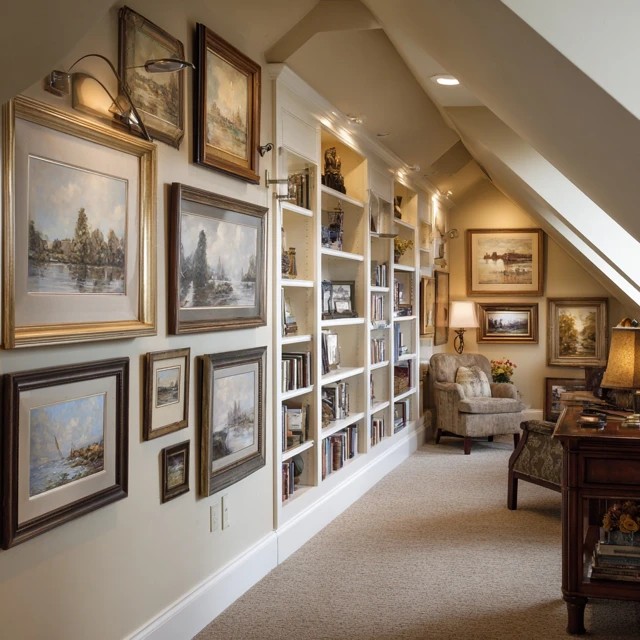
An attic library is a book lover’s greatest aspiration — a dedicated space for a personal collection, removed from the noise and interruption of the main house, where sloped ceilings create natural enclosure, dormer windows supply quiet reading light, and exposed beams add the kind of historic warmth that makes sitting with a book feel genuinely special. Unlike a shelf in a living room or a small bookcase in a bedroom, an attic library treats the collection as the reason for the room.
Here are 20 attic library ideas spanning floor-to-ceiling shelving, rolling ladders, reading nooks, writing desks, and scholarly styling — each one demonstrating how to transform a converted attic into a bibliophile’s sanctuary that is as beautiful as it is genuinely functional.
1. Floor-to-Ceiling Built-In Bookshelves for Maximum Collection Capacity
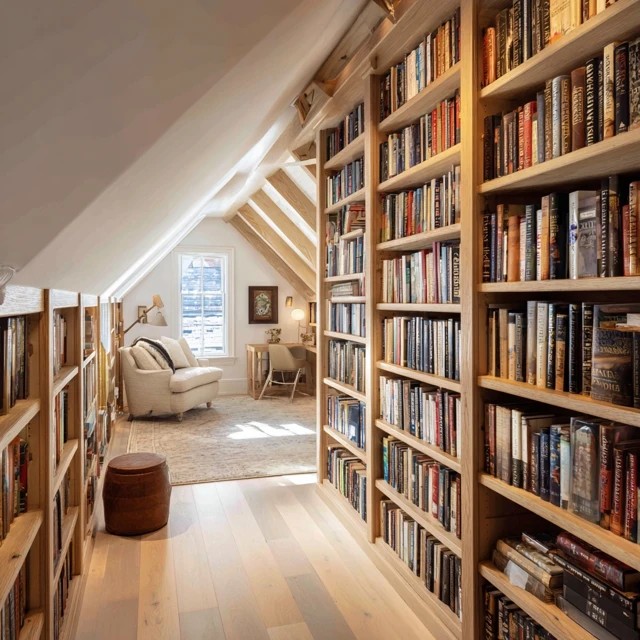
Built-in shelves running from floor to the highest available ceiling point — custom-fitted to follow the slope and maximise every inch of wall space — create the most impressive and practically capable storage a personal library can contain.
- Build shelf depths at 10 inches for standard paperbacks and 12 inches for hardcovers — deeper shelves waste space behind books.
- Install adjustable shelf pins rather than fixed shelves to accommodate varying book heights across the collection.
- Include a small built-in step stool niche at the base of the shelving run for reaching the upper levels safely without a ladder.
2. Upholstered Reading Chair with Ottoman for Dedicated Literary Comfort
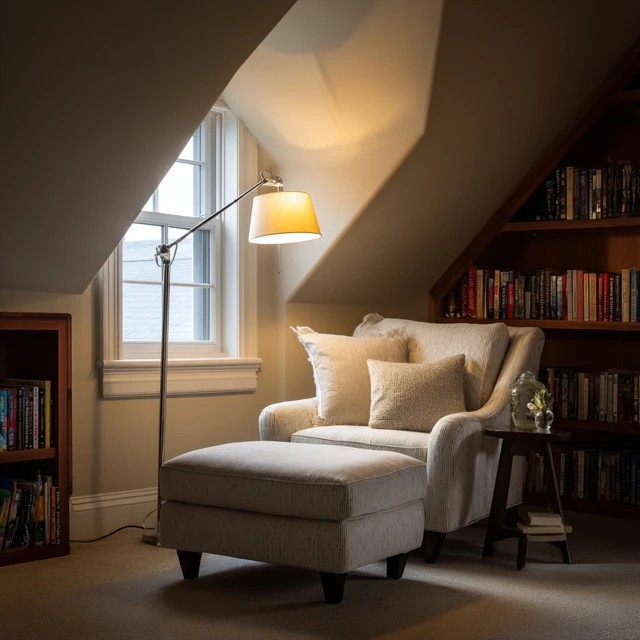
A generously proportioned armchair with a matching ottoman — positioned near the dormer window where natural light falls from the side — creates the ideal physical environment for extended reading: feet elevated, back supported, light well-directed, and the book at a natural reading distance without strain.
- Choose a chair with a high back and deep seat — at least 22 inches — for comfortable long-session reading without fatigue.
- Position the chair so natural light falls from the side or slightly behind the reader, never directly in front of the eyes.
- Add a small side table at arm height so tea, a notebook, and reading glasses are within reach without leaving the chair.
3. Rolling Library Ladder for High Shelf Access
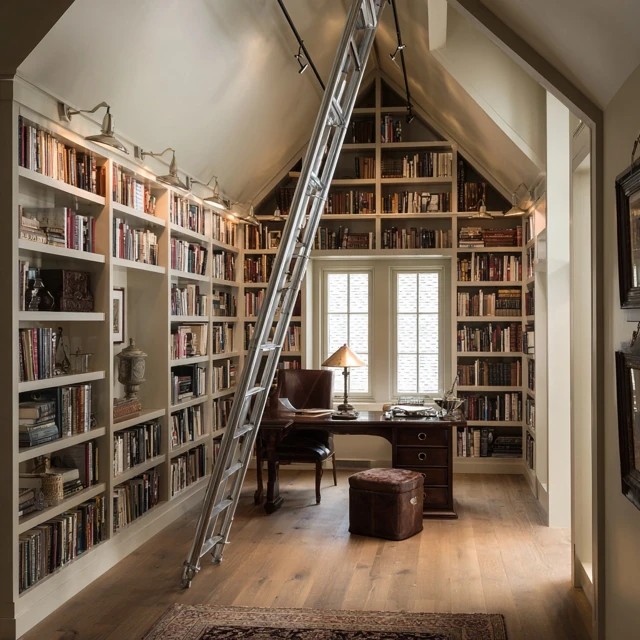
A rolling library ladder on a wall-mounted track is simultaneously the most practical and most aesthetically evocative addition to a floor-to-ceiling shelved attic library — it makes the upper shelves genuinely accessible and adds the unmistakable visual quality of a private scholar’s library from another era.
- Install the track on the wall most visible from the room’s entry point for maximum visual impact on arrival.
- Choose a solid wood or wrought iron ladder in a finish that complements the exposed beams or cabinetry in the room.
- Ensure the track is mounted into wall studs rather than plasterboard — a loaded ladder can exert significant lateral force.
4. Writing Desk Near the Window for a Study Area
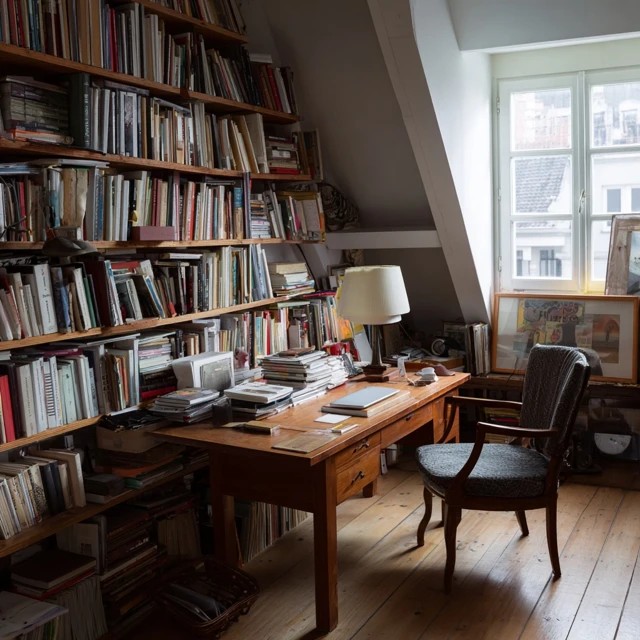
A writing desk positioned in the dormer window alcove — where natural light illuminates the workspace from the side without creating glare on a notebook or screen — gives the attic library a study function that distinguishes it from a simple reading room.
- Position the desk so the window light falls on the writing surface from the left for right-handed writers, from the right for left-handed.
- Include a shallow drawer in the desk for pens, bookmarks, and index cards that support the reading and writing workflow.
- Mount a small adjustable lamp on the desk wall or position a banker’s lamp on the desk surface for evening study sessions.
5. Window Seat with Book Storage for a Dormer Reading Nook
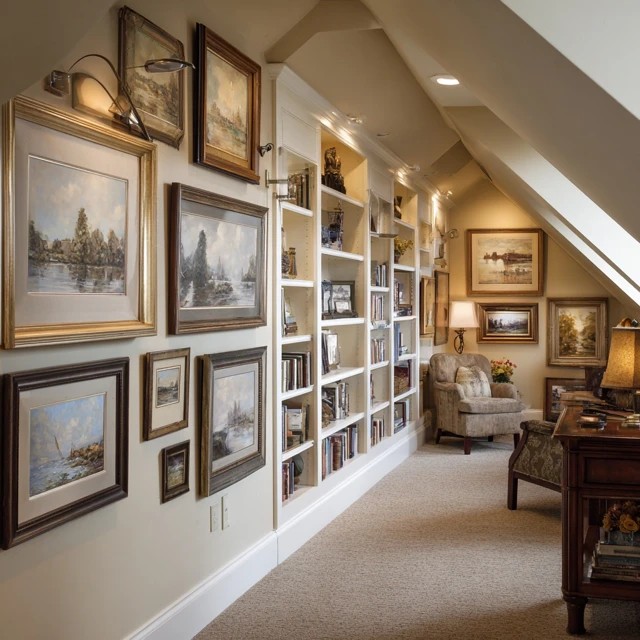
A built-in window seat in the dormer alcove — with a thick cushion on top, drawers beneath for overflow books, and the window’s natural light directly above — creates the most coveted reading spot in any home. The dormer’s slight enclosure creates a natural alcove that the window seat cushion converts into a reading nook with the sheltered, cave-like quality that makes concentrated reading so pleasurable.
- Upholster the window seat cushion in a durable fabric — at least 50,000 rub count — as this is the most frequently used seat in the room.
- Build the seat at 17-18 inches height for comfortable sitting without a step, with the cushion adding a further 4 inches of comfort.
- Use soft-close hinges on the drawer fronts beneath the seat for quiet, elegant access to the overflow book storage.
6. Organised Shelves by Category for a Navigable Collection
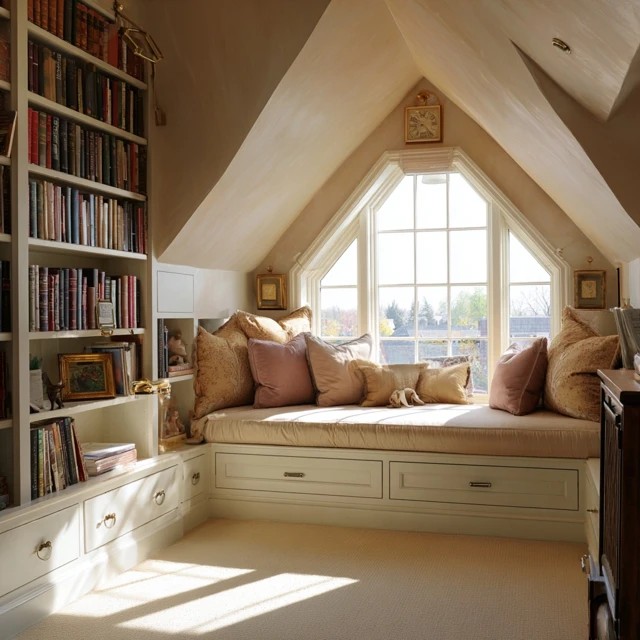
Organising the attic library’s books by clear categories — fiction by author alphabetically, non-fiction by subject area, poetry and drama separately — creates a collection that rewards browsing and makes specific retrieval fast and confident. Natural light across organised spines reveals both the content categories and the warm colour spectrum that a diverse collection creates naturally.
- Label each section clearly with a small sign or section divider tab so the organisation system is self-explanatory to any user.
- Arrange fiction alphabetically by author’s surname — the most widely intuitive library organisation for personal collections.
- Reserve the most prominent, eye-level shelves for the sections most frequently accessed in daily reading life.
7. Adjustable Reading Lamp for Focused Evening Illumination
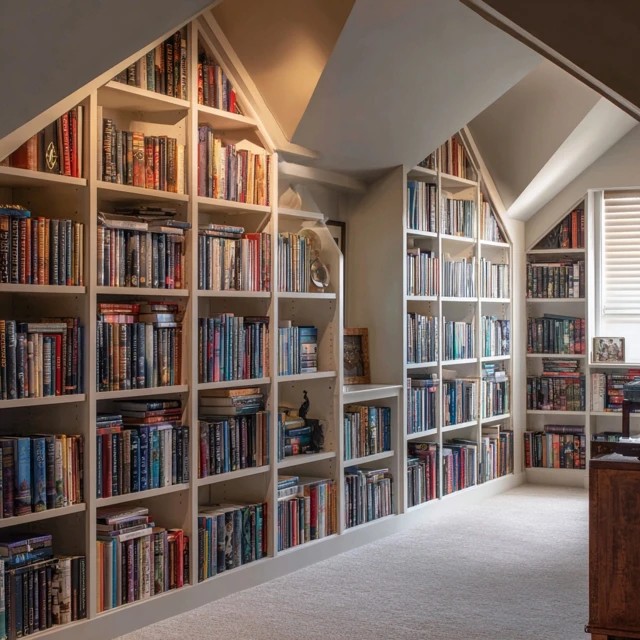
A floor lamp with an adjustable arm positioned directly beside the reading chair provides the focused, directed illumination that makes evening and low-light reading comfortable rather than tiring.
- Choose a lamp rated for at least 800 lumens at the reading position — insufficient brightness causes eye strain during extended reading.
- Select a warm-white bulb (2700K) for evening reading — cooler colour temperatures create alertness rather than the relaxation conducive to literary immersion.
- Position the lamp so the shade is approximately at shoulder height when seated, directing light slightly downward onto the book.
8. Artwork and Portrait Gallery Above the Shelves
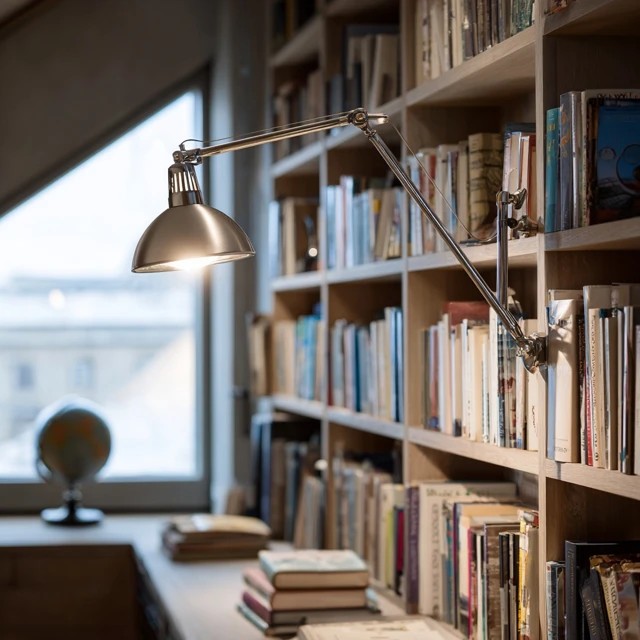
Framed artworks, portraits, maps, or botanical prints mounted on the wall sections above the bookcase tops create a gallery that gives the attic library genuine cultural personality and visual richness above eye level.
- Use consistent frame sizes and a single metal finish throughout the gallery for a curated, considered display rather than a random collection.
- Hang artwork so the centre of each piece is at the same height as the others for visual alignment across the gallery row.
- Choose subject matter thematically connected to the library’s book collection for the most intellectually coherent display.
9. Area Rug Under the Reading Chair for Grounding and Warmth
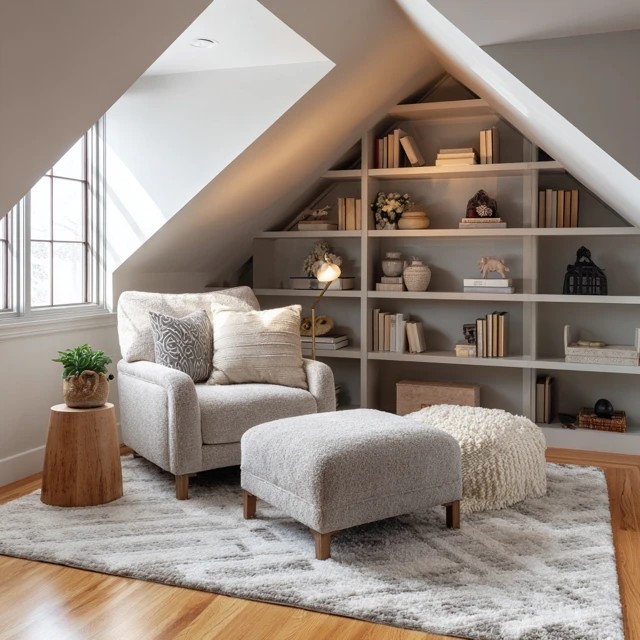
An area rug placed beneath the reading chair and ottoman defines the library’s primary reading zone as a distinct, contained territory within the larger shelved space — a room within a room.
- Size the rug so both the front legs of the chair and the entire ottoman sit comfortably within its boundary.
- Choose a traditional pattern — Persian medallion, kilim geometric, botanical — that suits the scholarly character of a personal library.
- Use a thick rug pad beneath to add underfoot cushioning and prevent the rug from sliding on hardwood floors when the chair is moved.
10. Globe or Telescope as Scholarly Decorative Accent
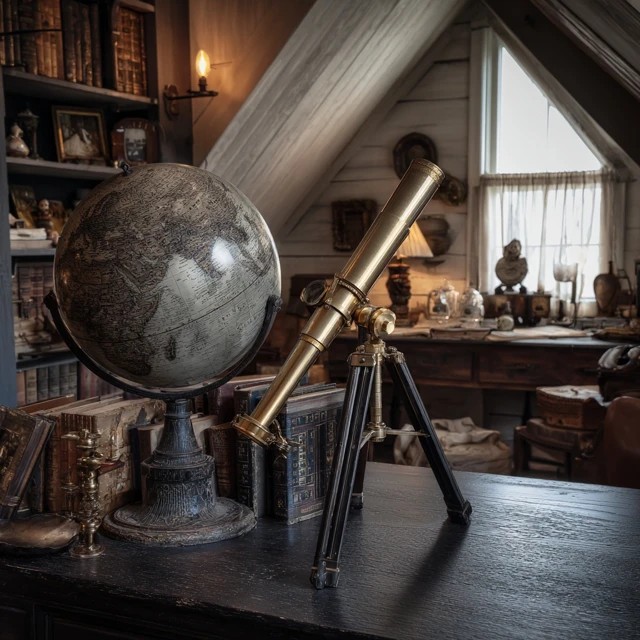
A vintage globe on a wooden stand placed on the writing desk, or a brass telescope mounted on a tripod in the dormer window, adds the kind of scholarly visual character that transforms an attic full of bookshelves into a genuine library with intellectual atmosphere.
- Position a globe at desk height where it can be spun and consulted naturally during reading and research sessions.
- Choose antique or antique-reproduction pieces rather than novelty items for the most authentic scholarly quality.
- Keep the number of statement decorative objects small — one or two significant pieces have more impact than a crowded collection of smaller ones.
11. Leather-Bound Classics Collection for Vintage Aesthetic

A collection of leather-bound classic volumes — whether original antique editions from bookshops and estate sales, or high-quality reproduction sets — displayed at the most visible shelf positions creates a visual anchor of traditional literary elegance within the attic library.
- Source individual leather-bound volumes from antiquarian bookshops for genuine character rather than matched novelty sets.
- Store leather-bound books with a thin cotton glove to prevent skin oils from transferring to covers during handling.
- Apply a specialist leather conditioner annually to any genuine leather-bound books to prevent the spines from drying and cracking.
12. Reading Side Table for Book Staging and Comfort
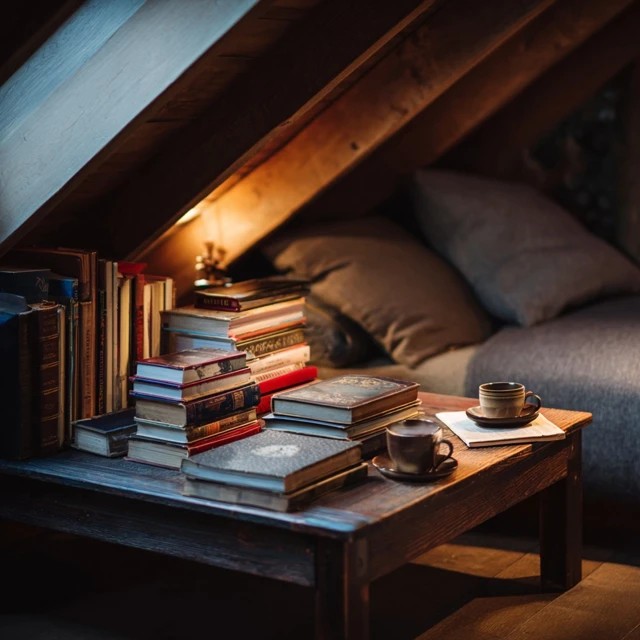
A small side table at arm height beside the reading chair provides the most immediately practical surface in the entire library — the place where current reads are stacked, a cup of tea rests, reading glasses and a bookmark are set down, and the notebook for jotting responses to the text lies open between reading sessions.
- Choose a table at the same height as the chair arm for the most accessible surface without reaching or leaning.
- Include a small lower shelf on the side table for three or four books — a natural current-reading stack that keeps titles visible and accessible.
- Use a material — wood, stone, ceramic — that does not mark from a hot teacup set directly on the surface.
13. Houseplants on Shelves for Living Botanical Accents
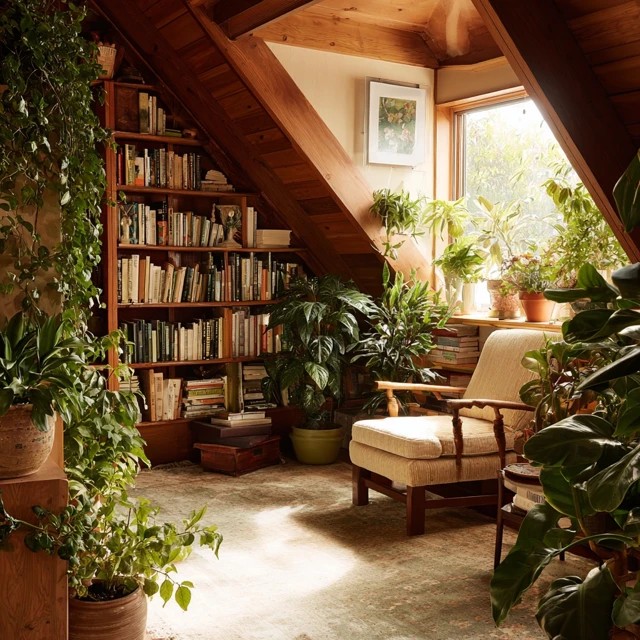
Small potted plants interspersed among the books on the shelves bring organic life into the attic library in a way that is proportionally suited to the space between and above volumes.
- Choose species that tolerate the variable humidity of a book-lined room — ZZ plants, pothos, and peace lilies are all good options.
- Use self-watering ceramic pots for shelf-placed plants to prevent water spillage onto book pages and wooden shelf surfaces below.
- Keep plants away from valuable or irreplaceable editions — a spilled self-watering pot can cause significant book damage.
14. Vintage Bookends for Decorative Shelf Organisation
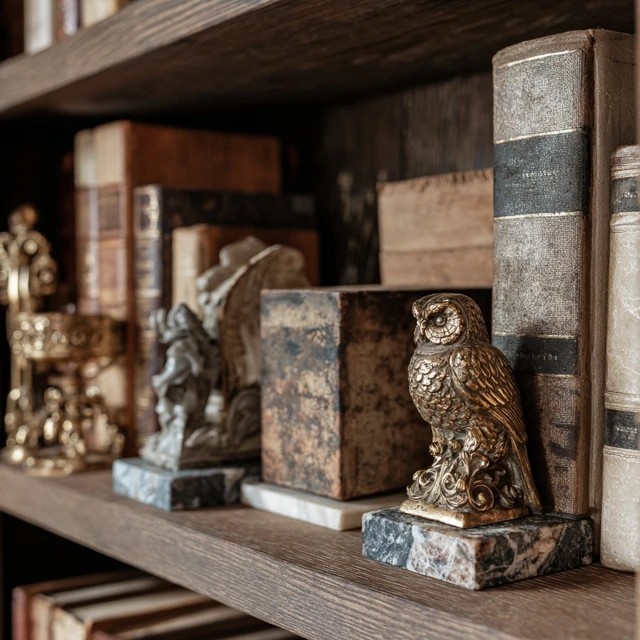
Decorative bookends — in aged brass, carved stone, heavy cast iron, or solid marble — serve the dual function of keeping books upright and adding punctuation marks of material interest throughout the library shelves.
- Choose bookends heavy enough to support at least 10-15 books under their own weight without being pushed aside during removal.
- Use a consistent material or finish throughout the shelves — varied bookend styles create visual noise rather than punctuation.
- Pair bookends thematically with the book sections they contain — a globe pair beside travel literature, an owl pair beside natural history.
15. Throw Blanket on the Reading Chair for Textile Comfort
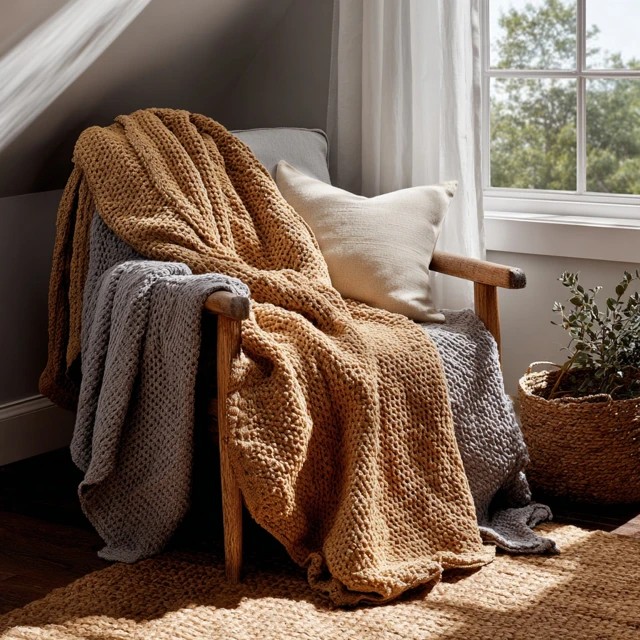
A throw blanket draped casually over the arm of the reading chair is one of the simplest and most effective additions to an attic library’s comfort — an invitation to pull it across the lap on cool evenings and sink deeper into the chair and the book.
- Choose a throw in a cashmere, merino wool, or heavyweight cotton blend for genuine warmth without excessive bulk.
- Drape the throw over one arm of the chair casually rather than folding it neatly — the casual arrangement looks more inviting.
- Select a colour that complements the chair upholstery without matching it exactly — slight contrast is more visually interesting than a perfect match.
16. Skylight for Natural Overhead Book Illumination
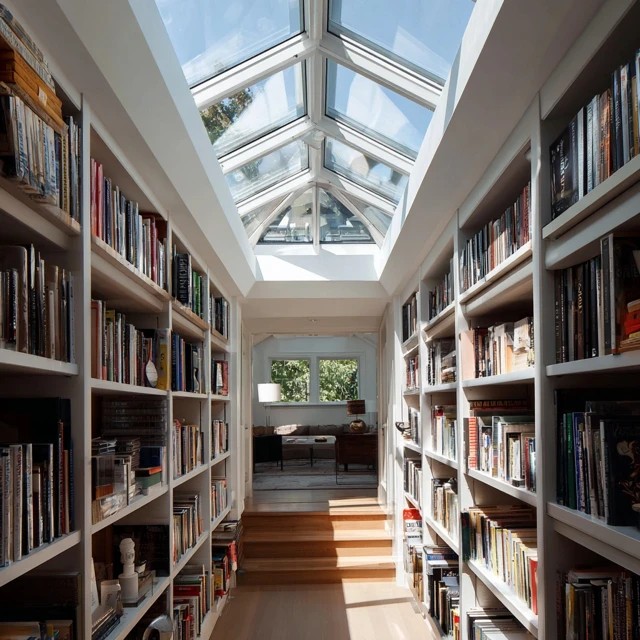
A skylight positioned over the primary shelving wall illuminates book spines from above with natural daylight — the most revealing and beautiful light for appreciating the colours, textures, and lettering of a book collection.
- Use a diffusing glazing type in the skylight over the shelving — direct sunlight on books causes accelerated spine fading and cover damage.
- Install a UV-filtering film on the skylight glazing to protect the entire collection from ultraviolet degradation during peak sunlight hours.
- Position the skylight slightly toward the reading chair side as well as the shelving to illuminate the primary reading zone from above.
17. Leaning Ladder Shelf for Flexible Additional Storage
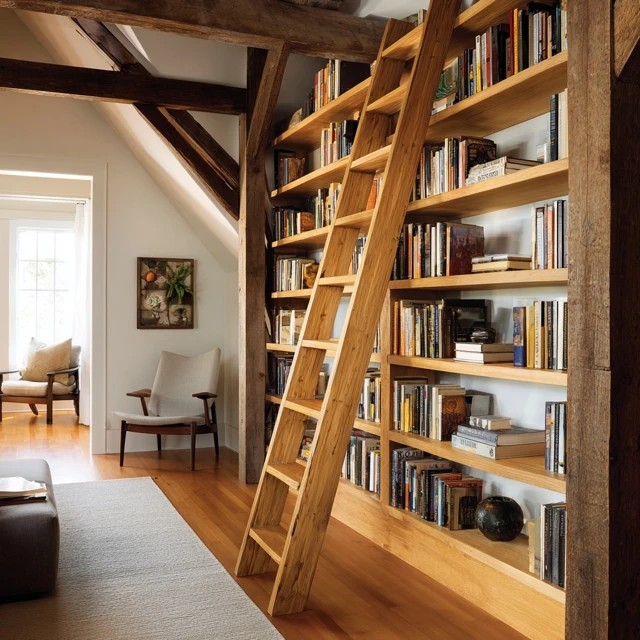
A leaning ladder shelf — a freestanding angled unit that rests against the wall without any wall mounting — provides flexible additional book capacity in a corner or beside the writing desk without requiring the commitment of built-in installation.
- Position the leaning shelf against a solid wall section where floor space allows the angled footprint without obstructing circulation.
- Use the leaning shelf for the most recently acquired books so new additions to the collection have a visible temporary home before integration.
- Choose a ladder shelf in natural wood that complements the built-in shelving finish for visual coherence throughout the library.
18. Reading Journal Station for Literary Reflection
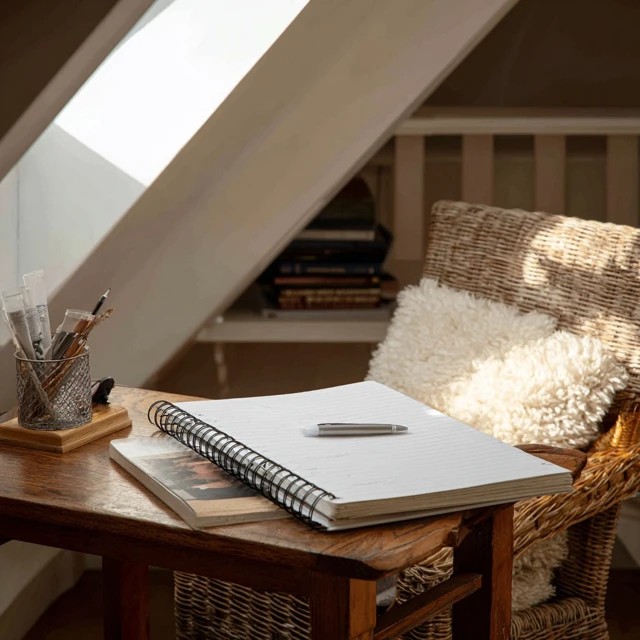
A dedicated spot for a reading journal — a quality notebook, a good pen, and perhaps a small pen holder — turns the attic library from a passive collection into an active literary practice.
- Choose a hardbound journal with acid-free pages that will last as long as the books it responds to.
- Position the journal station on the writing desk rather than the reading side table — writing response requires desk support for comfortable extended notation.
- Date every entry and include the book title and author so the journal becomes a genuine record of reading history over years of use.
19. Special Editions Display for Collector’s Showcase
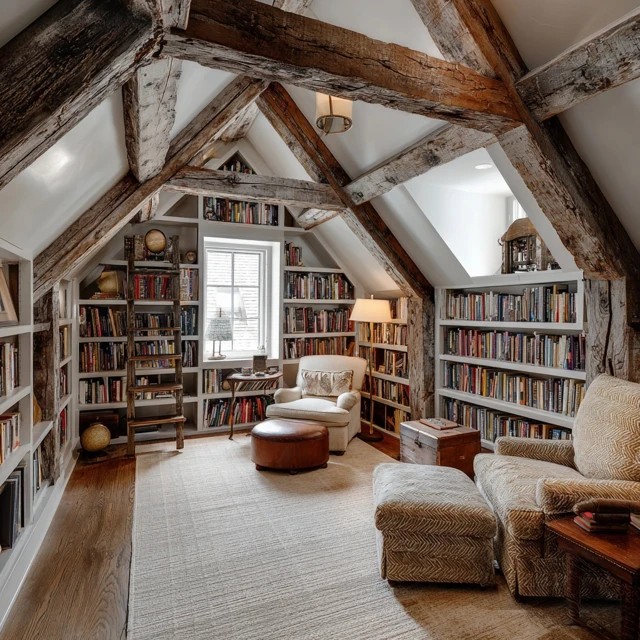
A dedicated section of the shelving — or a small glass-fronted display cabinet — for first editions, signed copies, limited editions, and other volumes of particular significance creates a collector’s showcase within the working library. UV-protective glazing and acid-free slipcase storage protect fragile covers and spines from environmental damage.
- Store rare editions in individual acid-free clamshell boxes when not on display to protect from light, dust, and humidity over time.
- Install a glass-fronted cabinet with UV-filtering glazing for permanent display of the most valuable collection pieces.
- Keep an inventory of special editions with provenance notes — where and when each was acquired, and its significance to the collection.
20. Exposed Wood Beams for Rustic Warmth and Character
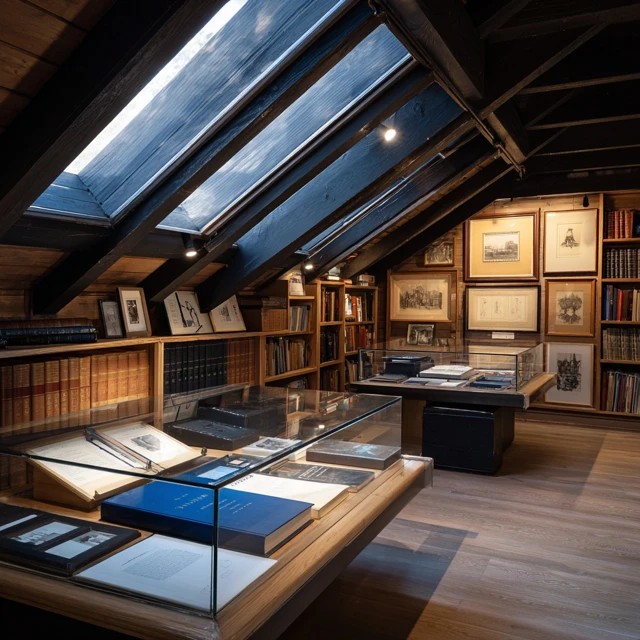
Exposed structural beams in the attic library overhead add the kind of authentic architectural warmth and historical depth that makes the space feel genuinely inhabited by literary tradition rather than simply furnished for it.
- Clean and treat beams with a penetrating oil to enhance the natural grain without adding a varnish that would make them look too finished.
- Hang pendant lights from the beam structure rather than from the ceiling plaster for both practical and aesthetic advantages.
- Position the most important bookshelf run beneath the longest visible beam section for the most architecturally composed relationship.
Why These Attic Library Ideas Excel
Every idea on this list serves the dual purpose of the attic library: housing a collection in conditions that preserve it, while creating an environment so comfortable the reader chooses to stay.
Storage design — built-ins, rolling ladders, leaning shelves, and clear categories — is the foundation that makes the library genuinely useful rather than merely atmospheric.
Reading comfort — the chair, the ottoman, the throw, the reading lamp, the side table — determines how long the reader stays. The right chair reduces fatigue, the right light prevents eye strain.
Atmosphere and character — the exposed beams, the vintage bookends, the globe, the gallery of portraits, the leather-bound classics — is what makes the attic library feel like a room with a life of its own rather than a functional storage space.
Conclusion
An attic library gives a book collection the home it deserves — a dedicated, beautiful, comfortable space where reading is the primary activity and every design decision supports it. Begin with the shelving, add the reading chair and lamp, install a skylight, and layer in the character — beams, globe, rolling ladder, window seat. A well-designed attic library is one of life’s most enduring domestic pleasures.

Andrew is the founder and lead writer at RoomBlossom, a home decor publication dedicated to practical, intentional interior design. With over 10 years of hands-on experience transforming real-world living spaces — from compact apartments to full attic conversions — Andrew specialises in room design that balances visual appeal with everyday function. His work spans living rooms, bedrooms, sunrooms, and attic spaces, always guided by the belief that great design should work for the people who live in it, not just look good in photographs.