
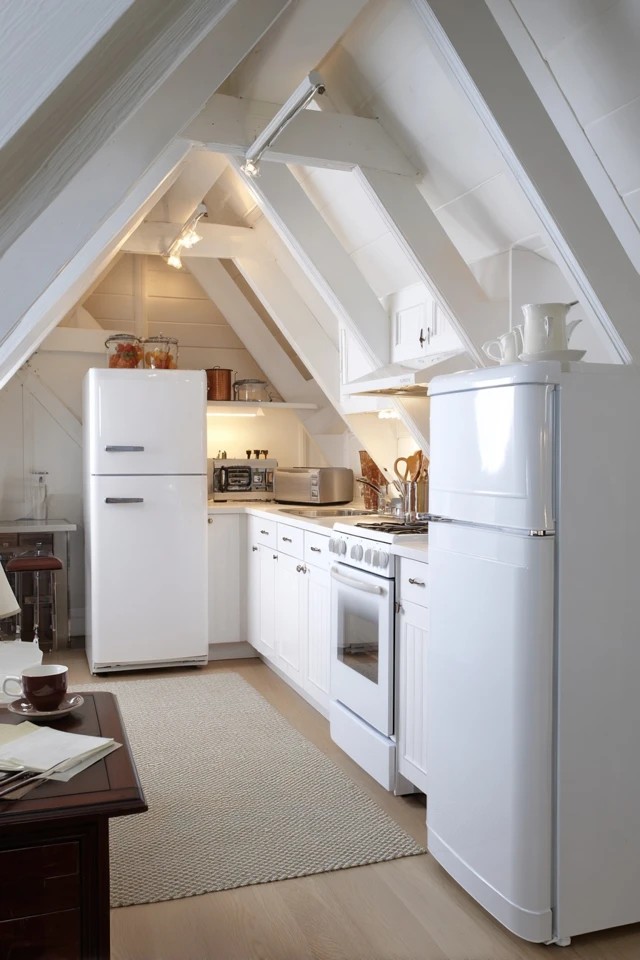
An attic kitchen is one of home design’s most satisfying challenges — fitting a fully functional cooking space into a room defined by sloped ceilings, limited floor area, and the distinctive architectural character that makes a converted attic so appealing to live in. The key is designing every element to work with the geometry rather than against it, treating every slope and eave as an opportunity for clever cabinetry or spatial efficiency.
Here are 20 attic kitchen ideas spanning galley layouts, open shelving, skylight placement, exposed beams, and material choices — each one demonstrating how to create a complete, beautiful, and practical kitchen in the distinctive setting of a converted attic space.
1. Compact Galley Layout Along One Wall for Space Efficiency
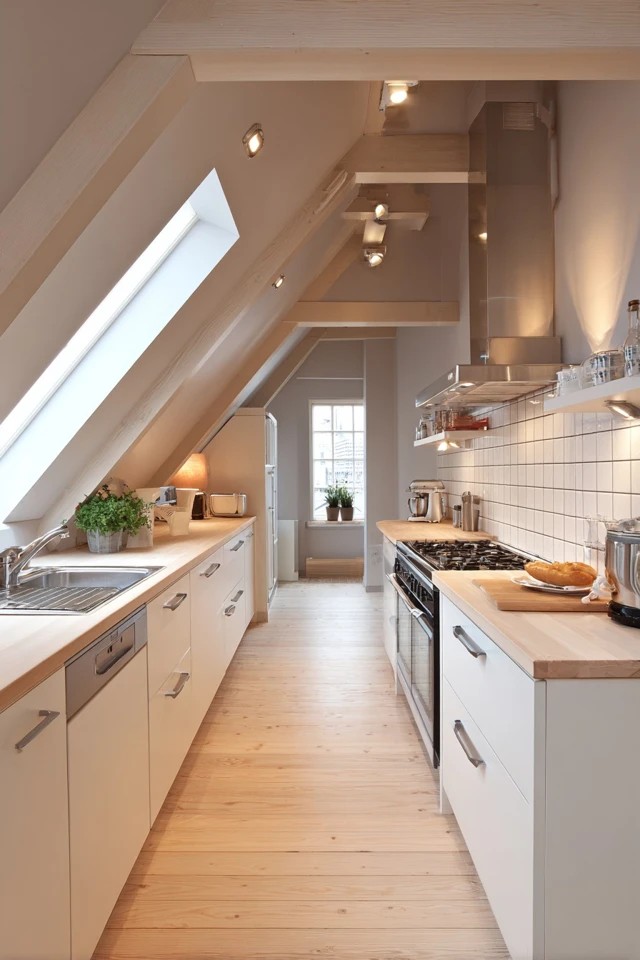
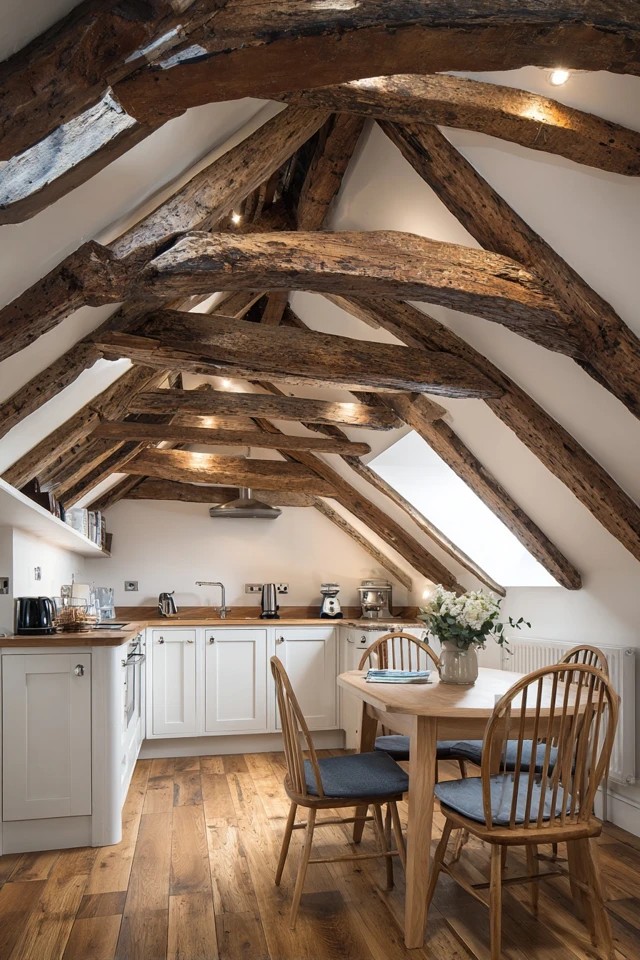
A galley kitchen — appliances, worktop, and storage in a tight linear sequence along a single wall — is the most space-efficient layout for an attic kitchen where floor area is limited by the roof slopes on multiple sides. Open shelving above the worktop maintains visual lightness beneath the slope.
- Place the sink at one end and the hob at the other to create logical prep space in the centre between them.
- Install open shelving above the worktop rather than upper cabinets to reduce visual weight in the compact space.
- Choose integrated appliances flush with cabinet fronts for the cleanest, most space-efficient galley result.
2. White Painted Cabinetry for a Bright Light-Filled Kitchen

White-painted cabinetry custom-built to follow the exact contours of the attic slope creates a kitchen of remarkable brightness — every surface reflects natural and artificial light throughout the space, and the white finish makes the room feel significantly larger than its actual dimensions.
- Use a semi-gloss finish on kitchen cabinetry for easier cleaning and improved light reflectance over time.
- Add shadow-gap detailing between cabinet units for a subtle architectural quality without adding visual weight.
- Match the white of the cabinetry to the wall paint for a seamlessly integrated, built-in appearance throughout.
3. Skylight Over the Sink for Natural Task Illumination

A skylight positioned directly above the kitchen sink provides the best possible natural light for the most frequently used task position in any kitchen — the quality of light from an overhead skylight illuminates the sink basin, the chopping board, and the hob evenly and without the directional shadows that side windows create.
- Install the skylight with an integral opening mechanism for essential steam and odour ventilation during cooking.
- Choose a low-e glazed skylight to reduce summer heat gain directly above the most heat-generating kitchen zones.
- Add a motorised blind to the skylight for glare control during intense sunlight conditions in summer months.
4. Open Shelving Instead of Upper Cabinets for Visual Openness
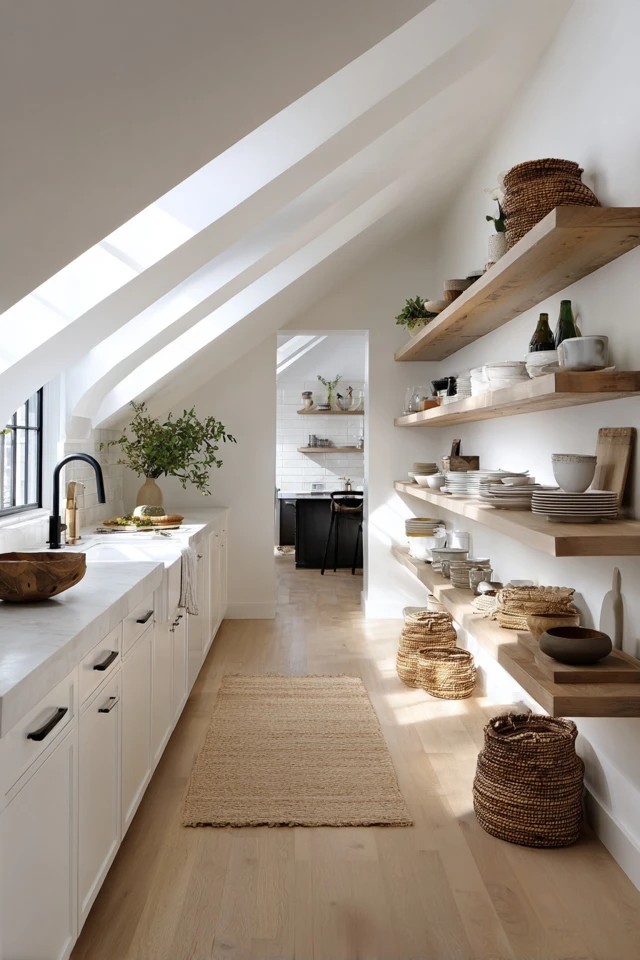
Replacing traditional upper cabinets with floating open shelves maintains the sightlines across the kitchen and makes the compact attic cooking space feel significantly more open and less enclosed.
- Install open shelves at 16-18 inches above the worktop for comfortable access and adequate counter clearance.
- Limit shelf depth to 10-12 inches to prevent items from being pushed to the back beyond practical reach.
- Style open shelves consistently — matching crockery, grouped by function — for a curated rather than cluttered appearance.
5. Exposed Wood Beams for Rustic Architectural Character
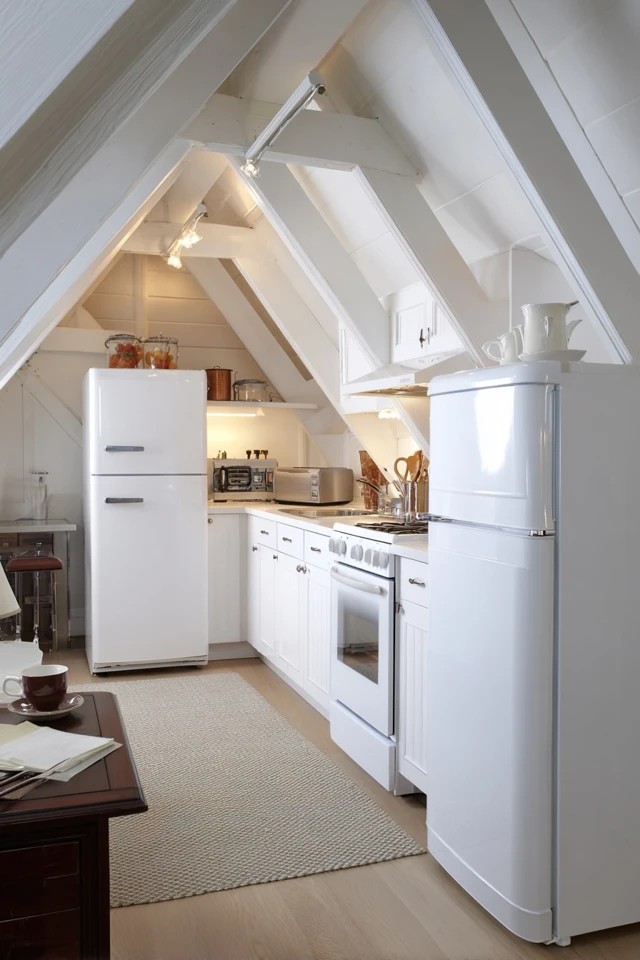
Exposed wood beams left visible in the attic kitchen add the kind of authentic structural beauty that transforms a functional cooking space into a genuinely distinctive room. White cabinetry and pale walls make the dark beams the clear visual focus, and the rhythm of their spacing overhead creates a natural compositional element that no designed feature could improve upon.
- Seal exposed beams in a kitchen with a water-resistant and washable finish to handle cooking steam and grease over time.
- Use the beam grid to guide the positioning of pendant lights hung between rather than below the structural elements.
- Keep all other kitchen elements pale and simple so the beams receive undivided visual attention overhead.
6. Butcher Block Countertops for Organic Warmth

Butcher block countertops in maple, beech, or walnut bring the most organic warmth available in any kitchen material — the honey and amber tones of the wood grain complement both white cabinetry and exposed beams with natural harmony.
- Seal butcher block with food-safe mineral oil or a hardwax oil finish for water resistance and hygienic food contact.
- Re-oil the surface every three to six months to maintain the seal and prevent the wood from drying or warping.
- Use a separate section of sealed butcher block near the sink as the primary food preparation zone for practical daily use.
7. Compact Apartment-Sized Appliances for Space-Efficient Function
Apartment-sized appliances — slim 24-inch or 18-inch refrigerators, compact two or four-burner hobs, slimline dishwashers — deliver every essential cooking function in a footprint that fits the attic kitchen’s limited floor area without compromise.
- Choose a 24-inch refrigerator as the minimum practical size — smaller units sacrifice too much food storage capacity for daily use.
- Select a slimline integrated dishwasher to maintain clean cabinet fronts and preserve the kitchen’s uncluttered aesthetic.
- Use a two-burner induction hob if the cooking space is very compact — it provides sufficient daily cooking capability with minimal footprint.
8. Subway Tile Backsplash for Classic Timeless Protection

White subway tiles in a running bond pattern behind the hob and sink create the most reliably timeless and easily maintained backsplash available — the reflective ceramic surface bounces light throughout the kitchen, the simple rectangular format suits any design aesthetic, and the glazed surface wipes clean of cooking grease and splashes with minimal effort.
- Use 3×6-inch subway tiles for the most classic proportions — larger subway tiles work in bigger kitchens but can overpower a compact space.
- Choose mid-tone grey grout rather than white — white grout discolours rapidly in the greasy cooking environment.
- Extend the subway tile from worktop to the underside of the upper shelves or cabinets for a fully resolved treatment.
9. Peninsula or Breakfast Bar for Casual Dining Integration

A peninsula extending from the main kitchen run — or a counter with bar stools on the living room side — integrates casual dining directly into the attic kitchen without requiring a separate dining zone, making it the most space-efficient meal-taking solution for a compact attic apartment.
- Allow 12 inches of knee space beneath the breakfast bar per stool for comfortable seated dining clearance.
- Choose bar stools with a swivel function so users can rotate to face either the kitchen or the living space naturally.
- Keep the peninsula worktop at 900mm — standard worktop height — rather than bar height for the most versatile dual-function surface.
10. Under-Cabinet Lighting for Task Illumination and Atmosphere

LED strips mounted beneath the upper cabinets or open shelves provide focused task lighting directly on the worktop below — eliminating the shadows that overhead ceiling lights create when standing at the counter.
- Choose warm-white LED strips (2700-3000K) for kitchen task lighting — cooler temperatures make food colours appear less appetising.
- Install the strips at the front edge of the shelf or cabinet underside for the most forward-directed light on the worktop.
- Connect to a dimmer switch so the under-cabinet lights can serve as atmospheric ambient lighting after cooking is finished.
11. Stainless Steel Appliances for a Modern Professional Aesthetic

Stainless steel appliances — refrigerator, range, and extractor — create a cohesive, professional kitchen aesthetic that reads as deliberately designed rather than assembled from separate purchases. The reflective metal surfaces bounce light around the kitchen and provide a hygienic, easy-clean finish that suits the high-use demands of a primary cooking space.
- Clean stainless steel appliances with a microfibre cloth and specialist stainless cleaner to prevent scratching and water marks.
- Wipe stainless surfaces in the direction of the grain rather than across it to maintain the brushed finish quality.
- Choose fingerprint-resistant stainless where possible — it maintains its appearance significantly better in daily kitchen use.
12. Pot Rack for Accessible Overhead Cookware Storage

A ceiling-mounted pot rack hung from the attic beams or ceiling joists uses the overhead space of the kitchen for cookware storage — a solution that frees the limited cabinet space for other items while keeping pots and pans immediately accessible without opening any door.
- Mount the pot rack from solid structural joists or beams — not from drywall or plaster — for safe load bearing.
- Position the rack at a height that allows comfortable reaching without requiring a stool — approximately 6 feet from the floor.
- Use S-hooks of consistent length so all pots hang at the same level for a tidy, considered appearance overhead.
13. Quartz Countertops for Low-Maintenance Durability

Quartz engineered stone countertops provide the most practical kitchen work surface for an attic cooking space — non-porous, stain-resistant, heat-resistant, and requiring no annual sealing unlike natural stone alternatives.
- Choose a quartz with a subtle movement or vein pattern rather than a plain solid colour for the most sophisticated result.
- Select a thickness of 20mm for standard worktops — 30mm is available for a more substantial, premium appearance.
- Always use a heat pad beneath hot pans on quartz — direct heat can cause thermal shock cracking despite the material’s heat resistance.
14. Farmhouse Sink for Cottage Character and Practical Capacity

A deep apron-front farmhouse sink adds immediate cottage character to the attic kitchen while delivering the practical washing capacity that standard inset sinks rarely match — large stockpots, roasting trays, and oversized chopping boards all fit comfortably in the generous basin depth.
- Install a farmhouse sink on a custom-height base cabinet — the apron front requires a cut-out that standard base units do not accommodate.
- Choose a single large basin over a divided sink for the most generous capacity for large item washing.
- Pair a farmhouse sink with a wall-mounted or bridge tap to complement its traditional character and maintain the cottage aesthetic.
15. Rolling Cart for Mobile Flexible Storage and Prep Space

A narrow rolling cart on locking casters provides the attic kitchen with flexible additional storage and a mobile secondary prep surface that can be positioned wherever it is most useful and rolled away when not needed.
- Choose a cart narrow enough to fit through doorways — 18 inches wide maximum — for full mobility within the attic apartment.
- Select a cart with a butcher block or stainless top that serves as a genuine food preparation surface when stationary.
- Locking casters are essential — a cart that moves during active food preparation creates a safety hazard in a small kitchen.
16. Glass Cabinet Doors for Display Storage and Visual Lightness

Glass panel doors on selected upper cabinets — alternating with solid fronts in the same run — add a display element to the attic kitchen storage while maintaining visual lightness that keeps the compact space from feeling closed in. The glimpse of neatly arranged dishware and glassware through glass adds colour and personal character to the kitchen, and natural light passing through the glass panels reduces the visual weight of the upper cabinet zone.
- Use glass doors on only one-third of the upper cabinet run — too many glass panels creates a fishbowl effect.
- Keep only consistently styled items behind glass — mismatched contents visible through glass look disorganised rather than displayed.
- Choose reeded or fluted glass rather than clear glass for a more forgiving presentation of less-curated cabinet contents.
17. Built-In Wine Rack for Entertaining Storage

A built-in wine rack integrated directly into the base cabinet run or a dedicated tall unit provides bottle storage without consuming any floor space beyond the existing cabinetry footprint.
- Size wine rack compartments at 3.5 inches diameter to accommodate standard 750ml bottles with easy insertion and removal.
- Position the wine rack away from the hob and oven — sustained heat damages wine quality over time.
- Include 12-18 bottle positions as a minimum for a wine rack that serves both everyday use and entertaining occasions.
18. Herringbone Wood Flooring for Pattern Underfoot Sophistication

Light oak planks laid in a herringbone pattern create a kitchen floor with distinctive visual sophistication — the angled geometry adds directional movement and design interest without introducing any colour beyond the natural warmth of the wood grain.
- Choose engineered wood for a herringbone kitchen floor — better dimensional stability in the kitchen’s temperature and humidity variation.
- Apply a matte or satin finish to prevent reflective glare from the skylight or dormer light on the angled floor surface.
- Account for 15-20% extra material when cutting herringbone — the angled cuts create more waste than straight laying.
19. Pull-Out Pantry for Maximum Vertical Storage Efficiency

A slim pull-out pantry — a narrow cabinet with multiple tiered shelves that extend on full-extension runners — stores a remarkable volume of dry goods, tins, and pantry items in a footprint of as little as 150mm width.
- Choose a pull-out pantry unit with shelves at multiple heights to accommodate products of varying sizes without wasted vertical space.
- Install the pantry in the section of the kitchen where ceiling height is greatest to maximise the unit’s usable height.
- Use door-mounted racks on the pantry interior for small jars and spice bottles that would otherwise waste shelf space.
20. Neutral Colour Palette for Timeless Serene Kitchen Atmosphere

A palette of whites, warm beiges, and soft greys with natural wood accents creates the most enduringly satisfying attic kitchen atmosphere — the neutral foundation allows natural light to animate the space throughout the day without any colour competition, and the warm wood tones prevent the neutral palette from feeling cold or clinical.
- Use warm white on cabinets and cool greige on walls for subtle tonal variation within the neutral palette.
- Introduce wood through the floor, floating shelves, or bar stools — at least two wood applications for meaningful warmth.
- Add green herbs on the windowsill as the sole living colour accent in a neutral kitchen — it connects the cooking space to the food it produces.
Why These Attic Kitchen Ideas Excel
Every idea on this list succeeds because it addresses the specific design challenges of an attic kitchen — limited floor area, sloped ceilings that restrict upper cabinet placement, and the need to include every essential kitchen function in a compact, architecturally distinctive footprint.
Space efficiency — the galley layout, compact appliances, open shelving, pot racks, rolling carts, and pull-out pantries — is the foundational principle that everything else builds upon. In an attic kitchen of 15-25 square metres, every storage and layout decision must deliver maximum function per square foot,
Light management — skylights over the sink, under-cabinet LEDs, white cabinetry, subway tile backsplash, and glass cabinet doors — is the second essential design discipline. An attic kitchen that is dark or poorly illuminated feels oppressive regardless of its other qualities;
Material warmth — butcher block counters, exposed beams, herringbone wood flooring, farmhouse sinks, and warm neutral palettes — prevents the attic kitchen from feeling clinical or impersonal despite its compact dimensions.
Conclusion
An attic kitchen designed with intelligence and material care becomes one of the most characterful cooking spaces a home can contain — compact but complete, practically efficient but genuinely beautiful, and made more distinctive by the sloped ceilings and exposed beams that define it rather than despite them. Choose the layout that suits your space, invest in quality materials at the worktop and backsplash where your hands and eyes spend the most time, maximise natural light with a skylight, and design storage to fill every available centimetre.

Andrew is the founder and lead writer at RoomBlossom, a home decor publication dedicated to practical, intentional interior design. With over 10 years of hands-on experience transforming real-world living spaces — from compact apartments to full attic conversions — Andrew specialises in room design that balances visual appeal with everyday function. His work spans living rooms, bedrooms, sunrooms, and attic spaces, always guided by the belief that great design should work for the people who live in it, not just look good in photographs.