
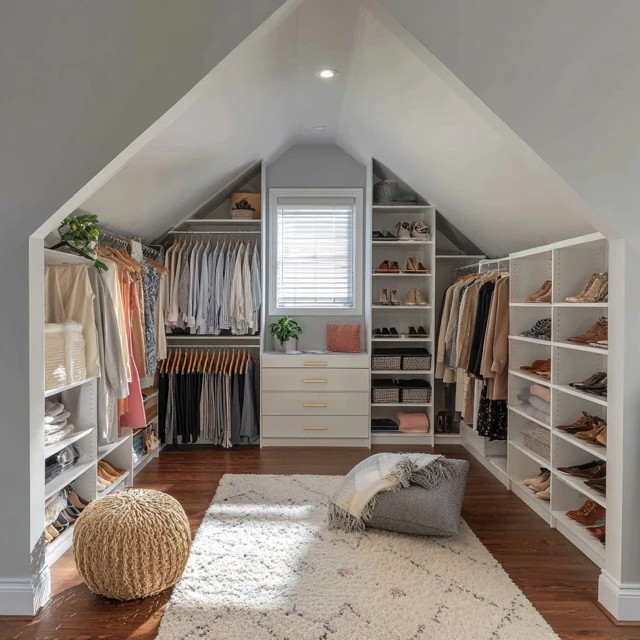
An attic bedroom presents a unique storage design challenge: the sloped ceilings, knee walls, eave depths, and dormer alcoves that give the room its charm are the same features that make standard storage solutions impractical.
Here are 20 attic bedroom storage ideas spanning built-in wardrobes, eave drawers, storage beds, and creative organisers — each designed for the sloped-ceiling sleeping space.
1. Built-In Wardrobes Along the Knee Walls
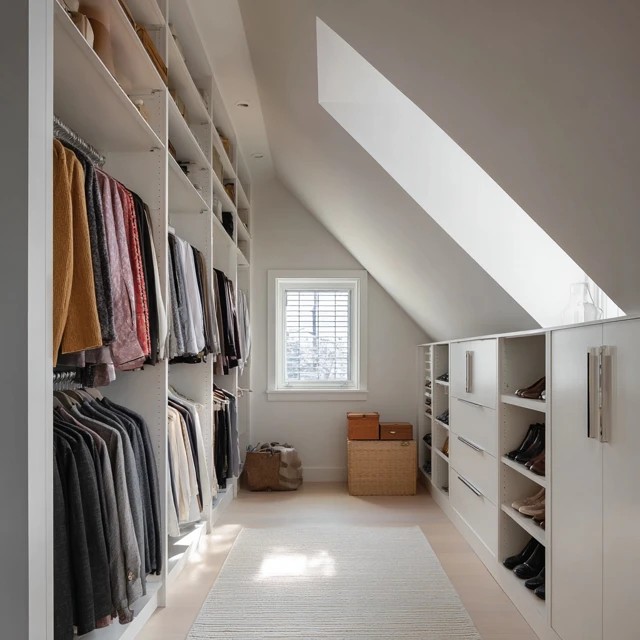
Custom-built wardrobes running along the knee walls — the short vertical sections between the floor and the beginning of the roof slope — create the most efficient clothing storage an attic bedroom can contain. Floor-to-ceiling in height at the knee wall zone, these units make full use of every centimetre of vertical space where it exists, and double hanging rod configurations within shorter sections double the capacity for folded trousers, jackets, and shirts.
- Build wardrobe interiors to the exact knee wall height — wasted space between the top shelf and the slope above is storage lost.
- Use double hanging rods in any section where total internal height permits — one at 80cm and one at 42cm for short garments.
- Paint built-in wardrobes the same colour as the walls for an integrated, architectural result rather than a furniture-like one.
2. Pull-Out Drawers Under the Eaves for Hidden Organisation
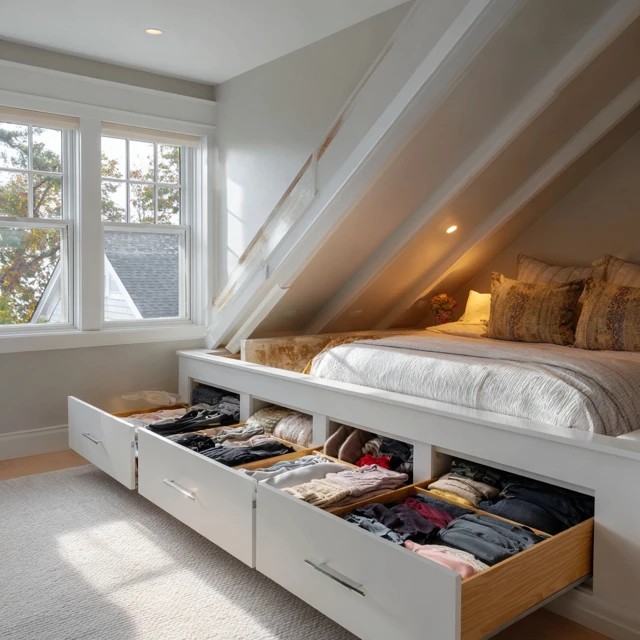
The triangular eave spaces where the roof slope descends to floor level — too low for standing but perfectly suited to shallow pull-out drawers — become genuinely useful storage when fitted with full-extension drawer units built to the exact depth of the eave zone. Folded clothing, accessories, and seasonal items stored in these drawers are fully accessible without crouching or reaching into dark corners,
- Install full-extension ball-bearing runners so the complete drawer depth is accessible from the front without reaching inside.
- Build drawer heights of 15cm for socks and underwear, 20cm for folded T-shirts, 25cm for jumpers and jeans.
- Label each drawer on its exterior so contents can be identified without opening during a quick morning search.
3. Platform Bed with Built-In Drawers for Dual-Function Furniture
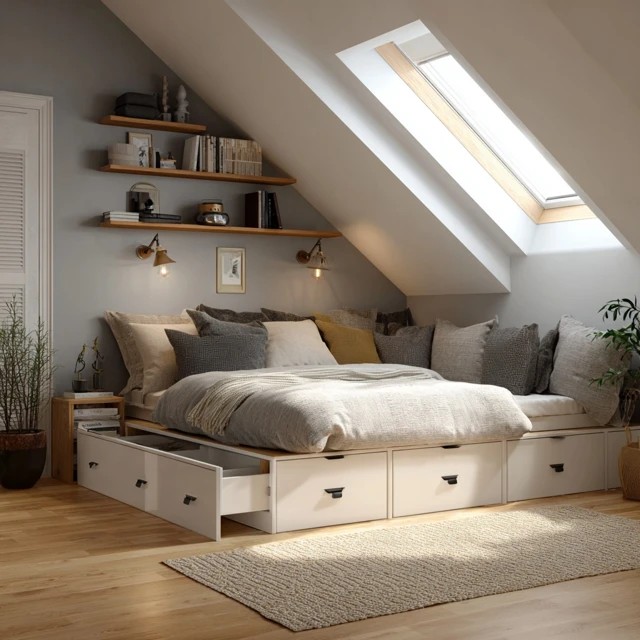
A platform bed with drawers built into the base provides sleeping and storage in a single piece of furniture — the most space-efficient arrangement available for a compact attic bedroom where floor area is limited by the sloping walls.
- Choose a platform bed with at least four substantial drawers — two on each side — for meaningful everyday storage capacity.
- Select a platform height of 35-40cm to provide drawers of sufficient depth for folded clothing and bedding storage.
- Use drawer dividers inside the platform drawers to keep contents organised and prevent items from jumbling together.
4. Floating Shelves Following the Roof Slope
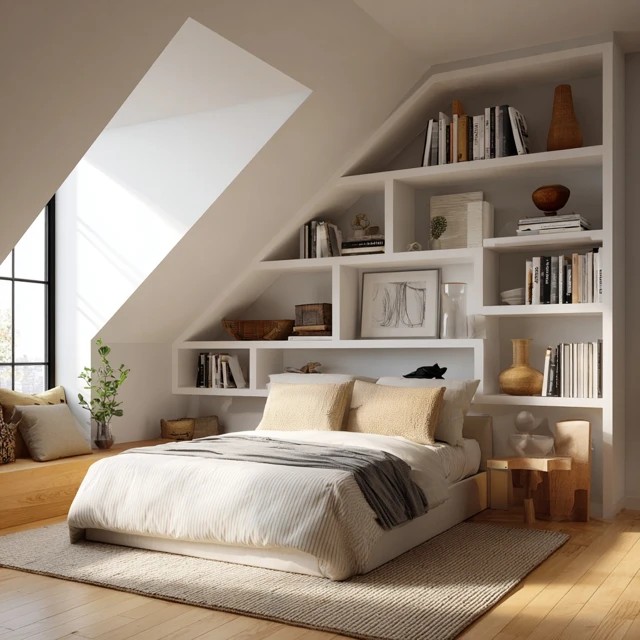
Shelves mounted directly onto the sloped wall surface — angled to follow the roofline rather than running horizontally — create a graduated storage system that harmonises with the attic bedroom’s geometry rather than conflicting with it. Smaller items at the lowest, shallowest position and taller objects at the highest, deepest point create a logical sizing sequence that suits the slope’s natural graduation,
- Add a lip to the front edge of each angled shelf to prevent items from sliding forward on the inclined surface.
- Position the lowest shelf at 120cm from the floor — below this height, a wall-mounted shelf creates a head-height hazard.
- Use the same shelf material as the built-in wardrobes for visual continuity across all storage elements in the room.
5. Custom Modular Closet System for Personalised Wardrobe
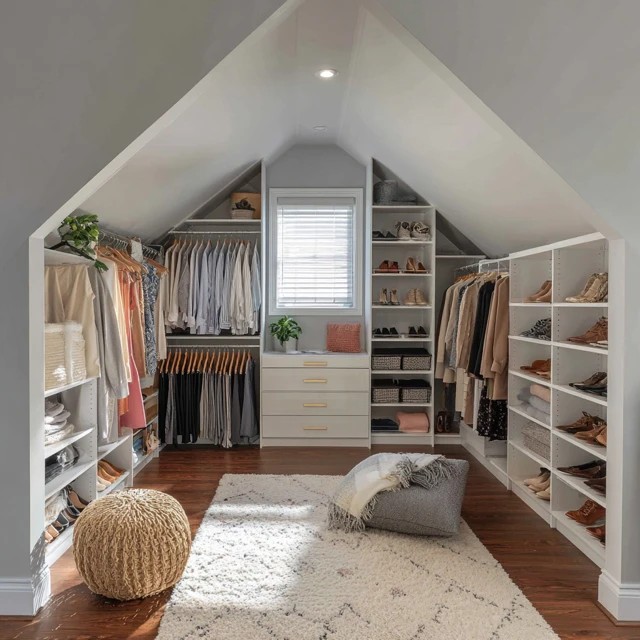
A modular closet system — assembled from configurable units of hanging rods, open shelves, shoe racks, and drawers — can be composed to fit the exact dimensions and specific clothing storage requirements of the attic bedroom and its occupant.
- Map the available wardrobe zone’s exact dimensions before selecting a modular system — height variation of even 10cm affects which components fit.
- Prioritise hanging rod length over shelf area if the wardrobe holds more hanging garments than folded — most systems allow this flexibility.
- Use consistent internal lighting throughout the modular system so every section is equally visible during morning clothing selection.
6. Nightstand with Drawers for Bedside Organisation
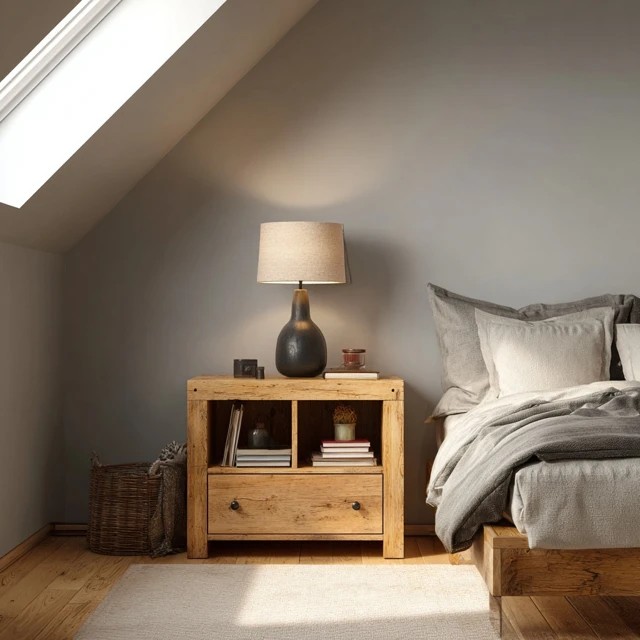
A nightstand with two or three drawers at bed height provides the essential bedside storage that keeps the sleeping surface clear and the immediate environment organised — phone, charger, reading glasses, medications, and a current book all housed in a compact unit that requires no more floor space than a lamp and a glass of water demand.
- Match nightstand height to within 5cm of the mattress top surface for the most ergonomically accessible bedside storage.
- Choose a nightstand with at least one drawer and an open lower shelf — the shelf accommodates books that would otherwise clutter the top surface.
- Select a nightstand without protruding handles if it is positioned where a walking person might brush against it in the dark.
7. Storage Bench at the Foot of the Bed
An upholstered bench with a hinged lift-top or pull-out drawers at the foot of the bed provides a staging surface for clothing, a seated dressing position, and concealed storage for extra blankets, pillows, and seasonal bedding in a single compact footprint.
- Choose a bench no taller than 45cm so it sits below the sloping ceiling at the foot of the bed without creating a hazard.
- Select a bench with a soft-close hinge mechanism on a lift-top lid to prevent the lid from dropping loudly during early morning use.
- Upholster in a durable performance fabric — the bench receives more daily physical use than any other bedroom furniture piece.
8. Hanging Closet Organisers for Vertical Space Use
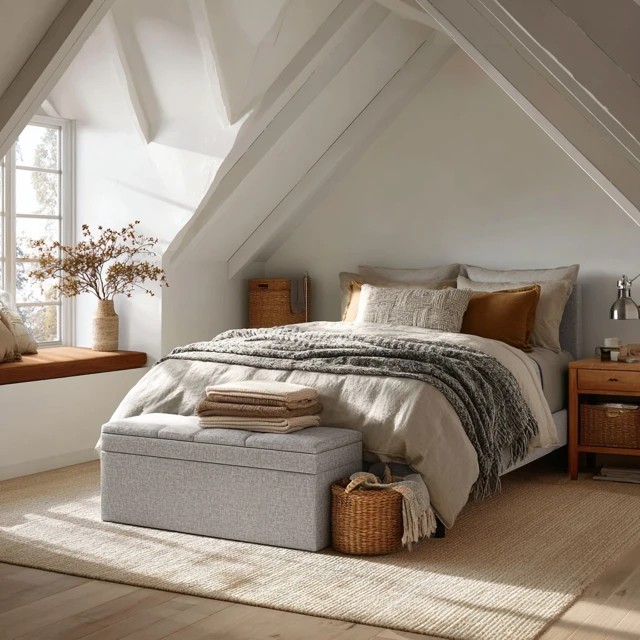
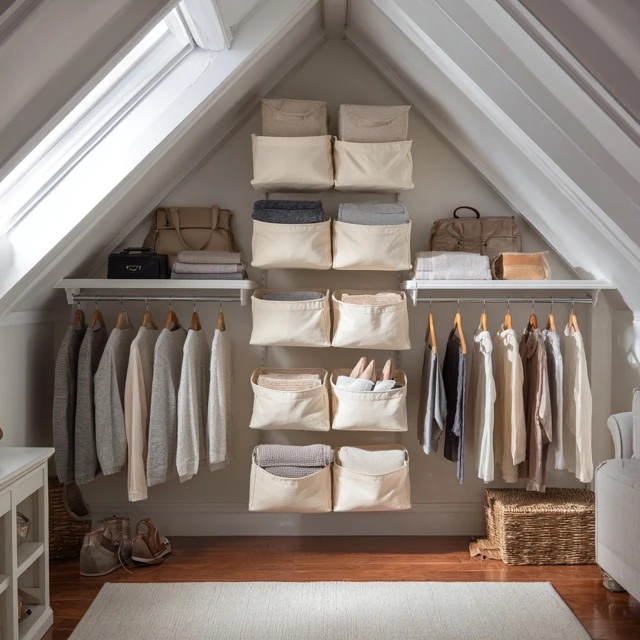
Hanging fabric organisers — slotted onto the existing hanging rod in the wardrobe — use the vertical space between hanging garments and the closet floor that would otherwise be wasted, converting it into multiple accessible pockets for folded items, shoes, handbags, scarves, and accessories.
- Choose an organiser with compartments sized to the specific items stored — shoe pockets at 15cm deep, accessory pockets at 10cm.
- Use one organiser per category — one for shoes, one for accessories, one for folded items — for the most organised result.
- Select canvas or breathable fabric organisers rather than plastic to prevent moisture accumulation around stored clothing.
9. Dresser Fitted Under the Slope for Clothing Storage
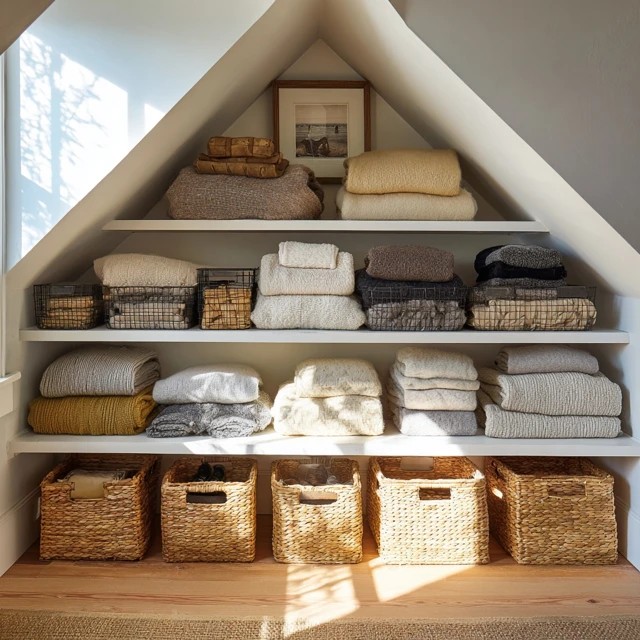
A low-profile chest of drawers positioned precisely in the zone where the slope reduces ceiling height to below standing level uses the space that no taller furniture could occupy while delivering the essential clothing storage that an attic bedroom requires.
- Measure the clear ceiling height at the dresser position before purchasing — even a 5cm difference determines whether a specific unit fits.
- Choose a wide, low dresser with many shallow drawers rather than a narrow tall one for the best fit under a sloped ceiling.
- Mount a mirror on the wall above the dresser at a height that works despite the slope — a horizontal format mirror keeps proportions correct.
10. Wall-Mounted Hooks for Accessible Daily Items
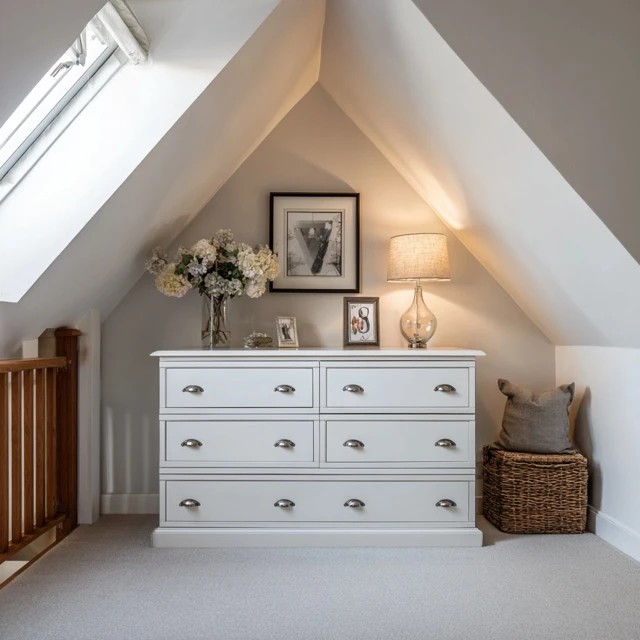
A row of wall-mounted hooks — for dressing gowns, bags, hats, scarves, and the items removed and replaced most frequently each day — keeps daily-use accessories immediately accessible without consuming any floor space or wardrobe rod.
- Mount hooks at 160-170cm from the floor so hanging items clear the floor comfortably without dragging.
- Choose hooks with a substantial projection — at least 8cm — so bulkier items like bags and coats hang without scraping the wall.
- Use a consistent hook style and metal finish throughout the room for a considered, deliberate installation rather than an ad-hoc one.
11. Woven Basket Storage on Shelves for Soft Goods
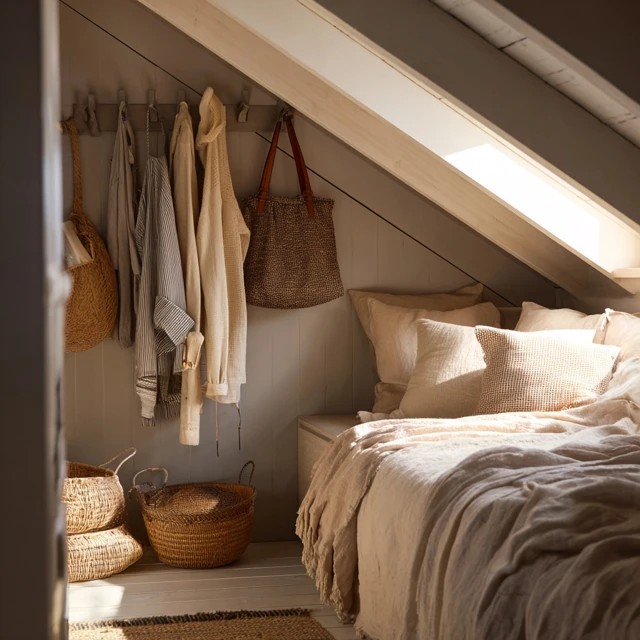
Woven or wire baskets on the bedroom shelves provide flexible, visual storage for bulky soft items — sweaters, scarves, hats, and extra bedding — that resist neat folding on an open shelf. Labels on the front of each basket maintain the organisation without requiring the baskets to be removed for identification.
- Choose baskets that fit the shelf depth precisely — a basket that protrudes past the shelf edge is a daily collision point.
- Use matching basket styles throughout the shelving for a cohesive, considered organisational display.
- Line baskets holding delicate items with acid-free tissue to prevent rough weave surfaces from snagging fine fabrics.
12. Freestanding Armoire for Traditional Concealed Storage
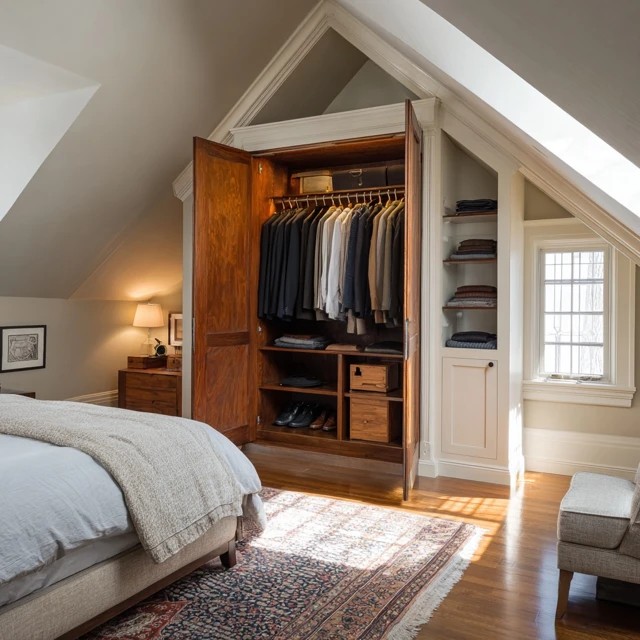
A freestanding armoire — a traditional tall cabinet with hanging space, shelves, and doors — provides complete clothing storage in a single piece of furniture that requires no installation and can be positioned wherever the available ceiling height in the attic bedroom permits. The doors conceal all stored contents for a visually tidy bedroom, and the armoire’s traditional silhouette suits the cottage or vintage character that attic bedrooms naturally possess.
- Measure ceiling height at the intended position precisely before purchasing — armoires typically stand 180-210cm tall.
- Anchor the armoire to the wall with an anti-tip strap — tall, free-standing furniture is a tipping hazard in any bedroom.
- Choose an armoire with both hanging space and shelving internally for the most versatile and complete storage capability.
13. Over-Door Organisers for Bonus Storage Capacity
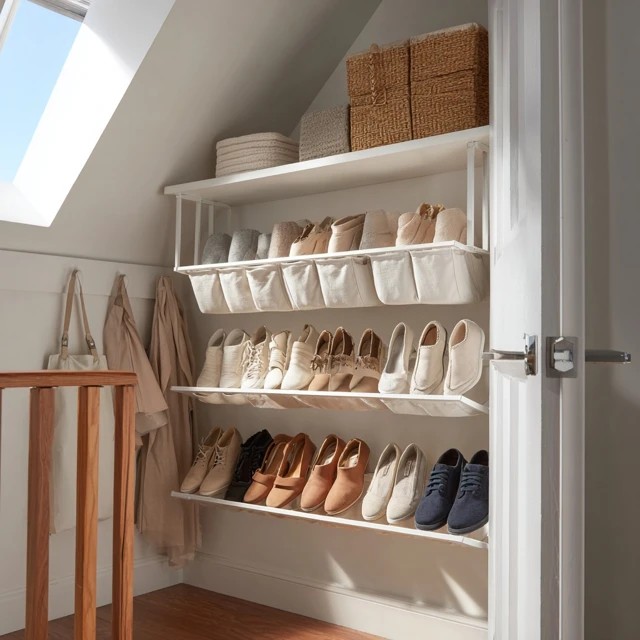
Over-door organisers hung on the inside of the bedroom door or wardrobe door use a surface that would otherwise contribute zero storage capacity to the room’s organisation.
- Choose an organiser with a padded hook section that protects the door’s paint or finish from scratching during daily use.
- Use the door organiser for the most frequently accessed small items — it is the easiest-to-reach storage position in the room.
- Select a model with clear pockets where possible so contents are identifiable without opening each pocket individually.
14. Rolling Cart for Mobile Flexible Bedroom Storage
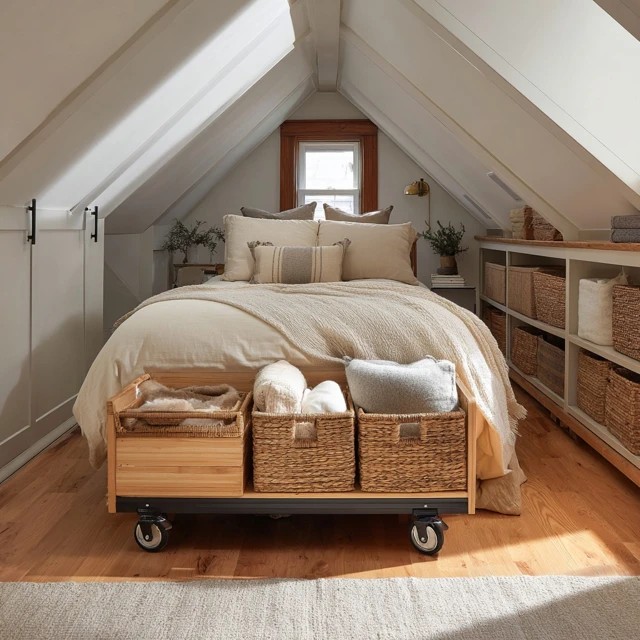
A rolling cart on locking casters gives the attic bedroom flexible storage that can be positioned wherever it is most needed and moved when the floor space is required for another purpose — beside the bed as a temporary nightstand, beside the wardrobe during dressing, or rolled under the desk when not in use.
- Choose a cart narrow enough to fit through doorways — 45cm wide maximum — for full mobility within the attic bedroom and its access route.
- Select locking casters so the cart stays fixed when in use and rolls easily when repositioning is needed.
- Use the cart for frequently changing storage needs — current reading, jewellery, accessories — rather than permanent wardrobe items.
15. Under-Bed Storage Boxes for Concealed Seasonal Items
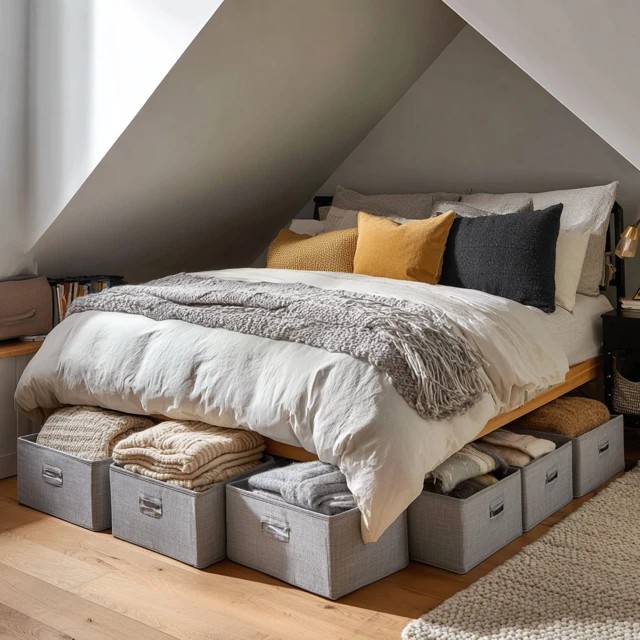
Flat, wheeled storage boxes that slide beneath the bed frame convert the under-bed zone — typically the largest single unused floor area in any bedroom — into concealed storage for seasonal clothing, spare bedding, and infrequently accessed items.
- Measure the clear floor-to-frame height before purchasing under-bed boxes — most standard boxes require at least 20cm of clearance.
- Choose boxes with fitted lids rather than open-top versions to protect contents from the dust that collects under beds.
- Store off-season clothing in breathable fabric under-bed bags rather than sealed plastic to prevent fabric deterioration.
16. Pegboard Wall for Customisable Accessories Display
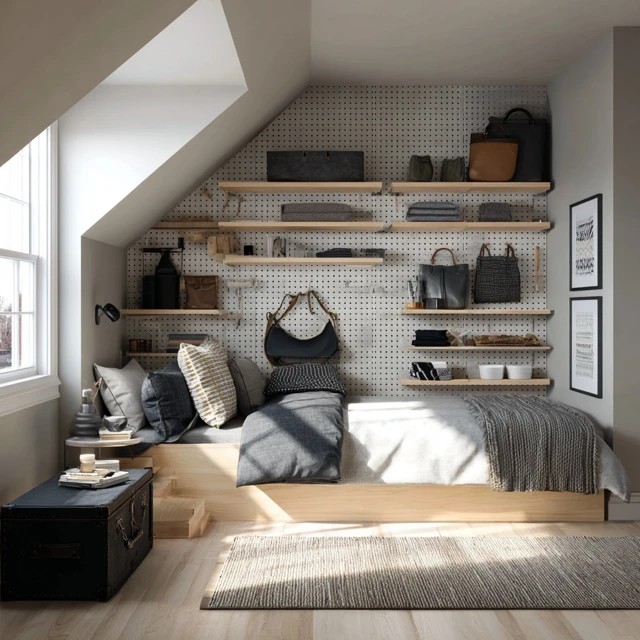
A pegboard panel mounted on a flat wall section of the attic bedroom creates a fully customisable accessories organisation system — hooks, small shelves, and bins clip into the perforations and can be rearranged at any time as storage needs evolve.
- Mount pegboard at least 2.5cm from the wall surface using spacers so hooks have full engagement depth behind the board.
- Use a painted or powder-coated pegboard in a colour that suits the bedroom’s palette rather than the industrial raw brown default.
- Outline each hook and accessory position in pencil before removing items so the layout can be replicated after cleaning.
17. Vacuum Storage Bags for Space-Saving Seasonal Wardrobe
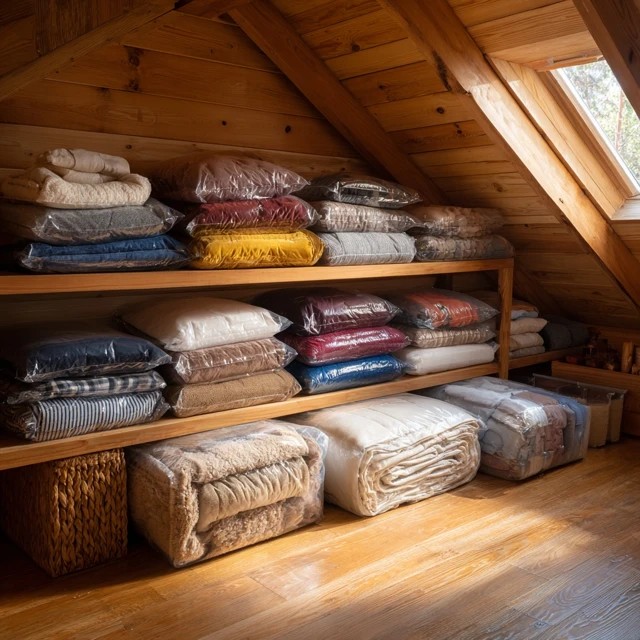
Vacuum-sealed storage bags reduce bulky seasonal items — duvets, winter coats, heavy knitwear, sleeping bags — to a fraction of their normal volume, dramatically extending the effective storage capacity of drawers, under-bed boxes, and wardrobe upper shelves.
- Use a cylinder vacuum with suction nozzle for the most complete air removal — handheld vacuums rarely generate sufficient suction.
- Store vacuum bags flat rather than on edge — the compressed contents can shift and rupture the seal when stored vertically.
- Label each bag clearly with its contents so the correct seasonal items are retrieved at changeover without opening multiple bags.
18. Jewellery Organiser Drawer for Accessory Protection
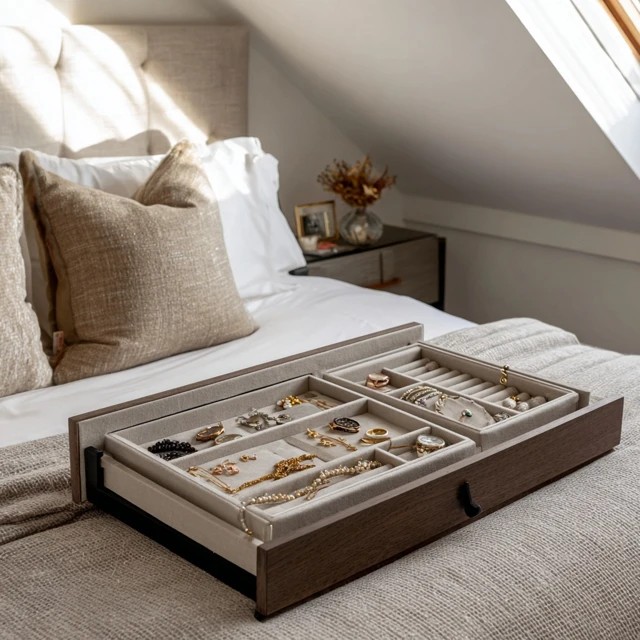
A velvet-lined drawer with individual compartments sized to rings, earrings, necklaces, and watches protects the jewellery collection from the tangling and scratching that loose storage in a general drawer creates.
- Choose a velvet liner in a contrasting colour to the primary jewellery metal — grey velvet for gold, navy for silver — for easy visual identification.
- Include at least two ring rolls, four earring holders, and six individual compartments for the most versatile jewellery organiser configuration.
- Position the jewellery drawer at standing height — 90-100cm from the floor — for comfortable selection without bending.
19. Open Clothing Rack for a Boutique Wardrobe Display
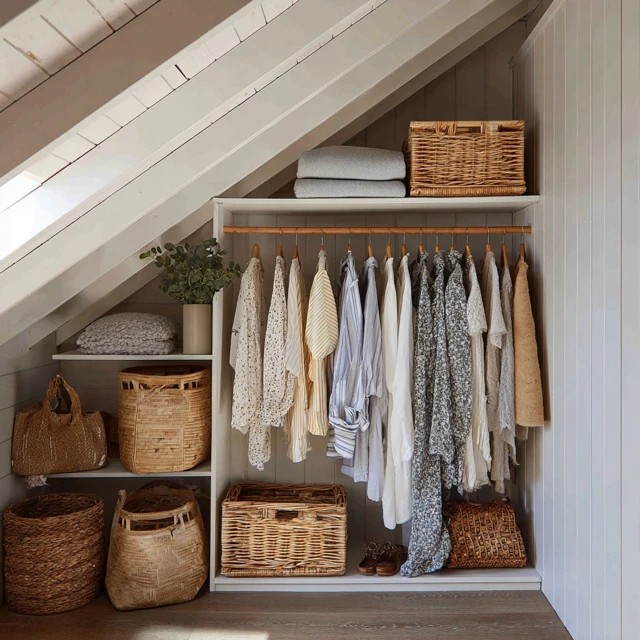
An open clothing rack — freestanding on castors or wall-mounted on industrial brackets — displays the most frequently worn and currently relevant section of the wardrobe in a boutique-style visible format that makes daily outfit selection immediate and visual. Unlike a closed wardrobe where items must be hunted for behind doors, an open rack makes the current capsule wardrobe fully visible and accessible,
- Limit the open rack to 30-40 garments maximum — a crowded rack loses the visual clarity that makes the format valuable.
- Style the rack by colour or garment type for a curated, considered display rather than a random assortment of clothing.
- Position the rack where natural attic light from the dormer falls across the garments for the most flattering daily display.
20. Built-In Window Seat with Concealed Storage
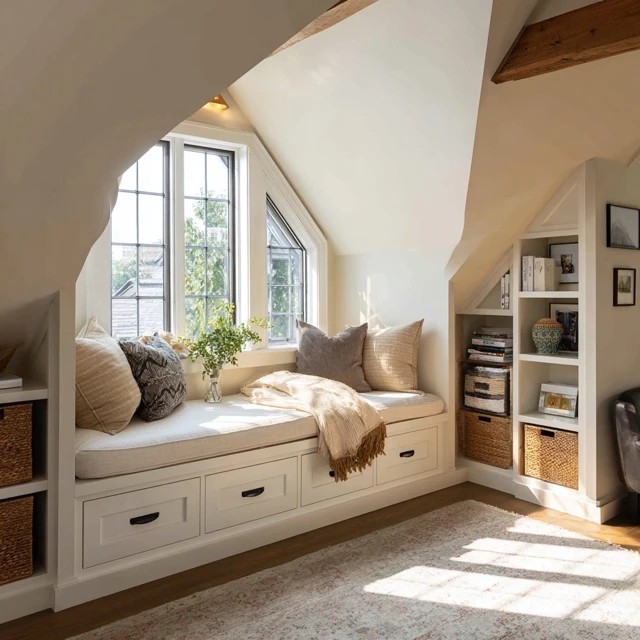
A built-in window seat in the dormer alcove — with a thick cushion on top for sitting and reading, and a hinged lift-top or drawers beneath for storing extra blankets, pillows, and seasonal bedding — delivers seating, storage, and natural light access in a single architectural feature that uses space which would otherwise be an awkward floor zone beside the dormer window.
- Build the window seat to 45cm height so it functions comfortably as both sitting height and as bedding-access height.
- Use a soft-close hinge on the lift-top lid for quiet, controlled access in a sleeping environment where noise matters.
- Upholster the seat cushion in a washable performance fabric — the window seat becomes a daily-use reading and sitting position.
Why These Attic Bedroom Storage Ideas Excel
Every idea on this list addresses the specific geometry of the attic bedroom rather than applying standard solutions that conflict with sloped ceilings.
Built-in solutions — wardrobes along knee walls, eave drawers, window seats, and platform beds — deliver the highest storage efficiency per square foot because they are designed to fit the specific geometry.
Flexible and freestanding solutions — rolling carts, hanging organisers, over-door racks, and modular closet systems — are the most accessible upgrades for attic bedrooms that already contain furniture.
Conclusion
An attic bedroom organised with intelligent storage solutions becomes a genuinely comfortable, functional sleeping space rather than a room that trades charm for practicality. Begin with built-ins — wardrobes along the knee walls, eave drawers, a window seat in the dormer — then add a storage platform bed and flexible solutions like baskets and hooks. The result is an attic bedroom that works as well as it looks.

Andrew is the founder and lead writer at RoomBlossom, a home decor publication dedicated to practical, intentional interior design. With over 10 years of hands-on experience transforming real-world living spaces — from compact apartments to full attic conversions — Andrew specialises in room design that balances visual appeal with everyday function. His work spans living rooms, bedrooms, sunrooms, and attic spaces, always guided by the belief that great design should work for the people who live in it, not just look good in photographs.