
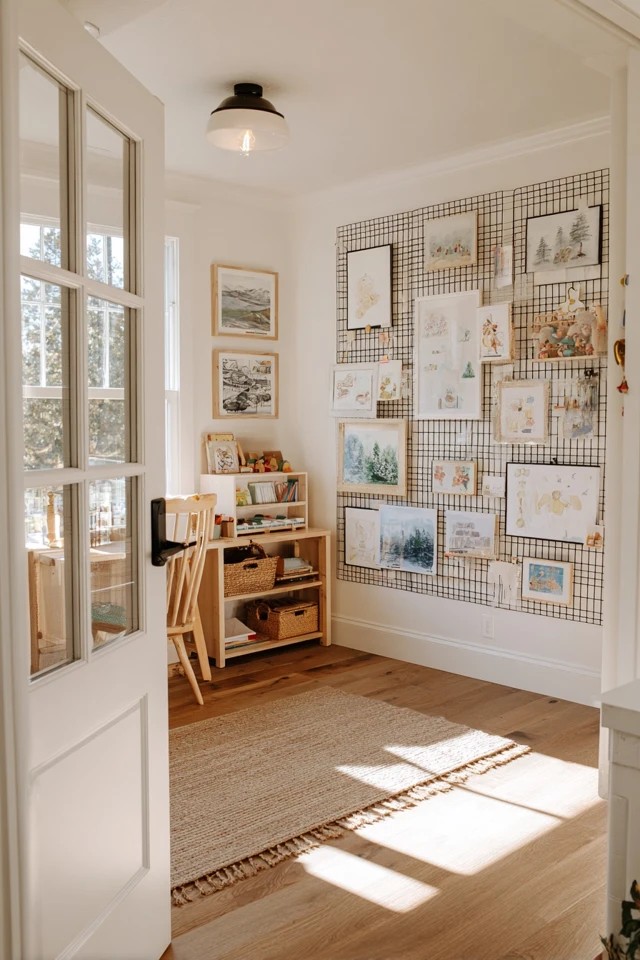
A sunroom playroom combines the best conditions for childhood development — abundant natural light, a connection to the outdoors, and a dedicated space where play, creativity, and learning can happen freely. Converting a sunroom into a playroom gives children a bright, purposeful room that parents can keep organized and children can genuinely own.
Here are 20 sunroom playroom ideas spanning storage solutions, creative zones, active play features, and quiet corners — each one designed to make the most of your sunroom’s natural light and open space for the children who will fill it.
1. Low Open Shelving for Accessible Toy Storage
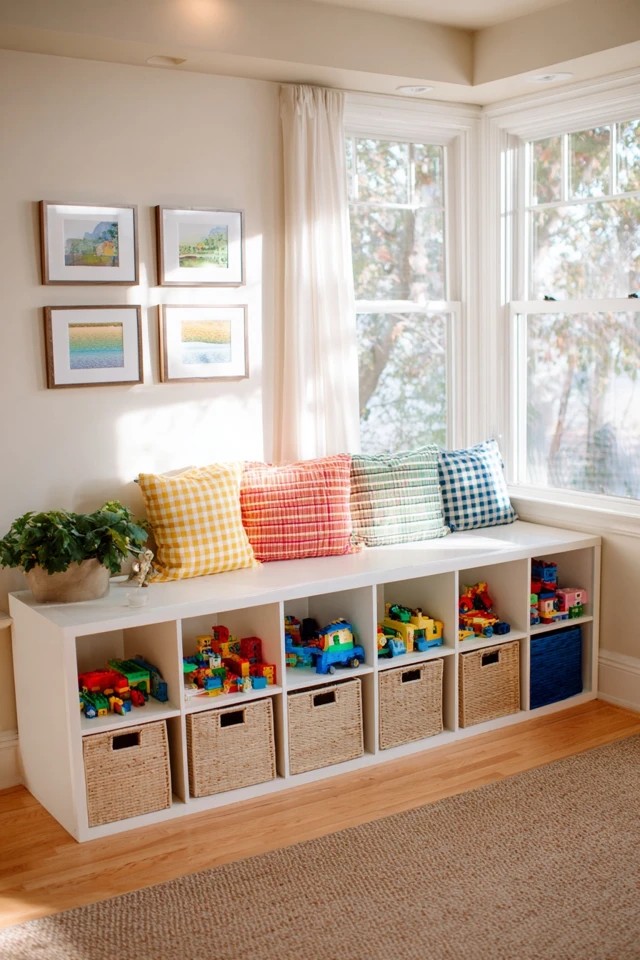
Child-height cubbies and labeled bins give children genuine independence over their play space — everything is visible, reachable, and easy to put away without adult help. Keeping toys organized at this scale also reduces the overwhelming clutter that discourages both play and cleanup in a shared family space.
- Use picture labels on bins for pre-readers so children can identify and return items independently.
- Limit each bin to one toy category — blocks, cars, soft toys — to maintain visual order.
- Choose shelving with rounded corners and no sharp hardware for a child-safe installation.
2. Foam Floor Mats for Safe Play Surface
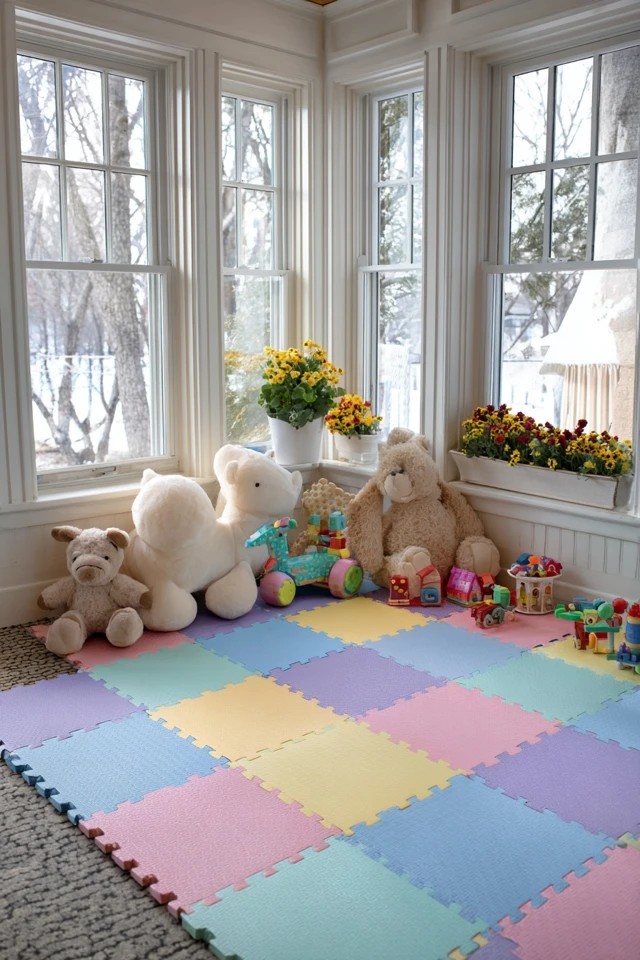
Interlocking foam tiles in bright primary colors create a cushioned play surface that protects toddlers from hard sunroom floors during falls and tumbles. The tiles are easy to wipe clean, simple to replace if damaged, and can be reconfigured as the room’s use evolves with the child’s age.
- Choose foam tiles at least 5/8 inch thick for meaningful fall protection on hard subfloors.
- Use a border edge kit around the perimeter for a finished, professional-looking installation.
- Select non-toxic, phthalate-free foam certified safe for toddler contact and mouthing.
3. Reading Nook with Floor Cushions for a Literacy Corner
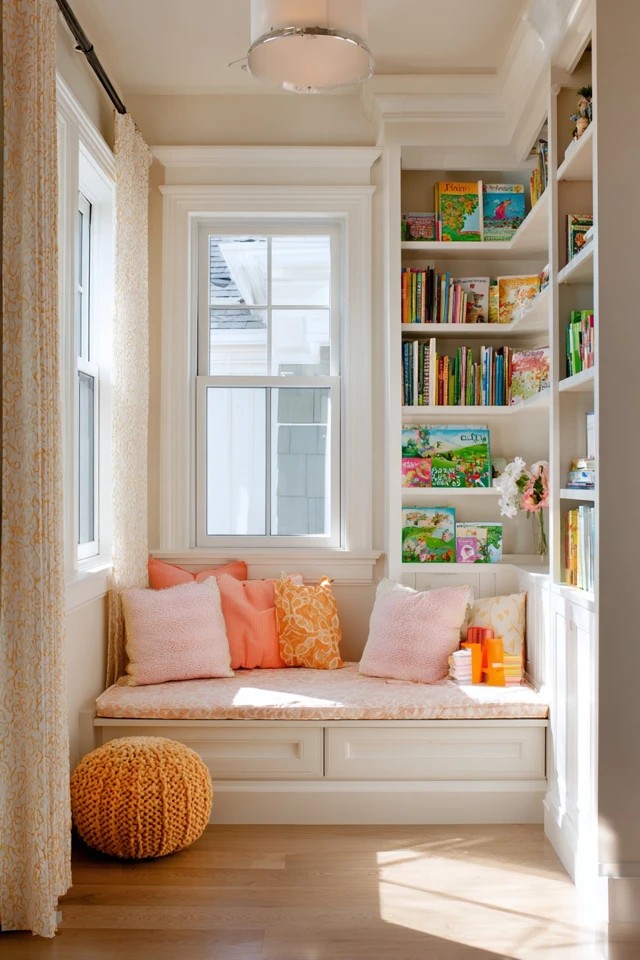
A cushioned floor seating area with a low bookshelf nearby creates a dedicated reading zone that signals to children this is a space for quiet, focused enjoyment of books. Bright natural sunroom light makes this the best-lit reading spot in the house, encouraging longer and more comfortable reading sessions than interior rooms allow.
- Face book covers outward on the shelf rather than spines — children choose books by cover image.
- Add a small canopy or curtain around the nook to create a sense of cozy enclosure.
- Rotate the book selection monthly to maintain novelty and encourage engagement with new titles.
4. Washable Area Rug for Practical Play Foundation
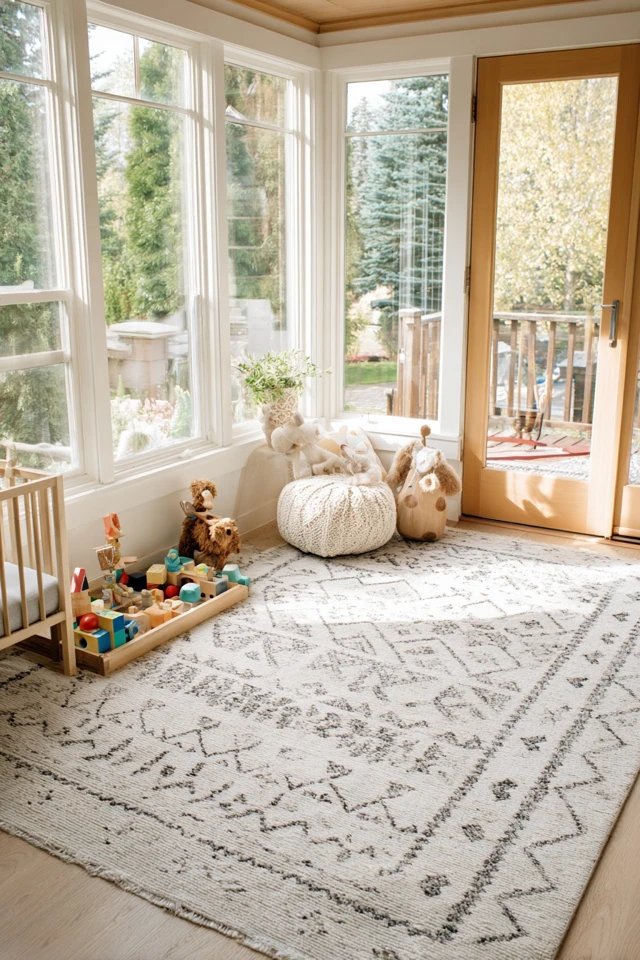
A machine-washable rug in a playful pattern — a city map, a colorful geometric, a simple stripe — provides the sunroom playroom with a soft foundation that handles spills, paint drips, and snack crumbs without consequence. The ability to remove and launder the rug is one of the single most practical design decisions a playroom can include.
- Choose a rug with a non-slip backing or add a rug pad to prevent sliding during active play.
- Select a pattern with some visual busyness — it hides stains and wear far better than a solid color.
- Size the rug to cover the primary play zone generously, not just the seating area.
5. Art Display Wall for Children’s Artwork Gallery
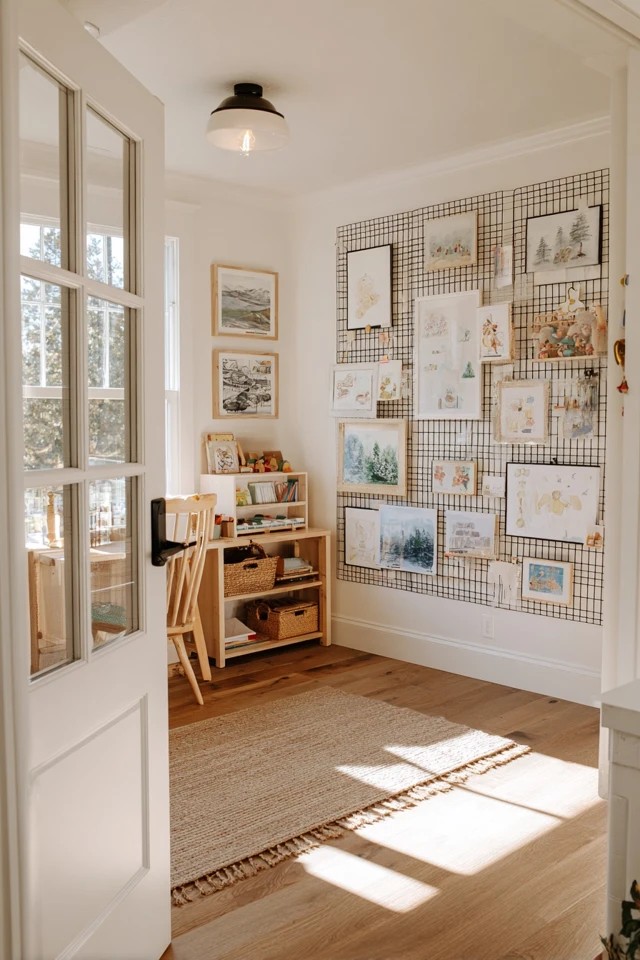
A dedicated display wall using wire grids, clipboards, or a simple string-and-peg system turns children’s artwork into a rotating gallery that celebrates their creativity and builds genuine pride in what they make. Natural sunroom light illuminates the displayed pieces beautifully, giving children’s work the same quality of presentation that any gallery would provide.
- Use binder clips on a horizontal rod for the easiest display system to update and rearrange.
- Involve children in choosing which pieces to display — the selection process builds artistic confidence.
- Photograph displayed works before rotating them so the collection is preserved digitally over time.
6. Low Kids Table and Chairs for Craft Activity Zone
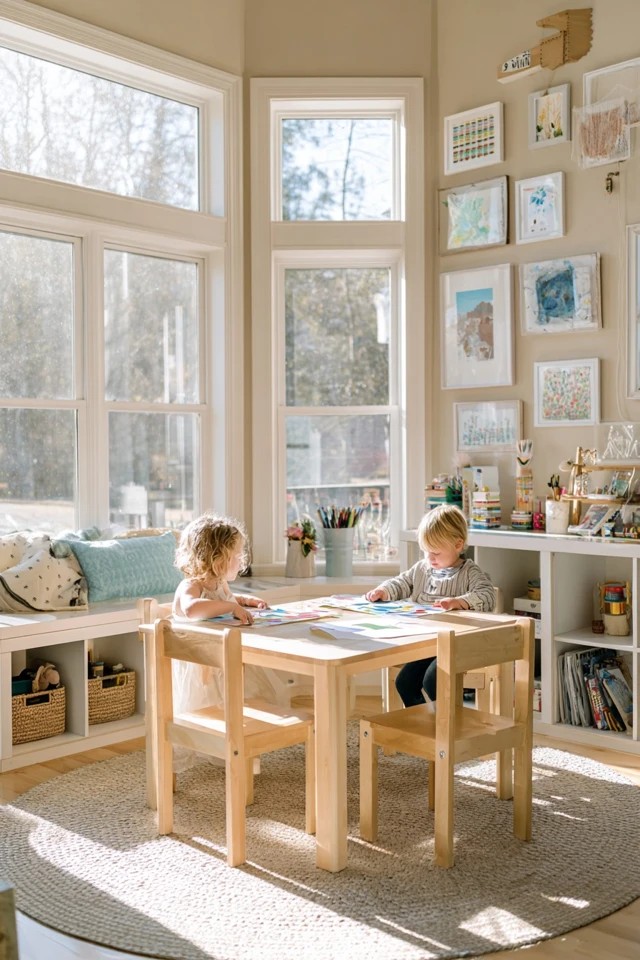
A child-sized table and chairs positioned near the sunroom’s best natural light creates the ideal craft station — well-lit, appropriately scaled, and dedicated to the messy, creative work that children need space and permission to do. The dedicated surface signals that art-making is a valued and expected activity in this room.
- Cover the table surface with a wipe-clean mat or oilcloth for paint and glue protection.
- Store art supplies in a rolling cart beside the table for easy access and tidying.
- Choose a table height of 20-22 inches for children aged three to six seated comfortably.
7. Toy Rotation System with Labeled Bins
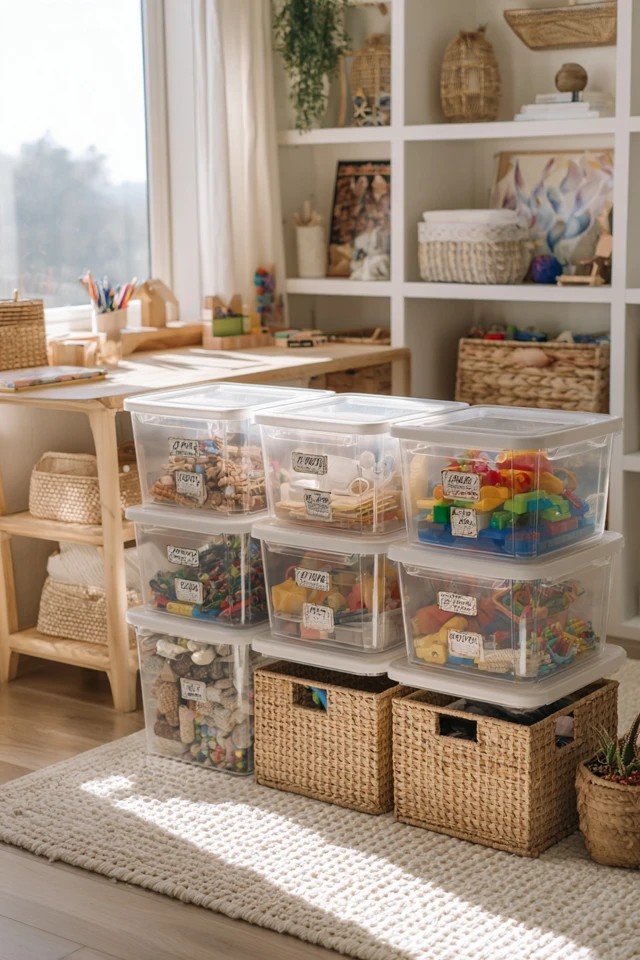
Rotating toys in and out of active circulation — keeping only a third of the collection accessible at any time — dramatically reduces playroom clutter and refreshes children’s engagement with toys they had seemingly forgotten. Clear bins with picture labels make the system self-maintaining once children understand how it works.
- Store out-of-rotation toys in opaque lidded bins in a closet so children cannot see or request them.
- Rotate toys every two to three weeks, or when interest in current selections noticeably drops.
- Involve children in the rotation — anticipating what comes back increases excitement and engagement.
8. Indoor Climber or Play Structure for Active Play
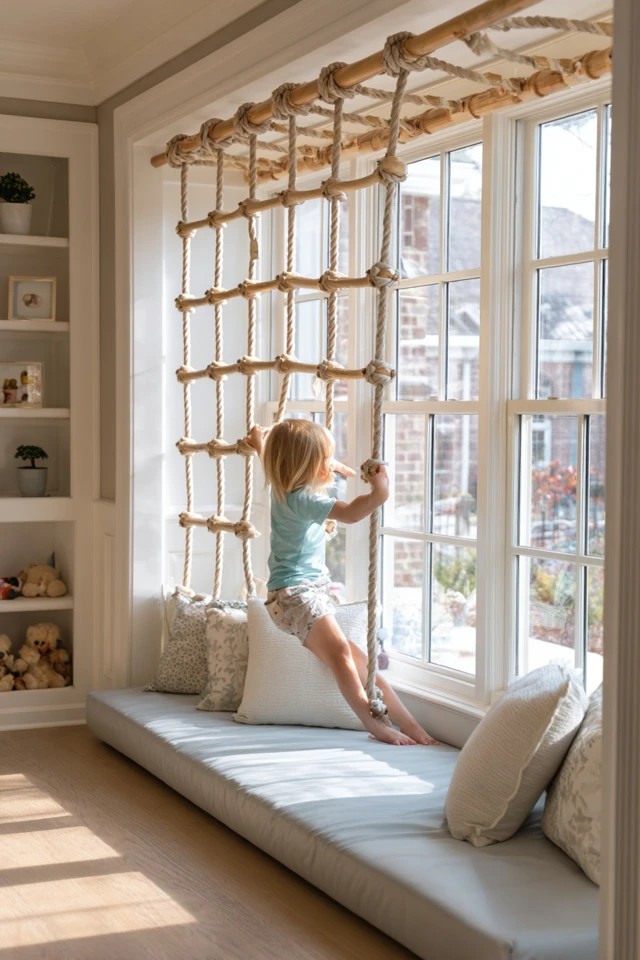
An age-appropriate indoor climbing structure gives children a gross motor outlet within the sunroom, channeling physical energy productively without requiring outdoor access. Soft landing mats beneath and around the structure are non-negotiable, and natural sunroom light ensures the climbing area is always well-illuminated for safe active play.
- Choose a structure rated for your child’s current weight plus growth room for the next two to three years.
- Install soft landing mats extending at least 18 inches beyond the structure on all sides.
- Anchor freestanding structures to a wall stud to prevent tipping during energetic climbing.
9. Dress-Up Corner with Costume Storage
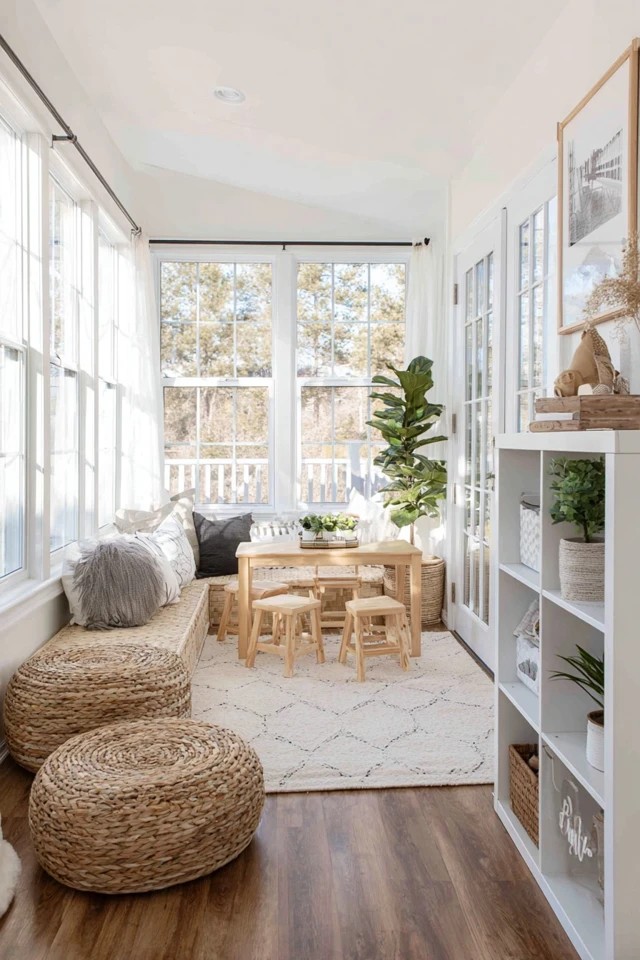
Low hooks, open bins, and a child-height mirror create a dress-up corner that makes imaginative role-play spontaneous and self-directed. When costumes are accessible and visible rather than buried in a box, children engage with them far more frequently and inventively as part of their independent daily play.
- Install hooks at 36-40 inches from the floor for easy costume access without adult assistance.
- Include a full-length mirror at child height — seeing the costume is essential to the imaginative experience.
- Add a small prop bin with hats, wands, and accessories alongside the costume storage.
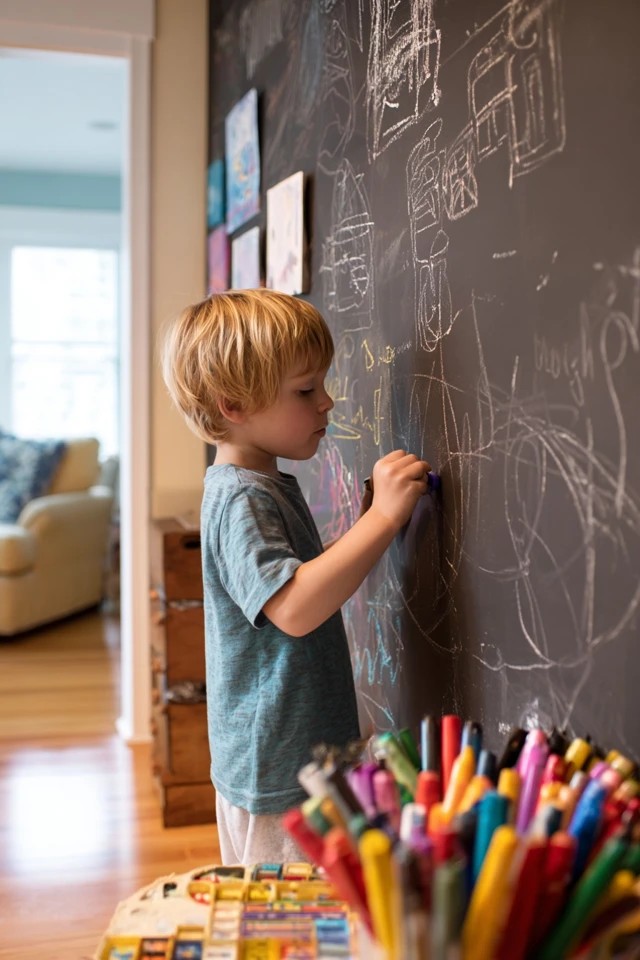
10. Chalkboard or Whiteboard Wall for Creative Expression
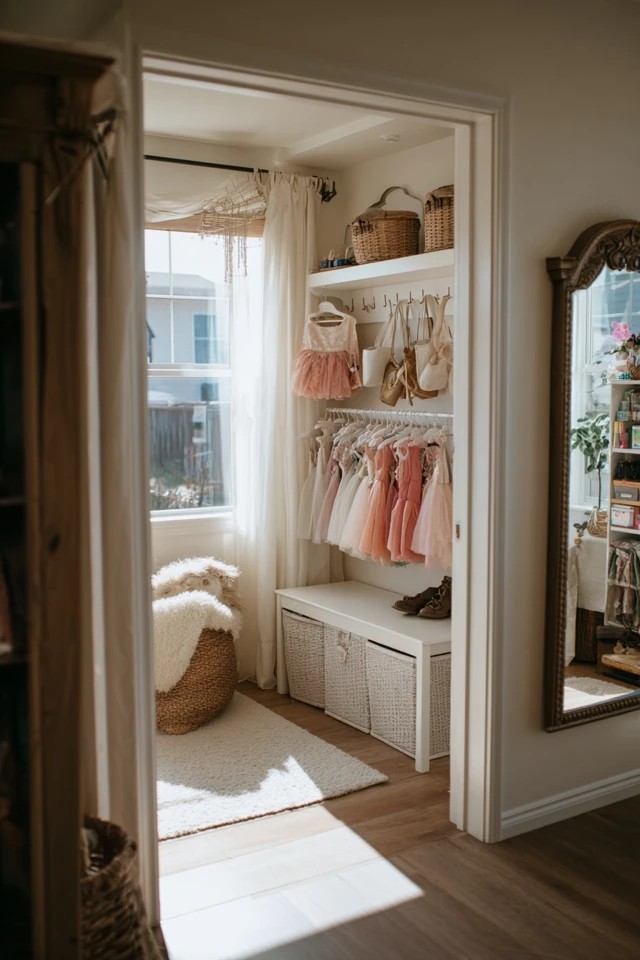
A chalkboard or whiteboard wall at child height provides an always-available, endlessly reusable drawing surface that removes the pressure of committing marks to paper. Natural sunroom light ensures the drawing surface is clearly lit from multiple angles, making it easy and inviting for children to use throughout the entire day.
- Apply chalkboard paint to a clearly defined section of wall rather than the entire room.
- Install a small ledge shelf along the bottom of the board to hold chalk or markers without floor mess.
- Use magnetic chalkboard paint to add magnetic functionality to the creative surface.
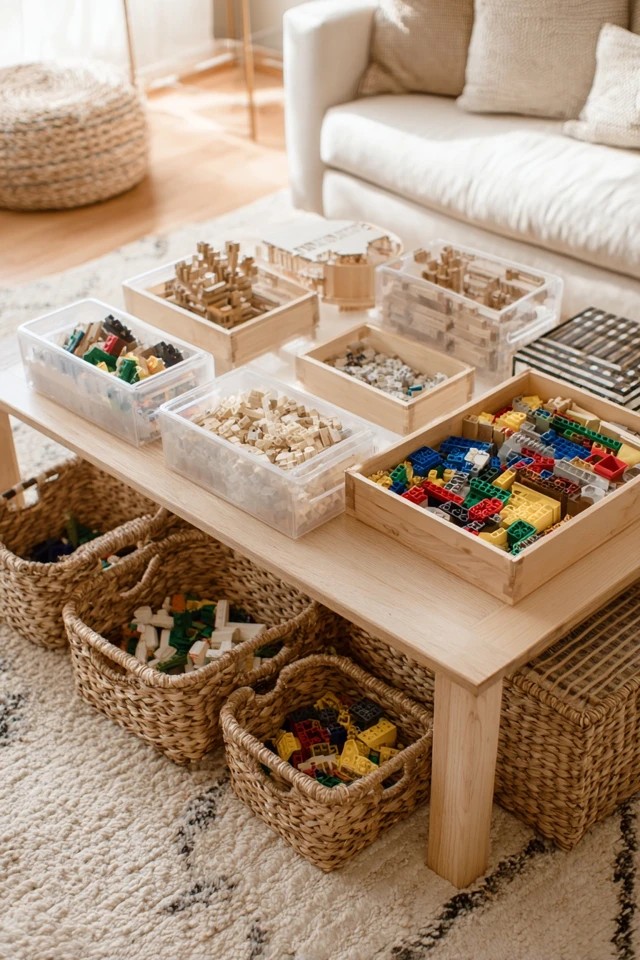
11. Building Block Storage for Construction Play Zone
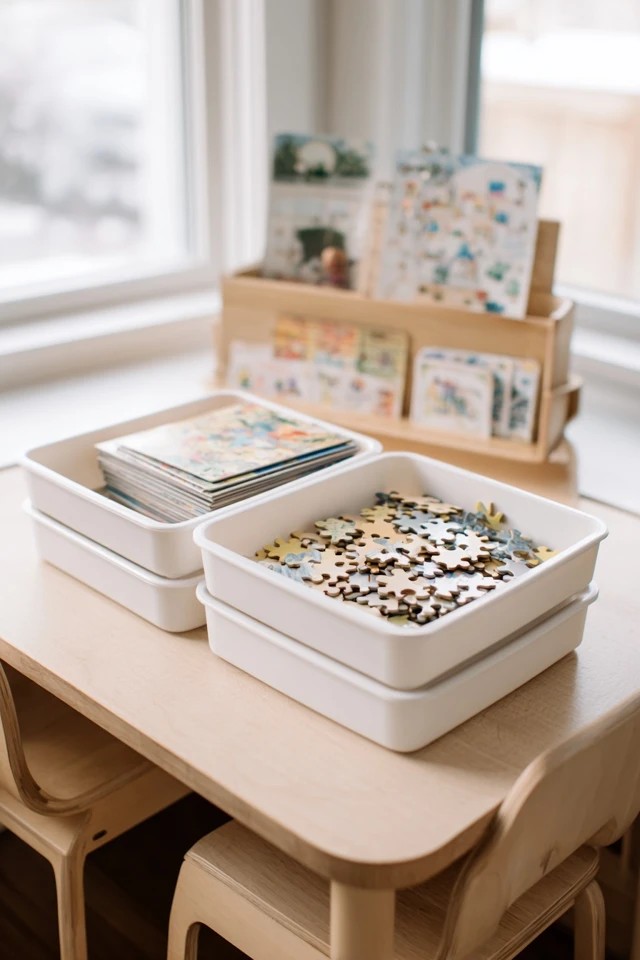
Dedicated bins or shallow trays holding LEGOs, unit blocks, and magnetic tiles create a construction zone where children can build without hunting through mixed toy bins. A low table nearby provides a stable building surface that keeps constructions intact longer, encouraging more complex and ambitious building projects.
- Sort blocks by type in separate bins — LEGOs, Duplos, unit blocks — to prevent mixing and frustration.
- Use a LEGO base plate on the table surface so builds stay attached during construction sessions.
- Display completed builds on a shelf for a period before disassembling — recognition motivates builders.
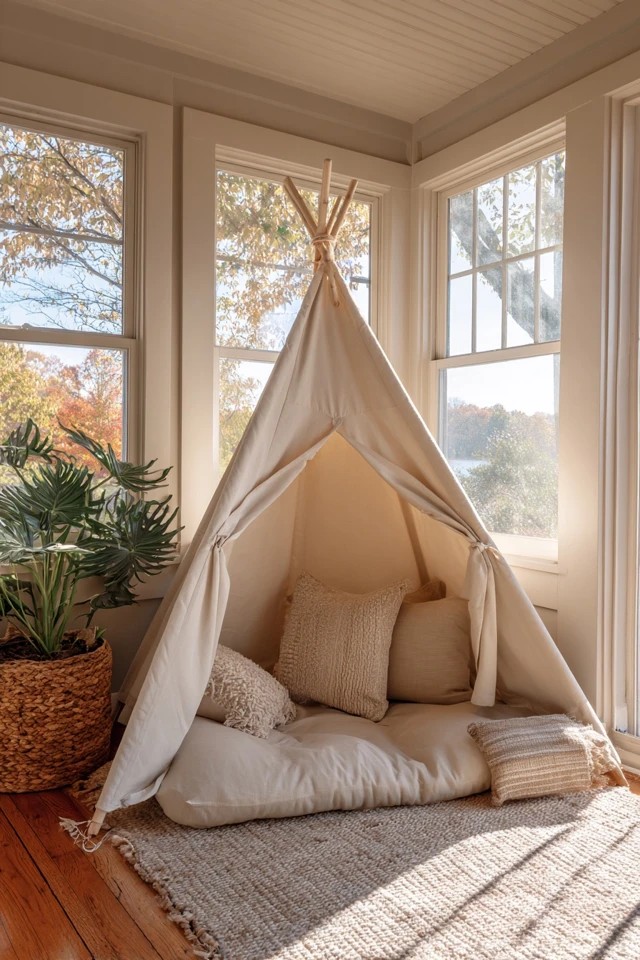
12. Teepee or Tent for a Quiet Retreat Corner
A fabric teepee or play tent with cushions inside gives children a semi-enclosed quiet space within the playroom for downtime, independent reading, or simply the need for calm enclosure that many children seek during busy days. The softened light inside the tent contrasts pleasantly with the bright sunroom light outside it.
- Place the teepee in a corner to give it natural backing and a greater sense of enclosure.
- Add a small battery-powered lantern inside for gentle lighting that children can control themselves.
- Keep the interior minimal — a few cushions and one or two books is enough for a true rest space.
13. Wipeable Furniture for Easy-Clean Playroom Setup
Vinyl-upholstered seating and laminate-finished tables that wipe clean with a damp cloth are the most practical furniture choices for a sunroom playroom where paint, food, and craft materials are daily realities. Choosing surfaces that tolerate mess removes the constant anxiety around playroom furniture and allows children to use the space freely.
- Choose vinyl upholstery in a mid-tone color — not white — for the most forgiving long-term wear.
- Apply a furniture protector spray to laminate surfaces annually to maintain water resistance.
- Avoid upholstered fabric seating in a playroom — it absorbs stains and odors that are very difficult to remove.
14. Window Seat with Toy Storage for Dual-Purpose Feature
A cushioned window seat with lift-top or drawer storage beneath combines the sunroom’s best natural light seating spot with concealed toy storage in a single built-in feature. Children naturally gravitate to window seats for reading and quiet play, making this a feature that earns its footprint with every use.
- Build the seat depth at 20 inches minimum for comfortable cross-legged sitting and lounging.
- Use a hinged lid with a soft-close mechanism so small fingers are not caught during storage access.
- Store frequently used toys in the seat storage and reserve closet space for seasonal or rotated items.
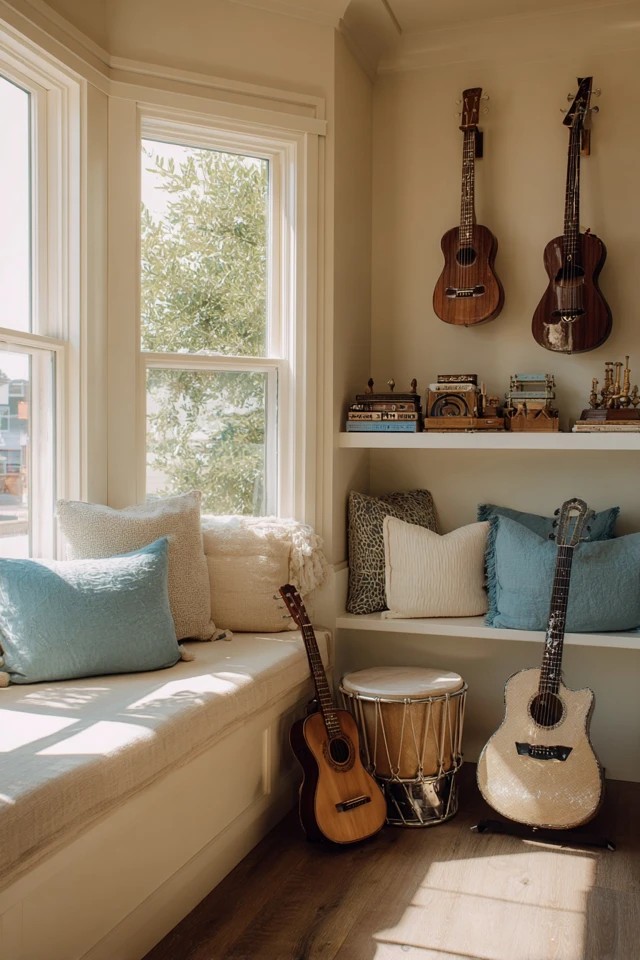
15. Music Corner with Instruments for Auditory Play
A low shelf holding child-safe instruments — a xylophone, maracas, a small keyboard, hand drums — creates a music corner that invites spontaneous sound exploration as part of everyday play. Music play supports language development, pattern recognition, and emotional expression, making it a developmental investment as well as a joyful activity.
- Choose instruments with durable finishes that withstand enthusiastic toddler handling.
- Include a simple rhythm guide poster on the wall above the instrument shelf.
- Add foam padding beneath the instrument shelf to reduce the acoustic impact on the rest of the house.
16. Puzzle and Game Storage for Quiet Activity Area
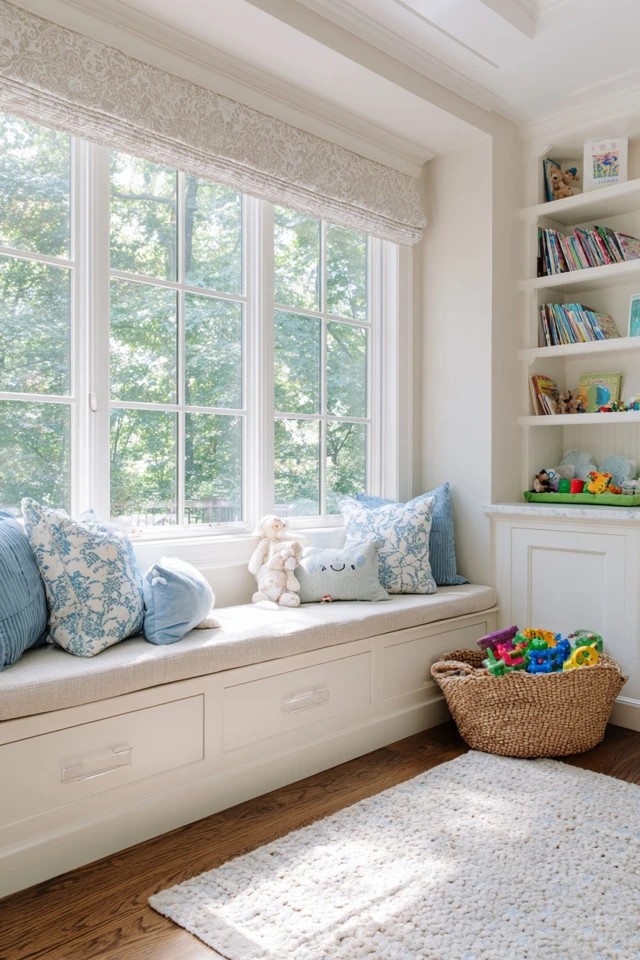
Stacking puzzle trays and labeled cubbies holding board games create a clearly defined quiet activity zone where children can settle into focused, calm play. Natural sunroom light provides ideal illumination for detailed puzzle work, and the organized storage helps children locate, use, and return games independently.
- Store puzzles in individual zip bags inside the box to contain pieces if packaging fails.
- Display game boxes face-out on shelves so children can identify choices by the cover image.
- Create a small table and two-chair setup specifically for puzzle and game play in this zone.
17. Sensory Play Station for Tactile Exploration
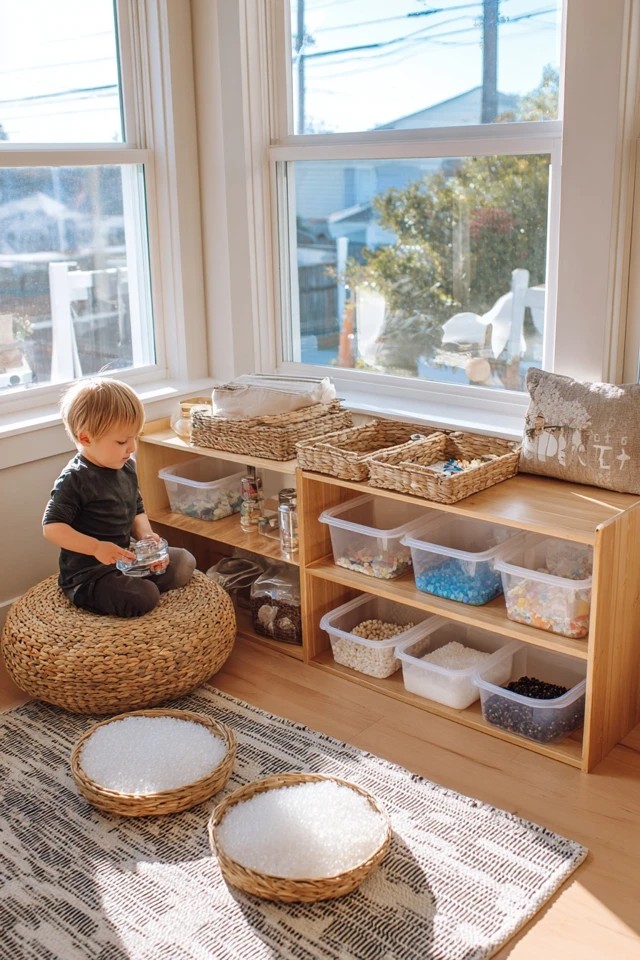
Shallow bins filled with kinetic sand, water beads, rice, or playdough create a hands-on sensory play station that supports fine motor development, concentration, and exploratory learning. A washable mat beneath the station protects the sunroom floor and makes post-play cleanup manageable for children and adults alike.
- Rotate sensory materials monthly to maintain interest and introduce new tactile experiences.
- Use a low plastic table with raised edges to contain sensory materials during enthusiastic play.
- Store sensory bin materials in sealed containers between sessions to maintain freshness and hygiene.
18. Nature Table for Science Exploration
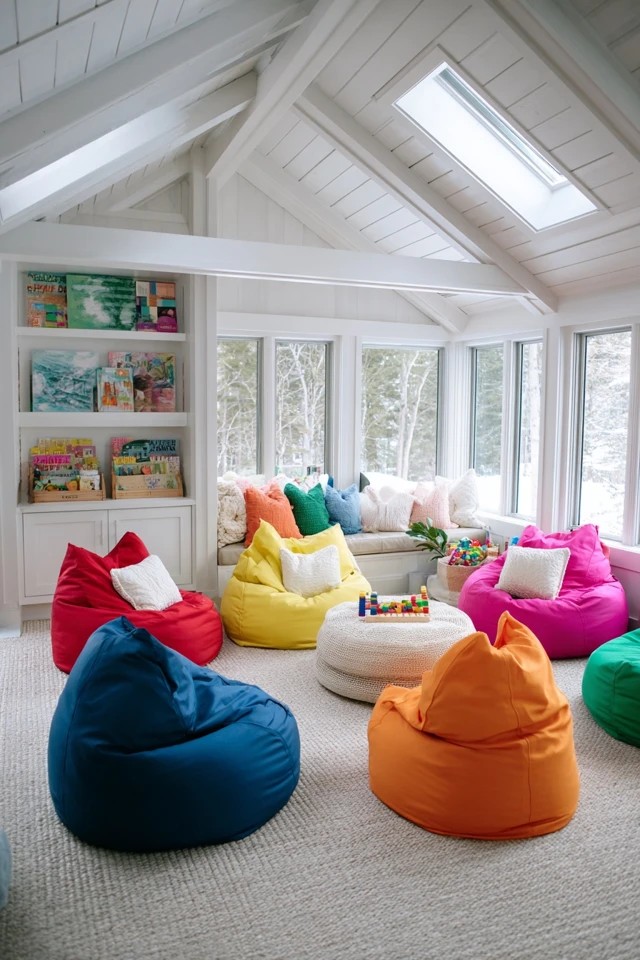
A low table displaying collected natural items — pinecones, shells, stones, feathers, seed pods — alongside a magnifying glass and simple field guides creates a science discovery corner that grows and changes with the seasons. Natural sunroom light provides the ideal bright, shadow-free illumination for examining specimens in detail.
- Refresh the nature table after every outdoor walk with new finds to keep curiosity active.
- Add a simple sorting tray and tweezers to encourage more deliberate scientific observation.
- Label specimens with handwritten tags to introduce vocabulary and early reading alongside discovery.
19. Colorful Bean Bags for Flexible Casual Seating
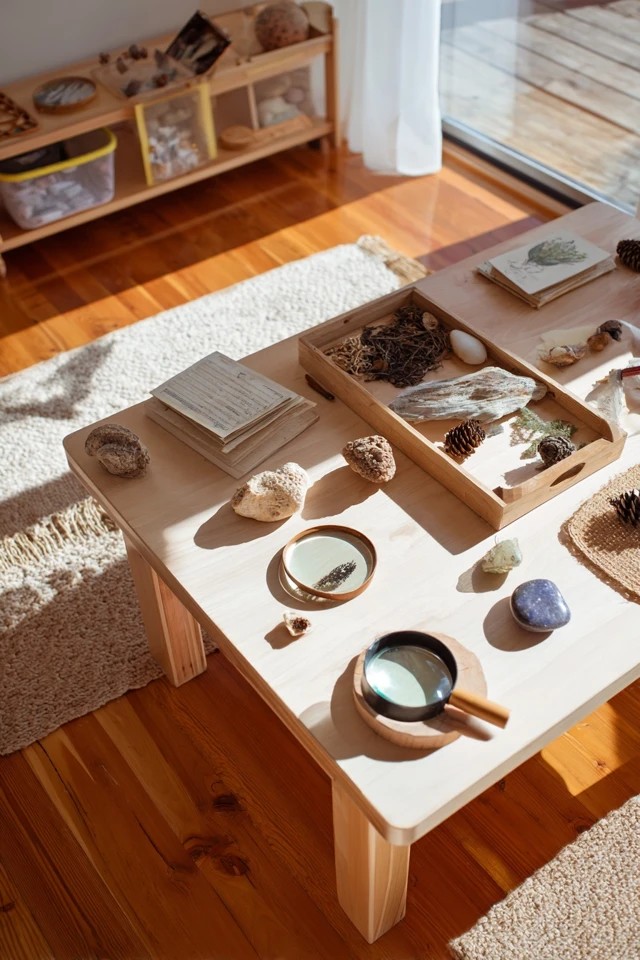
Washable bean bags in bold primary colors provide the sunroom playroom with seating that children can move, stack, and arrange freely to suit their activity — a circle for storytime, a line for watching a show, scattered individually for solo reading. Their lightweight, moveable nature gives children genuine agency over how their play space is configured.
- Choose bean bags with removable, machine-washable covers for practical everyday maintenance.
- Select covers in solid primary colors rather than novelty prints for longer aesthetic longevity.
- Store deflated spare bean bags in a basket for additional seating when playmates visit.
20. Growth Chart Wall for Developmental Milestone Tracking
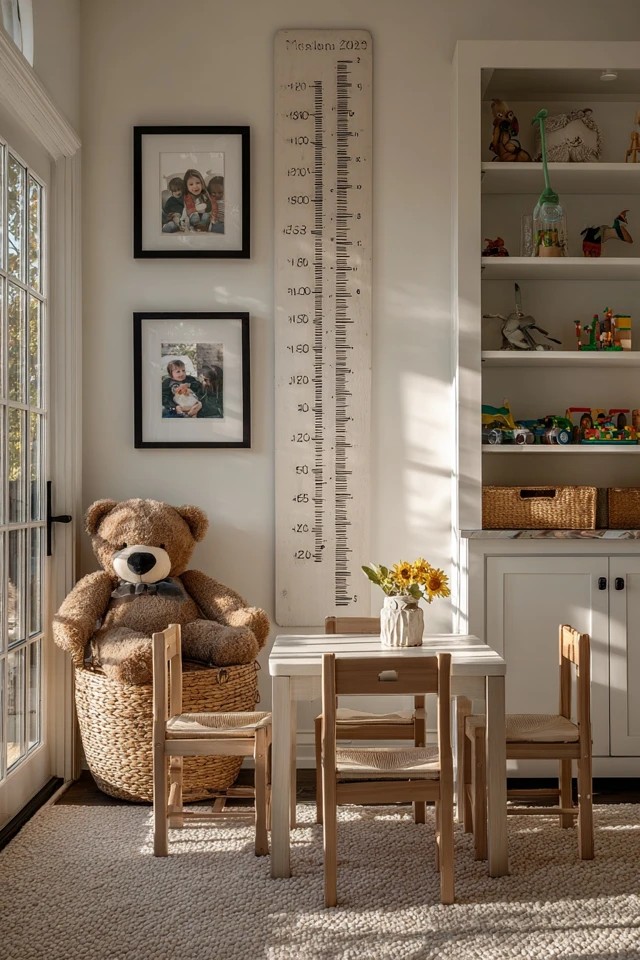
A decorative growth chart on the playroom wall creates a meaningful family record that children look forward to updating and referencing as they grow. Positioned in natural sunroom light, the chart becomes a backdrop for milestone photographs and a daily reminder that this room belongs to and grows with the children who use it.
- Choose a removable wall decal chart so it can move with the family to future homes.
- Date each measurement mark so the chart becomes a genuine developmental record over time.
- Position the chart on a clear wall section away from furniture so full-length photos are easy to take.
Why These Sunroom Playroom Ideas Excel
Every idea on this list works because it respects two equally important principles: children’s developmental needs and parents’ practical realities. The best sunroom playroom design serves both simultaneously — accessible storage that children can manage independently, wipeable surfaces that tolerate daily mess, and creative zones that invite genuine engagement rather than passive consumption.
Natural light is the sunroom playroom’s greatest advantage over interior playrooms. It supports healthier play environments, provides ideal illumination for detail-oriented activities like puzzles, art, and nature study, and creates a mood-enhancing atmosphere that makes children genuinely want to spend time in the space. Every zone in this list — the reading nook, the art station, the nature table, the dress-up corner — performs better in natural sunroom light than it would in an artificially lit interior room.
Zoning is the organizational principle that makes a sunroom playroom functional rather than chaotic. Dividing the space into distinct active, creative, quiet, and storage zones helps children transition between activities and self-regulate between energetic and calm play. The climber and bean bags serve the active zone; the teepee and reading nook serve the quiet zone; the art table and chalkboard wall serve the creative zone. Clear zones make the room easier to clean, easier to supervise, and more genuinely useful.
Adaptability is what ensures a sunroom playroom remains valuable as children grow. Toy rotation systems, modular shelving, washable rugs, and moveable furniture all allow the room to evolve without expensive renovation. The nature table serves a curious three-year-old and an eight-year-old naturalist equally well. The art display wall works for finger paintings and detailed drawings. Designing with adaptability from the start is the investment that makes a sunroom playroom worth creating.
Conclusion
A sunroom playroom succeeds when it gives children brightness, freedom, and genuine ownership of their space while giving parents the practical systems to maintain it without constant intervention. Start with the storage foundation — open shelving, labeled bins, a washable rug — then add the creative and active zones that match your child’s current interests. Let the extraordinary natural light do the rest, and build a room that grows alongside the children who love it.

Andrew is the founder and lead writer at RoomBlossom, a home decor publication dedicated to practical, intentional interior design. With over 10 years of hands-on experience transforming real-world living spaces — from compact apartments to full attic conversions — Andrew specialises in room design that balances visual appeal with everyday function. His work spans living rooms, bedrooms, sunrooms, and attic spaces, always guided by the belief that great design should work for the people who live in it, not just look good in photographs.