
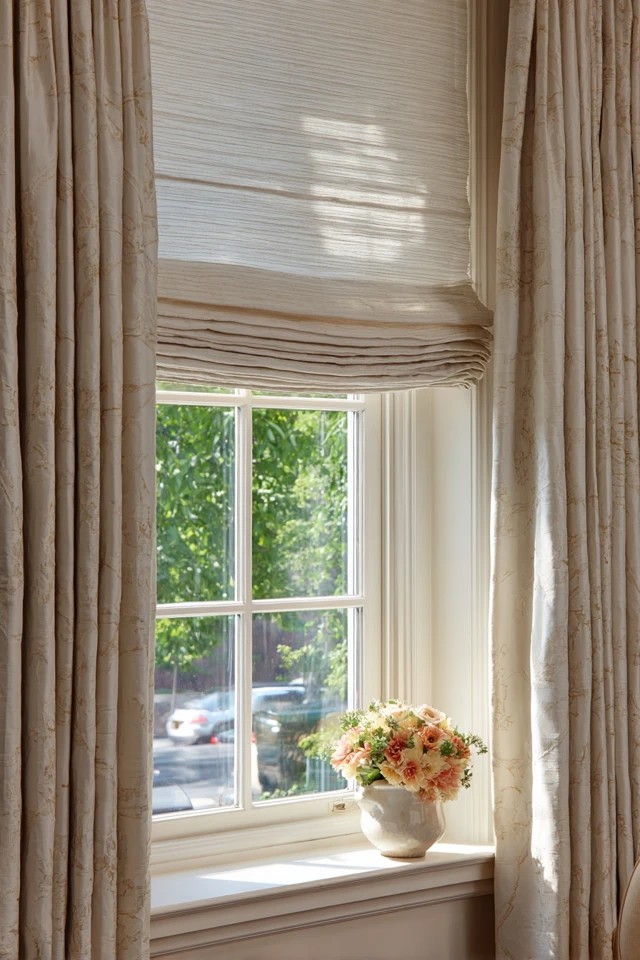
Sunroom curtains occupy a unique position in the world of window treatments — they must manage the intense UV exposure and heat that glass-enclosed rooms generate while contributing the textile softness and decorative character that transforms a functional space into a beautiful one. The right curtain choice balances practical light control with aesthetic purpose in a room where both demands are unusually high.
Here are 20 sunroom curtain ideas spanning sheer panels, velvet drapes, bamboo shades, motorised systems, and botanical prints — each one offering a different approach to the essential sunroom challenge of living beautifully with abundant natural light.
1. Sheer White Linen Panels for Light-Filtering Elegance
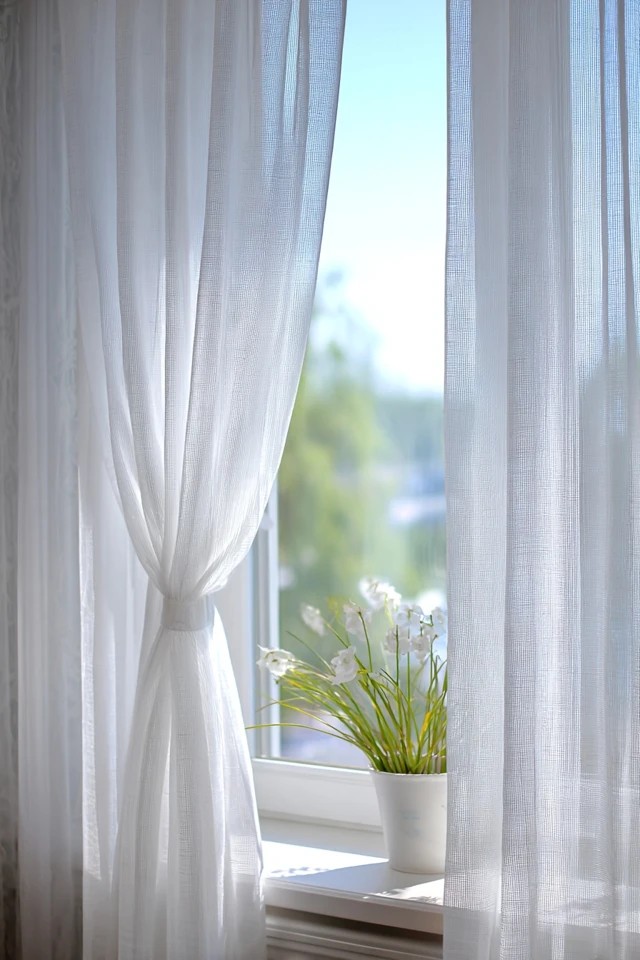
Sheer white linen or voile panels are the quintessential sunroom curtain choice — they soften intense direct light into a diffused, golden glow without sacrificing the room’s essential brightness and connection to the outdoors.
- Choose a rod width 12 inches wider than the window on each side so panels clear the glass completely when open.
- Select a linen weight of 100-150gsm for the most beautiful drape and light diffusion quality.
- Hang sheer panels from ceiling to floor even on smaller windows for maximum visual height and elegance.
2. Floor-to-Ceiling Drapes for Dramatic Full-Height Coverage
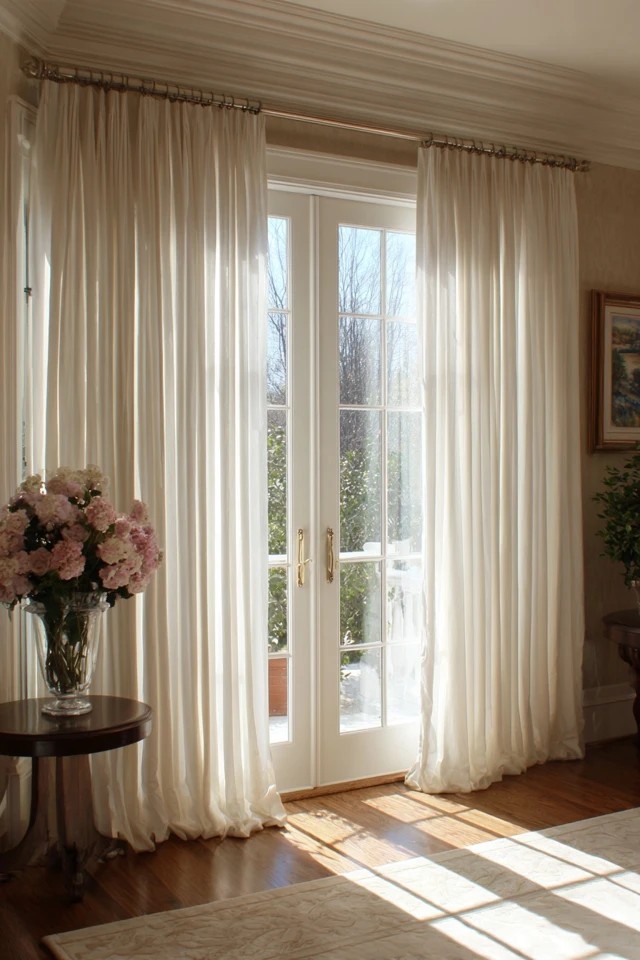
Floor-to-ceiling drapes — panels that run from the highest possible mounting point all the way to the floor — create the most architecturally impactful sunroom curtain statement available. The full-height format draws the eye upward and makes the sunroom’s glazed walls feel even more generous and impressive than their actual dimensions.
- Mount the curtain rod as close to the ceiling as possible — ideally within two inches of the ceiling line.
- Allow panels to be 2.5 times the window width in total fabric for generous, full folds when gathered.
- Choose a fabric with enough body to drape well over the full length — lightweight sheers pool unattractively.
3. Layered Sheers and Heavier Panels for Flexible Light Control
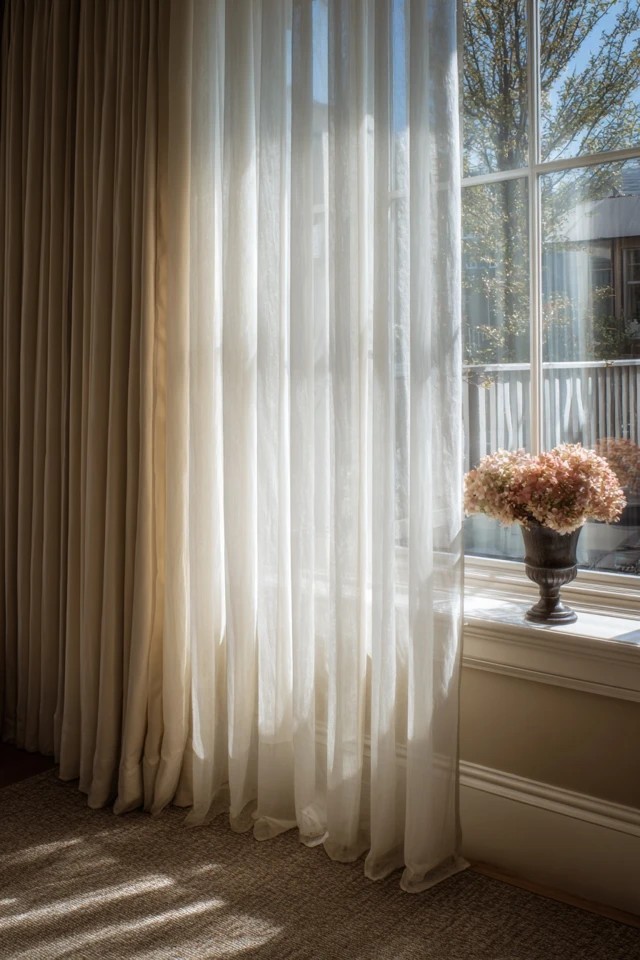
A double-track system with sheer panels on the inner track and heavier opaque panels on the outer track creates the most flexible sunroom curtain solution — sheers alone for soft diffused light, opaques alone for privacy and heat control, both together for full darkness when needed.
- Use a double ceiling track rather than two separate rods for the cleanest, most integrated layered look.
- Choose sheer and opaque fabrics in the same colour family so both layers work harmoniously together.
- Ensure the heavier outer panel is long enough to fully cover the sheer when both are closed.
4. Neutral Beige Linen for Warm Natural Window Dressing
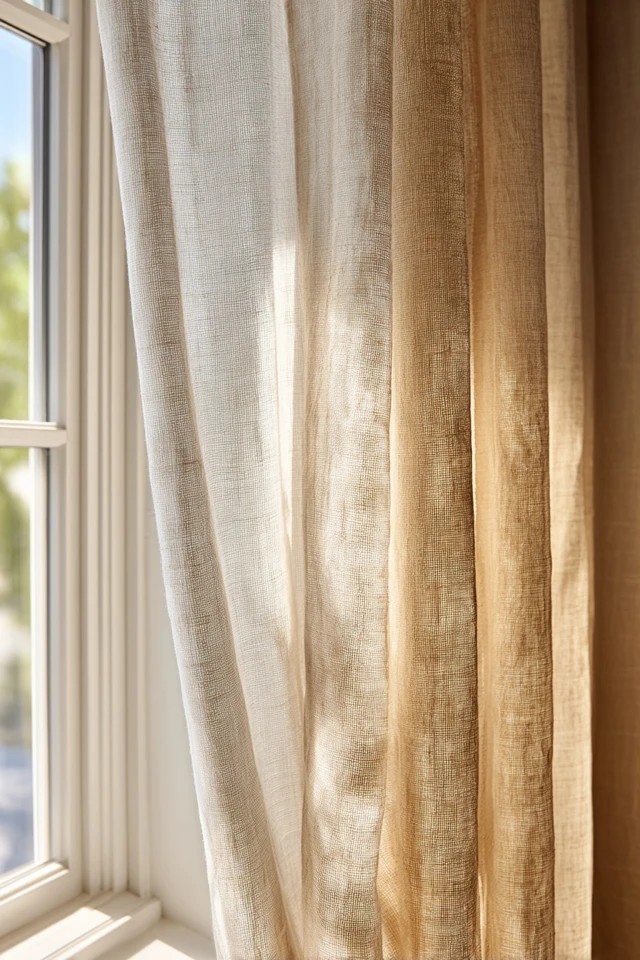
Sand, oatmeal, or warm beige linen curtains bring an organic warmth to the sunroom that white panels cannot achieve — the natural tone filters light with a honey warmth rather than a cool brightness, creating a slightly warmer and more enveloping atmosphere.
- Choose 100% linen or a linen-cotton blend for the most authentic natural texture and drape quality.
- Wash linen curtains before hanging to pre-shrink the fabric and soften the texture for better movement.
- Allow a slight break on the floor for an effortlessly casual finish that suits the relaxed sunroom aesthetic.
5. Grommet-Top Panels for Contemporary Hanging Style
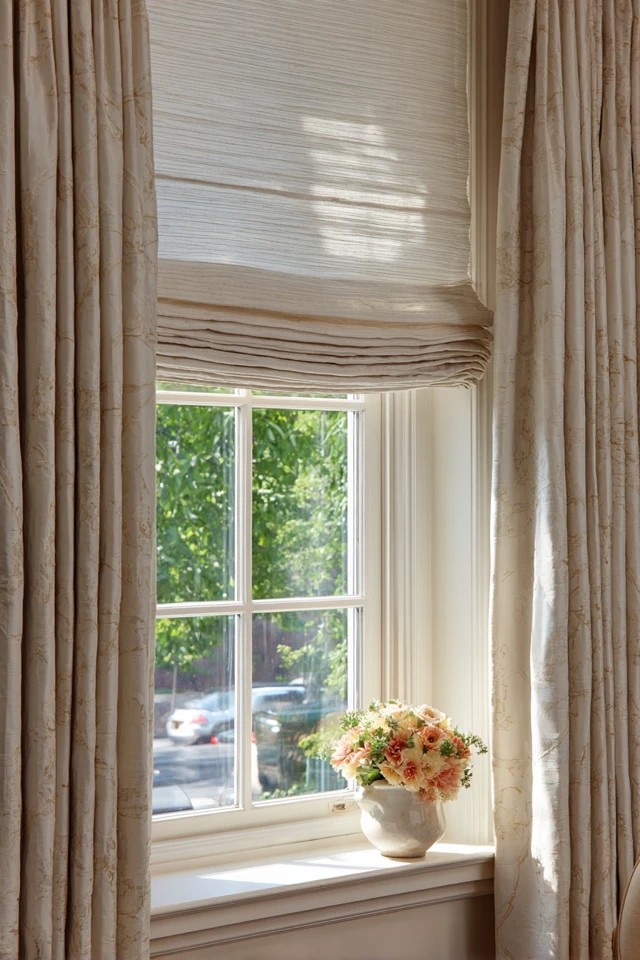
Grommet-top curtain panels with metal-ringed header openings create the clean, contemporary hanging style that suits modern sunrooms best — the evenly spaced rings form architectural ripple folds that look crisp and intentional rather than gathered or ruffled.
- Choose grommet rings in a metal finish that coordinates with the window frames and other hardware in the room.
- Select a medium-weight fabric for grommet panels — too light and the folds collapse; too heavy and the rings strain.
- Ensure the rod diameter fits the grommet ring opening — too loose creates sloppy folds; too tight prevents smooth sliding.
6. Botanical Print Fabric for Garden-Inspired Decorative Charm
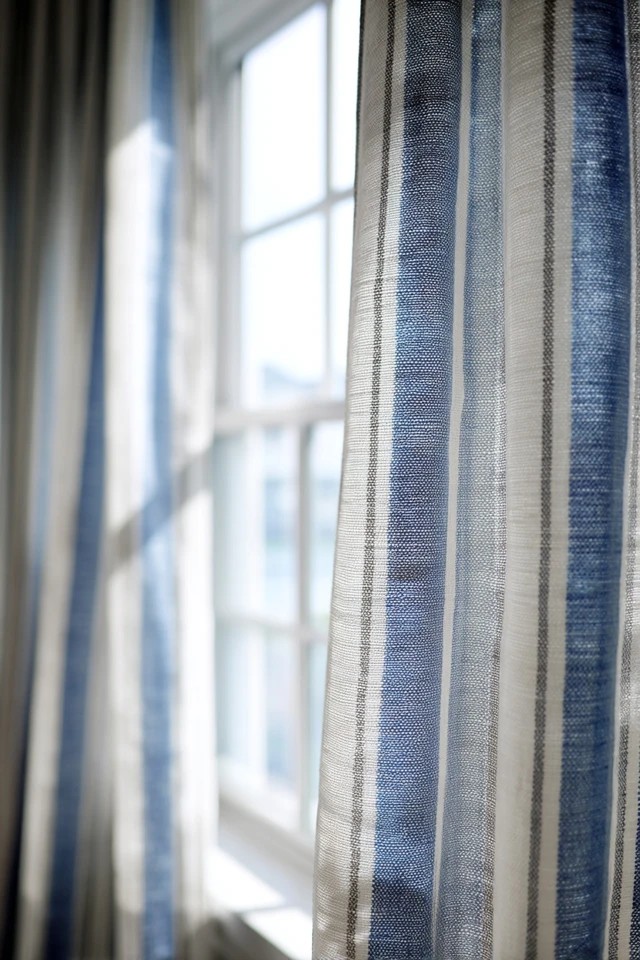
Botanical print curtains — large-leaf tropical patterns, delicate pressed-flower designs, or oversized floral prints — bring the garden indoors through the window treatment itself, creating a layered connection to the outdoor world visible beyond the glass.
- Choose a botanical print in a colourway that echoes the actual plants visible through the sunroom windows.
- Select a fabric scale proportional to the window size — large prints need large windows to read correctly.
- Use the curtain’s background colour as the wall colour for a fully coordinated, designer-quality scheme.
7. Tie-Top Panels for Casual Cottage Window Character
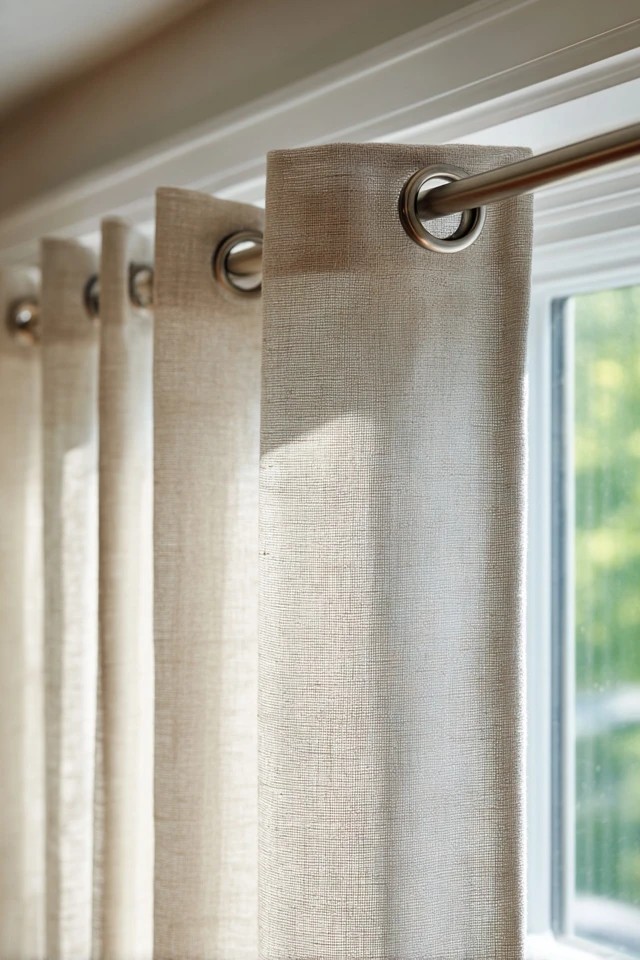
Curtain panels that attach to the rod via fabric ties — knotted or bow-tied over a simple wooden or iron rod — bring the most handmade, cottage-like character of any curtain heading style.
- Tie each panel bow loosely and consistently so the gathers fall in an even, relaxed pattern across the rod.
- Choose a rod with a rustic or painted finish — natural wood or white iron — that complements the fabric ties.
- Iron the tie-top panels before hanging to remove packaging creases that disrupt the casual drape quality.
8. Roman Shades for Tailored Folding Sophistication
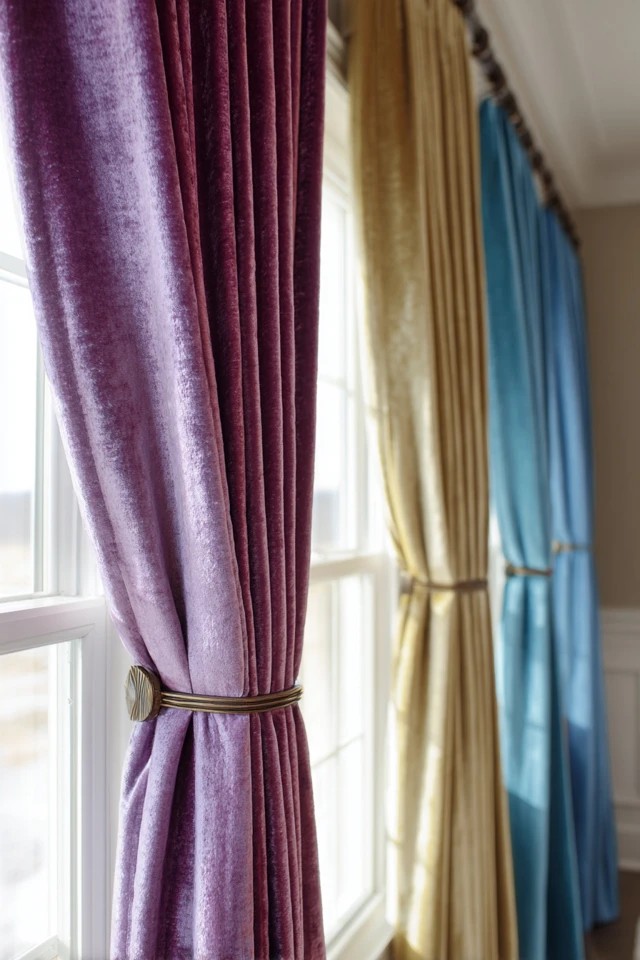
Roman shades raise into neat horizontal folds and lower to a flat, unbroken fabric panel — creating a window treatment with the tailored sophistication of a structured blind and the warmth of fabric in a single, space-efficient system.
- Mount Roman shades inside the window reveal for the cleanest, most architectural look.
- Choose a blackout lining option for shades on south or west-facing windows prone to afternoon overheating.
- Select a fabric with enough body to hold the horizontal fold lines crisply when fully raised.
9. Striped Panels for Coastal Graphic Window Accent
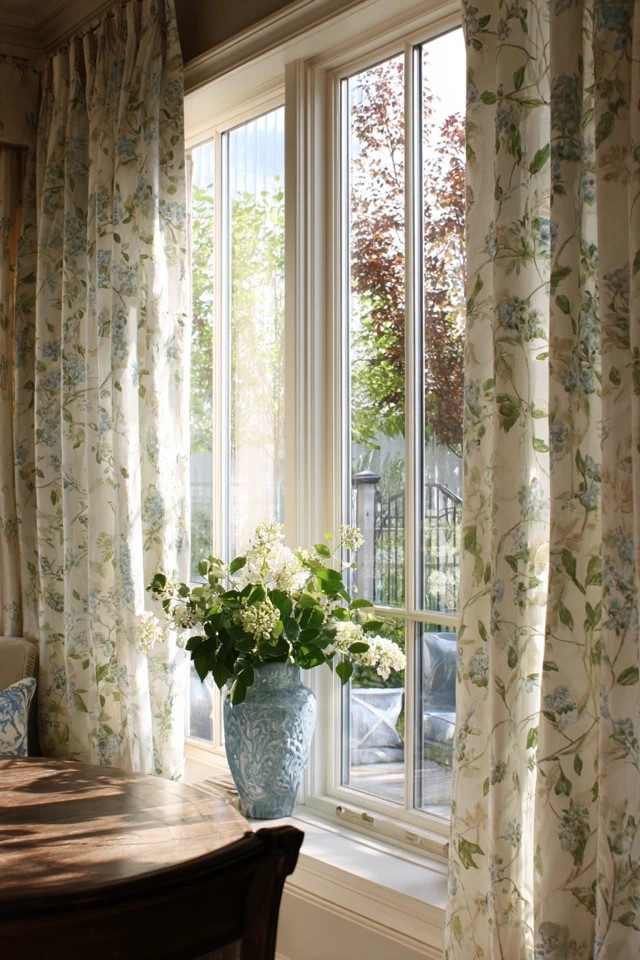
Blue-and-white or grey-and-white striped curtain panels bring the clean, graphic quality of coastal design to the sunroom window — the vertical lines extending from rod to floor create an impression of added height while the nautical colour combination connects the room to the seaside aesthetic with unmistakable clarity.
- Choose vertical rather than horizontal stripes to visually elongate the window and room height.
- Select a stripe width proportional to the window — narrow stripes on small windows, bold stripes on large ones.
- Keep all other textiles solid to allow the striped curtains to carry the room’s pattern interest alone.
10. Café-Style Half Panels for Cottage Privacy Without Blocking Light
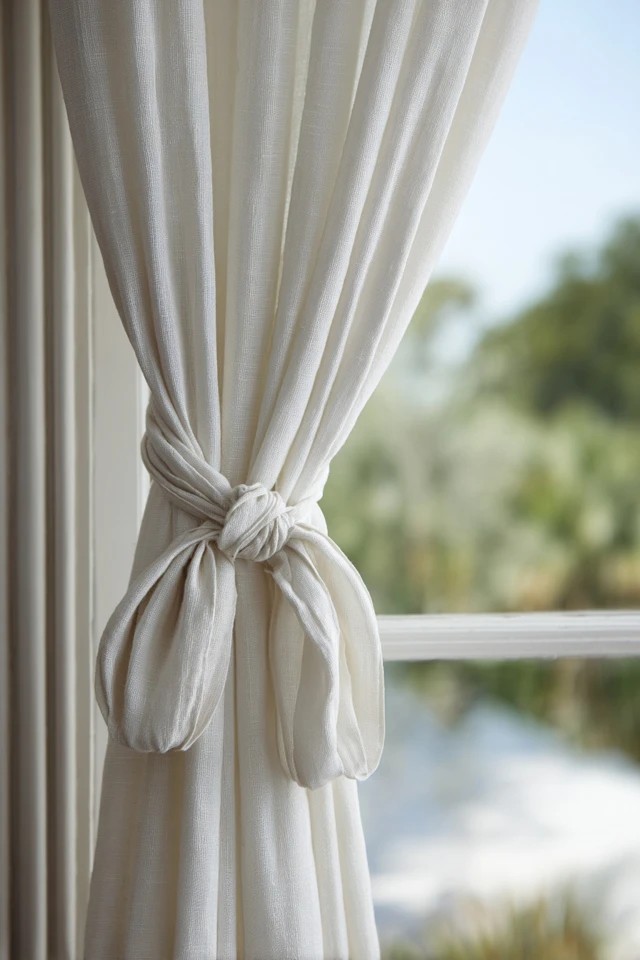
Café-style curtains — panels that cover only the lower half of a window — solve the sunroom’s privacy challenge with elegant economy: seated occupants are screened from outside view while the upper half of each window remains completely open to natural light.
- Mount the café rod precisely at window mid-height so seated eye level is fully screened from outside.
- Choose a sheer or semi-sheer fabric for the lower panels so privacy is achieved without darkness below.
- Add a simple top valance above the café curtains to complete the window frame with a finished edge.
11. Velvet Drapes for Luxurious Textural Window Dressing
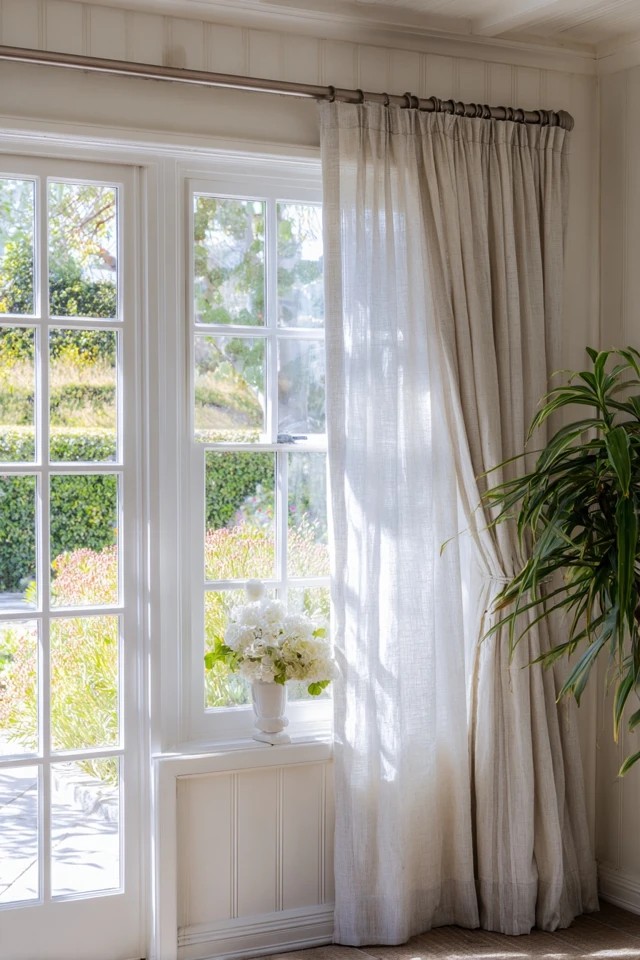
Velvet curtains in jewel tones — deep teal, plum, forest green, or burgundy — bring a tactile luxury to the sunroom window treatment that no other fabric can match.
- Choose a velvet with a high pile density for the most sumptuous drape and richest colour depth.
- Protect velvet curtains from prolonged direct sunroom sunlight — prolonged UV exposure flattens and fades the pile.
- Use a velvet brush to restore pile direction and remove dust regularly to maintain the fabric’s characteristic sheen.
12. Pinch-Pleat Heading for Traditional Tailored Elegance
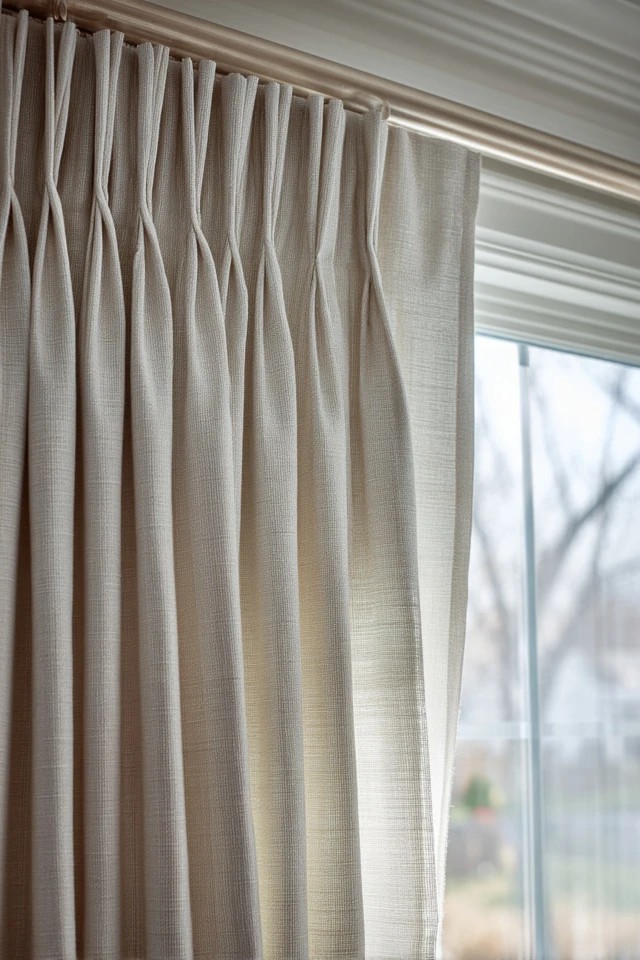
The pinch-pleat curtain heading — groups of fabric gathered and pinched at regular intervals to form structured pleats — creates the most traditionally tailored and formally elegant of all curtain heading styles.
- Allow at least 2.5 times the window width in total fabric for correctly proportioned pinch-pleat fullness.
- Hand-press each pleat group with a warm iron when hanging to set the folds in precise, even formation.
- Use a traverse rod for pinch-pleat panels to allow smooth, fabric-friendly opening and closing action.
13. Colour-Block Panels for Modern Graphic Window Statement
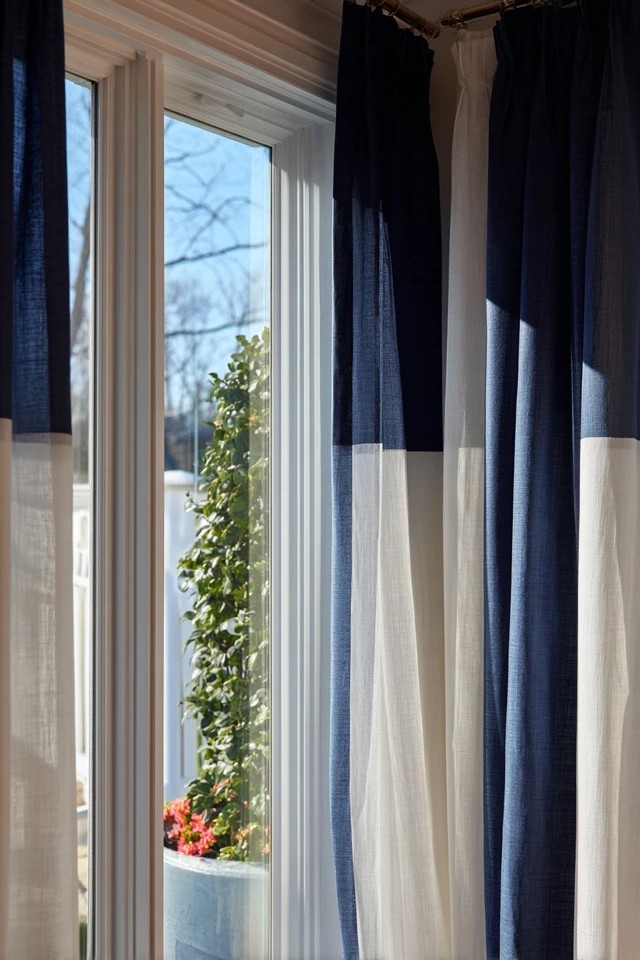
Curtain panels constructed in two contrasting colour blocks — a pale upper section and a deeper lower section, or a neutral body with a bold border band — create a contemporary graphic statement that treats the window treatment as an object of design rather than merely a functional cover.
- Create colour-block panels by sewing two fabric sections together with a flat seam pressed open for the cleanest join.
- Position the colour transition point at the same height as a strong horizontal element in the room — a shelf line or window sill.
- Keep the colour combination to two tones for maximum graphic impact and modern restraint.
14. Outdoor-Grade Fabric for Weather-Resistant Durability
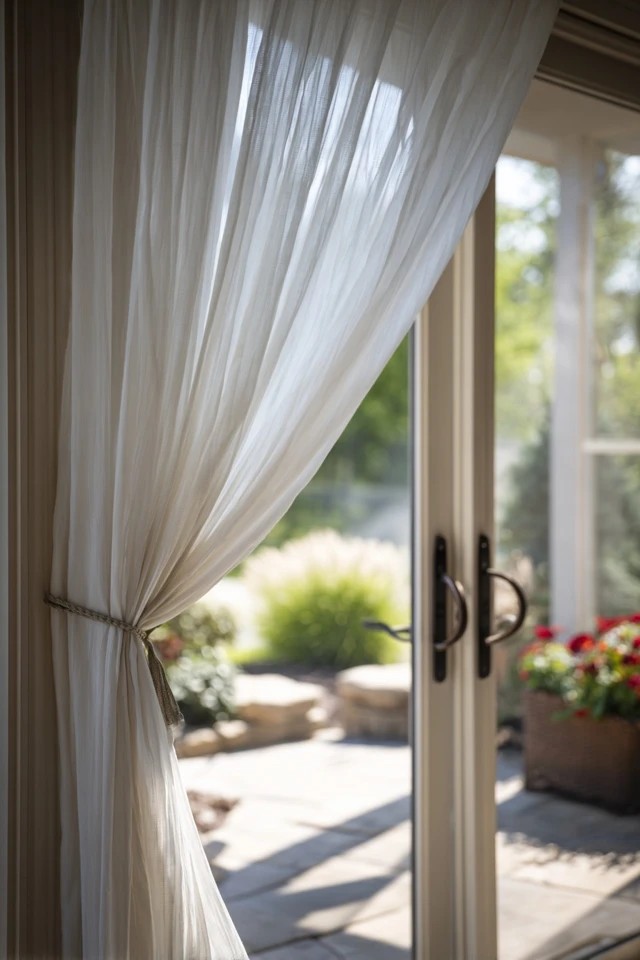
Outdoor performance fabric — solution-dyed acrylic, polyester canvas, or UV-stabilised Sunbrella-type material — is the most practically intelligent choice for a sunroom where curtains are exposed to levels of UV radiation that would fade conventional interior fabrics within a single season.
- Choose solution-dyed fabrics where colour is baked into the fibre rather than printed on the surface for maximum fade resistance.
- Select marine-grade brass or stainless steel hardware to prevent rust on components near outdoor-grade curtains.
- Clean outdoor fabric curtains by hosing them down or wiping with a damp cloth rather than dry cleaning.
15. Bamboo Panels for Natural Textured Window Shade
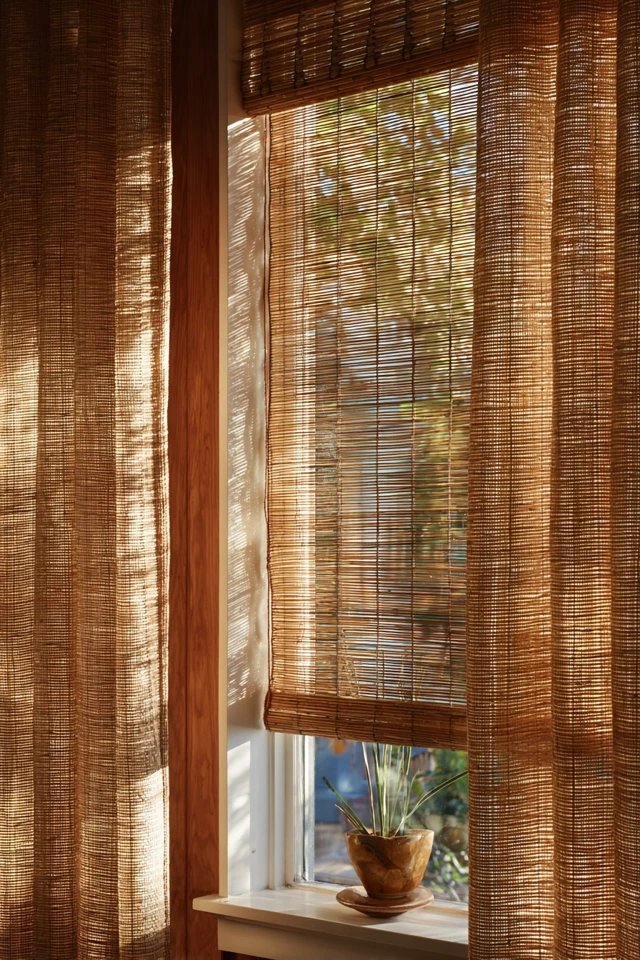
Woven bamboo panels create a natural, organic window shade that filters sunroom light into warm-toned stripes across the floor and furniture — a quality of light that is entirely different from the smooth diffusion of fabric curtains.
- Choose a tighter bamboo weave for rooms needing more sun control; looser weaves for light filtering with maximum view preservation.
- Use a cord lock mechanism rather than a standard cord for safer, child-friendly operation.
- Add a roller liner behind bamboo panels for blackout capability without changing the exterior appearance.
16. Thermal-Backed Fabric for Year-Round Climate Control
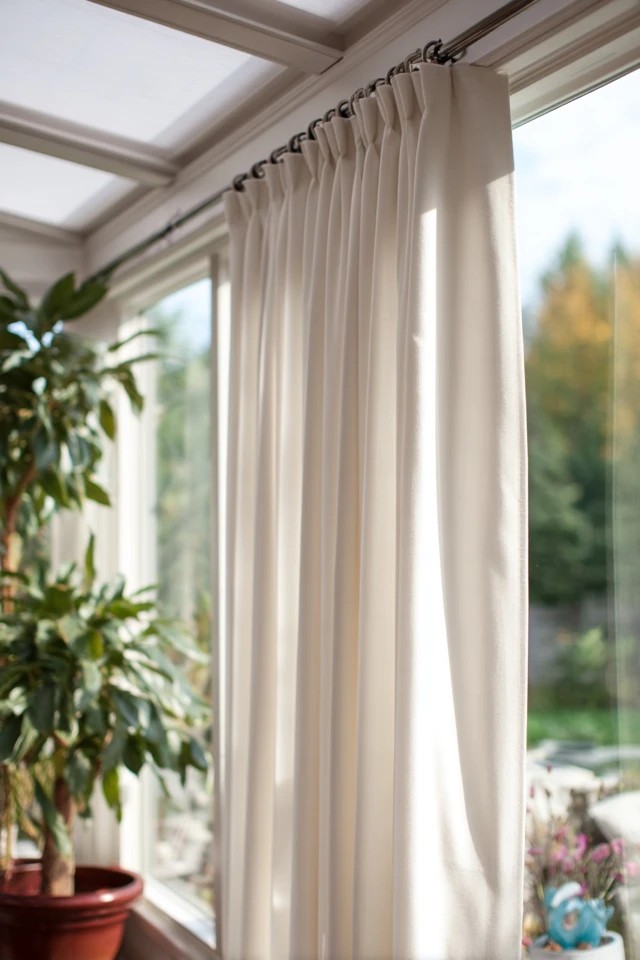
Curtains with a thermal backing — a layer of reflective or foam-lined fabric bonded to the rear of the curtain panel — provide meaningful insulation in a room where glass walls lose heat rapidly in winter and gain it aggressively in summer.
- Close thermal curtains after sunset in winter to retain the day’s solar heat gain through the glass.
- Close thermal curtains on east and west-facing glass during peak morning and afternoon sun hours in summer.
- Choose a thermal curtain with a decorative face fabric so the insulating function does not compromise the room’s aesthetic.
17. Embroidered Curtains for Artisan Decorative Sophistication
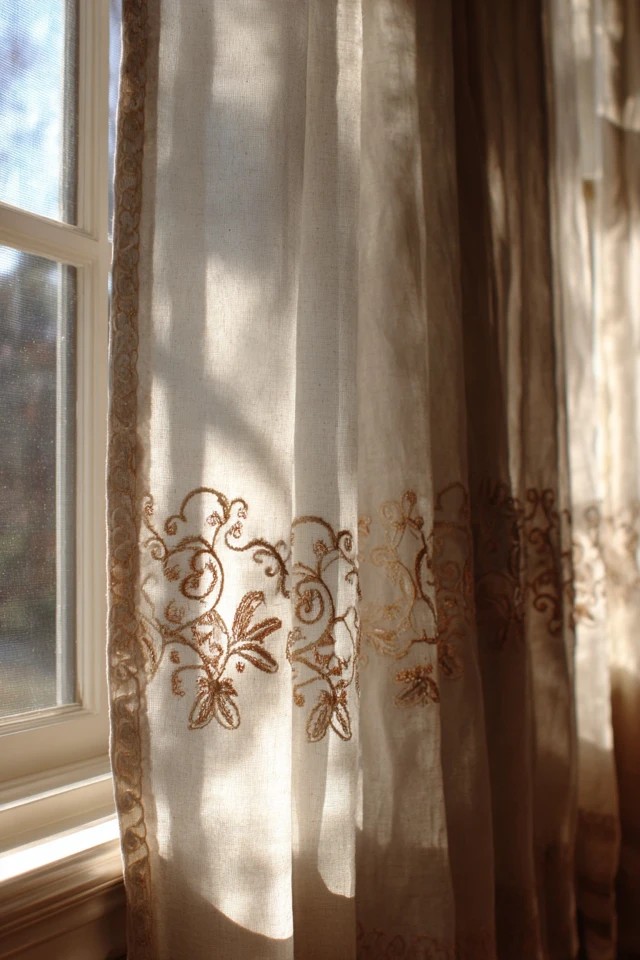
Curtain panels with embroidered borders, scattered floral motifs, or geometric embellishments bring an artisan quality to the sunroom window treatment that plain fabric cannot achieve.
- Position embroidered panels so the embroidery detail falls at eye level when the curtains are in the open position.
- Choose hand-wash or gentle machine-wash embroidered curtains rather than dry-clean only for practical everyday maintenance.
- Select embroidery thread in a slightly warmer tone than the ground fabric so the detail reads clearly in natural light.
18. Motorised Curtains for Smart Home Integration
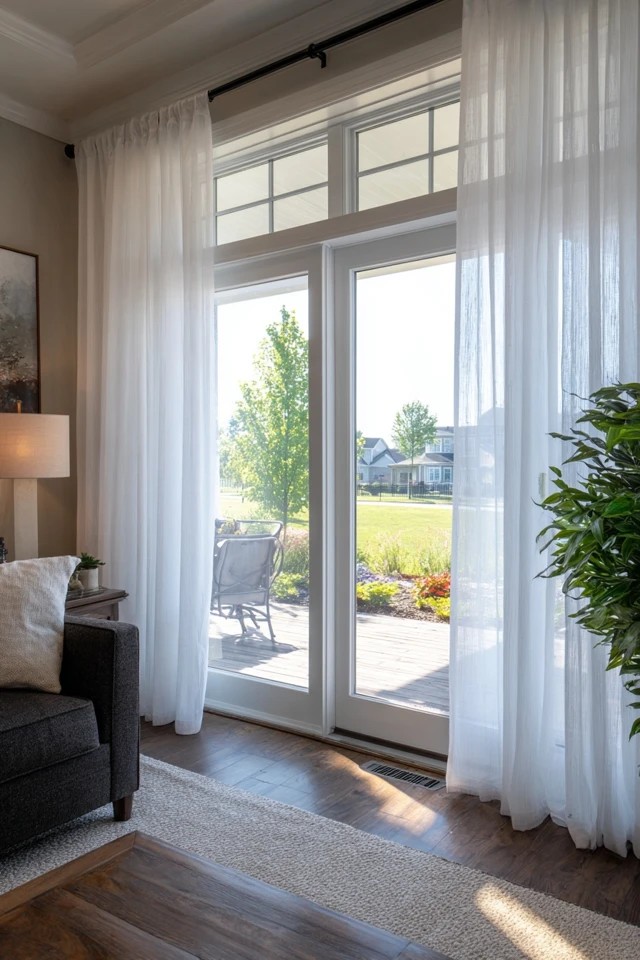
A motorised curtain system — with panels opening and closing via remote, smartphone app, or programmed schedule — is the most practically convenient sunroom curtain solution available, allowing light management without leaving the reading chair or interrupting a meeting.
- Programme motorised curtains to close automatically during peak afternoon sun hours for passive climate management.
- Choose a system compatible with your existing smart home ecosystem — Apple HomeKit, Google Home, or Amazon Alexa.
- Install the motor in a recessed ceiling pocket above the window reveal for the cleanest possible installation.
19. Contrasting Trim or Border for Custom Designer Detail
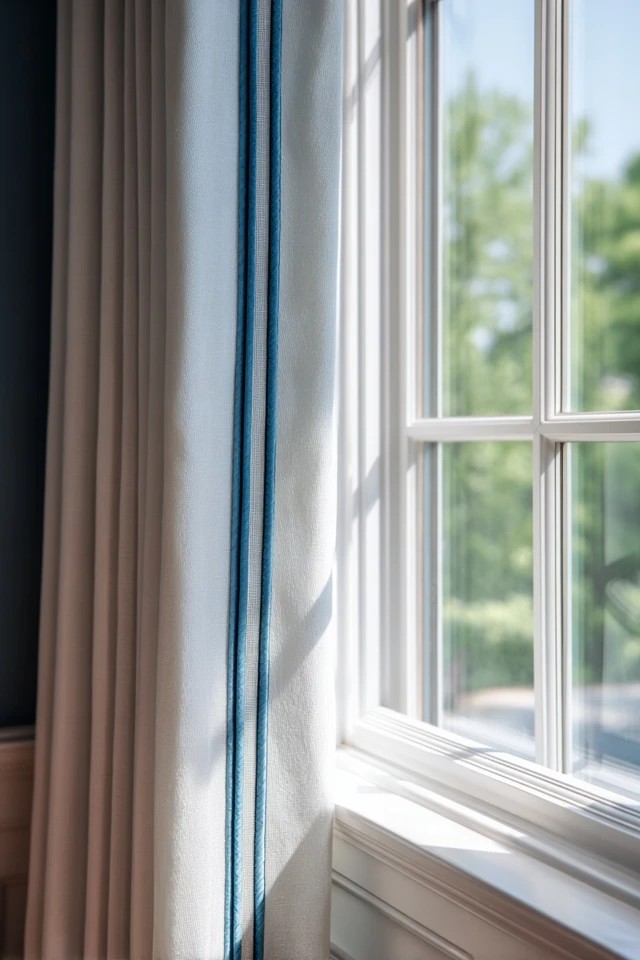
A contrasting trim — a band of deeper or complementary colour sewn along the leading edge, hem, or border of a curtain panel — gives a simple fabric treatment the custom, designer-made quality of a professionally produced window covering.
- Apply contrasting trim to the leading edge and hem only — all four sides creates a frame that can look overly formal.
- Choose a trim width of 2-4 inches for standard curtain panels — wider trims suit floor-to-ceiling installations best.
- Repeat the trim colour in one other room element — a cushion, a lampshade — to connect the detail to the overall scheme.
20. Extra-Long Puddle Panels for Romantic Flowing Luxury
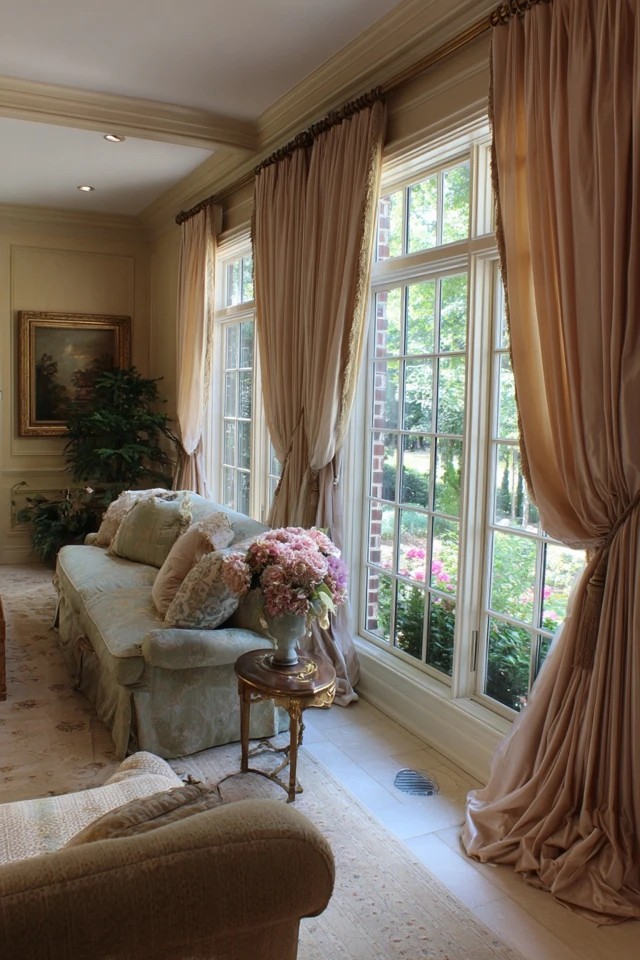
Curtain panels cut two to four inches longer than floor level — allowed to pool softly on the floor in generous fabric puddles — create a deliberately opulent, romantic window treatment that signals complete design confidence.
- Use a heavier fabric for puddle panels — at least 200gsm — so the floor pool has sufficient mass and body.
- Fluff and reshape the floor puddle regularly as foot traffic and air movement disturb the fabric arrangement.
- Reserve puddle-length curtains for rooms with hard flooring — carpet prevents the fabric from spreading correctly.
Why These Sunroom Curtain Ideas Excel
Every curtain idea on this list succeeds because it addresses the sunroom’s specific and demanding requirements: exceptional UV exposure that fades ordinary fabric, intense heat gain that requires thermal management, and the need to preserve the room’s defining connection to natural light while providing genuine privacy and sun control when needed.
Fabric selection is the most consequential decision in sunroom curtain design. Conventional interior fabrics — cotton prints, linen blends, standard polyester — fade significantly within one to two years of sustained sunroom UV exposure. Outdoor-grade solution-dyed fabrics, velvet with UV-protective lining, and bamboo panels all resist this degradation far more effectively, making fabric durability an investment consideration as important as aesthetics in any sunroom curtain project.
Heading style determines not just the curtain’s visual character but its practical performance. Grommet and eyelet tops slide smoothly for frequent daily use; pinch pleats create formal fullness for curtains that are set and rarely adjusted; Roman shades provide precise light control without any gathered fabric; tie-tops add casual handmade charm for rooms where frequent adjustment is not required. Matching the heading style to the actual daily use pattern of the curtains is what makes sunroom window treatments function well over the long term.
Light management strategy — whether maximising diffusion through sheers, controlling heat through thermal backing, enabling complete blackout through layering, or preserving the view through bamboo — is the functional design decision that all aesthetic choices should serve. The most successful sunroom curtain ideas are those where the functional strategy and aesthetic intention are aligned from the start, producing window treatments that work as well as they look.
Conclusion
Sunroom curtains are the room’s most versatile and impactful design element — capable of transforming harsh direct light into gentle ambiance, protecting furniture and fabrics from UV damage, providing privacy without sacrificing brightness, and adding the essential textile softness that a glass-walled room needs to feel genuinely comfortable and complete. Choose the curtain style that serves your sunroom’s specific light conditions and aesthetic vision, invest in quality fabric and hardware, and install with care — the result will be a sunroom that functions beautifully at every hour of the day and in every season of the year.

Andrew is the founder and lead writer at RoomBlossom, a home decor publication dedicated to practical, intentional interior design. With over 10 years of hands-on experience transforming real-world living spaces — from compact apartments to full attic conversions — Andrew specialises in room design that balances visual appeal with everyday function. His work spans living rooms, bedrooms, sunrooms, and attic spaces, always guided by the belief that great design should work for the people who live in it, not just look good in photographs.