
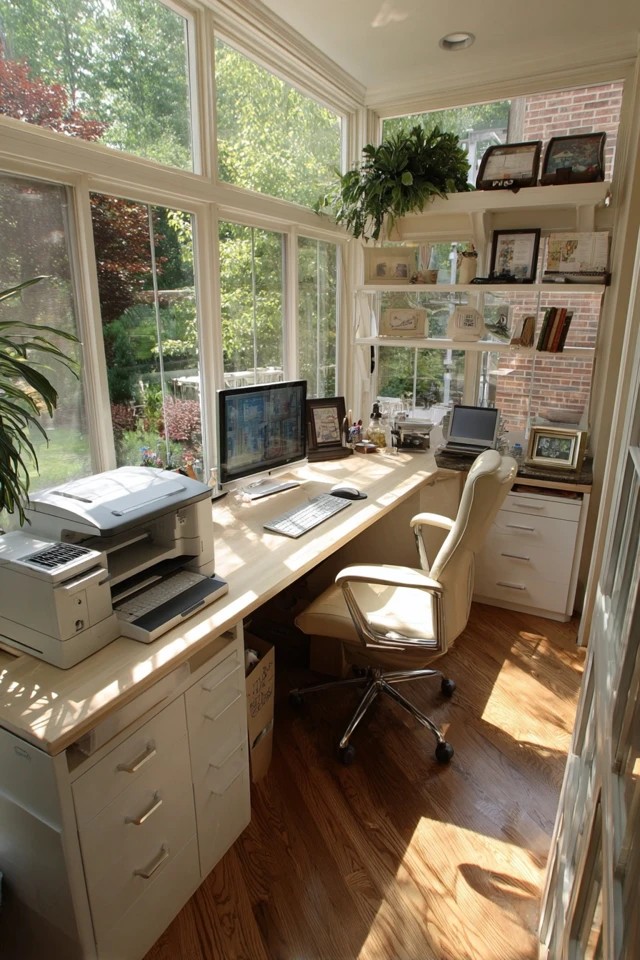
A sunroom office is one of the most enviable home workspace setups available — natural light floods the desk from multiple angles, outdoor views provide restorative micro-breaks between tasks, and the glass-enclosed environment creates a focused atmosphere that interior rooms rarely achieve. Working in natural light has measurable benefits for mood, energy, and concentration throughout the day.
Here are 20 sunroom office ideas covering desk placement, ergonomics, storage, tech setup, and décor — each one designed to help you build a home office that is as productive as it is beautiful.
1. Desk Positioned Near Windows for Natural Light
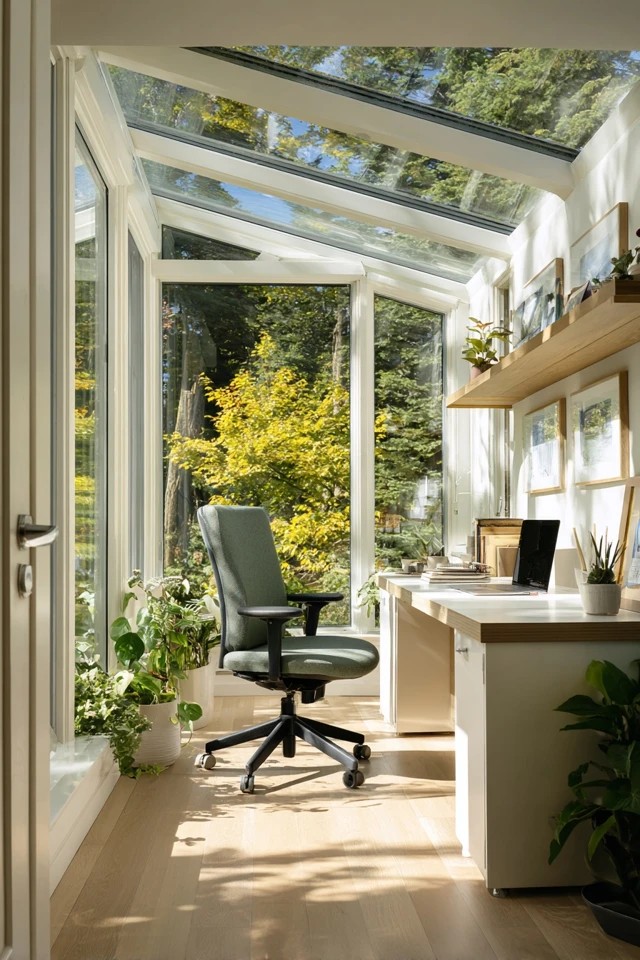
Positioning the desk to face or sit adjacent to the sunroom’s glass walls puts natural daylight exactly where it most benefits work — illuminating the desk surface and reducing eye strain throughout the day. Pairing the window view with a clean, minimal desk setup creates a workspace that feels genuinely inspiring rather than merely functional.
- Position the desk so windows are to the side rather than directly behind the monitor to avoid backlighting glare.
- Choose a desk in a light wood or white finish to reflect rather than absorb natural daylight.
- Keep the view line to the window clear of tall accessories that block the connection to the outdoors.
2. Built-In Wall Desk for Integrated Workspace
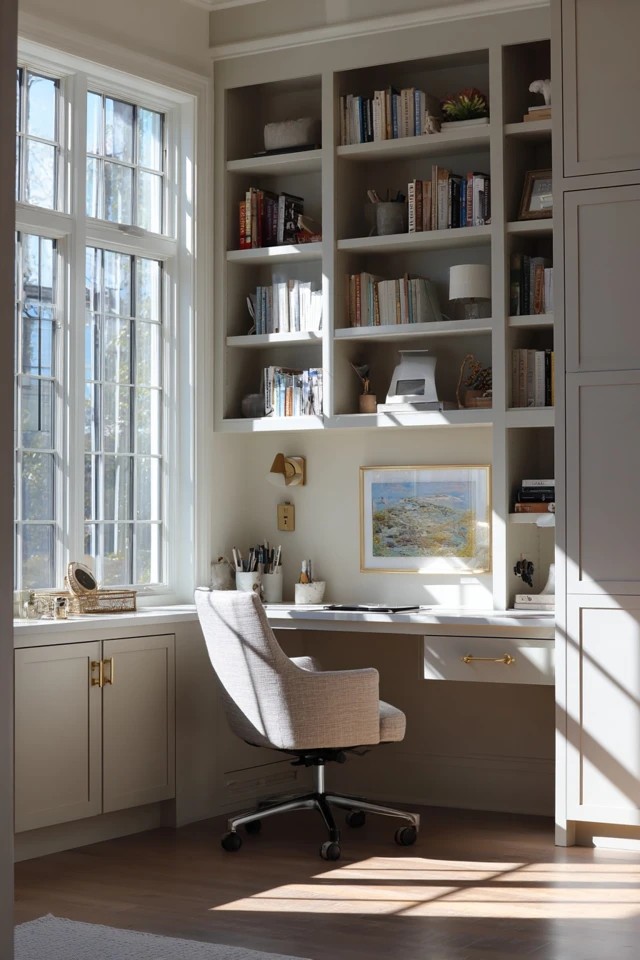
A wall-mounted desk with integrated cabinets and shelves above creates a permanently organized workspace that uses vertical space efficiently and keeps the sunroom floor clear.
- Build the desk surface at 29-30 inches height for standard seated ergonomics.
- Include at least two closed cabinet doors in the built-in to conceal items that would otherwise create visual clutter.
- Match the built-in finish to the sunroom’s window frames for a cohesive architectural look.
3. Standing Desk for Ergonomic Sit-Stand Flexibility
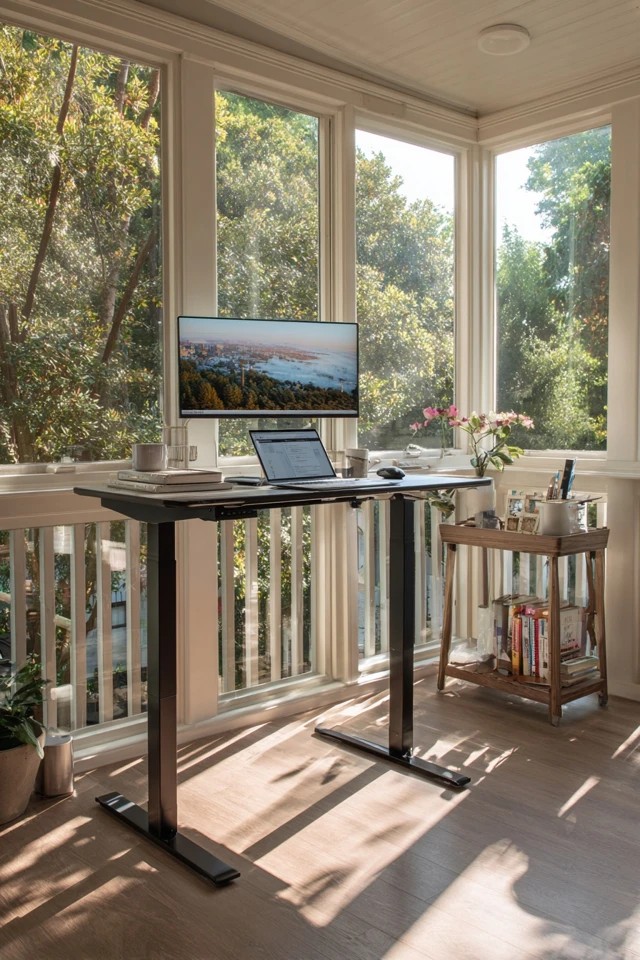
An adjustable-height standing desk lets you alternate between seated and standing positions throughout the workday, reducing the physical cost of prolonged desk work. In a sunroom where natural light and outdoor views already provide energizing benefits, a standing desk amplifies the health-positive atmosphere of the entire workspace.
- Set standing height so elbows rest at 90 degrees with shoulders relaxed when arms are at the desk.
- Use an anti-fatigue mat beneath the standing position to reduce leg and back discomfort over time.
- Program the desk memory settings to your exact sitting and standing heights for instant switching.
4. Filing Cabinet or Storage Credenza for Document Organization
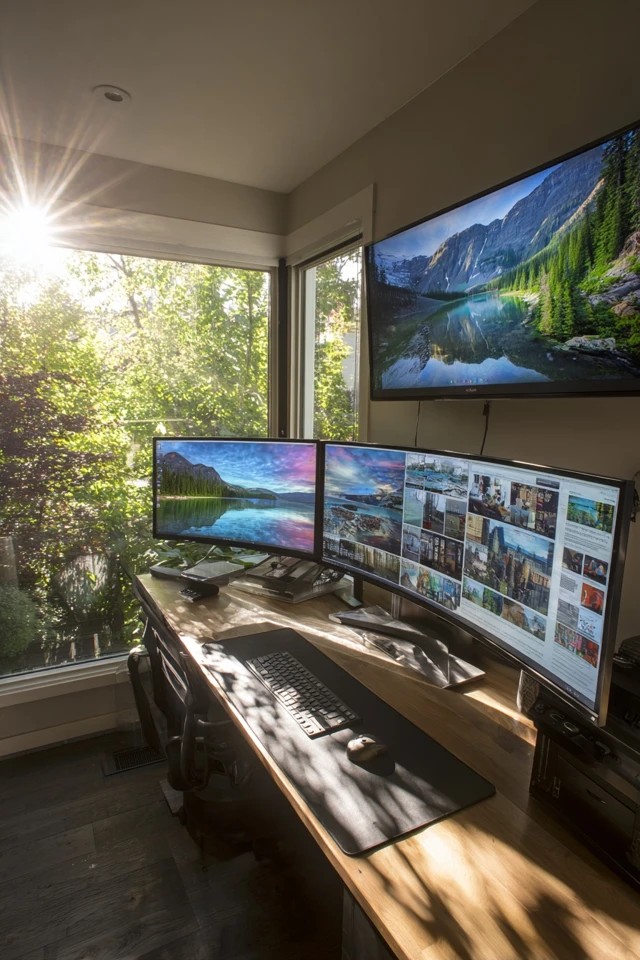
A lateral filing cabinet or low storage credenza gives the sunroom office a professional-grade document organization system that keeps the desk surface clear and the workspace visually calm. Choosing a piece that coordinates with the desk in finish and proportion creates a cohesive office suite rather than a collection of mismatched furniture.
- Place the credenza perpendicular to the desk for easy access without leaving the work chair.
- Use hanging file folders rather than stacked papers inside the cabinet for faster document retrieval.
- Top the credenza with a plant, a lamp, or a framed piece to prevent it from reading as purely utilitarian.
5. Floating Shelves Above Desk for Vertical Storage
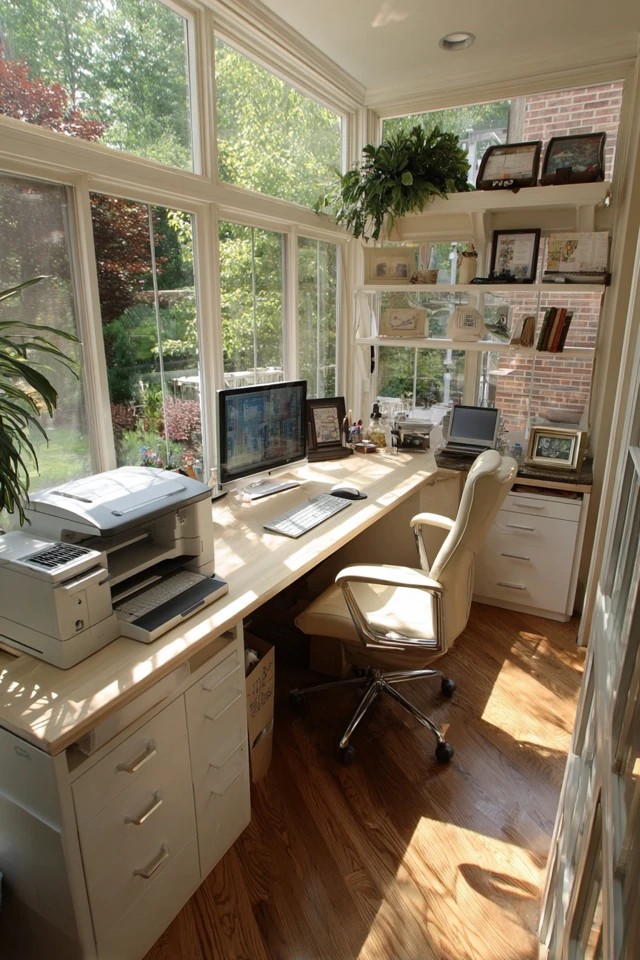
Floating shelves mounted directly above the desk use wall space that would otherwise go to waste, creating accessible storage for reference books, binders, and supplies within arm’s reach of the work surface. The open shelving also provides a curated display backdrop that makes video calls look far more professional.
- Install the lowest shelf at least 18 inches above the desk to maintain comfortable seated clearance.
- Use bookends or small baskets on each shelf to keep items upright and organized visually.
- Limit shelf depth to 10 inches — deep shelves above a desk feel visually oppressive and collect clutter.
6. Dual Monitor Setup for Productive Digital Workflow
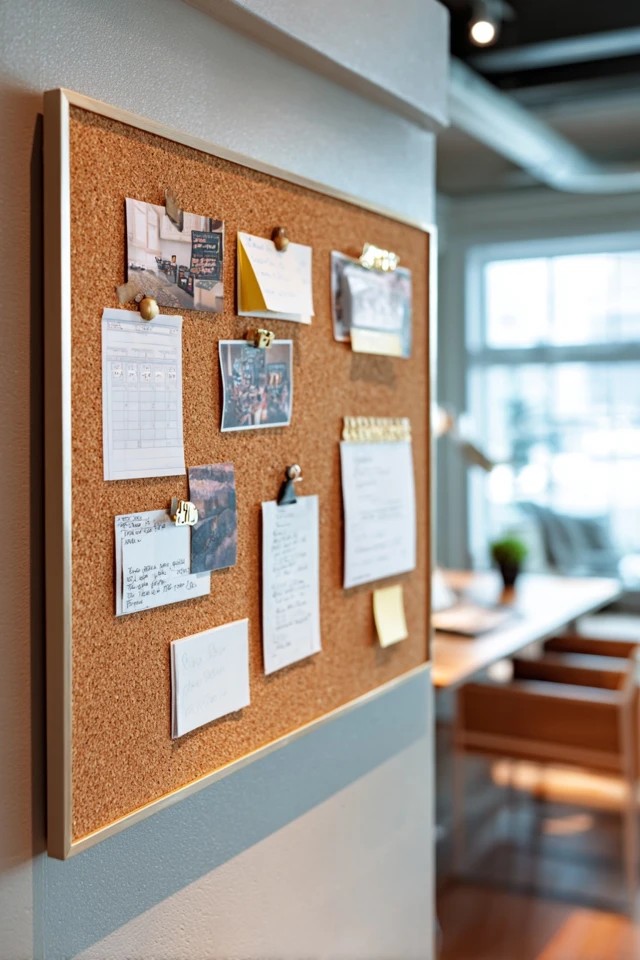
A dual monitor configuration increases the effective screen real estate available for multitasking, document comparison, and complex digital workflows that a single screen cannot support comfortably. In a sunroom office, proper monitor positioning relative to windows prevents the glare that abundant natural light can create on screens.
- Position monitors perpendicular to windows rather than facing them to eliminate reflective glare.
- Use a monitor arm for both screens to free up desk surface and enable precise angle adjustment.
- Match monitor sizes and brands for the most seamless dual-screen visual experience.
7. Task Lamp for Focused Evening Illumination
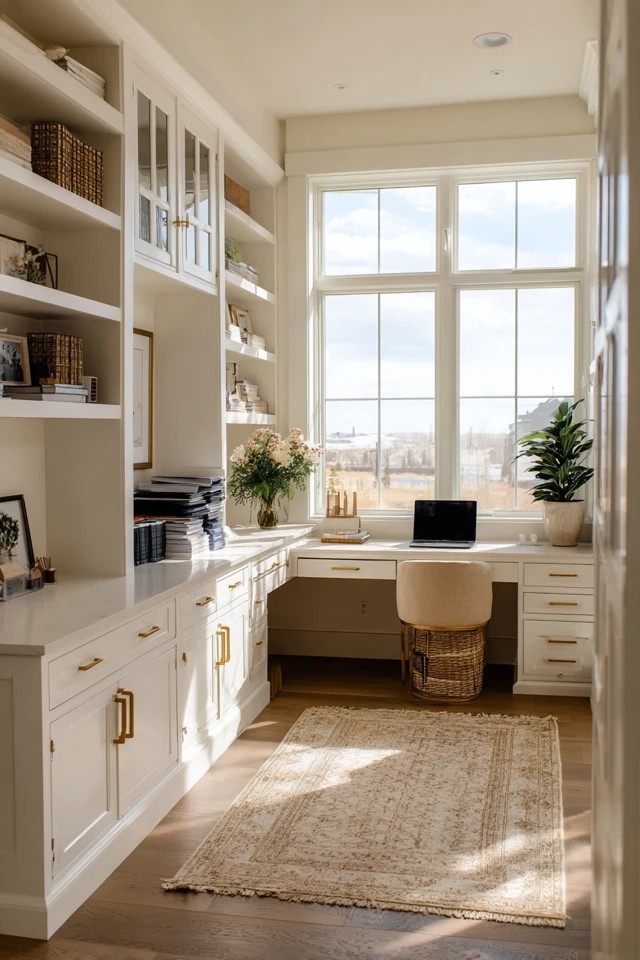
A quality adjustable desk lamp ensures the sunroom office remains fully functional after natural light fades, providing focused task illumination that overhead lighting alone cannot deliver effectively.
- Choose a lamp with at least 450 lumens for sufficient task illumination without eye strain.
- Position the lamp to the non-dominant hand side to prevent the writing hand from casting shadows.
- Select a lamp with a USB charging port built in to reduce desk cable count by one adapter.
8. Ergonomic Chair for All-Day Comfort and Posture
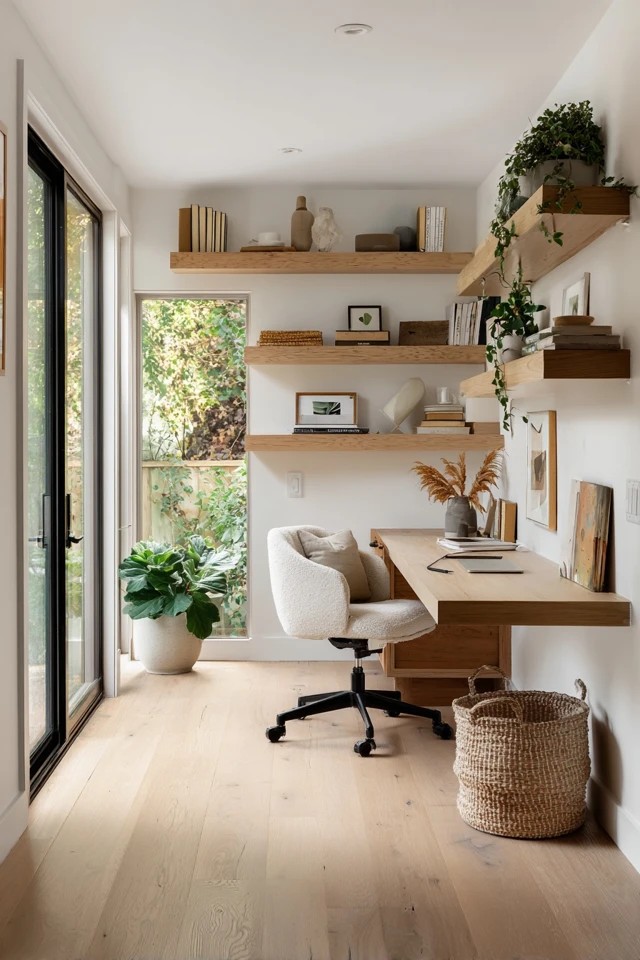
A properly adjusted ergonomic chair with lumbar support, adjustable armrests, and seat depth control is the single most important investment in any home office, and the sunroom office is no exception. No amount of beautiful natural light compensates for a chair that causes back pain after an hour of work.
- Adjust seat height so feet rest flat on the floor and knees are at a 90-degree angle.
- Set lumbar support to contact the natural inward curve of the lower back without pushing it forward.
- Choose a breathable mesh back panel for the sunroom’s potentially warm environment in summer months.
9. Cork Board or Whiteboard for Visual Planning
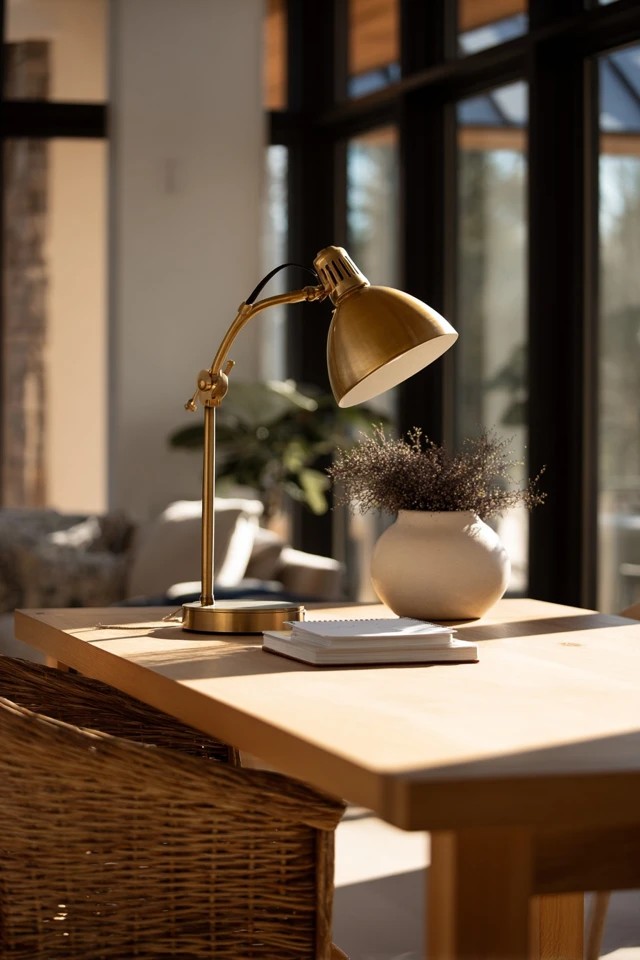
A wall-mounted cork board or whiteboard at eye level from the desk creates a visual planning surface for notes, schedules, and reference materials that would otherwise clutter the desk. Natural sunroom light illuminates the board clearly, making it easy to read and update without repositioning or squinting.
- Mount the board directly in the sightline from the desk chair for effortless reference during work.
- Use a whiteboard for frequently changing information; cork for pinned reference materials that stay longer.
- Frame the board with a simple wood or metal surround so it reads as décor as well as function.
10. Houseplants for Biophilic Workspace Benefits
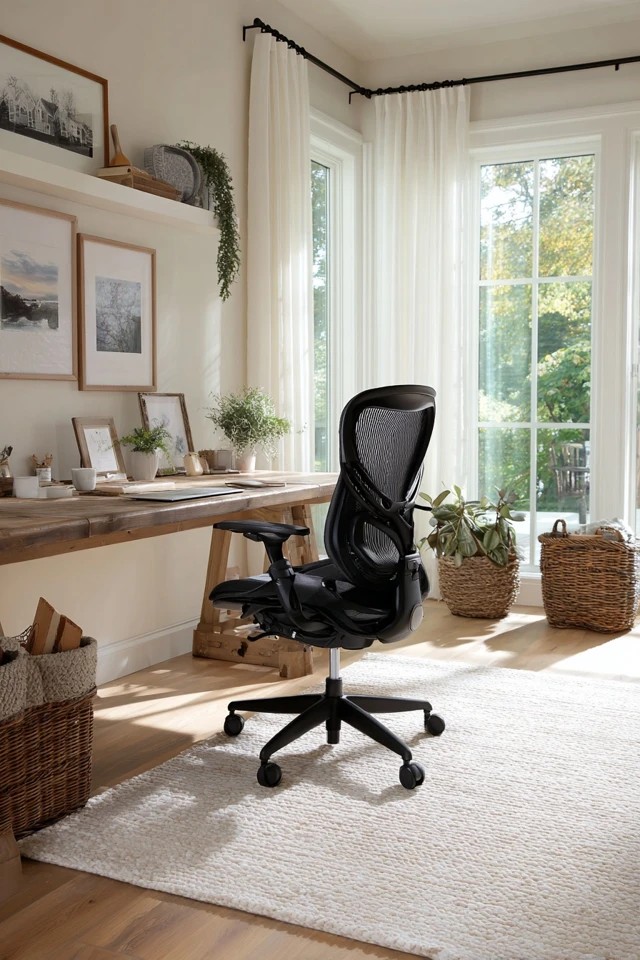
Plants on the desk and shelves bring measurable benefits to the sunroom office environment — reduced stress, improved air quality, and the restorative effect of natural forms during demanding work. The sunroom’s extraordinary natural light supports genuinely healthy, thriving plants that interior offices can rarely sustain.
- Choose low-maintenance species — pothos, ZZ plant, snake plant — that tolerate occasional missed watering.
- Keep desk plants small enough not to obstruct sightlines to the monitor or windows.
- Use self-watering pots for desk plants to prevent overwatering and eliminate water marks on the surface.
11. Window Treatments for Glare Control
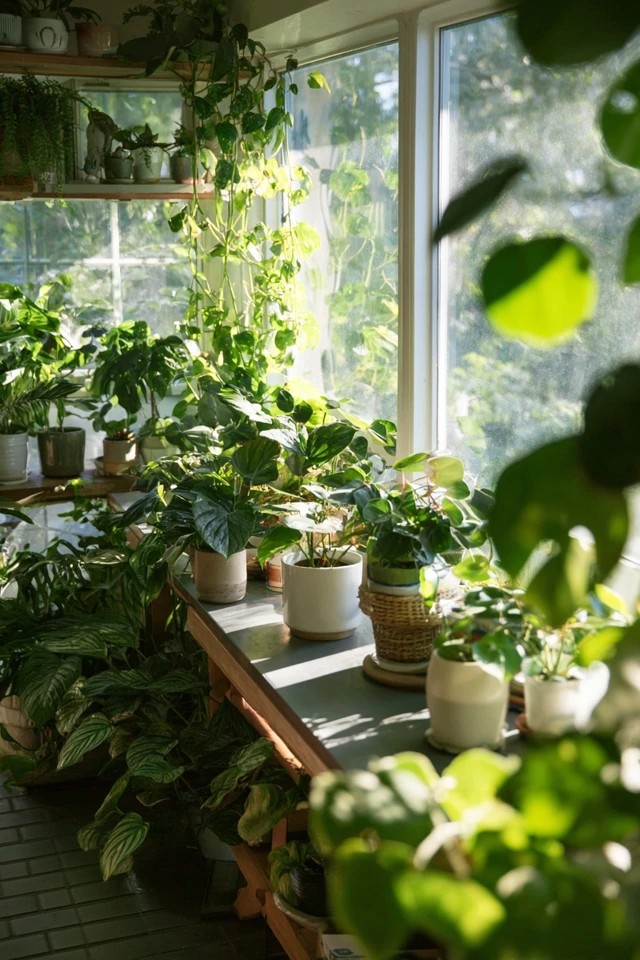
Adjustable solar shades or roller blinds are essential in a sunroom office where direct sunlight can make screens unreadable and create uncomfortable heat at the desk. Solar fabric shades filter UV and visible light while maintaining the outdoor view, striking the ideal balance between brightness and screen usability.
- Choose solar shades with a 3-5% openness factor for the best balance of glare reduction and view preservation.
- Install shades on a motorized track for one-touch adjustment without leaving the desk during work.
- Use shades on west-facing glass specifically — afternoon sun creates the most disruptive screen glare.
12. L-Shaped Desk for Expanded Workspace
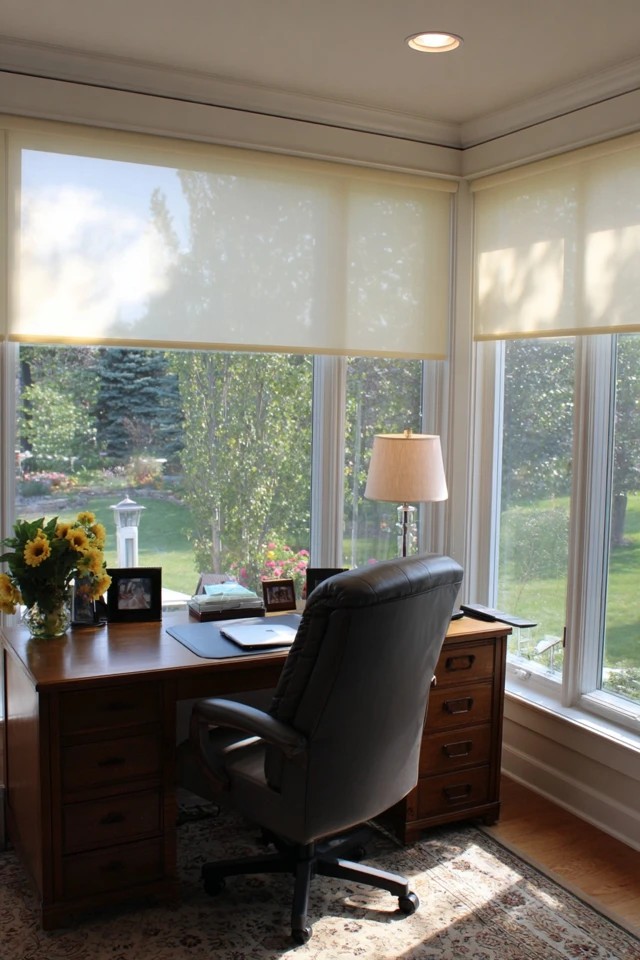
An L-shaped desk positioned in a corner of the sunroom creates generous workspace with distinct zones for computer work, paperwork, and secondary tasks — all within reach without leaving the chair. The corner placement also puts two different window aspects within view simultaneously, maximizing natural light across the entire work surface.
- Position the monitor on the longer L-arm and use the shorter section for secondary tasks and reference materials.
- Choose an L-desk with matching height on both surfaces to allow seamless work across the full configuration.
- Keep the L-desk corner area clear — it tends to accumulate clutter and becomes a productivity obstacle.
13. Cable Management for a Tidy Tech Workspace
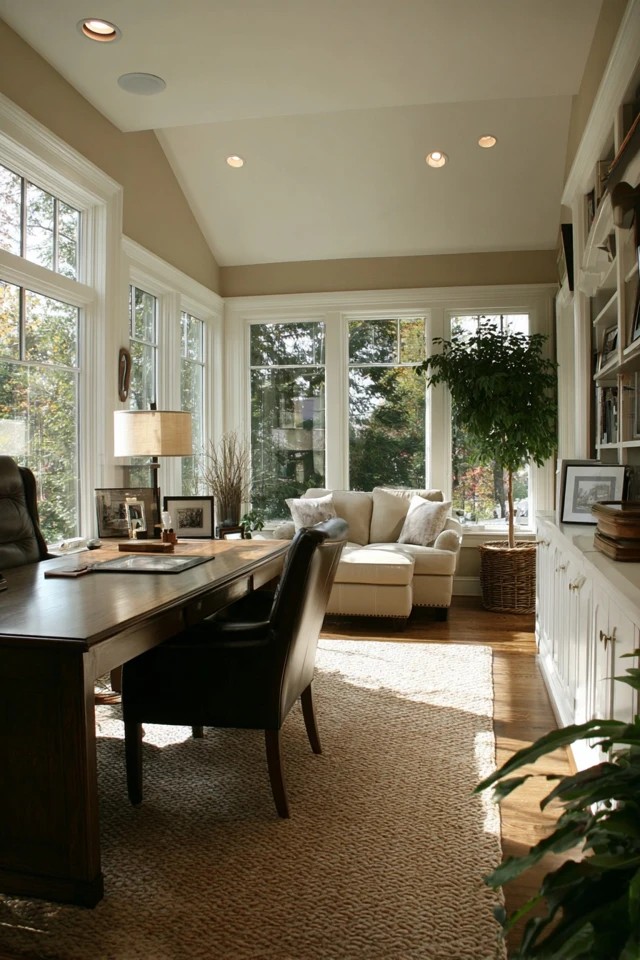
A well-executed cable management system — cable trays under the desk, velcro ties grouping cords together, and a power strip mounted out of sight — transforms a technology-heavy desk into a visually calm workspace. In a sunroom flooded with natural light, exposed cable tangles are particularly visible and distracting.
- Mount a cable management tray to the underside of the desk to route all power cords out of sight.
- Use a single, centrally located power strip rather than multiple adapters scattered across the desk area.
- Label cables at both ends with small tags so devices can be identified quickly during rearrangement.
14. Printer Station on a Side Table for Functional Support
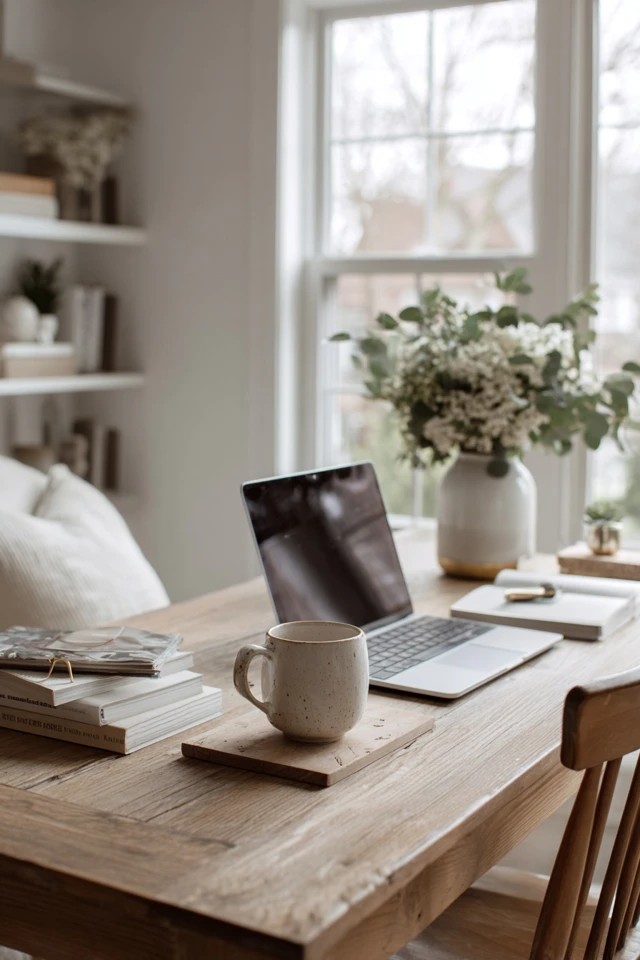
Placing the printer and related supplies on a dedicated side table or rolling cart keeps the main desk surface clear for the primary work that matters most. The printer station can be positioned slightly away from the desk so printing never interrupts the flow of screen-based work in progress.
- Use a rolling cart for the printer station so it can be tucked away when not needed or repositioned easily.
- Store paper, ink cartridges, and stapler in the cart drawers or on a shelf directly beneath the printer.
- Position the printer within arm’s reach of the desk chair to minimize movement during the work session.
15. Reading Chair for Alternative Workspace Seating
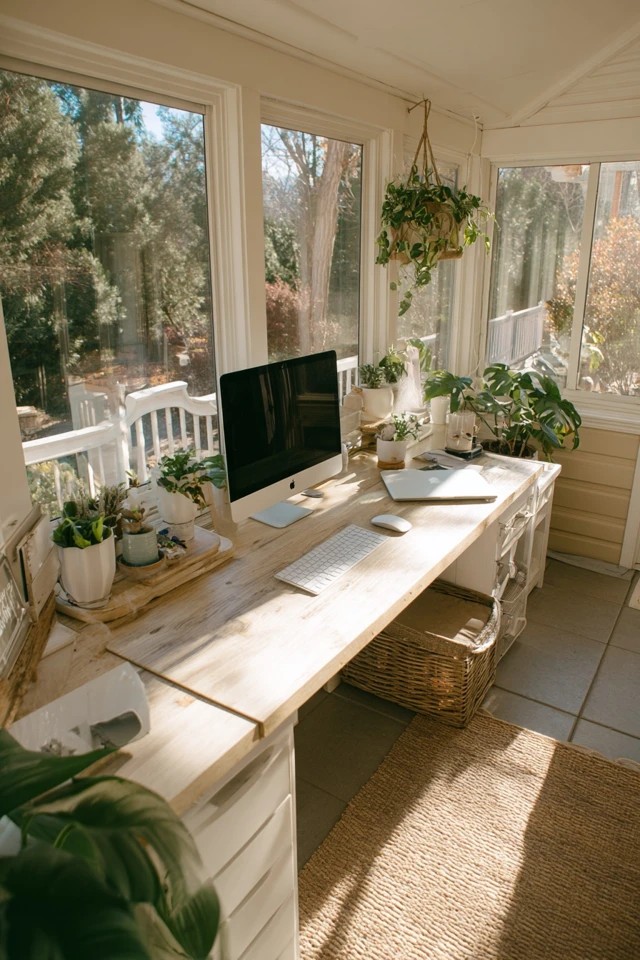
A comfortable upholstered chair with a small side table creates a secondary workspace for reading, thinking, phone calls, and laptop work that benefits from a change of posture and perspective. Alternating between the desk chair and the reading chair throughout the day reduces physical fatigue and promotes more varied, flexible working.
- Position the reading chair to receive natural sunroom light from the side for comfortable reading without glare.
- Add a small side table at arm height for a drink, a notebook, and reading materials.
- Choose an upholstered chair in a darker or patterned fabric that hides wear better than light solids.
16. Minimal Desk Accessories for a Clean Focused Surface
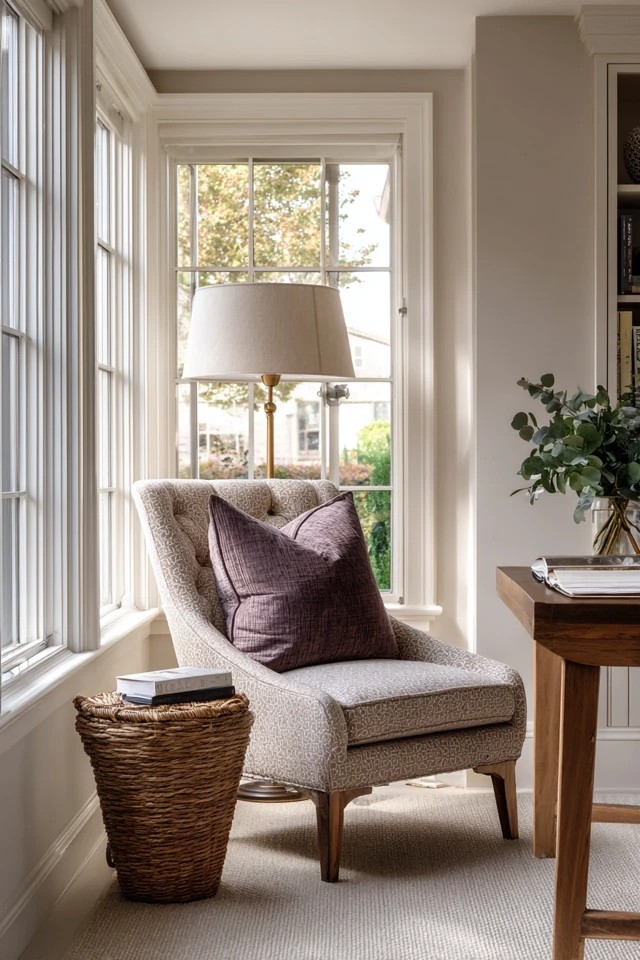
Limiting the desk surface to only the tools actively used — monitor, keyboard, mouse, a single notepad, and one pen — creates a workspace with the visual calm that supports deep, focused work. Every additional object on the desk surface is a potential distraction, and in a sunroom where the view competes for attention, a clear desk is especially valuable.
- Apply the rule: if it hasn’t been used in the past week, it doesn’t belong on the desk surface.
- Use a small tray or dock to group the few permitted desk items into a single contained zone.
- Store frequently needed supplies in the top drawer rather than on the surface for instant access.
17. Area Rug Under the Desk for Workspace Definition
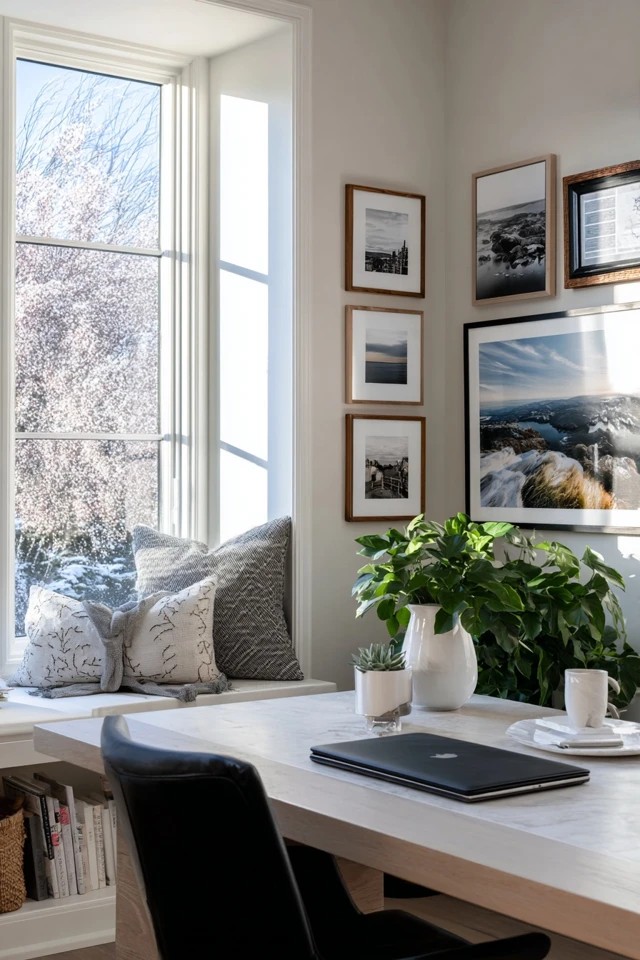
An area rug placed under the desk and extending beyond the chair creates a visually defined office zone within the open sunroom, anchoring the workspace architecturally without any partitioning. The rug also provides acoustic softening on hard sunroom floors and protects the floor surface from the repeated rolling movement of an office chair.
- Choose a rug large enough for the chair to remain fully on the rug even when rolled back from the desk.
- Use a hard floor chair mat on top of the rug to prevent wear from chair caster movement over time.
- Select a low-pile or flatweave rug for easier chair rolling compared to thick pile alternatives.
18. Inspirational Artwork or Vision Board for Motivation
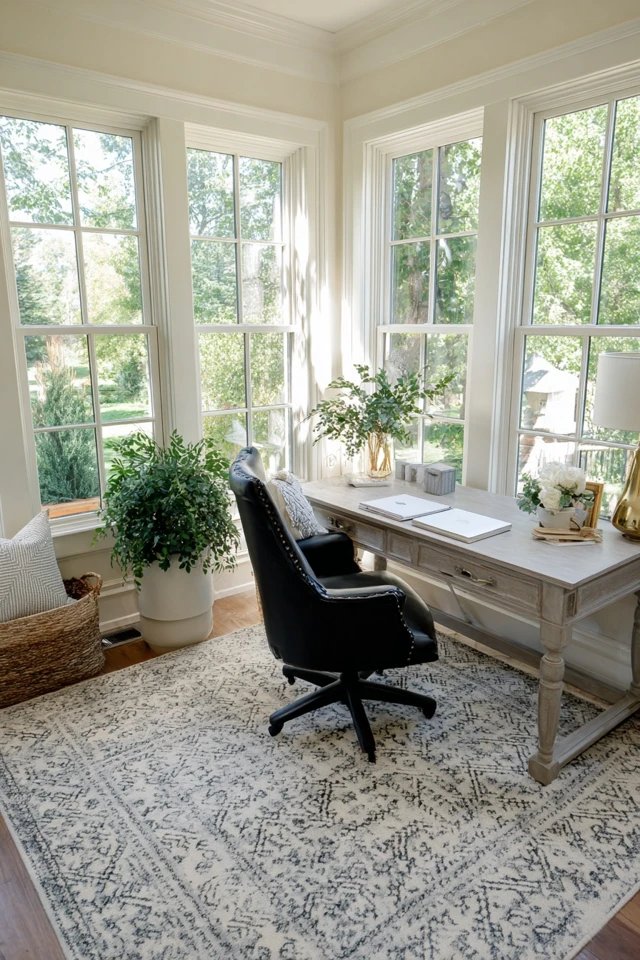
A piece of meaningful artwork or a curated vision board positioned in the direct sightline from the desk chair provides a daily visual source of motivation and personal meaning that transforms the sunroom office from a functional space into an inspiring one. Natural sunroom light illuminates the display clearly throughout the workday.
- Hang art at eye level from the seated desk position — standing wall height is too high for desk viewing.
- Update the vision board quarterly so it reflects current goals rather than becoming invisible through familiarity.
- Choose artwork in the office’s existing color palette so it integrates rather than distracts visually.
19. Desk on Wheels for Seasonal Position Flexibility
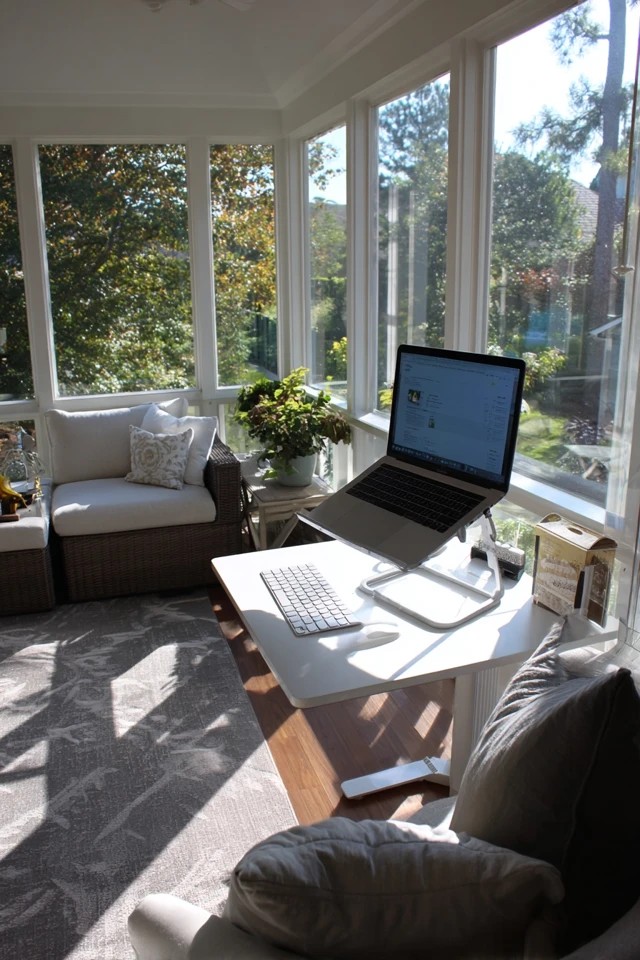
A lightweight desk on locking casters or a slim desk that can be easily repositioned allows the sunroom office to adapt to changing seasonal light conditions — moved closer to south-facing glass in winter for warmth, shifted away from west-facing glass in summer to avoid afternoon glare. This flexibility maximises year-round working comfort.
- Choose locking casters so the desk stays precisely positioned during use and rolls freely when relocated.
- Use a flat extension cord with a cover strip to safely accommodate desk repositioning without cable strain.
- Mark the floor with small tape dots at your preferred seasonal positions for quick, accurate repositioning.
20. Laptop Riser and External Keyboard for Ergonomic Screen Height
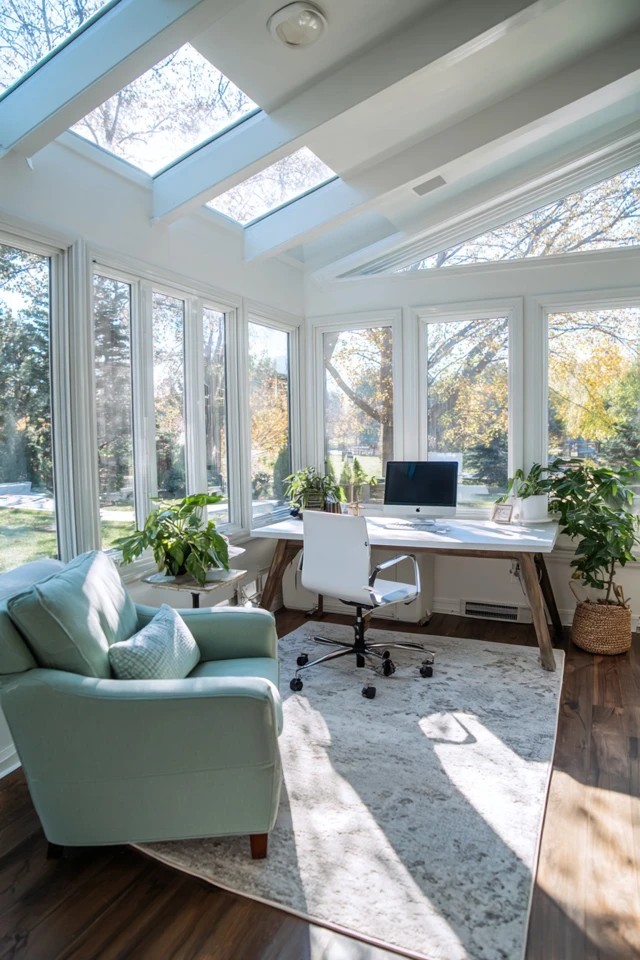
A laptop riser elevates the screen to eye level and pairs with an external keyboard and mouse to create a proper ergonomic workstation from a portable computer. Without the riser, laptop users inevitably develop neck strain from looking downward — a problem made no better by a beautiful sunroom setting.
- Set the laptop screen top at or just below eye level when seated with good posture in the chair.
- Choose a wireless keyboard and mouse to eliminate additional cables on the already tech-heavy desk.
- Use a laptop riser with integrated USB ports to reduce the adapter count required for full connectivity.
Why These Sunroom Office Ideas Excel
Every idea on this list succeeds because it addresses the specific challenges and opportunities of the sunroom office environment: exceptional natural light, potential glare, temperature variability, and the need to create genuine professional focus in a space that could easily feel more like a leisure room than a workspace.
Ergonomics — the standing desk, the ergonomic chair, the laptop riser, the external keyboard — appear repeatedly because no amount of beautiful natural light compensates for a workspace that causes physical discomfort over an eight-hour day. A sunroom office that looks gorgeous but hurts to work in is a design failure. Every sunroom home office should prioritise ergonomics as the foundation on which aesthetics are built.
Light management is the sunroom office’s defining design challenge. Solar shades, strategic desk positioning, task lamps, and monitor placement relative to windows all serve the same goal: capturing the mood-boosting and productivity-enhancing benefits of natural light while eliminating screen glare and uncomfortable heat that abundant sunroom light can create. Getting this balance right is what separates a comfortable sunroom office from an unusable one.
Organization and visual calm — minimal desk accessories, cable management, floating shelves, and closed storage — are especially important in a sunroom office where the view through the glass already provides significant visual stimulation. A cluttered desk in a sunroom is doubly distracting. The most productive sunroom office designs are those where the workspace itself is calm enough to complement rather than compete with the inspiring environment surrounding it.
Conclusion
A sunroom office offers a working environment that most professionals can only dream about — natural light, outdoor views, and a dedicated space where focus comes more easily than in the heart of the home. Start with the ergonomic fundamentals — the right desk height, chair, and monitor position — then address light management with solar shades and thoughtful positioning. Build organization around closed storage and minimal surfaces, and let the sunroom’s extraordinary natural advantages do the rest. The result is a home office you will genuinely look forward to working in every day.

Andrew is the founder and lead writer at RoomBlossom, a home decor publication dedicated to practical, intentional interior design. With over 10 years of hands-on experience transforming real-world living spaces — from compact apartments to full attic conversions — Andrew specialises in room design that balances visual appeal with everyday function. His work spans living rooms, bedrooms, sunrooms, and attic spaces, always guided by the belief that great design should work for the people who live in it, not just look good in photographs.