
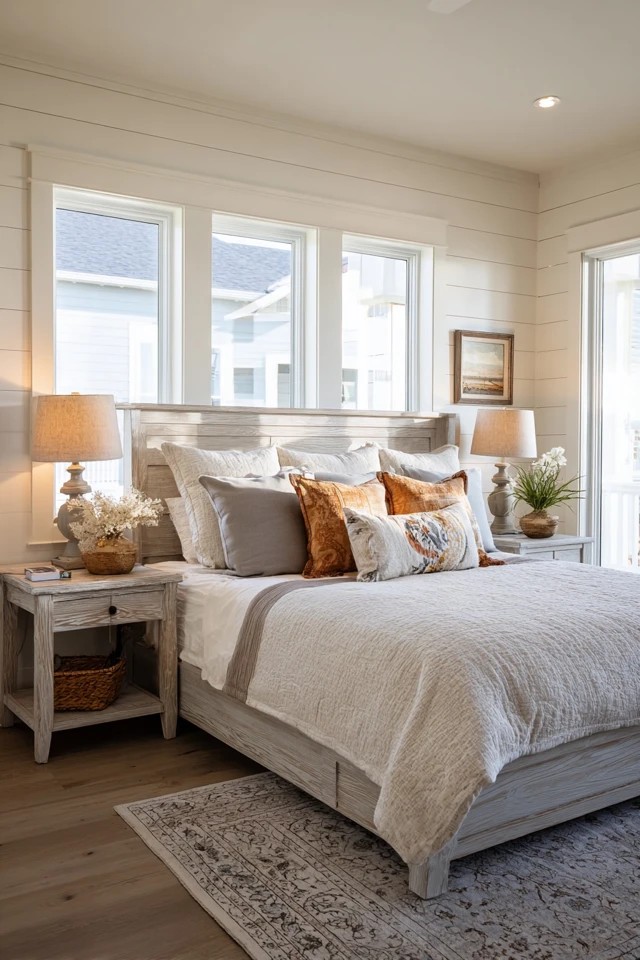
A sunroom bedroom is one of interior design’s most romantic ideas — sleeping surrounded by glass, waking to garden views, falling asleep beneath stars. Converting a sunroom into a bedroom requires thoughtful planning to balance the room’s extraordinary natural light with the darkness, privacy, and thermal comfort that quality sleep genuinely demands.
Here are 20 sunroom bedroom ideas spanning bed placement, blackout treatments, climate control, storage, and styling — each one demonstrating how to make a glass-enclosed room function beautifully as a sleeping space without sacrificing the natural light connection that makes it special.
1. Bed Positioned to Enjoy the View
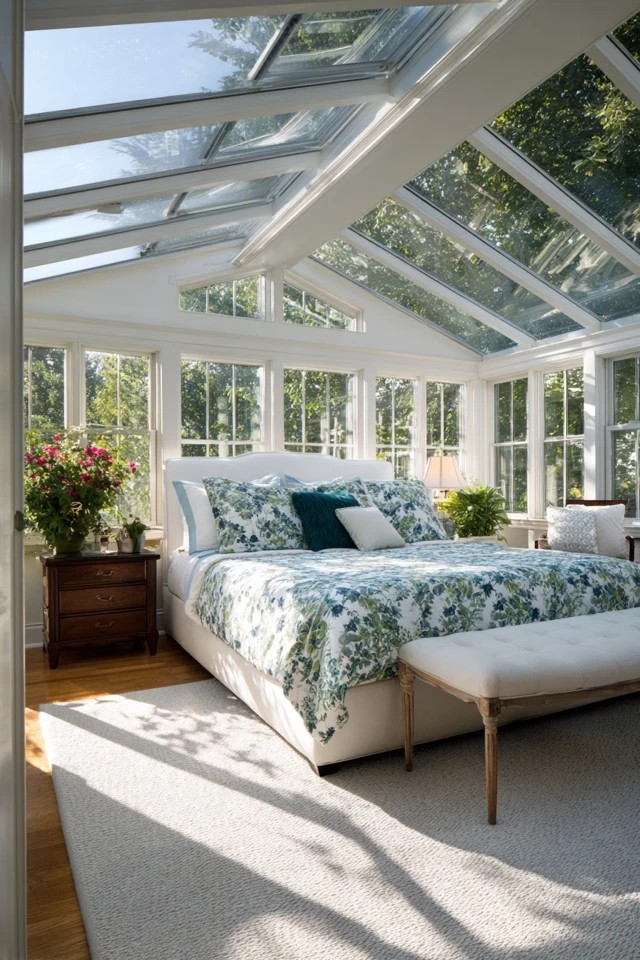
Orienting the bed to face the primary window view transforms the morning wake-up experience into something genuinely extraordinary — the first thing you see each day is the garden, the trees, or the sky beyond the glass.
- Position the bed so the sleeper faces east for morning light or a garden view rather than a road or utility area.
- Allow at least 24 inches on each side of the bed for comfortable access without squeezing past nightstands.
- Add blackout shades on the view windows for sleep — you can raise them each morning to restore the connection.
2. Blackout Curtains or Shades for Quality Sleep
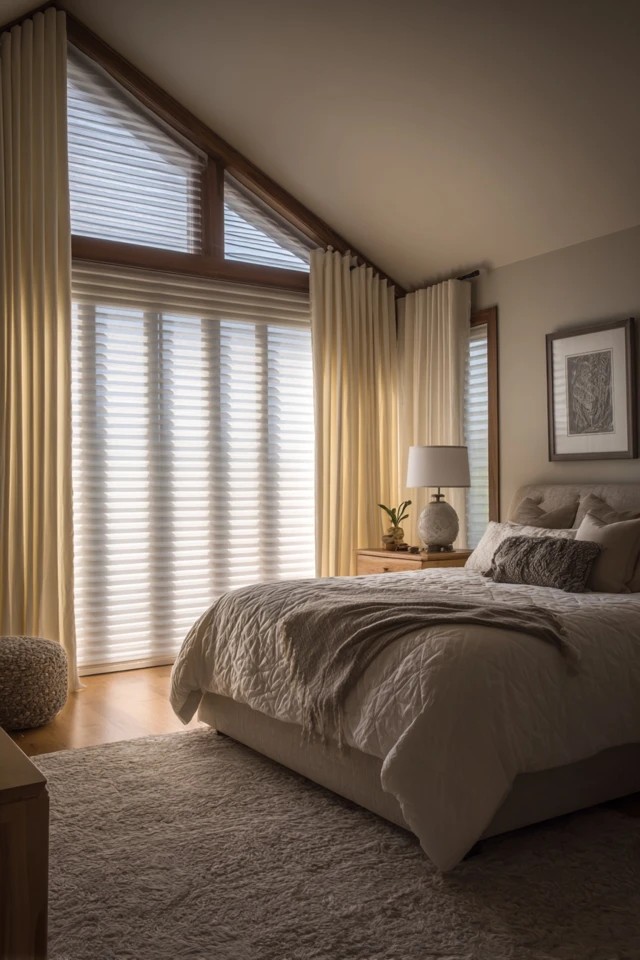
Blackout window treatments are the single most essential element of any sunroom bedroom — without them, summer mornings begin at 4am when the sun rises, and any ambient light from outside disrupts the melatonin cycle that governs quality sleep.
- Use motorised blackout roller shades with side guides that seal completely against the window frame edges.
- Test treatments in full daylight — any pinhole of light visible from inside means the system needs adjustment.
- Layer blackout shades with curtains for double light exclusion and improved thermal insulation in colder months.
3. Dresser for Essential Clothing Storage
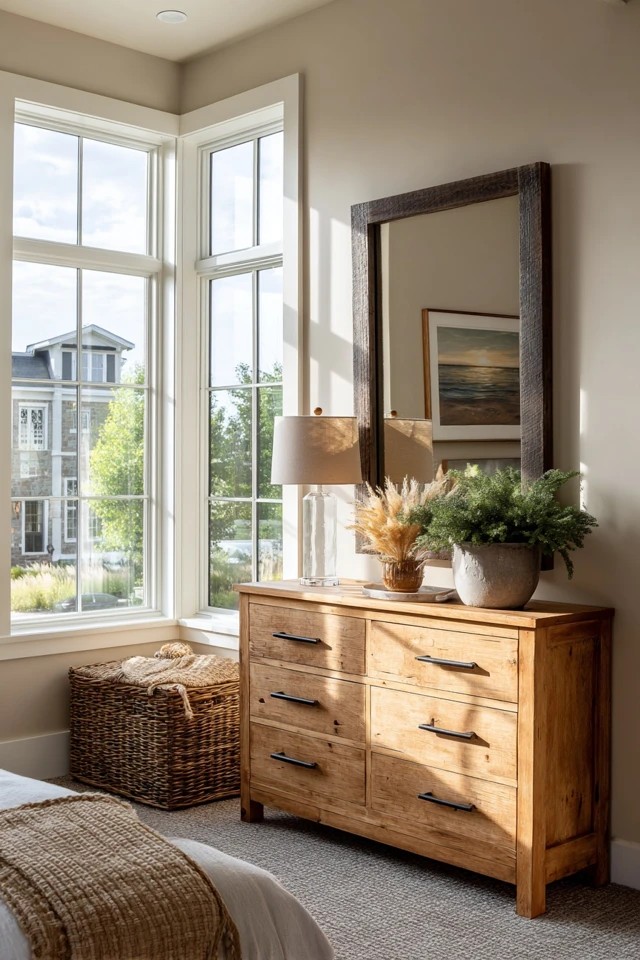
A well-sized chest of drawers gives the sunroom bedroom the practical clothing storage that makes it function as a genuine bedroom rather than merely a sleeping alcove.
- Choose a dresser depth of no more than 18 inches to preserve floor space in what is often a compact sunroom room.
- Position the dresser on a solid wall away from the bed so opening drawers does not disturb a sleeping partner.
- Use a horizontal mirror above the dresser rather than a tall one to avoid blocking the window light behind it.
4. Reading Chair in the Corner for a Cosy Retreat
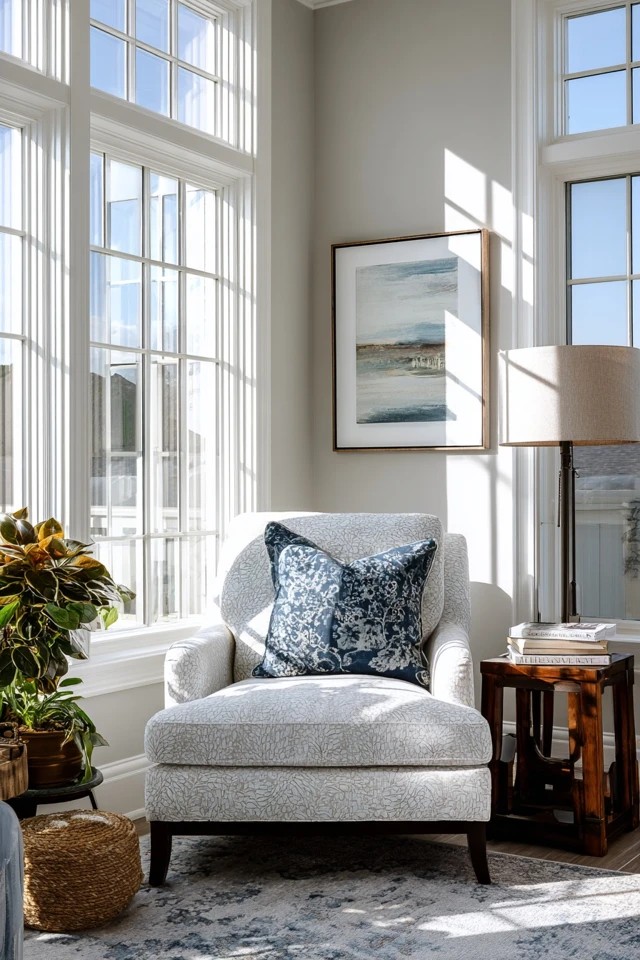
An armchair positioned in the sunroom bedroom’s best-lit corner creates a dedicated retreat within the sleeping space — a place for reading, morning coffee, or quiet reflection that is separate from the bed and therefore encourages wakefulness rather than sleep.
- Choose a chair compact enough to fit without crowding the bedroom floor, but generous enough to be genuinely comfortable.
- Position the chair to face the window view rather than the bed for the most restorative sitting experience.
- Add a small side table at arm height for a cup of tea, a phone, and a bookmarked novel within easy reach.
5. Area Rug for Soft Anchoring Foundation
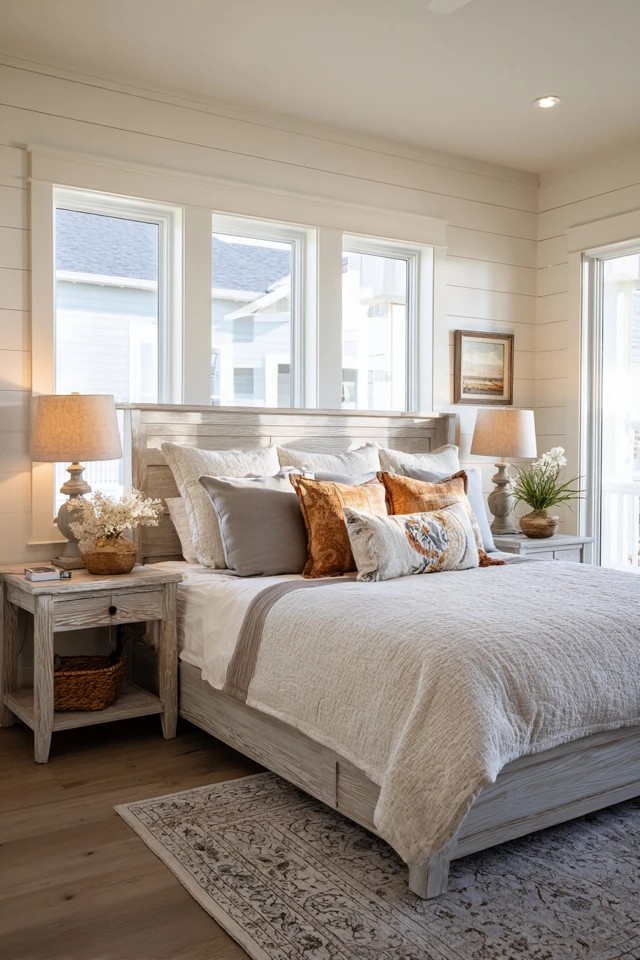
An area rug beneath or in front of the bed provides the first sensory experience of each morning — warm, soft flooring underfoot when you rise — while visually anchoring the bed as the room’s centrepiece.
- Place the rug so it extends at least two feet beyond the sides and foot of the bed for a soft landing on all sides.
- Choose a low-pile rug in a natural fibre or wool for comfort underfoot and easier furniture placement.
- Select a fade-resistant rug — sunroom UV exposure is significant and will degrade standard rugs within a year.
6. Ceiling Fan for Sleep-Quality Climate Control

A ceiling fan provides gentle air circulation that most sleepers find significantly more conducive to quality sleep than still air — the slight movement prevents the stuffiness that glass-walled sunrooms accumulate in warm weather without requiring air conditioning.
- Choose a fan with a DC motor for quieter operation — noise sensitivity during sleep is much higher than during waking hours.
- Install a remote or bedside control so the fan can be adjusted without leaving the bed.
- Use the reverse clockwise setting in winter at low speed to circulate warm air down without creating a cold draught.
7. Matching Nightstands for Functional Bedside Symmetry

Matching nightstands flanking the bed create the visual symmetry that signals a considered, complete bedroom arrangement rather than an improvised sleeping space.
- Match nightstand height to the mattress top — the surface should be within easy reach from a lying-down position.
- Choose nightstands with at least one drawer for storing items that should not be left on the open surface overnight.
- Ensure nightstand width is sufficient for a lamp base, leaving at least 8 inches of clear surface beside it.
8. Natural Fibre Bedding for Breathable Sleep Comfort
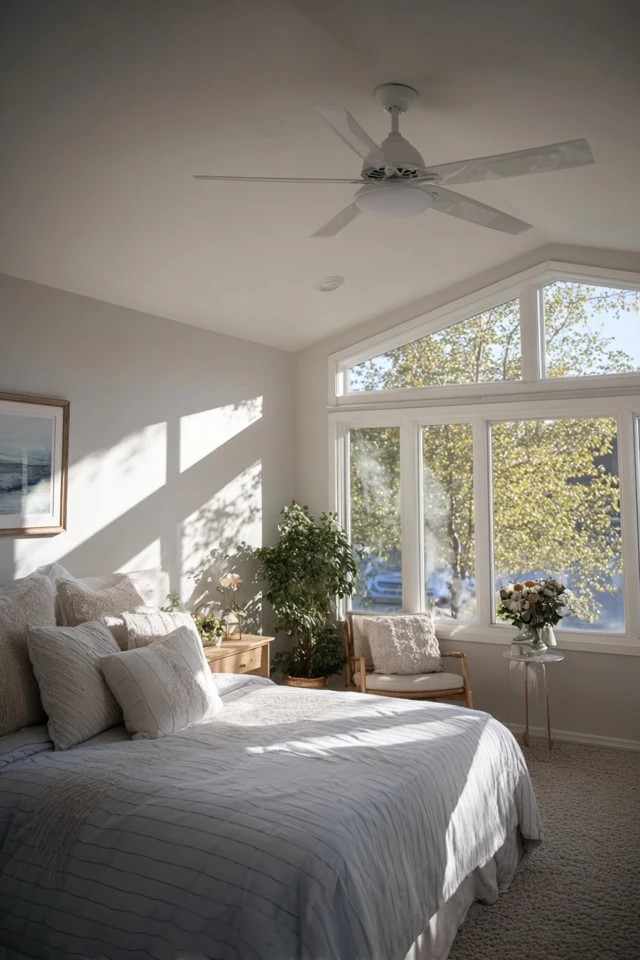
Linen or high-quality cotton bedding is essential in a sunroom bedroom where the glass walls create a warmer sleeping environment than conventional bedrooms — natural fibres breathe, wick moisture, and regulate temperature in ways that synthetic bedding cannot.
- Choose a linen duvet cover with at least a 150gsm weight for year-round comfort across seasons.
- Use a lighter-fill duvet insert in a sunroom bedroom than you would in a conventional room — the glass retains heat.
- Layer a single linen flat sheet between the sleeper and the duvet for adjustable temperature management during the night.
9. Wall Sconces for Space-Efficient Bedside Lighting
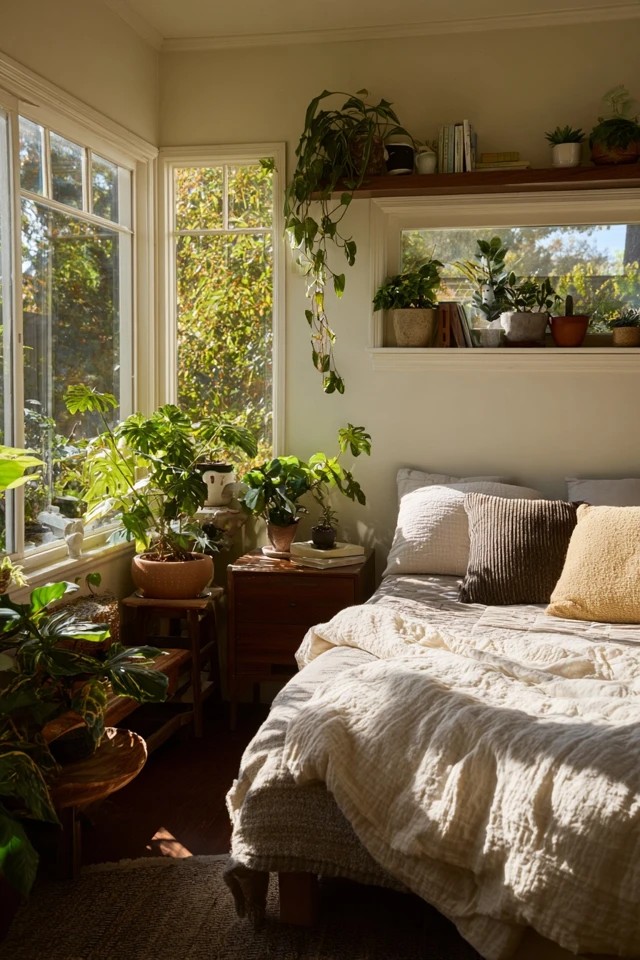
Wall sconces mounted on either side of the bed provide directed bedside reading light while freeing the nightstand surface entirely from lamp bases — a significant practical benefit in a sunroom bedroom where nightstands may be smaller than standard.
- Mount sconces at 60-65 inches from the floor so the light source is at seated reading eye level.
- Choose sconces with an adjustable arm or swivel head so reading light can be directed precisely onto the page.
- Use warm-white bulbs at 2700K or lower in bedroom sconces for a sleep-promoting gentle glow in the evening.
10. Soft Neutral Colour Palette for Restful Calm

A palette of whites, warm creams, and natural wood tones creates the most restful and timeless sunroom bedroom atmosphere — the neutral ground allows the changing quality of natural light throughout the day to become the room’s most dynamic visual element.
- Use the same pale neutral on walls and ceiling to eliminate the boundary that makes low ceilings feel oppressive.
- Introduce warmth through natural wood, rattan, and linen textiles rather than colour to maintain the calm palette.
- Add one organic accent — a woven basket, a ceramic vase, a wooden sculpture — to prevent sterility in the neutral scheme.
11. Plants for Botanical Bedroom Accents
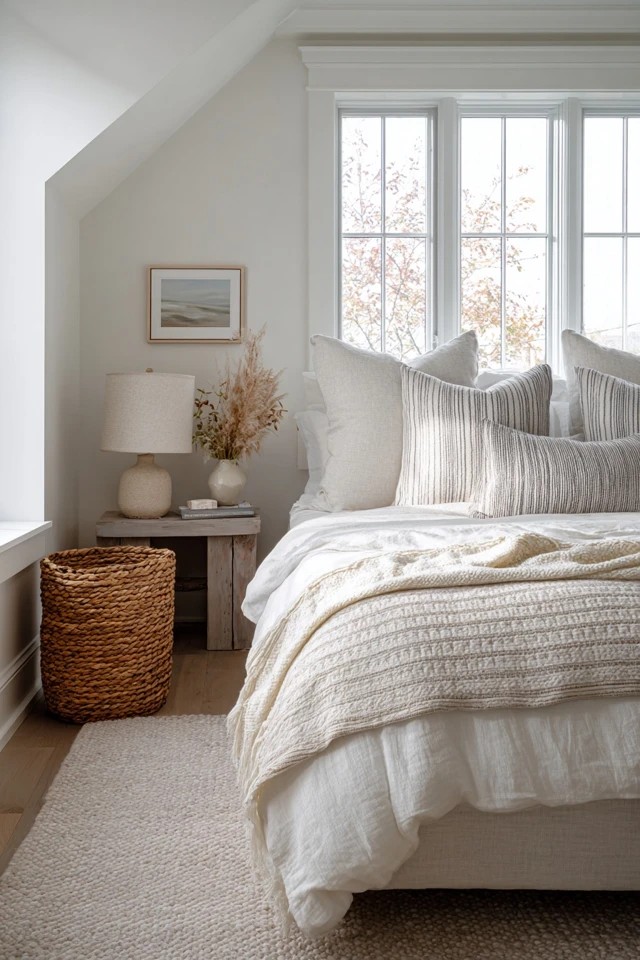
Small potted plants on the nightstand or dresser introduce organic living beauty into the sunroom bedroom in a gentle, unobtrusive way. Choose non-fragrant plants so nighttime scent does not disrupt sleep.
- Choose non-fragrant species for the bedroom — strong scents can disrupt sleep even if pleasant during the day.
- Use self-watering pots on nightstands to prevent overwatering and water ring damage to wooden surfaces below.
- Select trailing species for shelf or dresser placement — pothos and string-of-pearls drape beautifully at lower heights.
12. Full-Length Mirror for Grooming Functionality
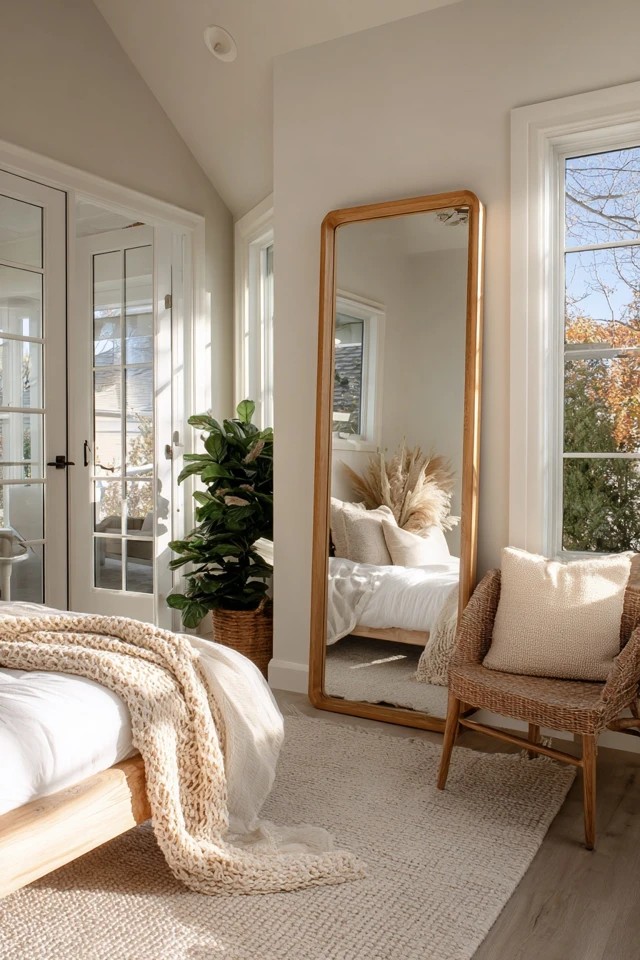
A full-length standing or wall-mounted mirror provides the essential grooming function that completes a sunroom bedroom as a fully operational personal space.
- Position the mirror to reflect the most light-filled part of the room — ideally the primary window or glass wall.
- Choose a leaning mirror with a protective rubber base for flexibility of placement and easy repositioning.
- Use a mirror with a simple, slim frame in a finish that coordinates with the room’s other metal elements.
13. Bench at the Foot of the Bed for Layered Function
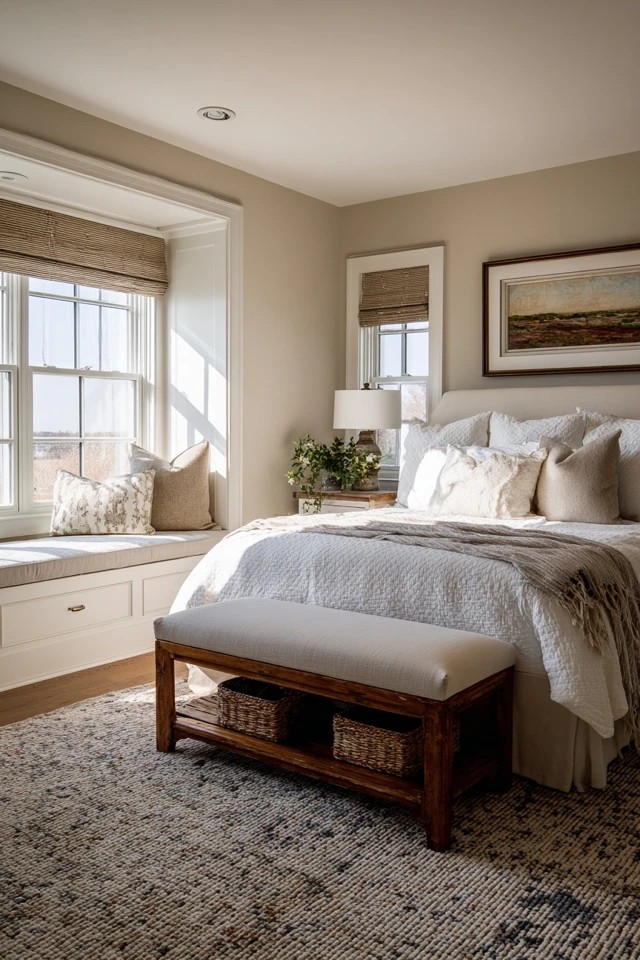
A bench at the foot of the bed serves as a clothing staging surface, a sitting spot for dressing, and a visual transition between the bed and the rest of the room — adding the layered furniture depth that makes a bedroom look fully designed rather than simply containing a bed.
- Choose a bench no deeper than 18 inches so it does not impede access to the foot of the bed when seated.
- Select an upholstered bench in a durable fabric — the foot of the bed sees regular sitting with shoes on.
- Use a bench with internal storage to maximise the function of the foot-of-bed position in a compact sunroom bedroom.
14. Artwork Above the Bed as Focal Emphasis

A piece of artwork mounted above the bed gives the sunroom bedroom a personalised focal point that the bed’s headboard alone cannot provide — transforming an area of the room that guests look at first into a genuine statement of taste and character.
- Hang artwork so the bottom edge is 8-10 inches above the headboard top for a connected, cohesive relationship.
- Use UV-filtering glass in the frame to protect artwork from the elevated UV levels present in a sunroom environment.
- Choose a single large piece rather than a gallery arrangement above the bed — it reads as calmer and more intentional.
15. Thermal-Backed Window Treatments for Climate Comfort

Curtains or shades with a thermal backing significantly reduce the heat loss through glass panels in winter and the heat gain in summer, making the sunroom bedroom genuinely comfortable across the full range of seasonal temperatures.
- Close thermal curtains before sunset in winter to trap daytime solar heat gain inside the room overnight.
- Choose thermal curtains in a pale interior colour to reflect solar radiation outward in summer rather than absorbing it.
- Combine thermal backing with a blackout layer for a treatment that manages both temperature and light simultaneously.
16. Upholstered Headboard as Soft Bed Focal Point
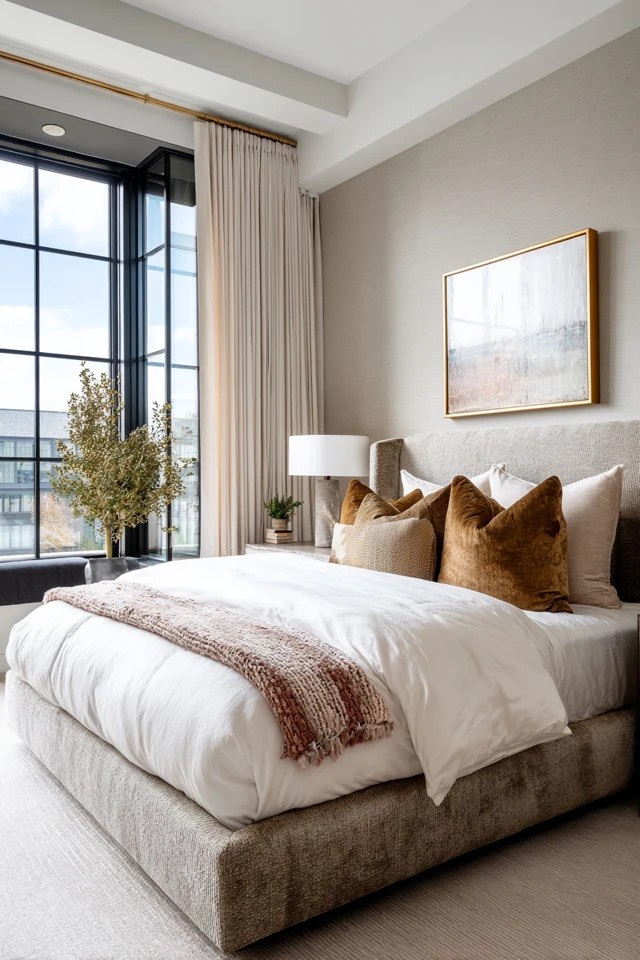
An upholstered headboard in linen or velvet gives the sunroom bedroom’s bed a soft, luxurious focal quality that wooden or metal headboards rarely achieve — the padded fabric invites leaning against it for reading, creates a warm and enveloping visual quality in a glass-walled room, and introduces the textile richness that makes a bedroom feel genuinely comfortable rather than merely furnished.
- Choose a headboard height at least 24 inches above the mattress top for a properly proportioned statement.
- Select linen or a performance velvet that resists UV fading from the natural sunroom light it will receive.
- Use a neutral headboard colour if the bedding changes seasonally — it coordinates with everything without needing replacement.
17. Bedside Table Lamps for Warm Evening Atmosphere

Matching bedside table lamps create the warm, human-scaled evening atmosphere that a sunroom bedroom’s glass walls and high ceilings make particularly necessary — the warm pools of lamplight at bed height provide intimate illumination that no ceiling fixture can replicate.
- Use warm-white bulbs at 2200-2700K in bedside lamps to promote the circadian cues needed for quality sleep.
- Choose lamps with a switch on the base rather than the cord for easier operation in the dark without fumbling.
- Dim bedside lamps to the lowest comfortable level for the final hour before sleep for maximum sleep-onset benefit.
18. Minimal Furniture for an Open Spacious Environment
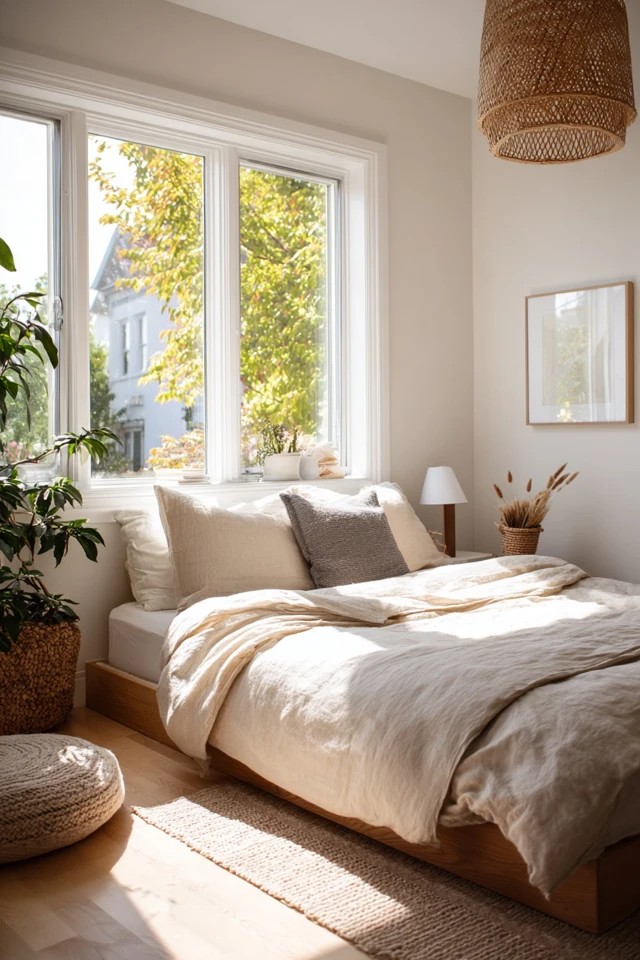
Limiting the sunroom bedroom to only its essential furniture pieces — bed, nightstands, and one storage item — creates a sleeping environment of genuine visual calm where the glass walls and natural light can be fully appreciated without competition from unnecessary furniture.
- Apply the rule: if it has not been used in the past two weeks, it does not belong in the sleeping space.
- Use wall-mounted shelving rather than freestanding furniture wherever storage is needed to preserve floor clarity.
- Choose a bed with integrated drawers beneath for storage that requires no additional furniture footprint in the room.
19. Throw Blanket on the Bed for Tactile Layered Comfort

A knit or woven throw blanket draped casually across the foot of the bed adds the textural layering and visual warmth that transforms a neatly made bed into something genuinely inviting and lived-in.
- Choose a throw in a slightly contrasting texture to the duvet cover — knit over linen, woven over cotton.
- Drape the throw diagonally across the foot of the bed rather than folding it neatly for a relaxed, organic look.
- Select a throw weight that adds warmth without overheating — a single layer of cashmere blend is ideal for a sunroom bedroom.
20. Thoughtful Bed Placement for Sleep-Oriented Light Management
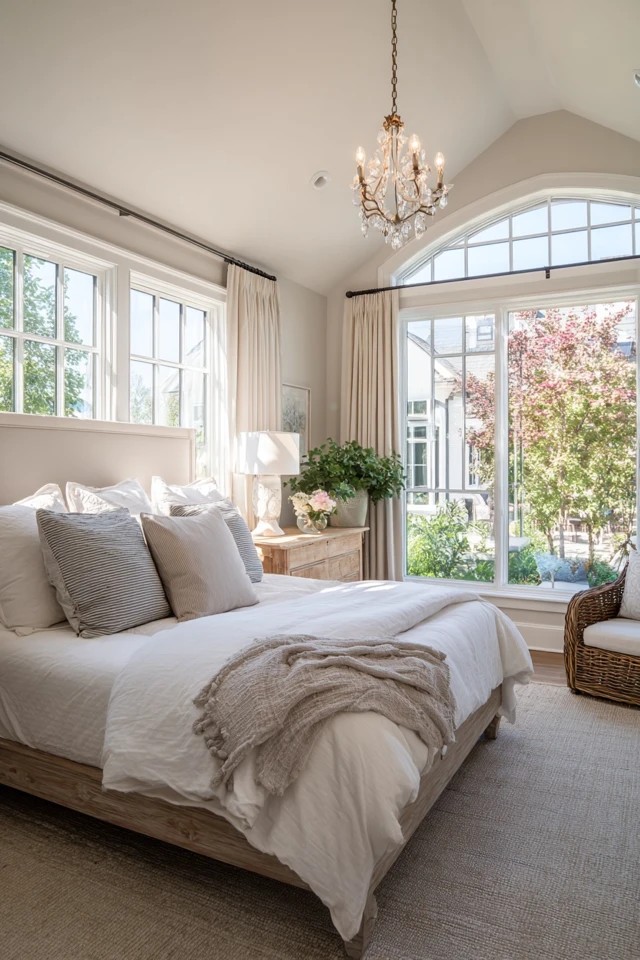
The most important decision in any sunroom bedroom is where the bed sits relative to the glass walls and the sun’s daily path — a bed positioned in the direct path of morning sun through east-facing glass will receive intense early light that disrupts sleep regardless of how good the blackout curtains are.
- Observe the room at the earliest morning hour in summer before deciding on bed placement — light is most intense then.
- Position the bed on a wall parallel to the largest glass panels rather than directly opposite them for the least direct sun exposure.
- Use motorised blackout shades with a timer set to open 30 minutes after your preferred wake time for an ideal morning transition.
Why These Sunroom Bedroom Ideas Excel
Every idea on this list succeeds because it addresses the sunroom bedroom’s central challenge: creating the darkness, privacy, thermal comfort, and calm that quality sleep requires within an architectural environment defined by glass, natural light, and openness. The sunroom bedroom is not simply a bedroom placed in a glass room — it is a room that requires specific, thoughtful solutions to problems conventional bedrooms never face.
Sleep quality infrastructure — blackout treatments, ceiling fan, thermal curtains, and natural fibre bedding — is the non-negotiable foundation of any functional sunroom bedroom. Without these elements in place, the room’s romantic appeal cannot be sustained past the first few nights of poor sleep. Every other design decision on this list is secondary to the fundamental requirement that the sleeping space enables genuinely restorative rest.
Light management across the full arc of the day is what makes the sunroom bedroom work as a practical everyday space rather than merely a beautiful concept. Morning light for waking, controlled light for sleeping, and warm evening light for winding down — each phase of the daily cycle requires a different approach, and the combination of motorised blackouts, bedside lamps, and ceiling fan creates the infrastructure to manage all three.
Comfort and character — the upholstered headboard, the reading chair, the throw blanket, the artwork, the plants — are what make the sunroom bedroom feel like a genuinely personal, lovingly designed room rather than a functional sleeping facility. The sunroom bedroom design ideas on this list balance practical necessity with genuine beauty, creating a space that earns its use every single night through quality rest and every morning through the extraordinary light that makes a sunroom bedroom unlike any other room in the home.
Conclusion
A sunroom bedroom rewards careful planning with one of the most extraordinary sleeping experiences a home can offer — waking to garden views, falling asleep beneath stars, and enjoying the most naturally lit personal space in the house. Begin with the sleep essentials: blackout treatments that genuinely exclude all light, climate management for year-round comfort, and bed placement that respects the sun’s daily path. Build the bedroom’s character from there, and you will have created a sleeping retreat that is both practically sound and genuinely magical.

Andrew is the founder and lead writer at RoomBlossom, a home decor publication dedicated to practical, intentional interior design. With over 10 years of hands-on experience transforming real-world living spaces — from compact apartments to full attic conversions — Andrew specialises in room design that balances visual appeal with everyday function. His work spans living rooms, bedrooms, sunrooms, and attic spaces, always guided by the belief that great design should work for the people who live in it, not just look good in photographs.