

A well-placed mirror in the dining room is one of the most transformative design moves available to any homeowner. Mirrors multiply natural light, create the illusion of expanded space, and introduce a decorative focal point that elevates the entire room’s character. Whether your dining room is grand and formal or compact and casual, the right mirror turns an ordinary wall into something genuinely extraordinary.
Here are 20 mirror in dining room ideas spanning traditional, modern, bohemian, farmhouse, and coastal styles — each one designed to help you choose the mirror that best serves your space.
1. Ornate Gold-Framed Mirror Above the Buffet

A large gilt mirror with a carved decorative frame above a traditional mahogany buffet creates one of the most timelessly elegant compositions in dining room design. The gold frame reflects chandelier light back into the room, doubling its warmth and drawing the eye to the buffet as the room’s natural focal point.
- Choose a frame with scrollwork or floral carving to complement traditional furniture.
- Hang the mirror so its center aligns with the top third of the buffet for ideal proportion.
- Let chandelier light hit the mirror directly to maximize the reflected warmth.
2. Floor-to-Ceiling Mirror Wall for Small Dining Rooms

A full mirror wall is the single most effective space-expanding trick for a small dining room. A floor-to-ceiling mirror creates a dramatic illusion of doubled space and light that no other design intervention can match. The compact dining table appears to float in a bright, open environment.
- Use low-iron glass for the clearest, most accurate reflection without green tint.
- Frame the mirror wall with thin trim to give it a finished, intentional look.
- Position the dining table centrally so it reflects symmetrically in the mirror wall.
3. Round Mirror with Black Metal Frame

A round mirror in a slim black metal frame brings bold graphic simplicity to a contemporary dining room. The circular form contrasts beautifully with rectangular dining furniture, while the dark frame creates a crisp, modern statement against light walls. Centered above a console or mounted as a standalone feature, this mirror reads as both art and function.
- Choose a diameter at least 24 inches to make sufficient visual impact on the wall.
- Pair with black hardware and fixtures elsewhere in the room for cohesive design.
- Center the mirror at eye level — approximately 57 to 60 inches from floor to center.
4. Antique Mirror with Distressed Silvering

An antique mirror with foxed or spotted silvering brings an irreplaceable quality of aged authenticity to a shabby chic dining room. The soft, imperfect reflection of distressed mirror glass has a romantic quality that new mirrors cannot replicate. Paired with cottage furniture and soft floral accents, a vintage mirror transforms the dining room into something genuinely nostalgic.
- Source antique mirrors from estate sales or architectural salvage dealers for authenticity.
- Choose a painted or distressed wood frame to reinforce the vintage aesthetic.
- Allow the foxing to be visible — the imperfection is precisely what makes it beautiful.
5. Leaning Floor Mirror for Effortless Modern Style

A large mirror propped casually against the wall rather than mounted introduces an effortlessly relaxed aesthetic that feels current and unstudied. The leaning mirror provides substantial reflective presence without requiring wall anchors, making it ideal for renters or those who prefer flexibility in their arrangements. In a modern dining room, a leaning mirror in a thin metal frame reads as a confident, gallery-inspired choice.
- Secure leaning mirrors safely with furniture anchor straps attached to wall studs.
- Choose a mirror at least 60 inches tall for proportional impact in the dining room.
- Layer a small plant or object in front of the mirror base to complete the composition.
6. Sunburst Mirror for Mid-Century Modern Flair

The sunburst mirror — with its radiating metal rays in gold or brass — is one of mid-century modern design’s most iconic decorative objects. Mounted above a credenza in a dining room furnished with tapered-leg furniture and warm walnut tones, the sunburst mirror adds sculptural dimension beyond simple reflection. The radiating rays catch light from multiple angles, creating a dynamic shimmer.
- Choose brass or aged gold rays to complement warm mid-century wood tones.
- Mount at eye level so the rays extend visually into surrounding wall space.
- Keep surrounding wall decor minimal to let the sunburst command full attention.
7. Arched Mirror for Architectural Harmony

An arched mirror echoes the curved profiles of windows, doorways, and architectural details, creating a sense of harmony and intention that flat rectangular mirrors cannot offer. In a traditional dining room, a curved-top mirror draws the eye upward and reinforces the formality of the space.
- Align the arch with nearby window or door shapes for architectural cohesion.
- Choose a simple molded frame rather than elaborate carving to keep the arch as the hero.
- Use an arched mirror to fill a narrow wall where a wide rectangular mirror would not fit.
8. Horizontal Mirror Above a Credenza

A wide horizontal mirror mounted in landscape orientation above a low credenza creates a streamlined, modern composition that emphasizes the room’s width and reinforces a calm, linear aesthetic. The panoramic reflection captures the entire dining room scene, making the space feel simultaneously larger and more considered.
- Match the mirror width to within a few inches of the credenza width below it.
- Keep the frame slim and simple — a thick frame competes with the linear intention.
- Use the credenza surface to display a few curated objects that appear in the mirror reflection.
9. Gallery Wall of Mixed Vintage Mirrors

A curated gallery wall of mixed vintage mirrors in varied shapes, sizes, and frames brings bohemian personality and layered visual interest to the dining room. Each mirror contributes its own character — an oval gilded frame here, a small beveled rectangle there — while the arrangement creates a dynamic, collected aesthetic that feels personal.
- Lay out the arrangement on the floor before mounting to find the best composition.
- Vary shapes — round, oval, rectangular, arched — for visual rhythm and variety.
- Keep a consistent spacing of two to three inches between mirrors for a cohesive gallery look.
10. Frameless Beveled Mirror for Modern Restraint

A frameless beveled mirror — nothing but polished glass with angled edges that catch and scatter light — embodies the minimalist dining room aesthetic at its most refined. With no frame to distract, the mirror becomes pure reflection. The beveled edges add understated prismatic sparkle without decorative fuss.
- Select a beveled edge width of at least one inch for visible light-scattering effect.
- Mount with minimal concealed fixings so the glass appears to float on the wall.
- Clean regularly — frameless mirrors show fingerprints and dust more visibly than framed ones.
11. Mirror with Integrated Shelf

A mirror with an integrated shelf combines reflective beauty with genuine function — the ledge below the glass provides a surface for candles, small plants, or decorative objects that then appear doubled in the mirror above. In a transitional dining room that bridges traditional warmth and modern simplicity, this practical mirror type earns its wall space twice over.
- Style the shelf with three to five objects of varying height for a curated display.
- Choose objects that look as beautiful reflected as they do in person — glass and ceramics work well.
- Ensure the shelf is rated to hold the combined weight of your display objects safely.
12. Venetian Mirror with Etched Glass

A Venetian mirror with etched or cut glass details around its perimeter brings Old World glamour and extraordinary craftsmanship to a formal dining room. The intricate etchings catch chandelier and candlelight, creating a sparkling border that transforms the mirror into a genuine work of art. Paired with crystal glassware and formal dining chairs, a Venetian mirror creates an atmosphere of genuine opulence.
- Pair with a crystal chandelier directly in front for maximum light interaction.
- Choose etched glass details in a scale proportional to the mirror’s overall size.
- Keep surrounding wall decor simple — the Venetian mirror commands full visual attention.
13. Oversized Mirror on the Fireplace Mantel

Resting a large mirror on the fireplace mantel rather than mounting it above creates a layered, relaxed arrangement that feels thoughtfully informal. The mirror leans at a gentle angle, capturing a wider reflection than a flush-mounted mirror would. This approach is particularly effective where a formal mantel already anchors the room — the mirror amplifies its presence without rigidity.
- Use a mirror at least as wide as the mantel shelf for proportional balance.
- Layer candle holders, clocks, or greenery in front of the leaning mirror for depth.
- Secure with a heavy-duty picture hook through the mantel into the wall behind.
14. Window-Style Mirror with Mullions
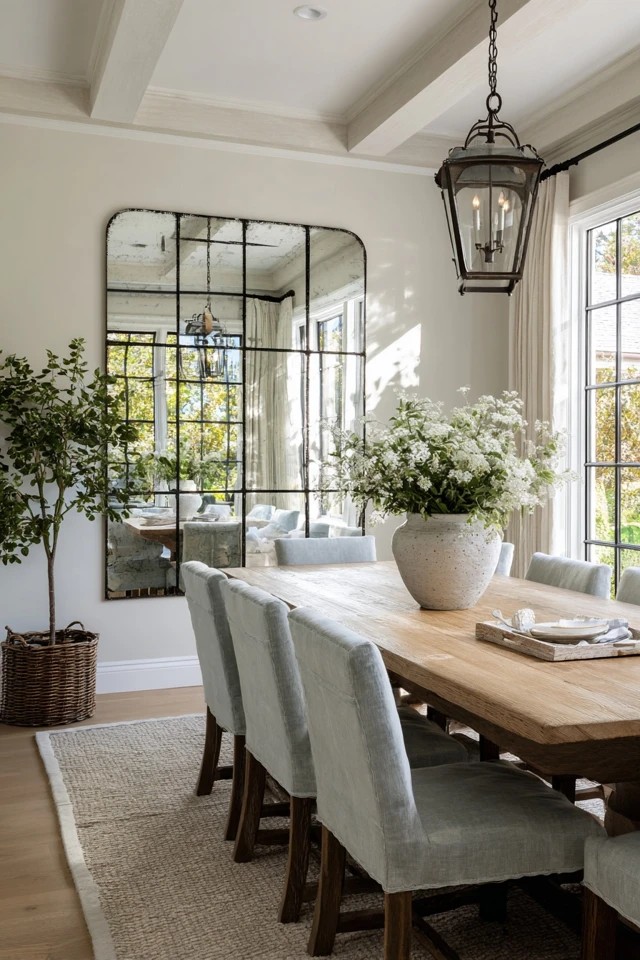
A mirror designed to resemble a multi-pane window — with wood or metal mullions dividing the glass into a grid — brings farmhouse charm and architectural wit to the dining room. The window mirror tricks the eye into seeing additional natural light, creating a clever spatial illusion that works especially well on interior walls. In a farmhouse dining room with shiplap and warm wood furniture, the window mirror feels entirely at home.
- Choose black metal mullions for a more modern interpretation of the window mirror.
- Mount at the same height as actual windows in the room for a convincing illusion.
- Position opposite a real window to reflect genuine natural light through the panes.
15. Reclaimed Wood Frame Mirror

A mirror framed in salvaged or reclaimed wood brings authentic rustic character to the dining room through the natural grain, weathered texture, and warm color variation of aged timber. No two reclaimed wood frames are identical, making each mirror a genuinely unique piece. In a rustic dining room with exposed beams and raw-edge furniture, this mirror bridges natural and refined with quiet confidence.
- Sand reclaimed wood lightly but preserve the patina — the weathering is the point.
- Apply a thin coat of matte finishing wax to protect the wood without adding shine.
- Pair with other reclaimed or natural materials to reinforce the organic design theme.
16. Mirror Tile Mosaic Wall

Individual mirror tiles arranged in a geometric mosaic pattern create a multifaceted reflective wall that is far more dynamic than a single large mirror. Each tile captures a slightly different fragment of the dining room, creating a glittering effect that changes with every shift in light.
- Choose uniform square tiles for a clean geometric look; varied sizes for an organic mosaic.
- Apply tiles with mirror-safe adhesive to prevent silvering damage over time.
- Limit mirror tile walls to one feature wall to avoid an overwhelming reflective environment.
17. Mirror with LED Backlighting

A mirror with integrated LED strip lighting behind its perimeter creates a soft halo glow that serves as both ambient illumination and a sculptural design statement. The backlit effect makes the mirror appear to float off the wall while adding a layer of adjustable ambient light.
- Choose warm white LED (2700-3000K) for a flattering, dining-room-appropriate glow.
- Install a dimmer so the backlight intensity can be adjusted for different occasions.
- Use a frameless mirror for backlit applications — the frame can obstruct the halo effect.
18. Baroque Gilded Mirror for Formal Grandeur

A heavily carved baroque mirror frame in aged gold with scrollwork, acanthus leaves, and decorative embellishments brings historical grandeur to a formal dining room at a scale that demands attention. This is a statement of intention, declaring the dining room a space where beauty and ceremony matter. Against a deep wall color — rich burgundy, forest green, or midnight navy — the baroque mirror achieves its fullest expression.
- Choose aged gold or antique bronze finish rather than bright gold for a more refined look.
- Hang on a deeply colored wall to maximize the contrast between frame and background.
- Keep furniture and accessories formal and substantial to match the mirror’s visual weight.
19. Mirror Positioned Opposite a Window

Positioning a mirror directly opposite a window is the oldest and most effective trick in the interior designer’s toolkit for multiplying natural light. The mirror captures the full window view and reflects it back, creating the impression of a second window and doubling the room’s natural brightness.
- Align the mirror center precisely with the window center for the most accurate reflection.
- Choose a mirror sized similarly to the window opposite for a convincing visual echo.
- Keep the wall between mirror and window clear of obstructions that break the light path.
20. Rope-Framed Mirror for Coastal Character

A mirror wrapped in thick natural rope brings effortless coastal character to a beach house dining room. The contrast between rough rope and smooth glass creates a tactile interest that purely decorative frames rarely achieve. Paired with driftwood furniture and woven textiles, the rope mirror anchors the coastal theme without resorting to cliché motifs.
- Choose manila or jute rope for the most authentic natural coastal texture.
- Seal the rope with a light spray finish to protect against humidity in coastal environments.
- Pair with other natural texture elements — rattan, woven grass, driftwood — for cohesion.
Why These Mirror in Dining Room Ideas Excel
Every mirror idea on this list succeeds because it addresses at least one of the core functions a dining room mirror performs: multiplying natural light, expanding perceived space, creating a decorative focal point, or reinforcing the room’s design style. The best mirrors do all of these things simultaneously — and the ideas above demonstrate how every budget, aesthetic, and room size can benefit from thoughtful mirror placement.
Light multiplication is the mirror’s most practical gift to the dining room. The window-opposite placement, the floor-to-ceiling mirror wall, and the LED-backlit mirror all prioritize brightness as their primary function. In dining rooms with limited natural light, a well-positioned mirror can genuinely transform the space without changing any electrical lighting.
Space expansion through strategic mirror use is particularly valuable in smaller dining rooms where a full mirror wall or large leaning floor mirror can visually double the available square footage. Even a single oversized mirror above a buffet contributes meaningfully to the sense of spaciousness.
Finally, the sheer decorative range of dining room mirror styles — from the baroque gilded frame to the farmhouse window mirror, from the Venetian etched glass to the coastal rope frame — ensures there is a perfect mirror for every home. Choosing the right frame style, scale, and placement is the difference between a mirror that merely hangs on the wall and one that genuinely transforms the dining room into a more beautiful, more functional, and more inspiring space.
Conclusion
Mirrors are among the most versatile and impactful design tools available to dining room decorators at any budget. Whether you invest in a carved baroque statement piece or simply lean an oversized mirror against an unused wall, the effect on light, space, and atmosphere is immediate and significant. Use the twenty ideas in this article as your starting point, match the mirror’s style and scale to your dining room’s existing design language, and enjoy the transformation that the right mirror brings to every shared meal.

Andrew is the founder and lead writer at RoomBlossom, a home decor publication dedicated to practical, intentional interior design. With over 10 years of hands-on experience transforming real-world living spaces — from compact apartments to full attic conversions — Andrew specialises in room design that balances visual appeal with everyday function. His work spans living rooms, bedrooms, sunrooms, and attic spaces, always guided by the belief that great design should work for the people who live in it, not just look good in photographs.