
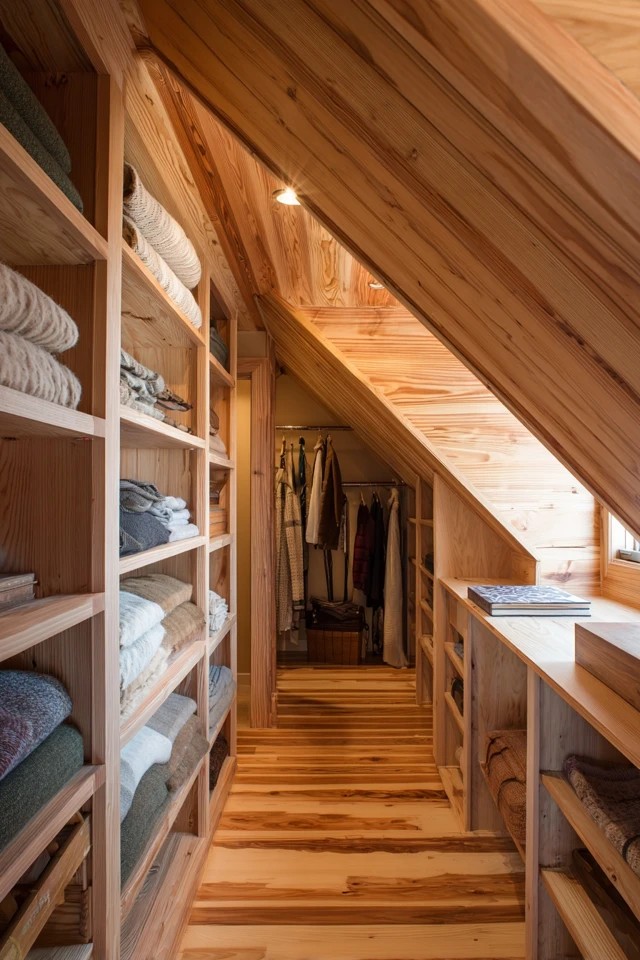
An attic is one of the most valuable and most wasted spaces in any home — a substantial volume of square footage directly above the main living areas that most households use as a dumping ground rather than a designed, organised storage system. Approached thoughtfully, an attic can absorb seasonal items, sports equipment, archives, clothing, and holiday decorations while keeping the main house clear and uncluttered.
Here are 20 attic storage ideas spanning built-in shelving, climate control, specialised racks, and smart organisational systems — each one demonstrating how to transform an underutilised attic into genuinely valuable, accessible, well-maintained storage.
1. Built-In Shelving Along Knee Walls for Maximum Capacity
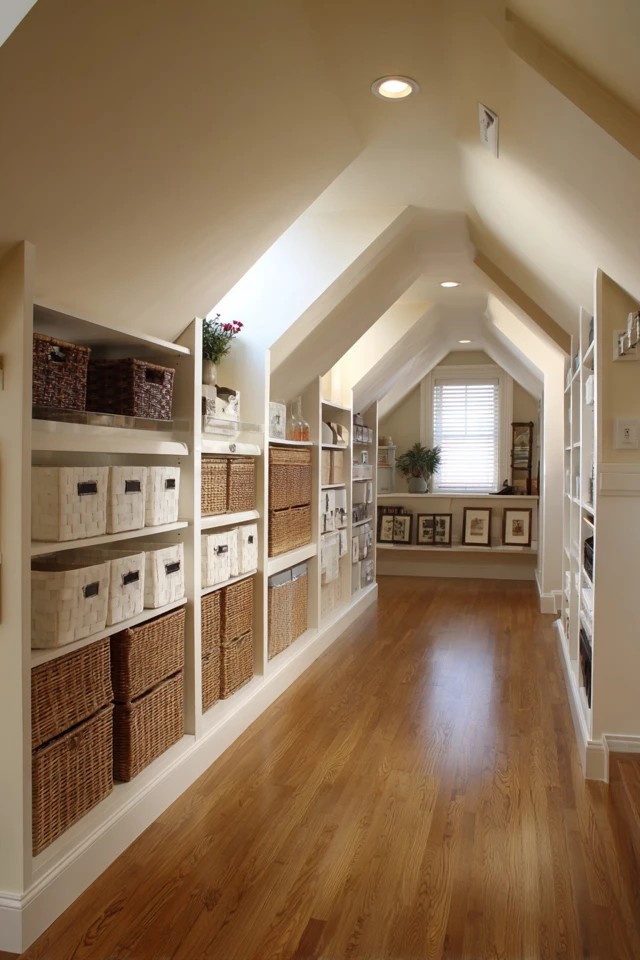
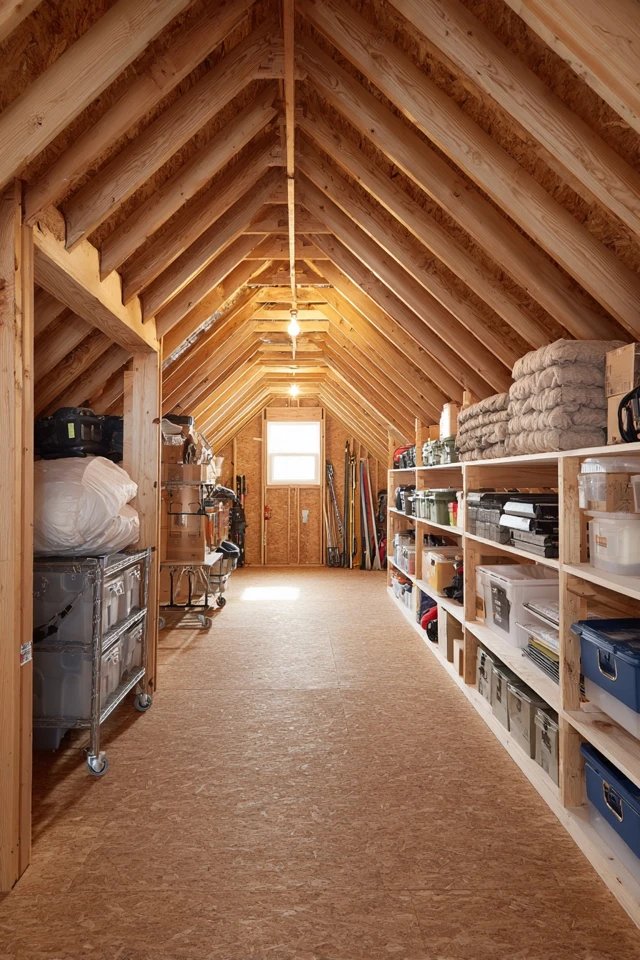
Floor-to-ceiling shelves built into the attic’s knee walls — the short vertical walls where the floor meets the beginning of the roof slope — create the maximum storage capacity available in the space.
- Build shelves in sections of 12-16 inches deep to accommodate standard box and bin dimensions without wasted space.
- Use adjustable shelf pins so shelf spacing can be reconfigured as storage needs change over time.
- Leave at least 30 inches of clear floor space in front of the shelves for comfortable access and retrieval.
2. Labelled Clear Plastic Bins for Visible Systematic Organisation
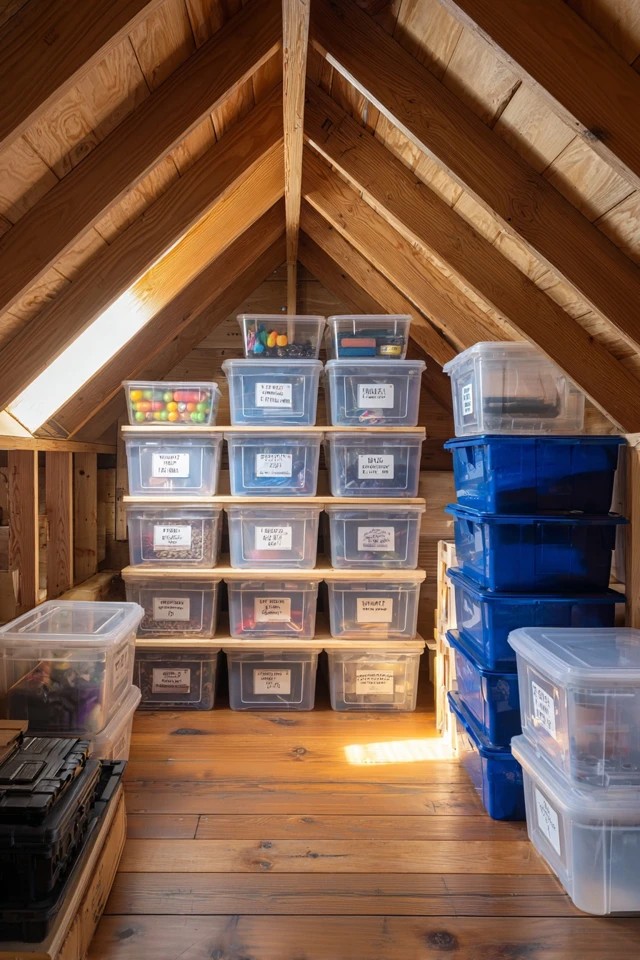
Clear plastic bins with labelled lids create a visible, systematic storage organisation that eliminates the attic’s most common problem — not knowing what is stored where. The transparent sides allow visual identification of contents without opening, and consistent bin sizes stack efficiently to maximise vertical capacity.
- Choose bins with snap-lock lids rather than lift-off lids — they seal more effectively against dust and pests.
- Use a single bin brand and size series throughout for the most efficient stacking and visual uniformity.
- Label both the lid and one side of each bin so contents are identifiable from any angle when stacked.
3. Hanging Rod System for Off-Season Clothing Storage
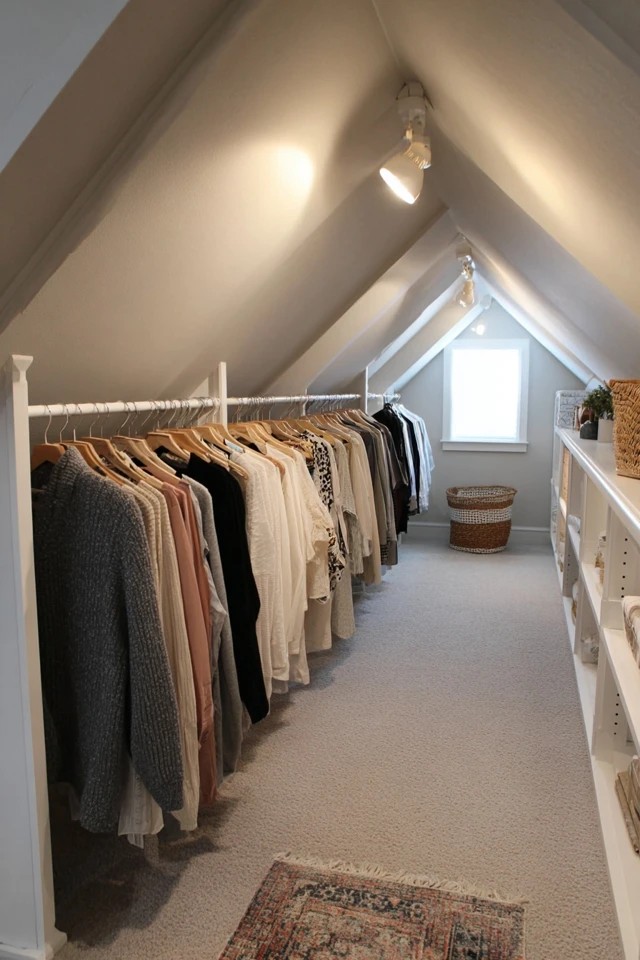
A hanging rod mounted at the height available beneath a section of the attic slope creates a dedicated clothing storage area for off-season garments — winter coats stored in summer, summer dresses stored in winter — keeping them wrinkle-free and accessible in a way that folded storage in bins cannot achieve.
- Install the rod at the highest available point beneath the slope where at least 60 inches of clearance exists above the floor.
- Use cedar hangers or cedar blocks on the rod to deter moths naturally without chemical treatments.
- Group garments by season clearly so the correct items are immediately identifiable when the changeover time arrives.
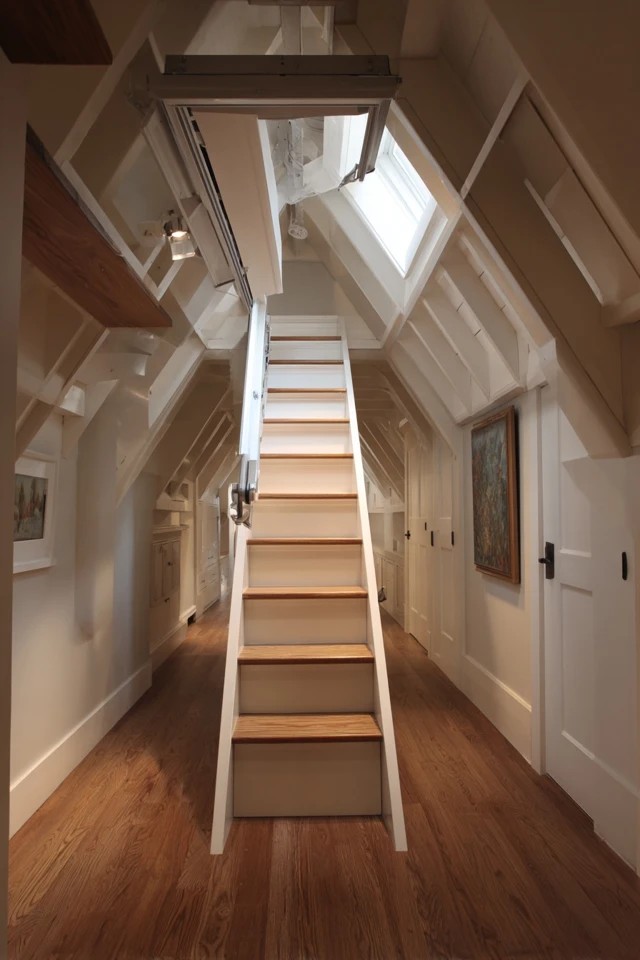
4. Pull-Down Attic Stairs for Safe and Easy Access
A spring-loaded pull-down stair system replacing a basic hatch is the single most important investment in any attic storage project — without safe, easy access, the stored items become functionally inaccessible and the space reverts to a dumping ground for things people cannot face retrieving.
- Choose a pull-down stair rated for at least 300 lbs — the weight limit must accommodate a person plus the items being carried.
- Add handrails to the pull-down stair on both sides for safe single-handed descent when carrying items.
- Install an insulated hatch cover above the stair opening to prevent heat loss from the main house in winter.
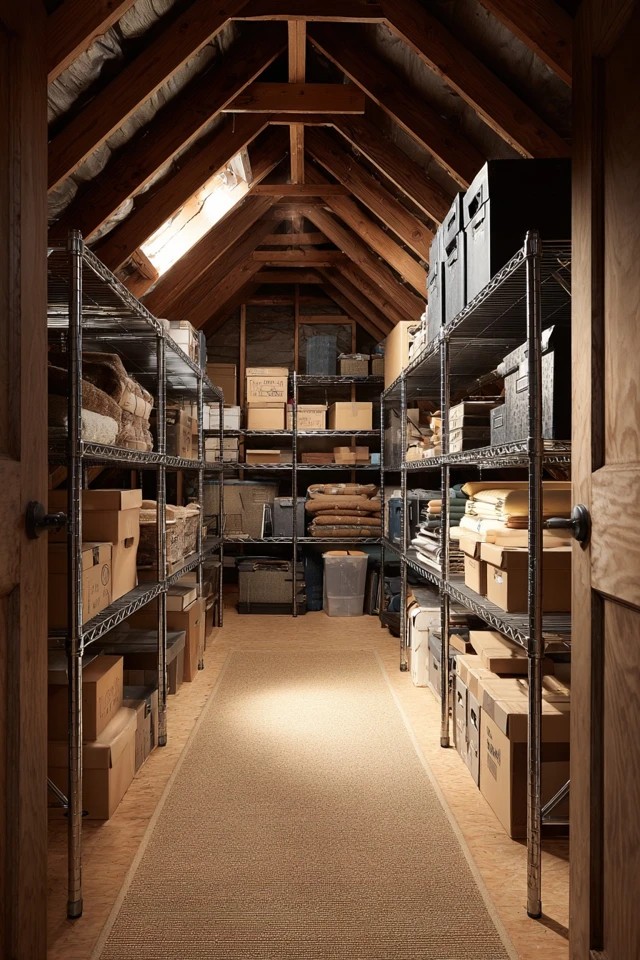
5. Metal Shelving Units for Heavy-Duty Industrial Storage
Adjustable steel shelving units provide the strongest, most durable storage solution for an attic holding heavy items — archive boxes, tools, paint tins, bulk purchases — that would overload lightweight shelving. The industrial aesthetic of steel shelving is entirely appropriate for a functional storage attic, and the adjustable shelf heights accommodate boxes, equipment, and containers of varying sizes without wasted vertical space.
- Choose shelving rated for at least 300 lbs per shelf for safe storage of heavy archive boxes and equipment.
- Anchor tall shelving units to the attic wall or floor to prevent tipping when heavily loaded shelves are accessed.
- Apply a protective coating or choose powder-coated units to prevent rust in an attic environment where humidity fluctuates.
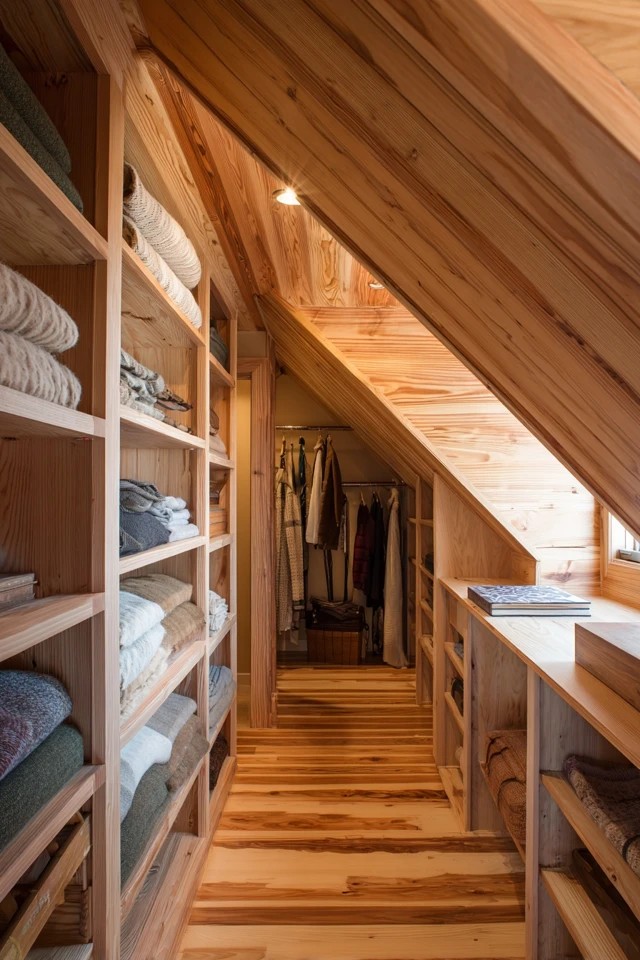
6. Cedar Closet Area for Climate-Protected Textile Storage

Lining a dedicated section of the attic with aromatic cedar planks creates a naturally moth-resistant storage environment for wool clothing, cashmere knits, fine linens, and other textiles vulnerable to insect damage. Built-in shelves within the cedar section keep everything organised and accessible.
- Sand the cedar lightly every two to three years to refresh the aromatic oils as the surface weathers.
- Seal all gaps and joints in the cedar closet thoroughly to prevent moths from entering through any small opening.
- Store garments clean rather than worn — food and perspiration stains are the primary moth attractant, not the fabric itself.
7. Vintage Trunk and Suitcase Collection for Nostalgic Storage
Vintage steamer trunks and antique suitcases stacked in the attic provide genuine storage capacity while creating the most characterful attic aesthetic available — aged leather straps, worn brass fittings, and faded labels tell the story of previous journeys and lives lived.
- Line the interiors of vintage trunks with acid-free tissue paper to protect stored items from any residual acidity in old materials.
- Attach a simple label to each trunk’s exterior identifying its current contents for practical everyday storage use.
- Source trunks from estate sales and antique markets — they are genuinely functional and far more interesting than plastic bins.
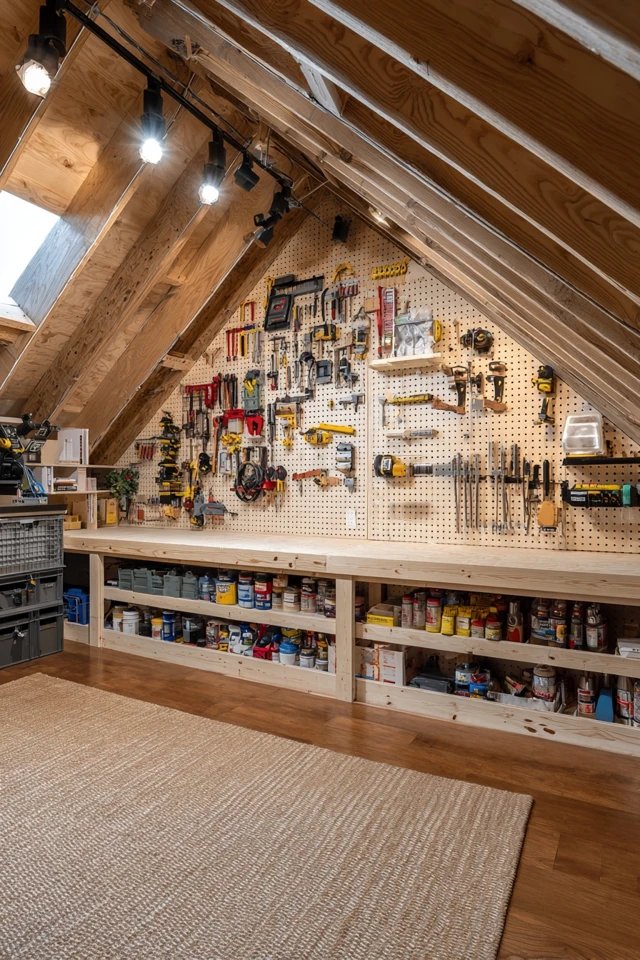
8. Pegboard Wall System for Tool and Supply Organisation
A pegboard panel mounted on the attic wall creates an instantly customisable tool and supply organisation system — hooks, bins, and shelf brackets clip into the perforations and can be rearranged at any time as storage needs change.
- Mount pegboard at least 1 inch away from the wall surface using spacers so hooks have full engagement depth behind the board.
- Group related tools together on the pegboard and mark each hook’s position with a permanent marker for quick return to the correct location.
- Choose 1/4-inch thick hardboard pegboard rather than cheaper cardboard alternatives for durability in a humidity-variable attic environment.
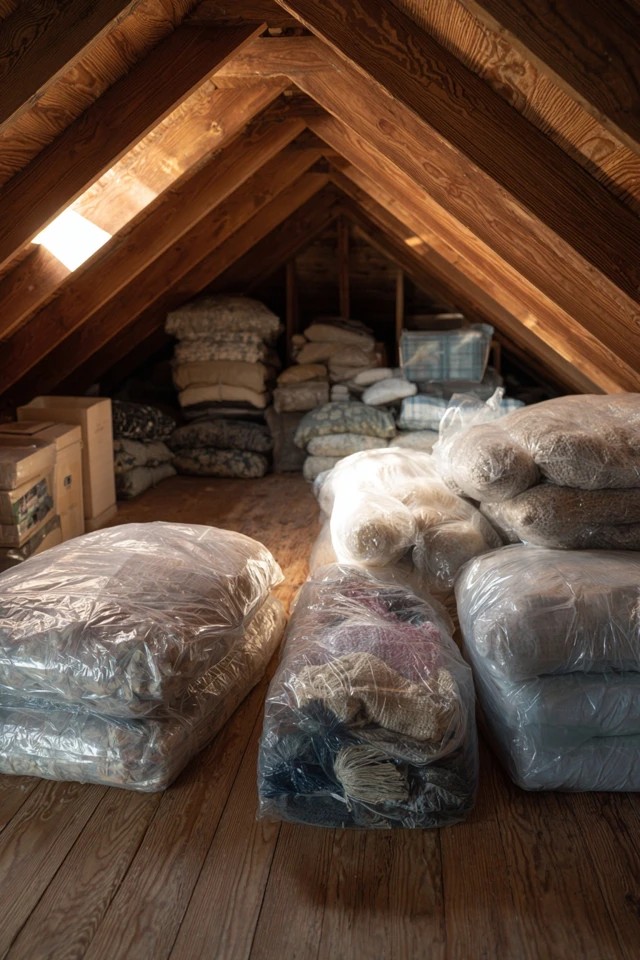
9. Vacuum-Sealed Storage Bags for Space-Saving Compression
Vacuum-sealed storage bags reduce the bulk of duvets, pillows, sleeping bags, and large knit garments to a fraction of their normal size, dramatically increasing the storage capacity of a given attic area.
- Use a cylinder vacuum with a suction attachment rather than a handheld unit for the most complete air removal from bags.
- Store vacuum-sealed bags flat rather than stacked on edge — the compressed contents can shift and rupture the seal when stored vertically.
- Re-seal bags annually and check for slow leaks that allow air re-entry and gradual re-expansion over time.
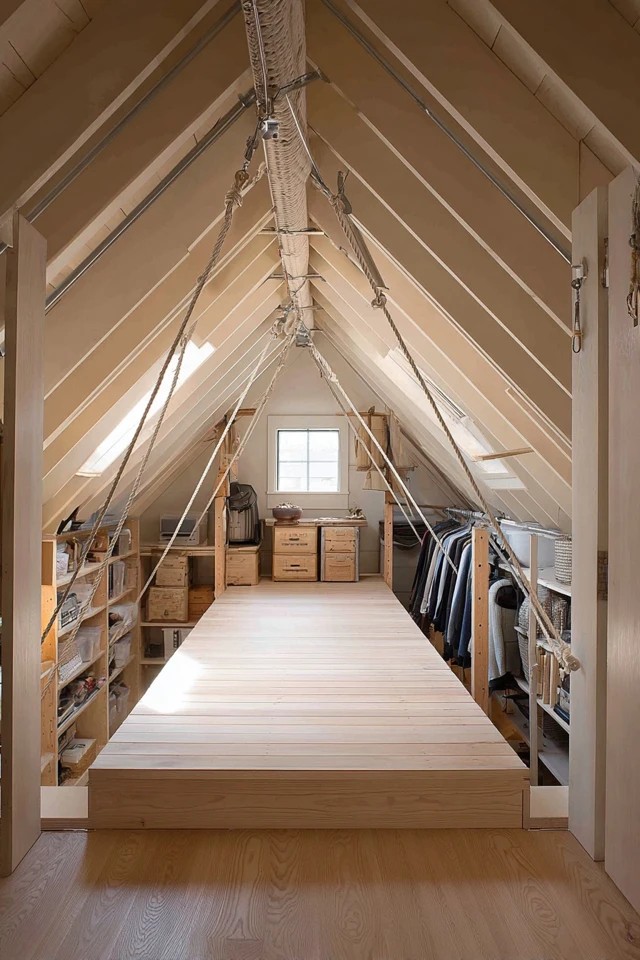
10. Overhead Pulley Platform for High-Ceiling Storage
In an attic with sufficient peak height, a pulley-operated storage platform that raises and lowers via a rope and counterweight system uses the vertical dimension of the space to store items clear of the floor, preserving the walking area beneath for easier access and movement.
- Ensure the ceiling structure can support the combined weight of the platform plus its maximum intended load before installation.
- Use a locking mechanism on the pulley so the raised platform cannot accidentally descend during non-access periods.
- Fit the platform with side rails to prevent stored items from sliding off during raising and lowering operations.
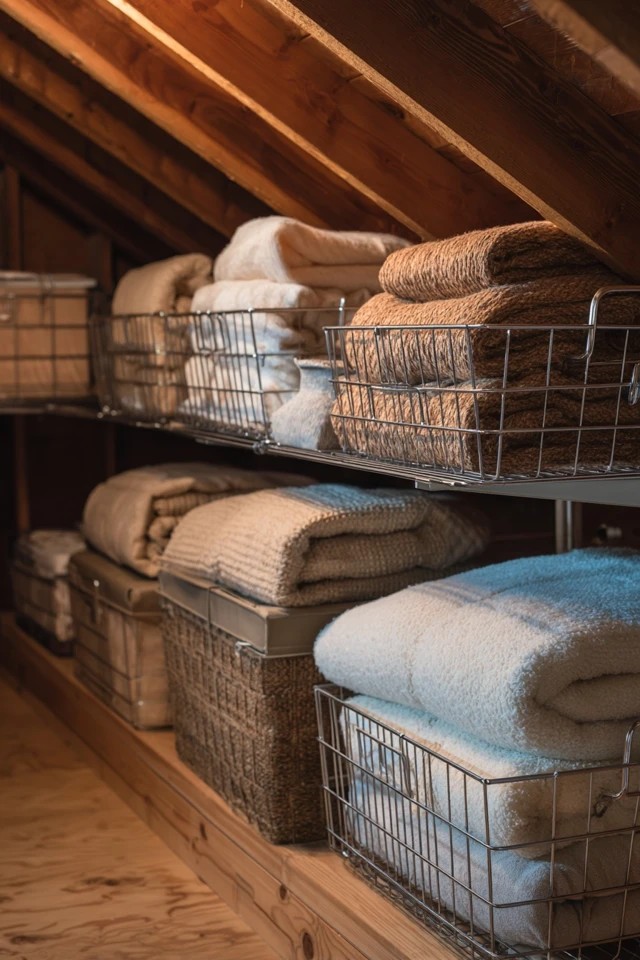
11. Wire Basket System for Ventilated Breathable Storage

Wire or mesh baskets on the attic shelves allow air to circulate freely around stored items, preventing the mustiness and mild mould growth that enclosed containers can develop in an attic where humidity levels fluctuate with the seasons.
- Use wire baskets for items that benefit from air circulation — wicker pieces, natural-fibre textiles, dried flowers, leather goods.
- Line baskets with acid-free tissue paper if storing items sensitive to the wire surface contact.
- Label the front face of each basket clearly since contents are visible but not always immediately identifiable from a distance.
12. Modular Cube Organisers for Flexible Configurations
Modular cube organisers that stack and connect in multiple configurations provide an adaptable storage system that can be reconfigured as storage needs evolve over time — a practical advantage in an attic whose contents change significantly year to year.
- Choose cube units that connect securely side-to-side and top-to-bottom to prevent the assembled structure from toppling.
- Use fabric drawer inserts in cubes storing items that would look untidy through an open front.
- Reserve the top surface of the highest cube row for lightweight seasonal items that are accessed rarely.
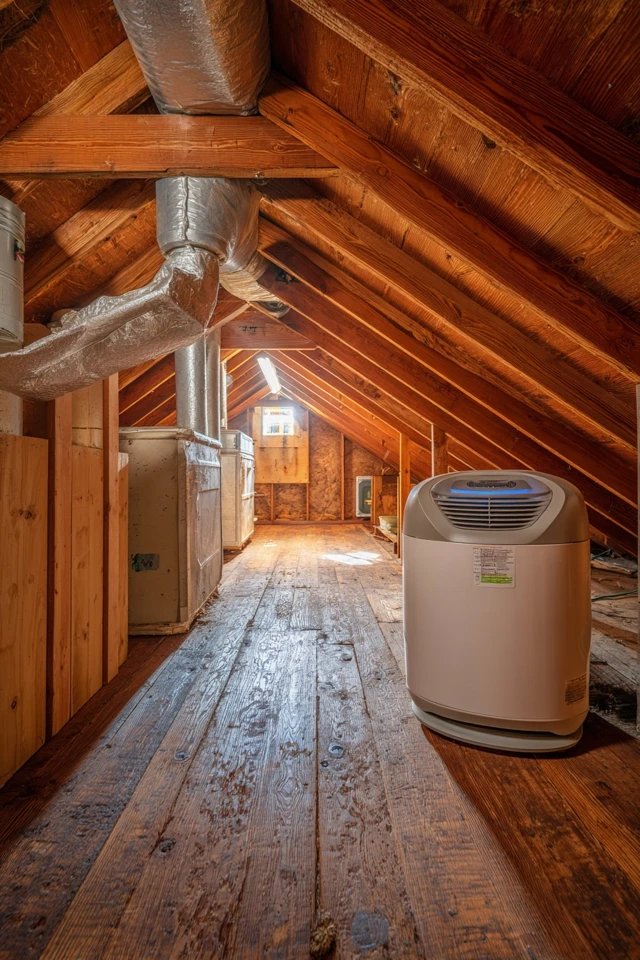
13. Dehumidifier for Climate-Controlled Storage Protection
A dehumidifier running in the attic during humid summer months maintains the moisture level required to prevent mould growth on stored fabrics, paper documents, wood items, and leather goods.
- Set the dehumidifier to maintain relative humidity between 45-55% — below this range causes materials to dry and crack.
- Choose a model with an automatic drainage hose connection rather than a manual emptying reservoir for unattended continuous operation.
- Place the dehumidifier centrally in the attic space for the most even humidity control across the entire storage area.
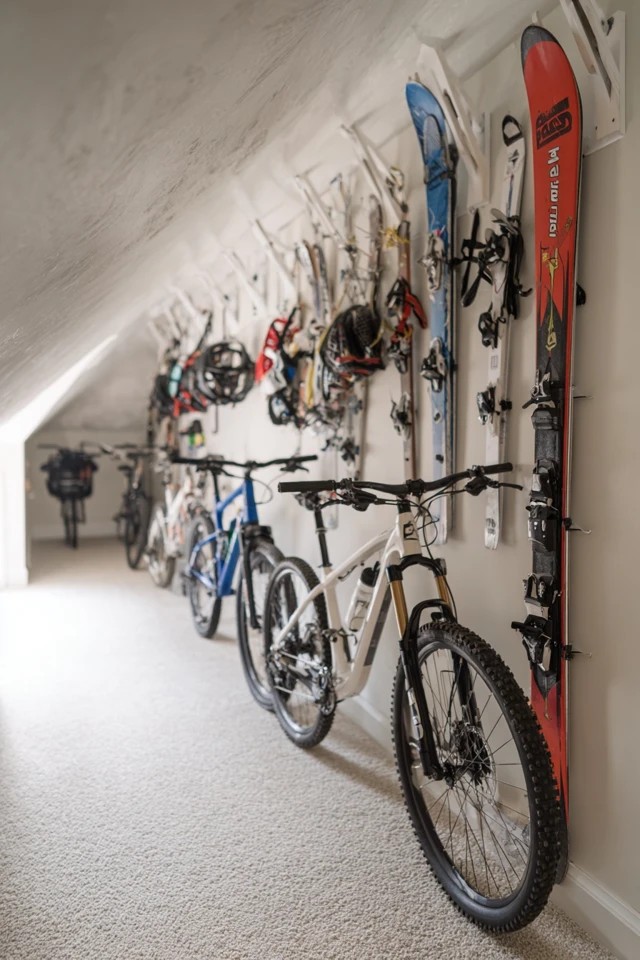
14. Sports Equipment Rack for Specialist Gear Storage
A purpose-built sports equipment rack mounted on the attic wall accommodates the awkward shapes and sizes of ski equipment, bicycles, camping gear, and other outdoor equipment that resist conventional shelf storage.
- Mount ski and snowboard racks at a height that allows equipment to hang vertically without touching the floor.
- Use a bike pulley system for bicycles rather than a fixed wall mount to allow floor access when needed.
- Apply foam padding to any rack contact points that touch finished equipment surfaces to prevent scratching or damage.
15. Holiday Decoration Boxes for Seasonal Organisation
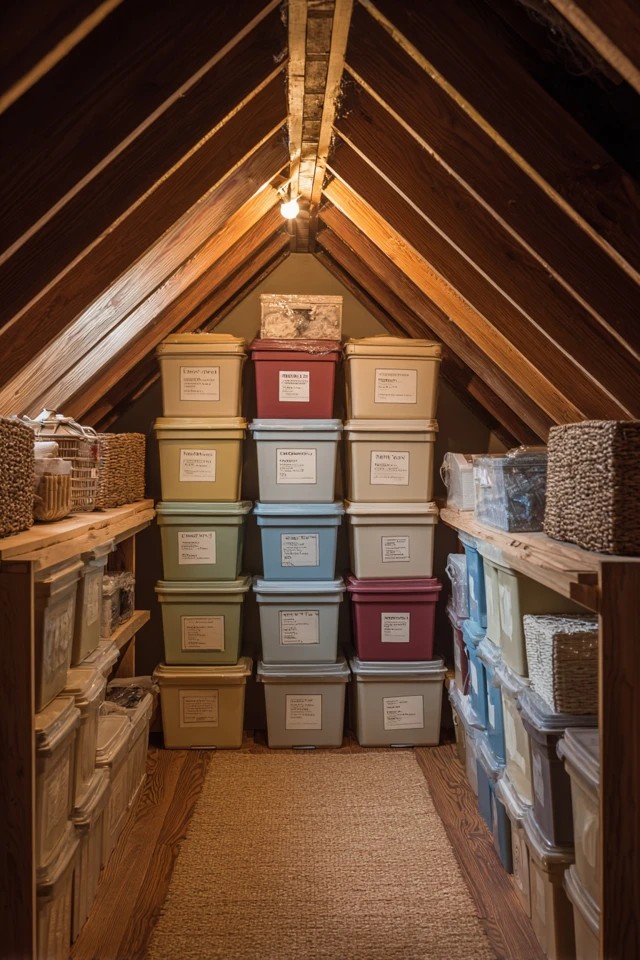
Dedicated boxes for each holiday’s decorations — labelled clearly and organised by occasion on designated shelves — create a seasonal storage system that makes festive decorating effortless rather than frustrating.
- Use purpose-built ornament boxes with individual compartments for fragile decorations rather than general storage bins.
- Store each holiday’s decorations together on the same shelf section rather than distributed across multiple locations.
- Include a brief inventory sheet inside each box so any missing or broken items are identified before the decorating season begins.
16. Archival Document Boxes for Important Paper Storage
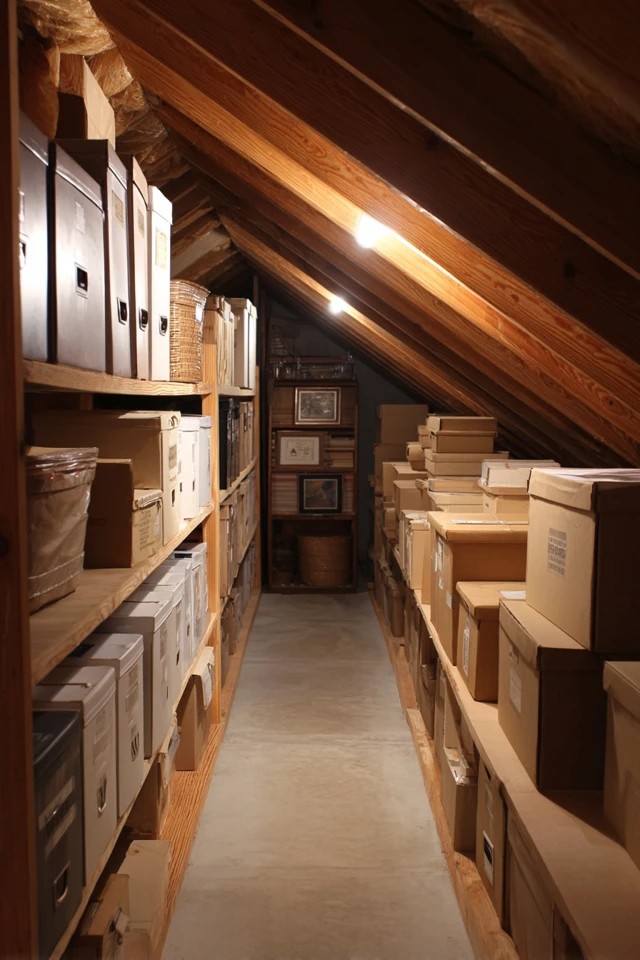
Acid-free archival boxes store important documents — property deeds, insurance records, family photographs, and legal papers — in a protected format that prevents the yellowing, brittleness, and deterioration that standard cardboard boxes accelerate over time.
- Choose boxes specifically marked as acid-free and lignin-free — standard cardboard actively damages paper through acid migration over time.
- Store document boxes in the most climate-stable section of the attic, away from the roof peak where temperature extremes are greatest.
- Create a master document inventory that records every box’s contents and location within the attic storage system.
17. Built-In Drawer Units Under the Eaves for Hidden Storage
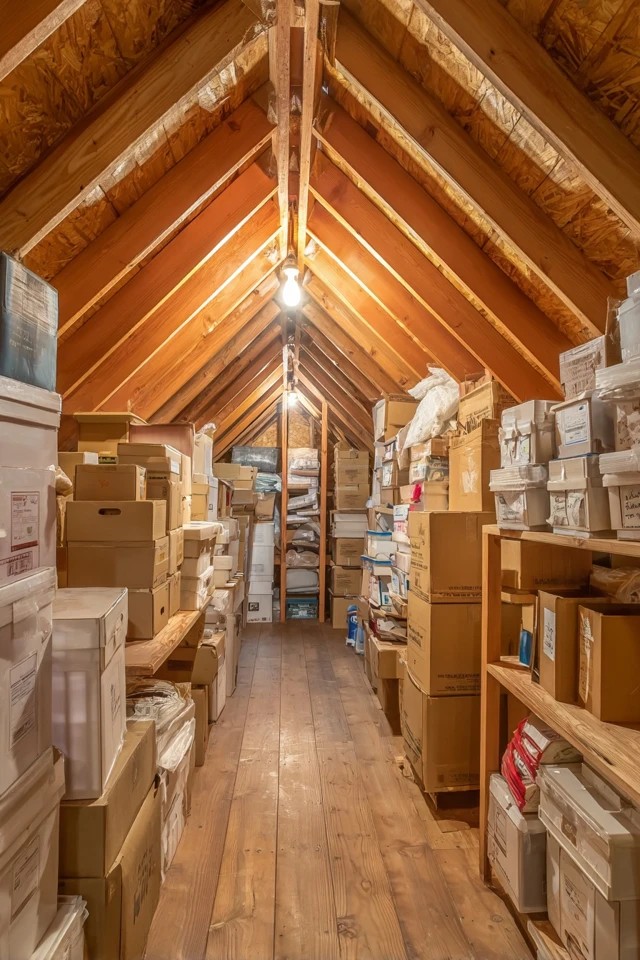
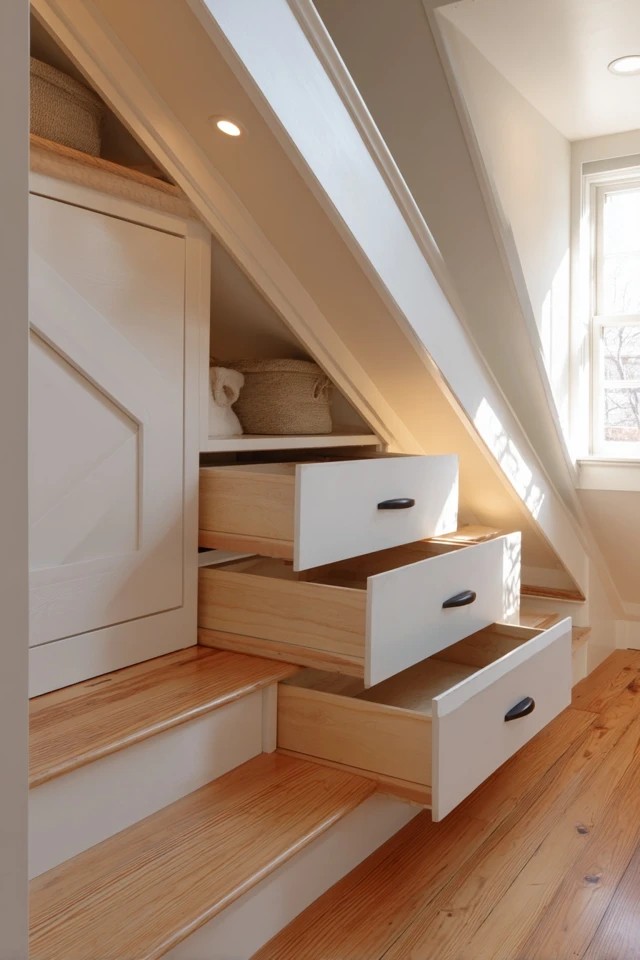
Pull-out drawer units built precisely into the triangular eave spaces — where ceiling height diminishes to too low for standing but perfectly suits drawer access — create concealed storage that feels integrated into the attic’s architecture.
- Build drawer fronts flush with the knee wall surface for the most integrated, architectural hidden storage appearance.
- Use full-extension drawer runners rated for the maximum anticipated drawer load plus a 50% safety margin.
- Install a finger-pull recess rather than a handle on drawer fronts for a completely seamless integrated look.
18. Rolling Cart System for Mobile Storage Flexibility
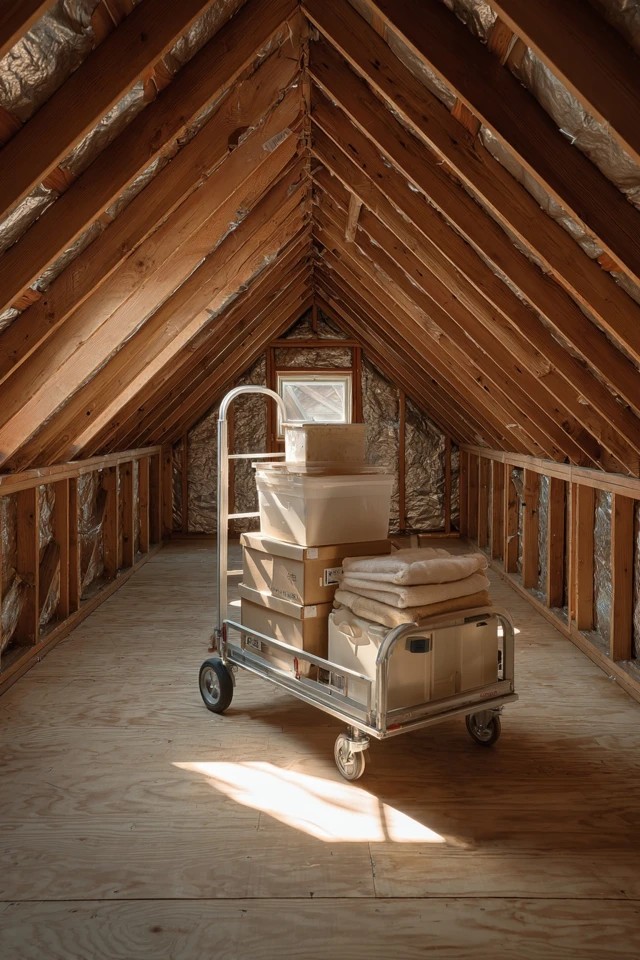
A rolling cart on lockable casters provides the most ergonomically efficient way to move items around the attic during packing and unpacking sessions — the cart travels to wherever items are stored and eliminates the repeated carrying trips that make attic storage sessions physically exhausting.
- Choose a cart with locking casters so it stays fixed during loading and unlocks smoothly for easy repositioning.
- Select a cart width that fits through the pull-down stair opening with sufficient clearance for safe carrying.
- Use the cart’s lower shelf for heavy items and upper surface for lighter objects to maintain a stable centre of gravity.
19. Inventory Management System for Tracked Storage
A physical inventory list posted on the attic wall or a simple digital spreadsheet tracking every storage box’s contents and location transforms attic storage from a black hole of forgotten items into a genuinely retrievable archive.
- Use a simple spreadsheet with columns for item, storage unit number, and date stored for the most efficient retrieval system.
- Photograph the contents of each bin before sealing it so the inventory entry can include a visual reference.
- Review and update the inventory annually — items stored and forgotten for over three years are candidates for donation or disposal.
20. Insulation and Proper Ventilation for Climate-Stable Storage
Proper insulation and ventilation are the non-negotiable infrastructure investments that make everything else in this list worthwhile — without them, the attic experiences temperature extremes that damage stored items and humidity fluctuations that cause mould, regardless of how well-organised the storage system is.
- Insulate the knee walls and attic floor to R-30 or higher for meaningful temperature stability throughout the storage zone.
- Install both soffit and ridge ventilation to create the stack-effect airflow that prevents summer overheating and winter condensation.
- Add a basic temperature and humidity monitor in the attic so conditions can be verified before storing sensitive items.
Why These Attic Storage Ideas Excel
Every idea on this list succeeds because it treats the attic as a valuable resource to be designed and managed rather than a space to be filled by default. The most effective attic storage systems combine the right physical infrastructure — shelving, climate control, access solutions — with the organisational discipline to keep the system functioning well over years and decades of use.
Climate control — the dehumidifier, cedar closet, insulation, and ventilation — is the foundation that every other storage investment depends upon. No shelving system, no labelling scheme, no archival box can protect stored belongings from a damp, temperature-extreme attic environment. Before investing in organisation systems, the attic’s climate must be assessed and stabilised for meaningful long-term attic storage success.
Accessibility and organisation — pull-down stairs, clear bins, inventory systems, rolling carts, and labelled seasonal boxes — determine whether the attic functions as a genuinely useful storage resource or simply as a slightly better-organised version of the chaos it replaced. The key insight is that attic storage is only as valuable as its retrievability: items that cannot be found easily are functionally equivalent to items that do not exist.
Specialisation — the cedar closet for textiles, the archive boxes for documents, the sports rack for equipment, the holiday boxes for decorations — is what makes an attic storage system serve the household’s actual needs rather than providing generic capacity. Each category of stored item has different requirements for climate, access frequency, and physical organisation, and the best attic storage ideas address these differences with purpose-built solutions for each.
Conclusion
A well-organised attic is one of the most valuable spaces in any home — freeing the main living areas from the accumulated surplus of household life while keeping belongings accessible, protected, and properly maintained for as long as they are needed. Begin with safe access and proper climate control, invest in shelving that fits the specific geometry of the space, establish a labelling and inventory system from day one, and address the specific needs of each category of stored item. An attic organised this way stays organised, and every item stored within it is available when needed.

Andrew is the founder and lead writer at RoomBlossom, a home decor publication dedicated to practical, intentional interior design. With over 10 years of hands-on experience transforming real-world living spaces — from compact apartments to full attic conversions — Andrew specialises in room design that balances visual appeal with everyday function. His work spans living rooms, bedrooms, sunrooms, and attic spaces, always guided by the belief that great design should work for the people who live in it, not just look good in photographs.