
Open-concept living presents wonderful opportunities for spacious, flowing interiors, yet the lack of defined boundaries often creates challenges in establishing distinct functional zones within larger spaces. Room separators provide elegant solutions, dividing areas without the permanence and expense of constructing walls while maintaining the airy openness that makes open floor plans so desirable. From architectural elements like half-walls and glass partitions to flexible options including bookcases, screens, and textile dividers, creative separation strategies define spaces while preserving light flow and visual connection between areas.
The art of effective room separation lies in balancing division with openness—creating psychological boundaries and functional zones without sacrificing the spacious feeling or natural light that drew you to open-concept living initially. Strategic separators reduce noise transfer between areas, provide privacy when needed, offer additional storage or display opportunities, and help furniture arrangements make sense within undefined spaces. Whether dividing living rooms from dining areas, creating home office zones, or establishing bedroom privacy in studio apartments, the right separator transforms ambiguous open space into purposefully defined yet connected living areas.
In this guide, we’ll explore fifteen distinctive living room separator ideas ranging from substantial architectural installations to lightweight portable solutions, demonstrating how to divide spaces beautifully while maintaining the benefits of open-plan living through transparency, light passage, and visual flow.
1. Double-Sided Open Bookshelf Divider

A floor-to-ceiling open bookshelf unit in natural walnut wood divides living area from dining space while maintaining visual flow through transparent shelving. The double-sided design displays books, plants, and decorative objects visible from both sides creating functional storage and attractive display. The separator anchors to floor and stops short of ceiling allowing light passage overhead while providing substantial division. Grey sofa on one side and dining table opposite define separate zones while the see-through shelving maintains spatial connection.
Natural daylight from windows on both sides filters through open shelving preventing either space from darkening. The walnut wood grain adds warmth and organic texture while the geometric grid of shelves creates architectural interest and rhythm. This approach provides practical storage maximizing vertical space while the open construction prevents heavy visual barriers.
- Choose floor-to-ceiling open shelving for storage and division combined
- Select natural wood finishes adding warmth to separated spaces
- Keep shelving open allowing light and visual flow through divider
2. Modern Half-Wall Partition
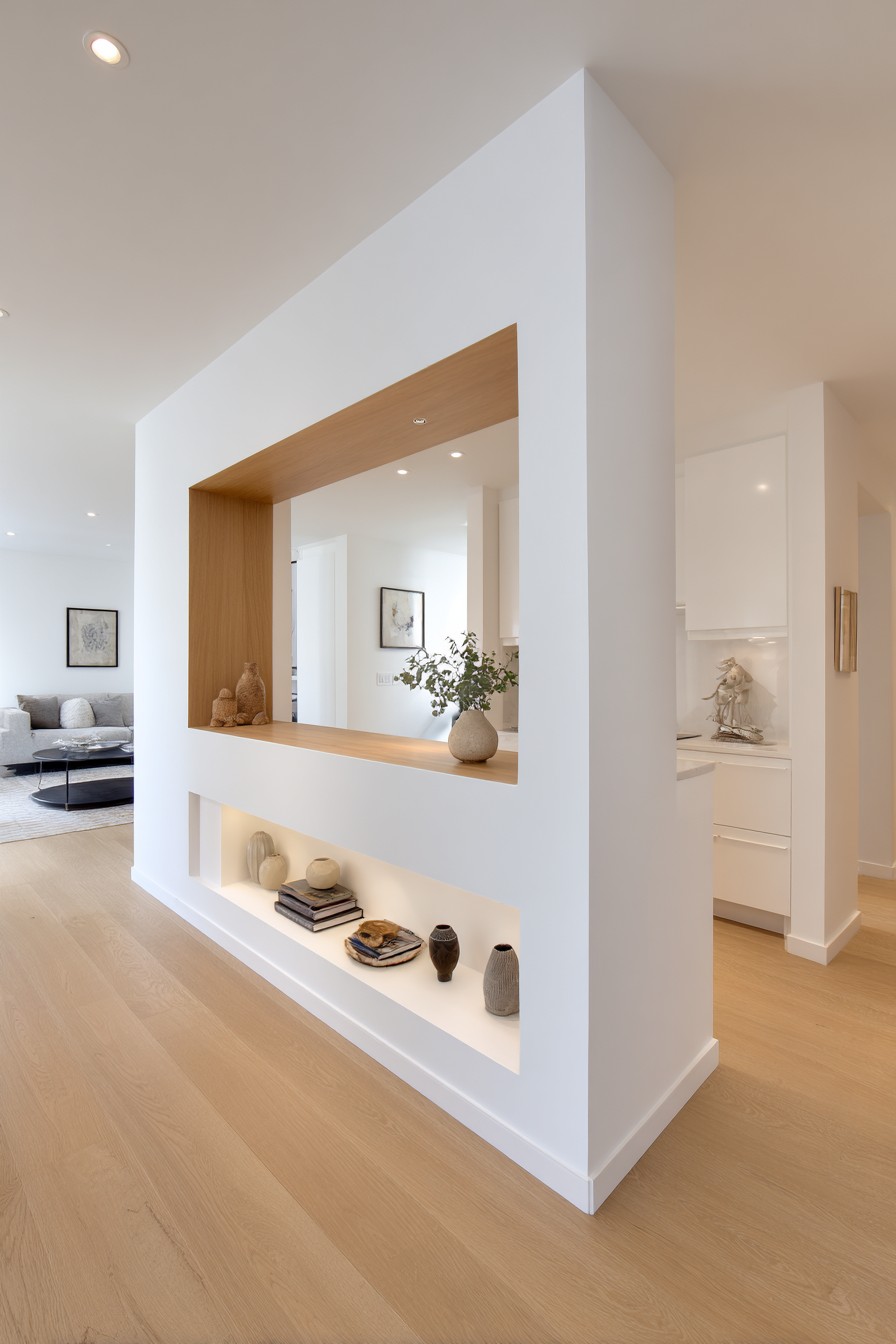
A minimalist half-wall partition in white-painted drywall topped with natural oak cap creates subtle division between living room and entryway. The low wall stands approximately 42 inches high providing separation while maintaining sightlines across spaces. Built-in display niche on living room side holds decorative items adding function while clean lines and simple construction make this achievable for most homeowners. The two-tone finish combines crisp white with warm wood creating visual interest.
The partial height allows conversation and visual connection while establishing clear boundaries. The oak cap provides finished edge and surface for displaying objects while preventing the half-wall from appearing unfinished. This permanent yet open solution works particularly well for defining entries or separating active zones from quieter areas.
- Build half-walls at 42-48 inches for optimal separation without blocking views
- Add wood caps for finished appearance and display surface
- Include built-in niches for functional display opportunities
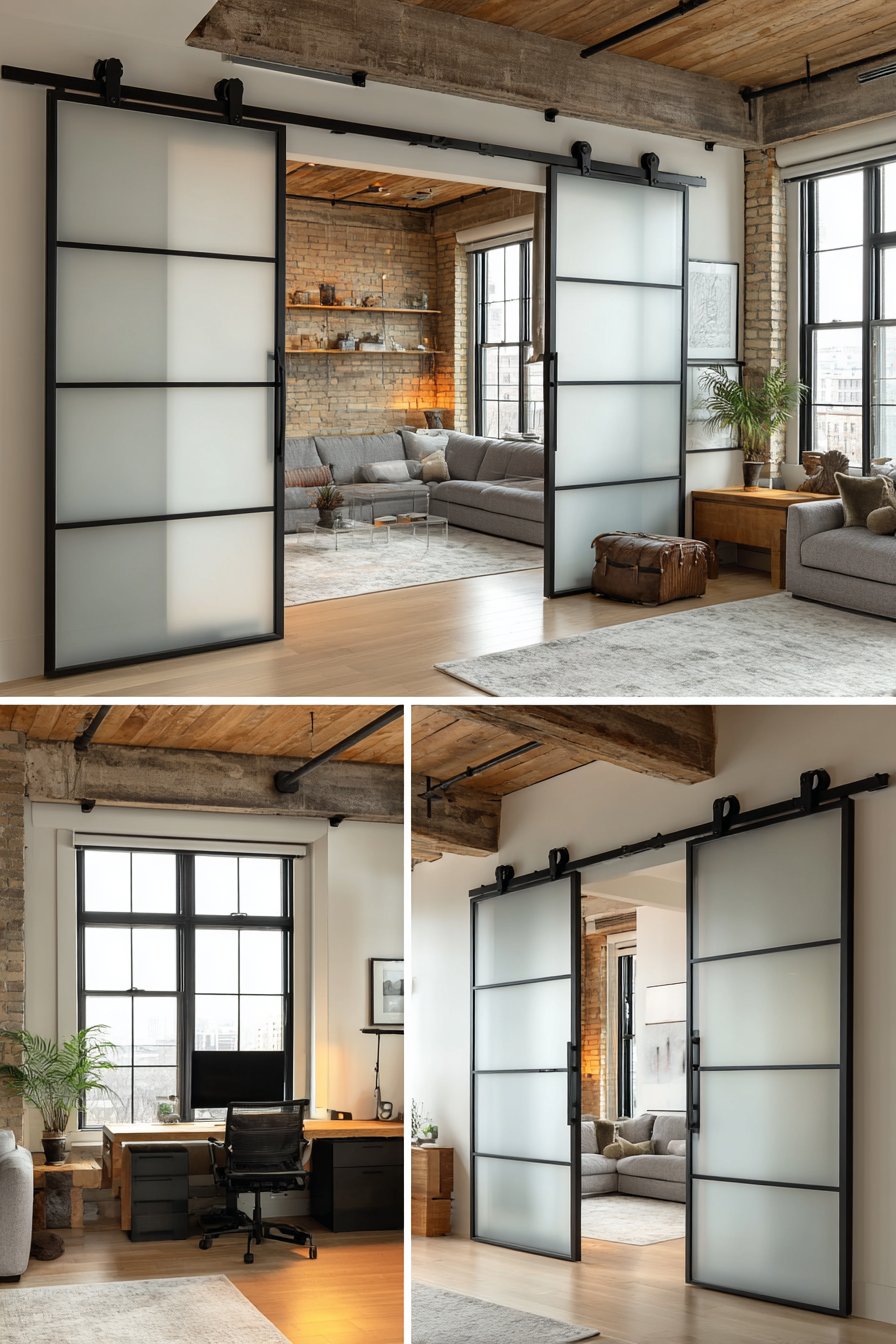
3. Industrial Sliding Barn Door
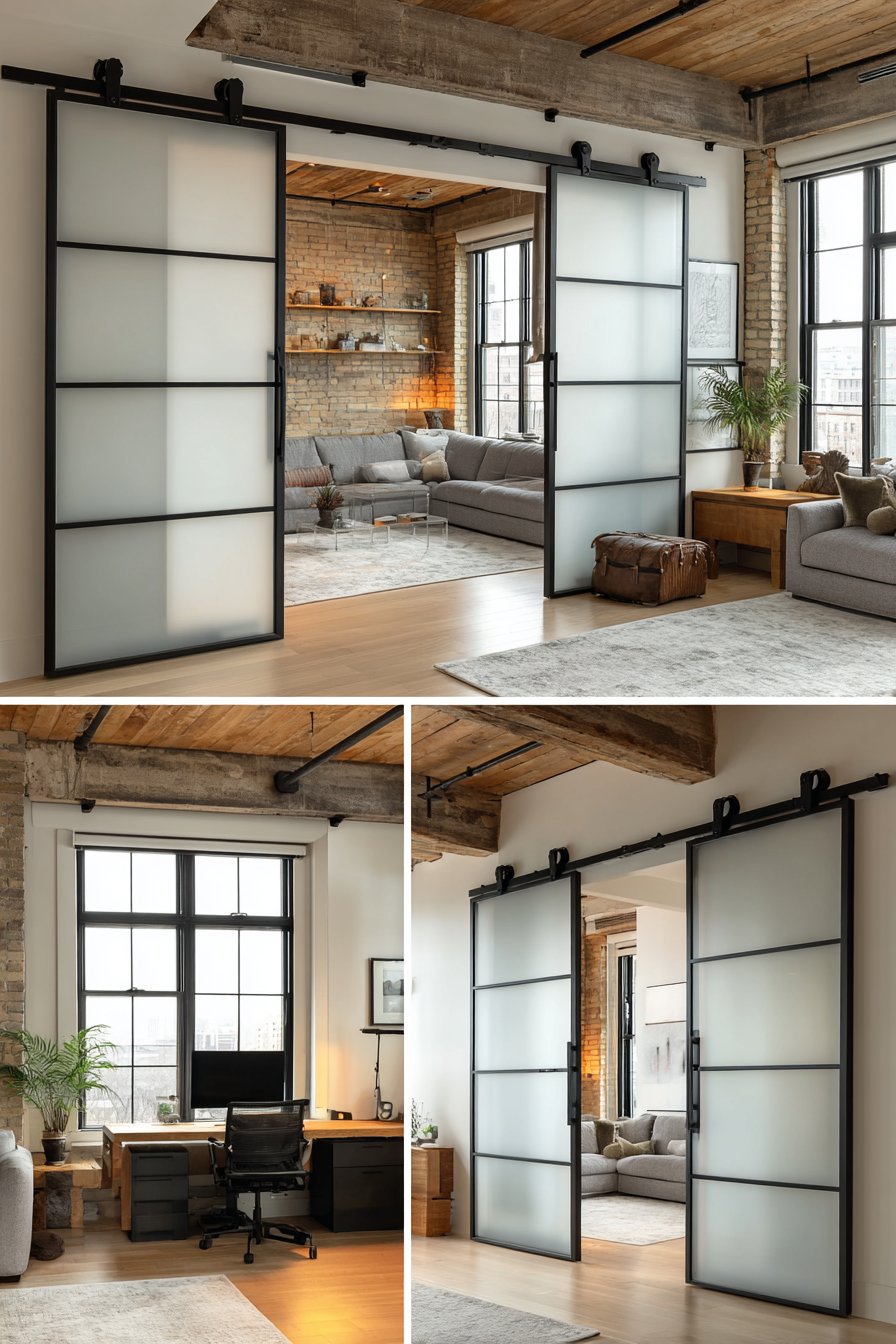
A sliding barn door system with frosted glass panels in black metal frame creates flexible partition between living room and home office in converted loft spaces. The industrial-style sliding door fully opens for open floor plan or closes for privacy during work calls. Track mounted to exposed ceiling beam adds urban aesthetic while the door stacks to one side when open revealing both spaces. Natural light diffuses through frosted glass when closed maintaining brightness while providing visual privacy.
The flexibility proves ideal for spaces requiring occasional separation. The black metal frame adds contemporary industrial character while the frosted glass balances privacy with light transmission. The sliding mechanism saves space compared to swinging doors while the barn door hardware becomes decorative architectural feature.
- Use sliding barn doors for flexible separation in loft spaces
- Choose frosted glass panels balancing privacy with light passage
- Mount on exposed beams or substantial tracks supporting weight
4. Scandinavian Vertical Slat Screen
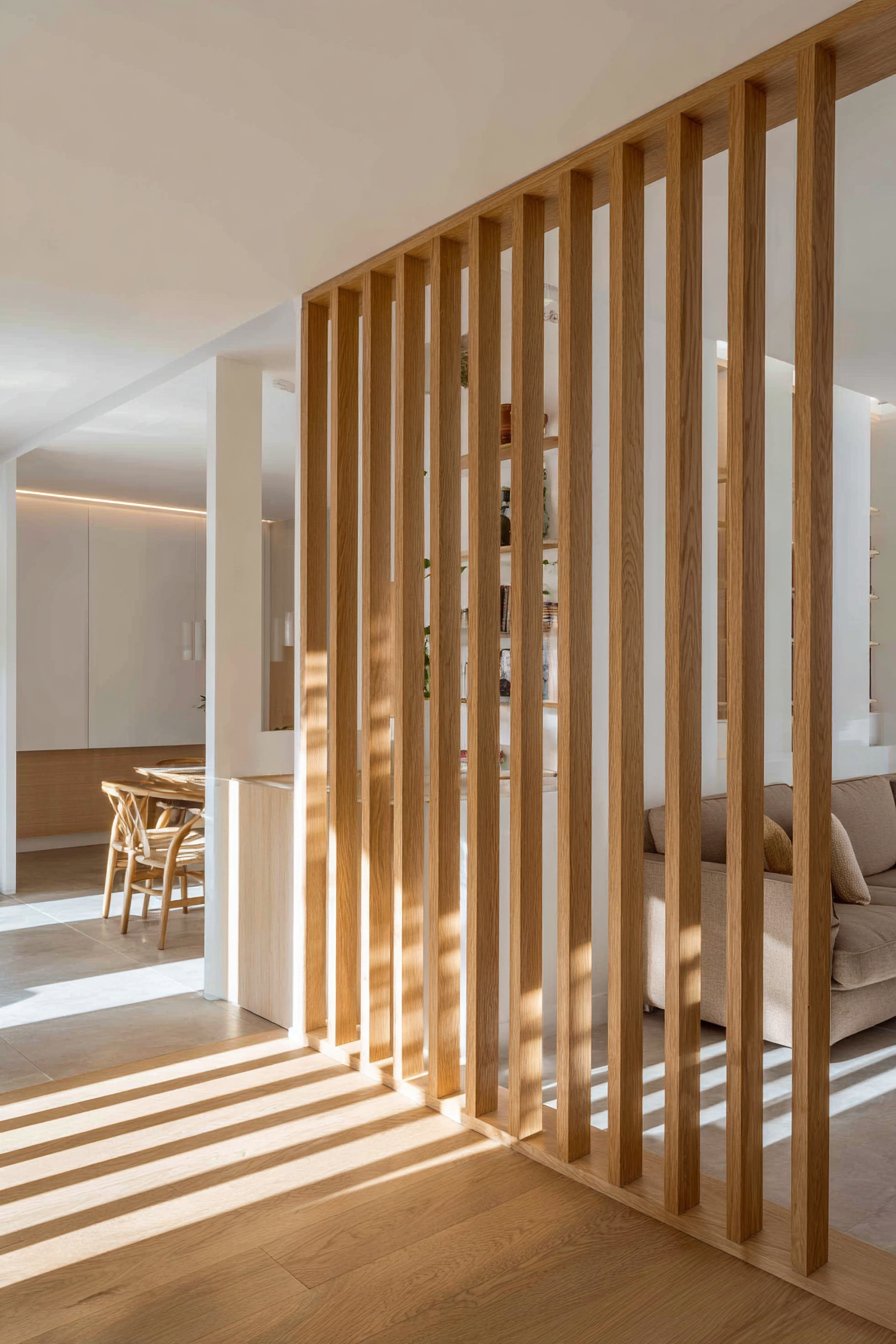
A vertical slat wood divider in light oak with evenly spaced vertical boards creates semi-transparent screen between living room and dining area. The floor-to-ceiling partition allows light and visual connection while defining separate zones. Slats mounted to top and bottom rails with 4-inch spacing create rhythm and texture while white walls on both sides enhance natural wood tones. Soft diffused daylight passes through slats creating linear shadow patterns that shift throughout the day.
The vertical orientation emphasizes ceiling height while the regular spacing creates architectural quality and visual interest. The light oak maintains Scandinavian brightness while the semi-transparent nature preserves openness. The shadow play adds dynamic element changing with sun angles throughout the day.
- Space vertical slats 3-5 inches apart for balanced privacy and openness
- Use light wood tones maintaining brightness in Scandinavian spaces
- Mount floor-to-ceiling emphasizing vertical space and architectural presence
5. Custom Storage Unit Room Divider
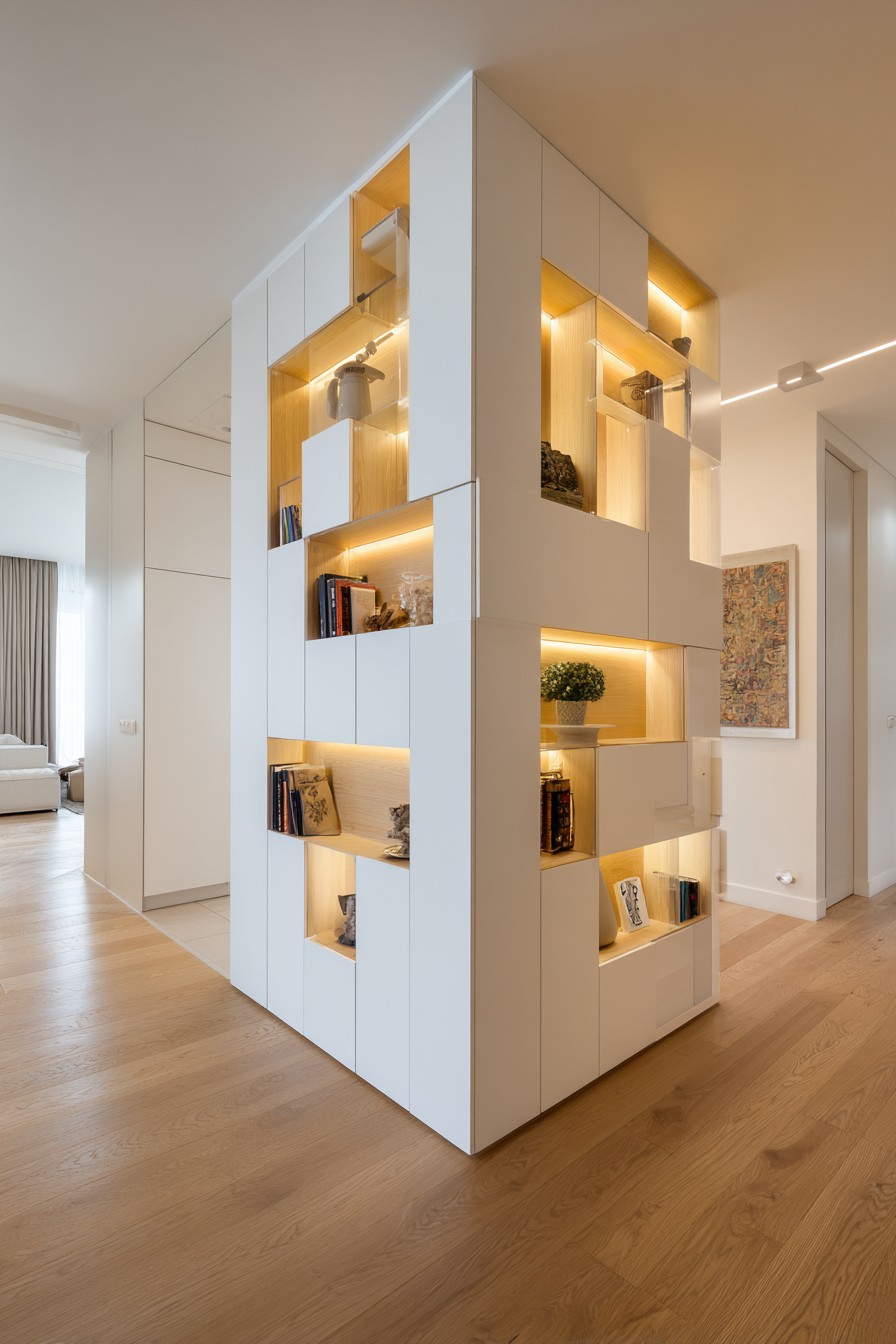
A custom-built storage unit serves as room divider between living room and hallway maximizing functionality in small apartments. The white lacquered cabinet system features open cubbies on living room side and closed storage on hallway side providing dual-purpose design. The freestanding unit extends floor-to-ceiling but stops short of wall allowing circulation while integrated LED lighting in open shelves creates ambient glow. Natural oak flooring flows through both spaces maintaining continuity.
The different treatments on each side address specific needs—display on living side, concealed storage on hallway side. The white finish maintains brightness while the substantial construction provides solid division. The integrated lighting transforms functional storage into attractive design feature creating atmospheric illumination.
- Design custom units with different functions on each side maximizing utility
- Add integrated LED lighting creating ambiance in storage separators
- Stop short of walls allowing circulation around freestanding dividers
6. Bohemian Rope Macramé Divider
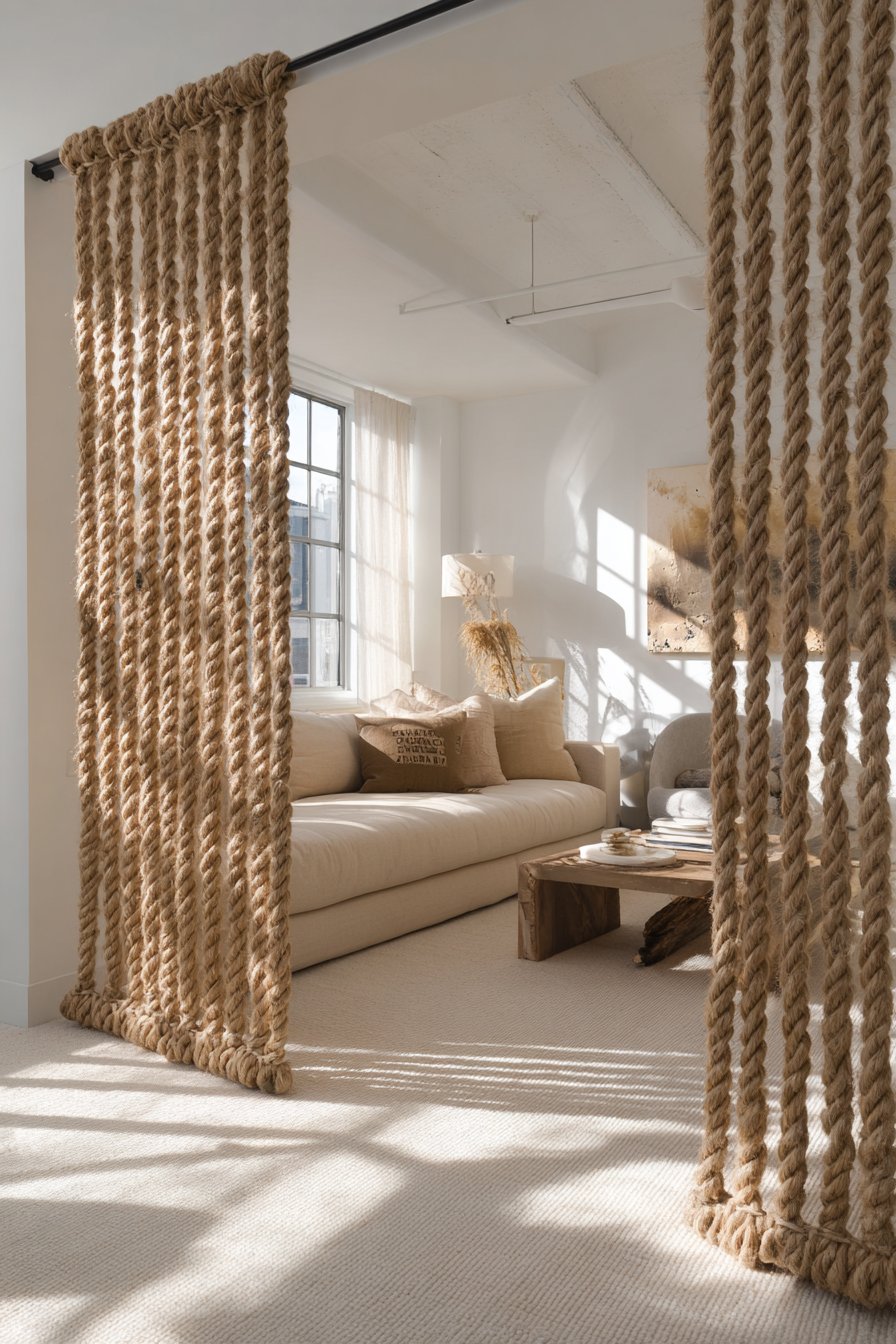
A dramatic floor-to-ceiling rope room divider made from natural jute cord creates bohemian partition between living area and bedroom in studio apartments. The macramé-style hanging creates texture and visual interest while allowing air and light passage. Mounted on ceiling track system for easy adjustment allowing flexible positioning. The organic fiber material adds warmth to white-walled spaces while beige sofa on one side and bed opposite establish separate zones.
Soft natural window light filters through rope creating dappled shadows and atmospheric effects. The handcrafted quality adds artisanal character while the textile nature softens hard architectural surfaces. The track mounting enables repositioning or complete removal when full openness desired making this ideal for flexible studio living.
- Use rope or macramé dividers for bohemian textile separation
- Mount on ceiling tracks allowing flexible positioning and removal
- Choose natural fibers adding organic warmth to minimal spaces
7. Living Plant Wall Screen
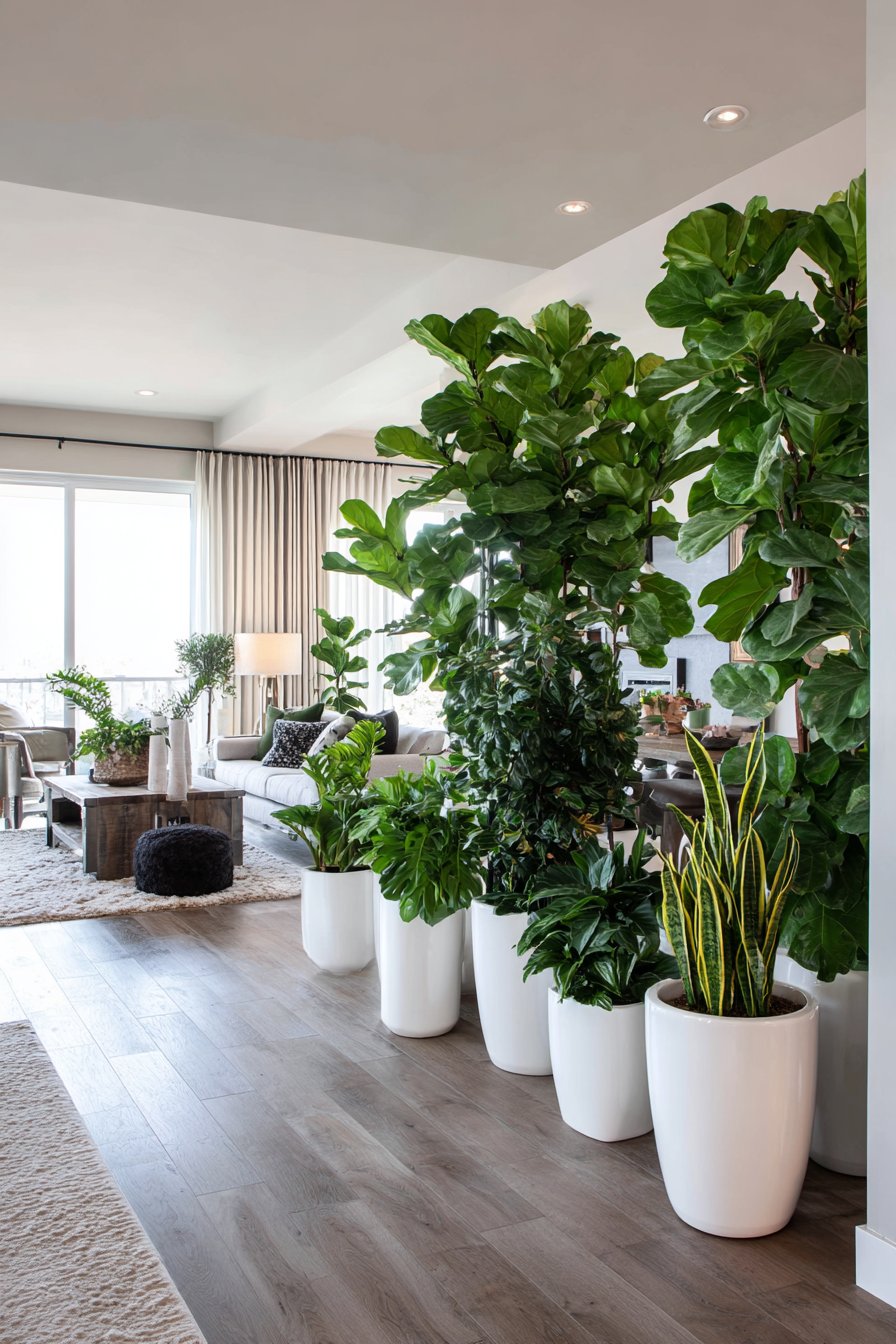
A series of tall potted plants arranged in linear row creates natural green screen between living room and dining space. Large fiddle leaf figs, monstera, and snake plants in matching white ceramic planters stand on floor defining boundary organically. The living plant wall provides separation without blocking light completely while wood flooring and neutral furnishings allow greenery to become focal point. Natural daylight from multiple windows keeps plants healthy and thriving.
The biophilic design approach brings nature indoors while creating functional division. The varied plant textures and heights create visual interest and organic rhythm while the white planters maintain cohesive appearance. This living separator improves air quality while adding vibrant green color to neutral spaces.
- Arrange tall plants in linear rows for natural organic separation
- Use matching planters creating cohesive appearance despite plant variety
- Position near windows ensuring adequate light for plant health
8. Contemporary Metal and Glass Partition
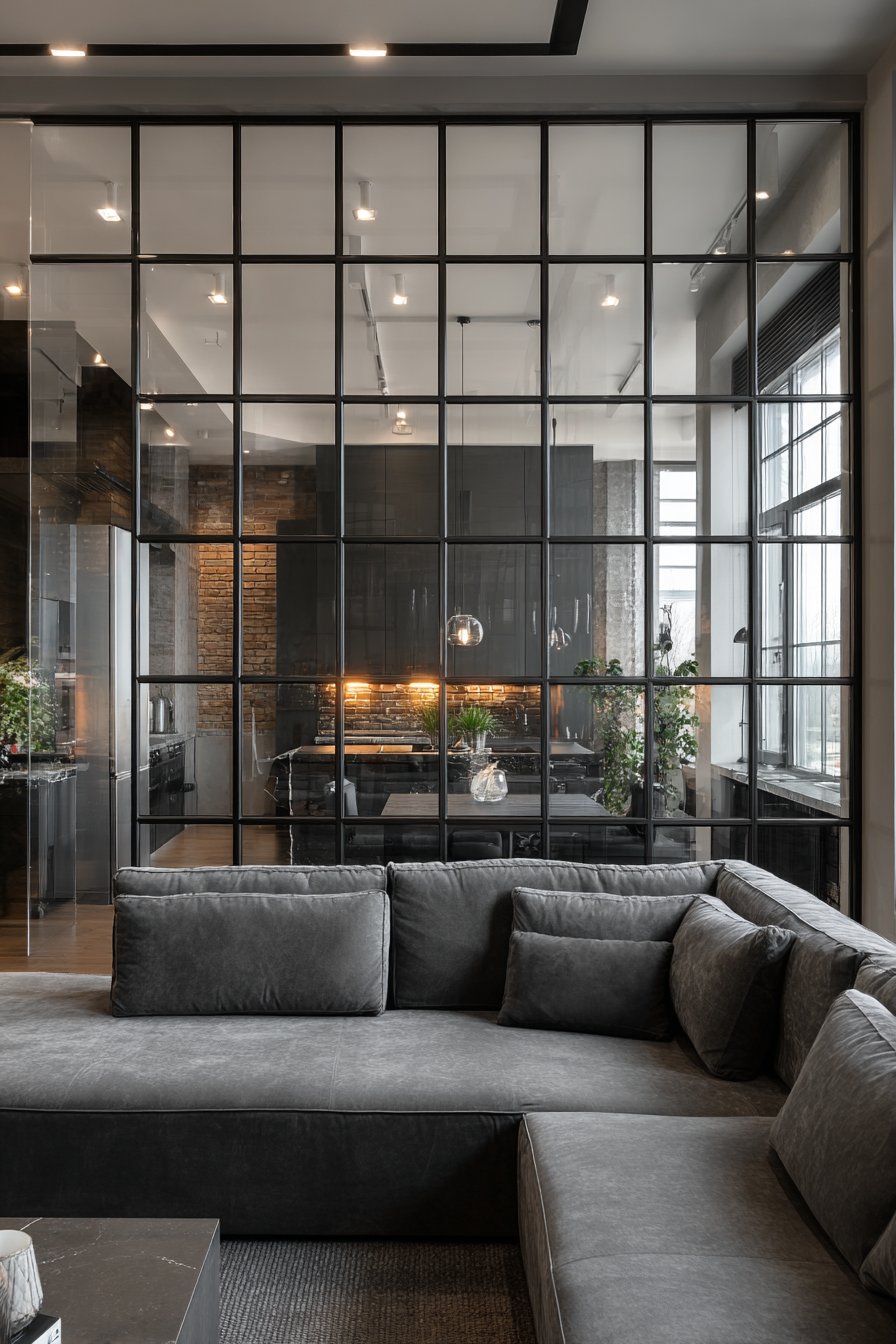
A contemporary metal and glass partition wall with geometric black steel frame and clear glass panels divides living room from kitchen in modern lofts. The industrial-style divider maintains visual connection while providing physical separation. The frame features vertical and horizontal elements creating grid pattern while transparent glass allows light flow while containing cooking smells and sounds. Grey sectional sofa faces away from kitchen side while recessed lighting and natural window light create reflections on glass surface.
The substantial construction provides real separation unlike purely visual dividers while the transparency prevents spaces from feeling closed off. The black steel frame adds contemporary industrial character while the clear glass maximizes light transmission maintaining brightness in both zones.
- Use metal-framed glass partitions for substantial yet transparent division
- Choose clear glass maximizing light passage between separated spaces
- Position to contain kitchen functions while maintaining visual openness
9. Console Table Perpendicular Divider
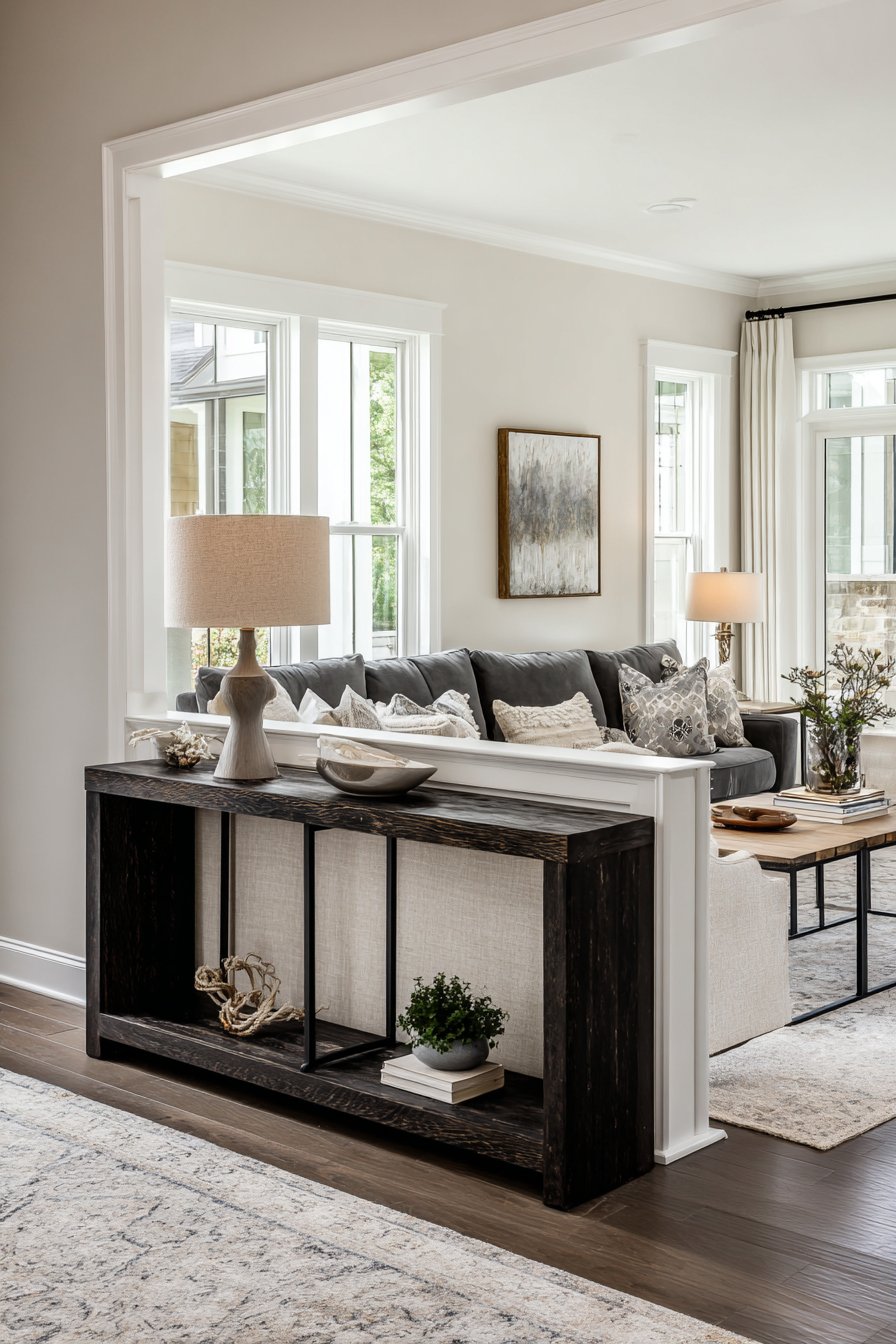
A practical console table positioned perpendicular to wall serves as subtle room divider between living area and entryway. The narrow table in dark wood with lower shelf creates visual boundary without blocking sightlines. Table lamp, decorative bowl, and small plants define separation while area rug on living room side further delineates space. The sofa back faces console creating functional division while natural light from nearby windows illuminates both spaces.
This accessible and budget-friendly solution requires only furniture repositioning rather than construction. The layered approach combining furniture placement, lighting, and rugs creates effective psychological boundaries. The console provides functional surface for keys and mail while establishing entry zone.
- Position console tables perpendicular to walls creating subtle divisions
- Layer with area rugs and lighting reinforcing spatial boundaries
- Add decorative objects and plants making dividers attractive features
10. Double-Sided Fireplace Feature
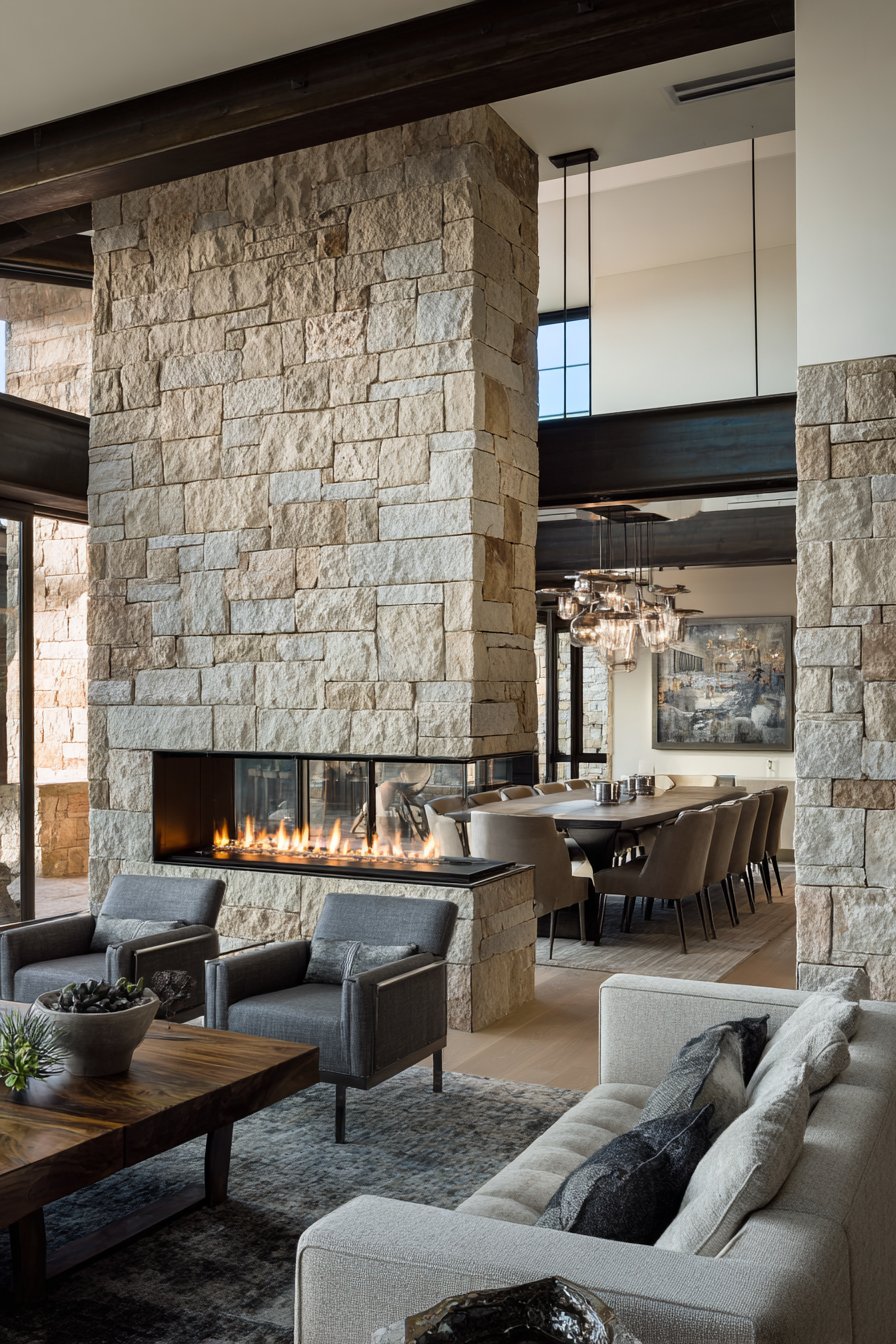
A double-sided fireplace with floor-to-ceiling stone surround creates dramatic architectural separator between living room and dining room. The see-through gas fireplace enjoys from both sides while natural stacked stone provides substantial visual and physical division. Modern linear firebox design adds sleekness to rustic stone texture while grey furniture on living side and dining table opposite define different zones. Ambient firelight and natural daylight create warm atmosphere.
This luxurious architectural feature provides functional heating while creating stunning focal point visible from multiple rooms. The stone surround adds natural texture and mass while the transparent fire element creates connection between spaces. The substantial investment yields dramatic architectural impact and year-round ambiance.
- Install double-sided fireplaces for luxurious architectural separation
- Use natural stone surrounds adding texture and substantial presence
- Choose linear fireboxes for contemporary sleek appearance
11. Retro Wooden Beaded Curtain
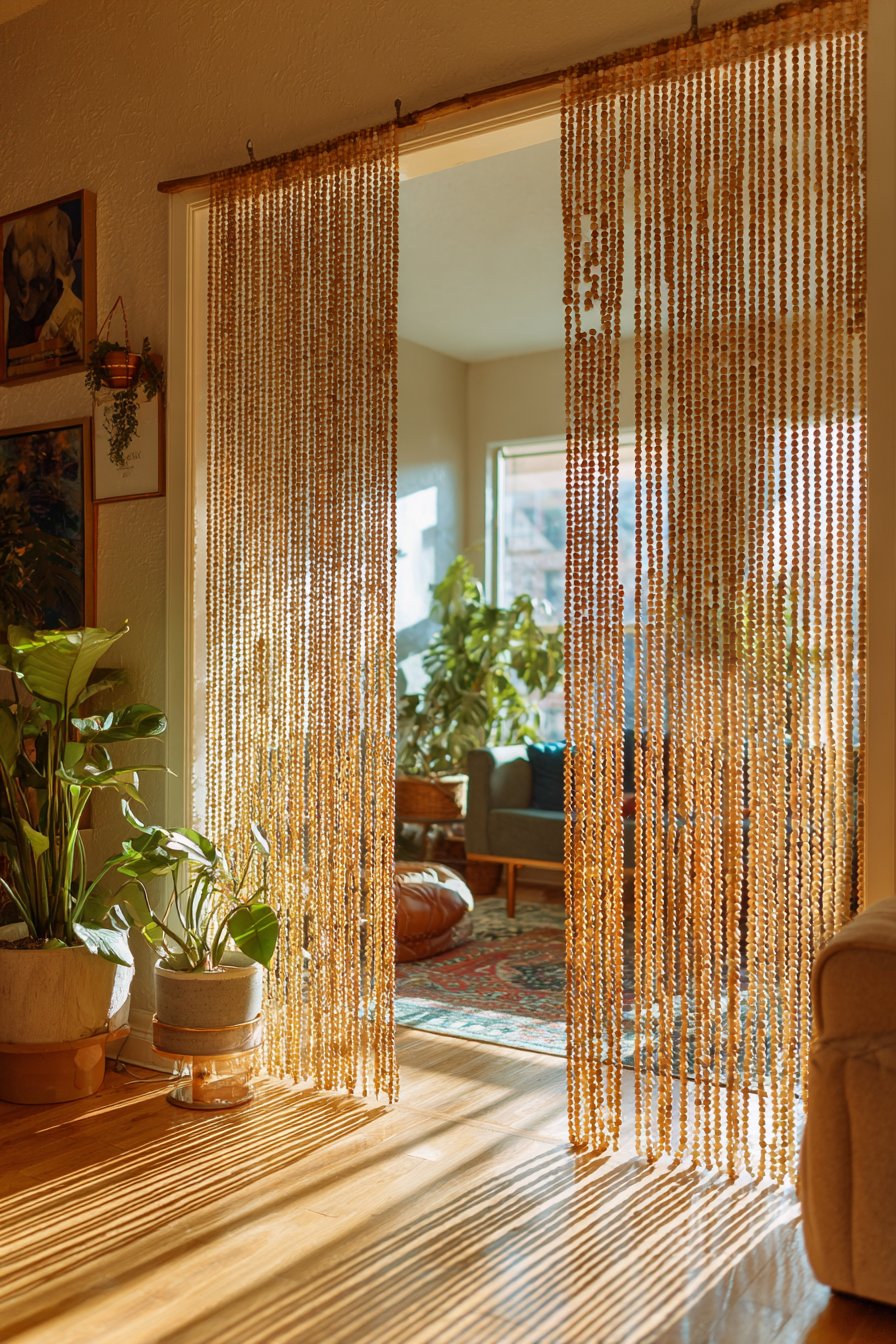
A hanging beaded curtain in natural wood beads creates retro-inspired room divider between living area and hallway. The floor-to-ceiling strands of wooden beads click softly when passing through while allowing air circulation and light penetration. Mounted on simple tension rod across doorway opening requiring no permanent installation. The warm wood tones complement bohemian-style living room with colorful textiles and plants while natural lighting creates interesting shadows through beads.
The vintage-inspired separator adds nostalgic 1970s aesthetic while remaining functional and easy to install. The movement and sound create sensory experience while the beads allow air flow essential in spaces without doors. The removable mounting enables seasonal changes or complete removal when desired.
- Use beaded curtains for retro bohemian separation with air flow
- Mount on tension rods for easy installation and removal
- Choose natural wood beads complementing warm eclectic interiors
12. Modern Ladder Shelf Divider
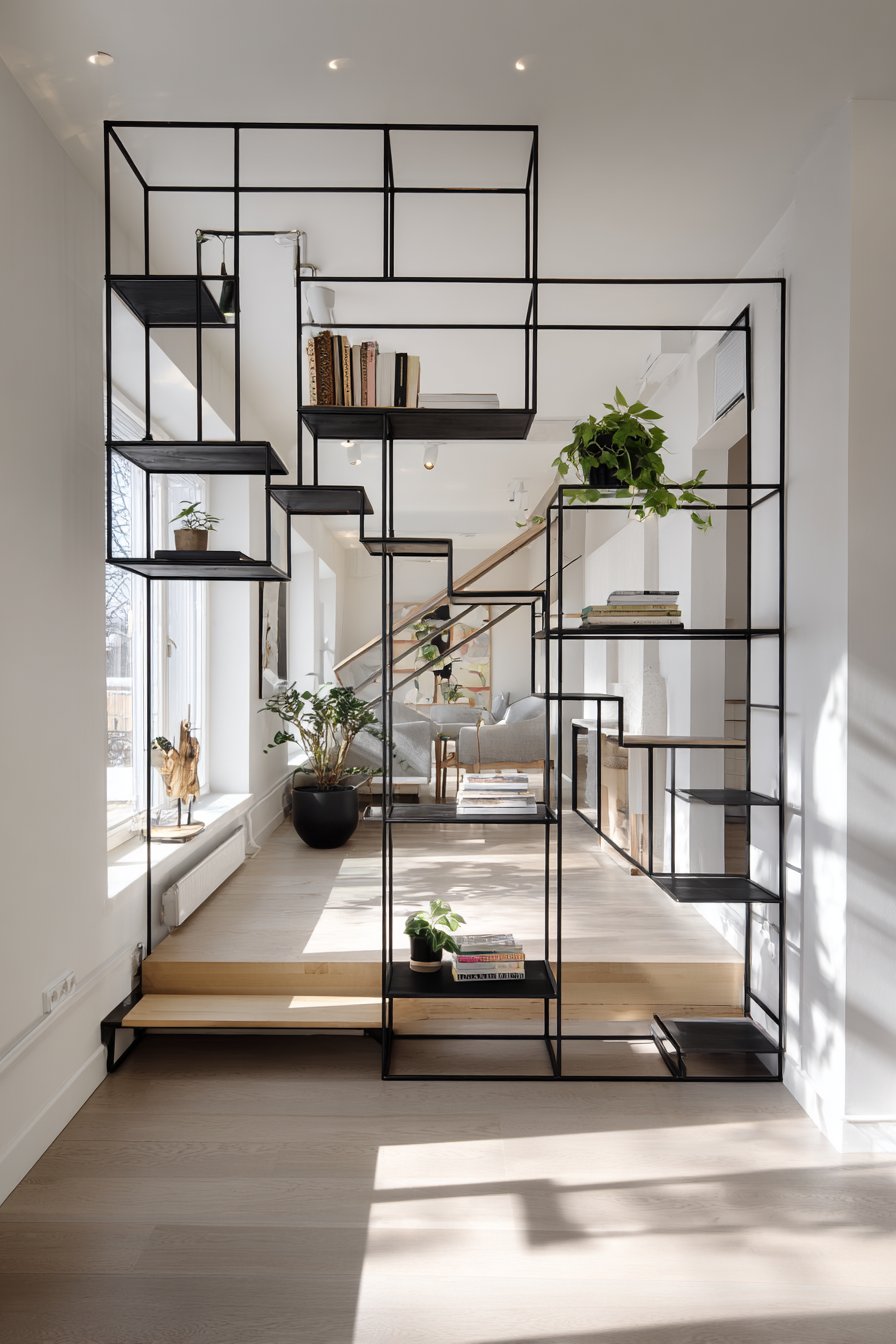
A modern shelving ladder system with angled frame in matte black metal leans against wall creating lightweight room divider in minimalist studio apartments. The ladder-style shelving holds books and small plants on stepped platforms while open structure maintains airiness. The freestanding unit repositions easily and requires no installation while white walls and light wood floors keep space bright. The diagonal orientation adds dynamic visual interest while soft natural light from windows creates shadows from geometric frame.
The contemporary industrial design provides storage and separation without permanent commitment. The leaning construction eliminates mounting requirements while the open framework prevents visual heaviness. The movable nature allows experimentation with different configurations finding optimal placement.
- Use ladder-style shelving for lightweight portable separation
- Choose matte black metal for contemporary industrial aesthetic
- Position diagonally adding visual interest and dynamic orientation
13. Folding Rattan Screen Panel
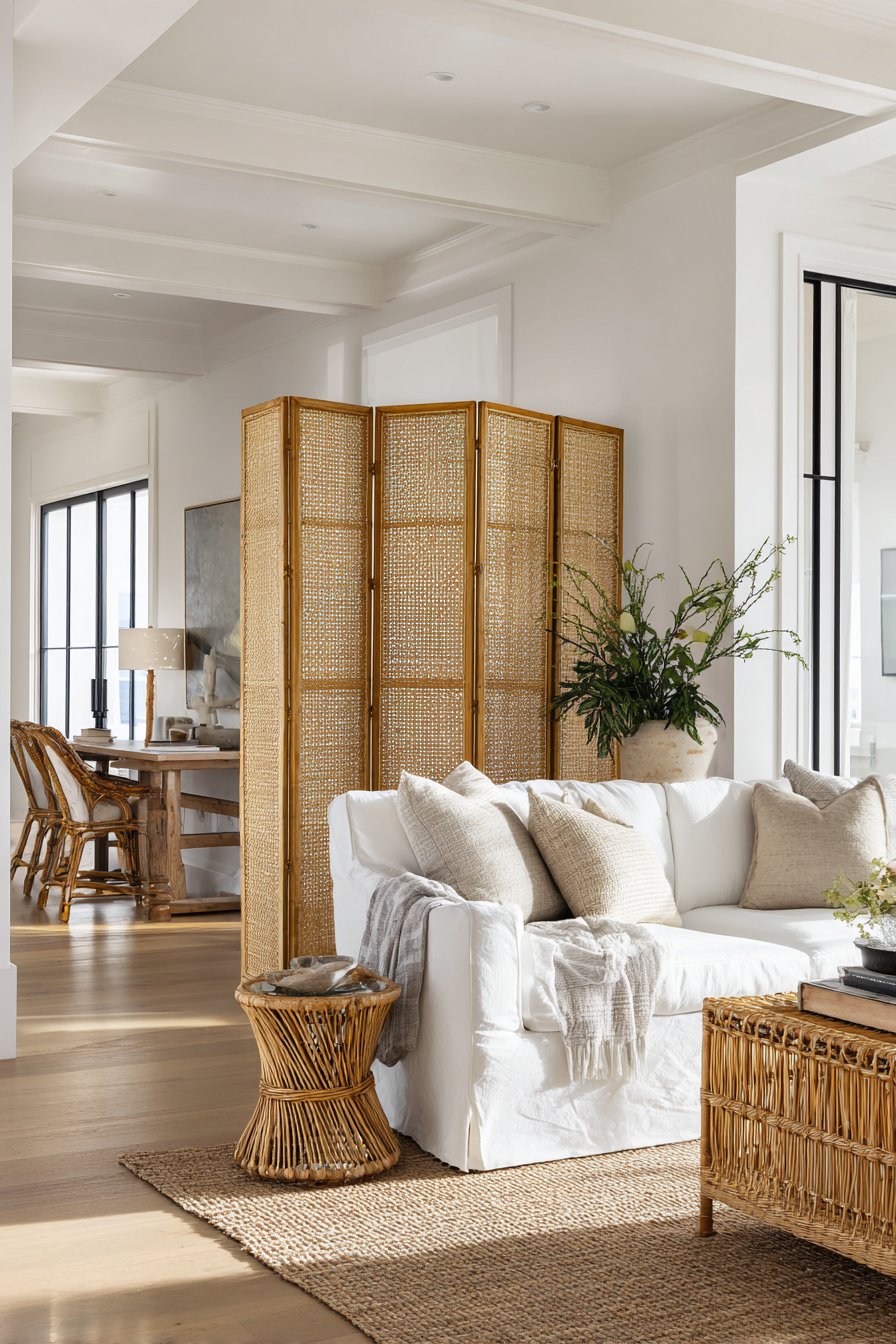
A three-panel folding screen in natural woven rattan creates flexible tropical-inspired partition between living room seating and workspace. The portable room divider repositions or folds flat when not needed while textured rattan panels in light natural finish add organic warmth providing privacy for desk area. White slipcovered sofa and wicker furniture complement natural material palette while bright natural light from nearby French doors highlights woven texture.
The versatile freestanding separator adapts to changing needs folding away for entertaining or positioning for work privacy. The handcrafted rattan weave adds artisanal character and tropical resort feeling while the adjustable folding design enables various configurations. The lightweight construction allows easy repositioning by one person.
- Choose folding screens for maximum flexibility and portability
- Select natural rattan adding organic warmth and texture
- Position near workspaces creating privacy when needed
14. Built-In Aquarium Wall
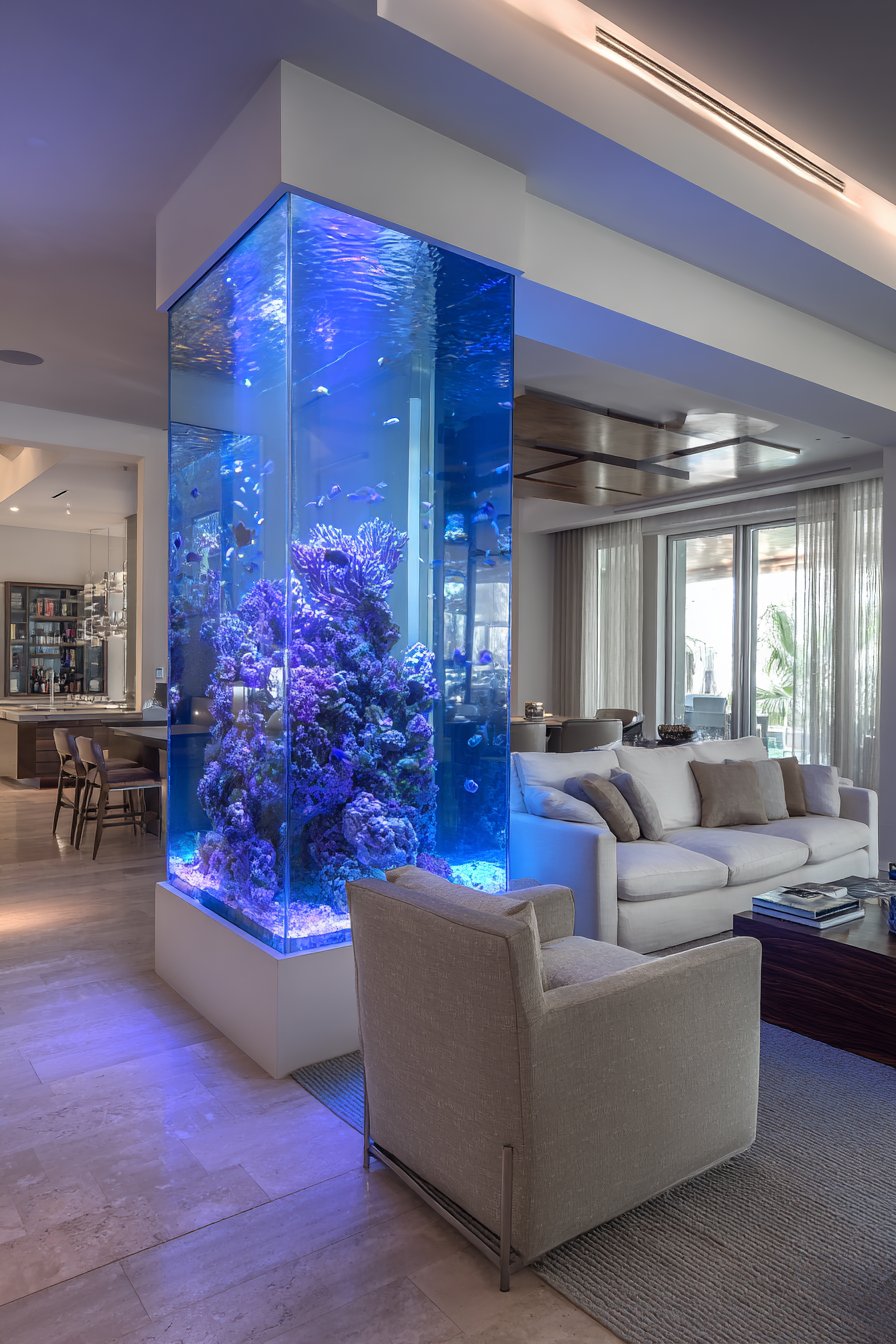
A built-in aquarium wall serves as living art room divider between living room and home office in luxury modern homes. The floor-to-ceiling custom aquarium with saltwater fish and coral creates mesmerizing transparent partition allowing light and visual interest from both sides. Blue LED lighting within tank creates ambient glow while modern furniture in neutral tones on both sides lets aquarium become focal point. The substantial installation requires professional setup but creates stunning architectural feature.
The unique separator provides dual-sided viewing creating calming underwater scene visible throughout spaces. The illuminated tank creates atmospheric lighting while the living ecosystem adds dynamic changing element. The investment yields extraordinary focal point combining art, nature, and function in singular architectural statement.
- Install custom aquariums for luxurious living art separation
- Use LED lighting creating ambient illumination from tank
- Hire professionals ensuring proper installation and maintenance systems
15. Laser-Cut Geometric Screens
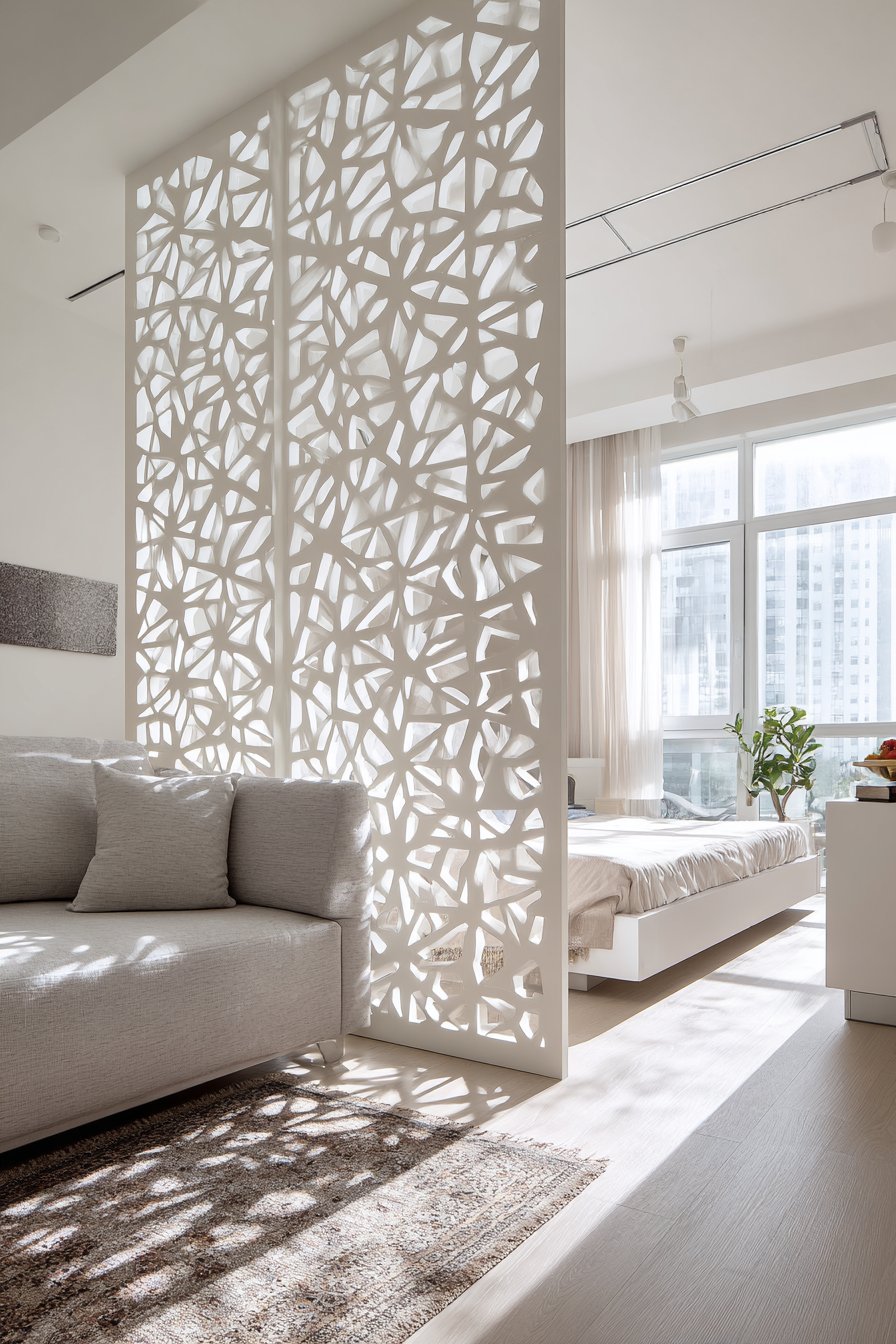
A series of tall decorative screens in white-painted MDF with laser-cut geometric pattern creates modern privacy partition between living room and bedroom area. The connected panel screens stand independently without ceiling attachment while cutout design allows filtered light passage creating interesting shadow patterns. The contemporary geometric motif adds artistic element to minimal white interior while light grey sofa on one side and bed opposite establish zoning. Natural daylight through pattern creates dynamic light play throughout the day.
The decorative yet functional separator provides privacy while maintaining visual interest through intricate cutwork. The white finish integrates seamlessly with minimal interiors while the geometric pattern adds artistic architectural quality. The freestanding construction enables repositioning without permanent installation commitments.
- Use laser-cut screens for decorative privacy with light filtration
- Choose geometric patterns adding contemporary artistic interest
- Select freestanding designs allowing flexible positioning
Why These Living Room Separator Ideas Excel
These fifteen living room separator ideas demonstrate comprehensive solutions for dividing open spaces while maintaining the light flow and spatial connection that make open-concept living desirable. From architectural separators including half-walls, glass partitions, and double-sided fireplaces to furniture-based dividers like open bookshelves and storage units, each approach balances division with openness creating defined zones without sacrificing brightness or flow.
The flexible separators—including sliding barn doors, folding screens, rope dividers, and ladder shelving—provide adaptable solutions for spaces requiring occasional privacy or reconfiguration. The transparent options like vertical slat screens, glass partitions, and open shelving maintain visual connection while establishing boundaries, while living separators including plant walls and aquariums add biophilic elements improving air quality and creating calming natural focal points.
The variety from permanent architectural installations requiring professional construction to portable solutions needing only furniture repositioning ensures options for every budget, skill level, and commitment preference. The emphasis on dual-purpose designs—separators providing storage, display, lighting, or artistic focal points beyond simple division—demonstrates how thoughtful room dividers maximize functionality while enhancing aesthetics. Whether dividing studio apartments, defining zones in open-plan homes, or creating home office privacy, these separator ideas prove that effective space division enhances rather than compromises the benefits of open living through strategic transparency, light passage, and visual flow.
Conclusion
Living room separators transform ambiguous open spaces into purposefully defined zones while preserving the spacious feeling, natural light, and visual flow that make open-concept living appealing. These fifteen separator ideas demonstrate that effective room division ranges from substantial architectural features to lightweight portable solutions, each offering distinct advantages for different needs, budgets, and spatial requirements. The key lies in selecting separators that balance your need for defined spaces with desire for openness, choosing solutions that divide while connecting through transparency, light passage, or visual interest.
When selecting room separators, consider your specific needs—occasional privacy requiring flexible solutions like sliding doors or folding screens, permanent definition suited to half-walls or built-in storage, or purely visual boundaries achieved through furniture arrangement and area rugs. Evaluate how much light penetration you need, whether additional storage would prove valuable, and whether you prefer architectural permanence or portable flexibility allowing future reconfiguration as your needs evolve.
Your ideal living room separator awaits among these diverse approaches, ready to transform your open space into well-defined yet connected zones that support your lifestyle while maintaining the benefits that drew you to open-plan living. Start with your specific challenges and preferences, then select the separator solution that best addresses your needs while enhancing your space’s beauty and functionality with thoughtful, purposeful division.

Andrew is the founder and lead writer at RoomBlossom, a home decor publication dedicated to practical, intentional interior design. With over 10 years of hands-on experience transforming real-world living spaces — from compact apartments to full attic conversions — Andrew specialises in room design that balances visual appeal with everyday function. His work spans living rooms, bedrooms, sunrooms, and attic spaces, always guided by the belief that great design should work for the people who live in it, not just look good in photographs.