
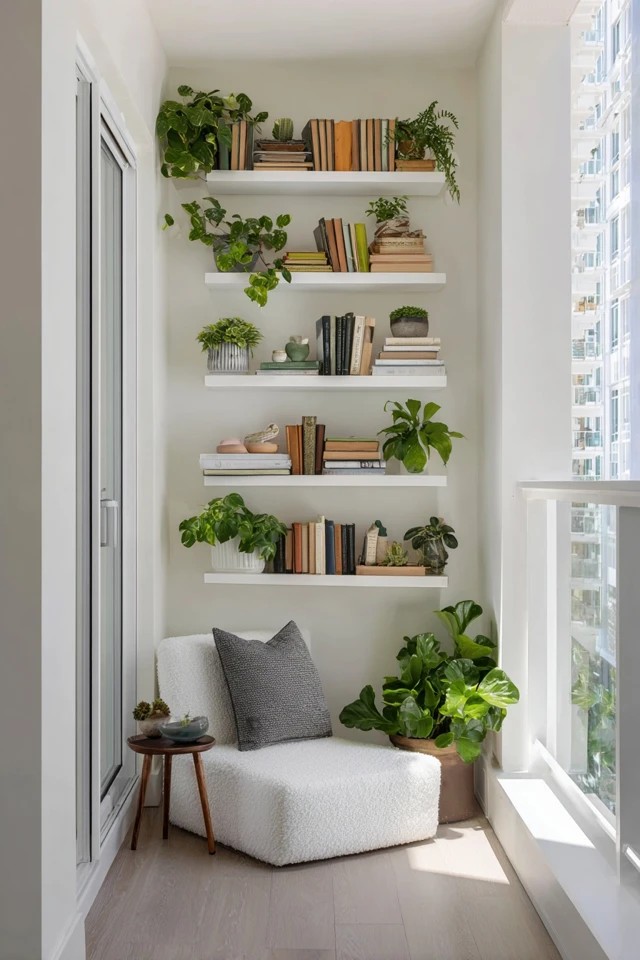
A small sunroom is one of the most rewarding design challenges in any home — a compact, glass-enclosed space where brilliant natural light and the promise of indoor-outdoor living demand thoughtful, creative planning. The right furniture choices, color palette, and spatial strategies can make a modest sunroom feel open, purposeful, and genuinely inviting rather than cramped and cluttered.
From built-in corner benches and vertical plant displays to folding bistro sets and transparent furniture, here are 20 small sunroom ideas that prove size is no barrier to creating a beautiful, functional retreat full of light and personality.
1. Compact Loveseat for Space-Appropriate Seating

A two-seat loveseat in white or natural fabric is the ideal anchor piece for a small sunroom, providing comfortable seating for two without consuming the floor space a full sofa demands. A single side table and one potted plant complete the arrangement.
- Choose a loveseat with legs rather than a skirted base to preserve visual floor space.
- Select a light fabric color — white, cream, or pale grey — to keep the space feeling open.
- Limit additional furniture to one side table only to maintain clear circulation paths.
2. Vertical Plant Display for Space-Saving Greenery
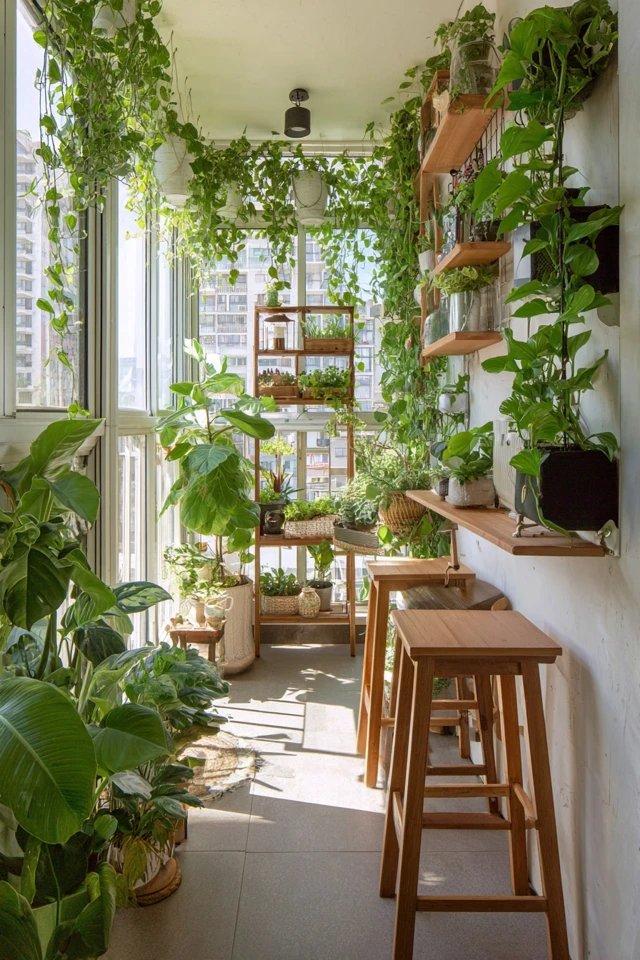
Taking plants upward rather than outward is the smartest botanical strategy for a small sunroom. Tall plant stands, wall-mounted planters, and ceiling-hung pots create a lush garden display without occupying precious floor space.
- Use a mix of heights — hanging, mid-level, and floor-standing — for a natural layered look.
- Choose trailing plants like pothos and string-of-pearls for hanging positions.
- Mount wall planters with a stud finder — wet soil adds significant weight over time.
3. Built-In Corner Bench for Efficient Seating
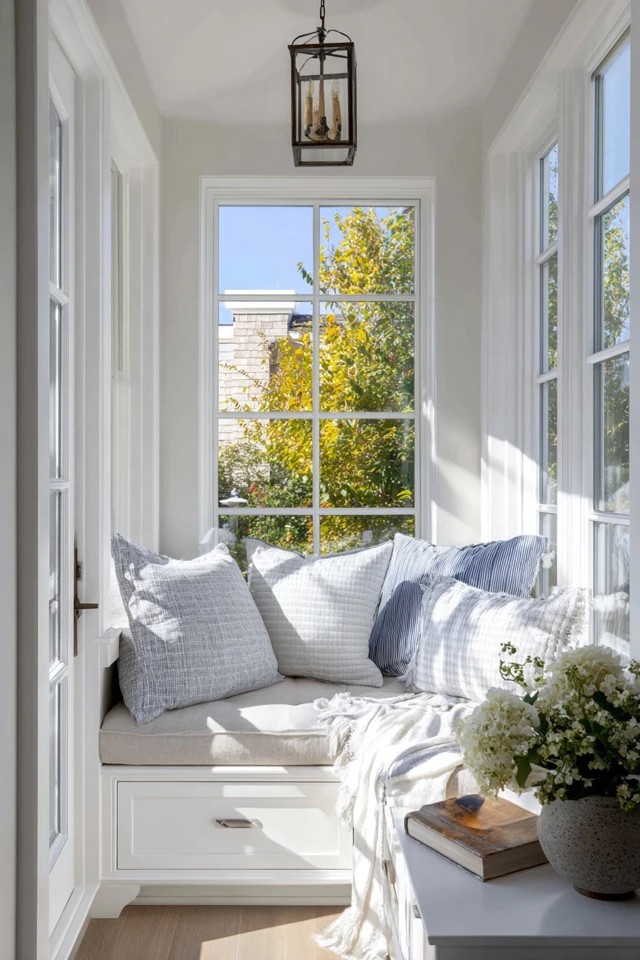
An L-shaped bench built into the corner uses structural space that freestanding furniture cannot efficiently occupy, providing seating for multiple people while leaving the center open. Storage beneath keeps sunroom accessories neatly hidden.
- Build seat height at 17-18 inches for comfortable seating without a separate cushion base.
- Use moisture-resistant materials for the bench construction given sunroom humidity levels.
- Add a small fold-down table at one end of the bench to expand functionality.
4. Light Color Palette for a Spacious Open Feeling
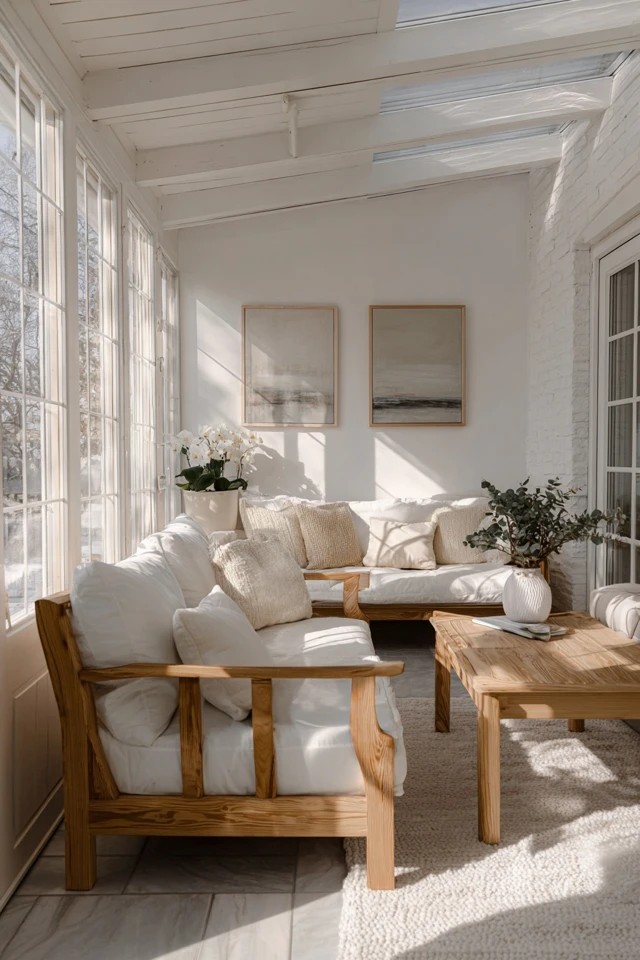
White walls, pale oak furniture, and cream linen textiles work together to make a small sunroom feel significantly larger and brighter than its actual dimensions. Light colors reflect natural sunroom light rather than absorbing it, creating an airy atmosphere from a modest footprint.
- Paint walls and ceiling the same bright white to eliminate the visual boundary between surfaces.
- Choose pale oak or whitewashed wood furniture rather than dark-stained alternatives.
- Keep textiles in a single neutral tone to avoid visual fragmentation of the small space.
5. Folding Bistro Furniture for Maximum Flexibility
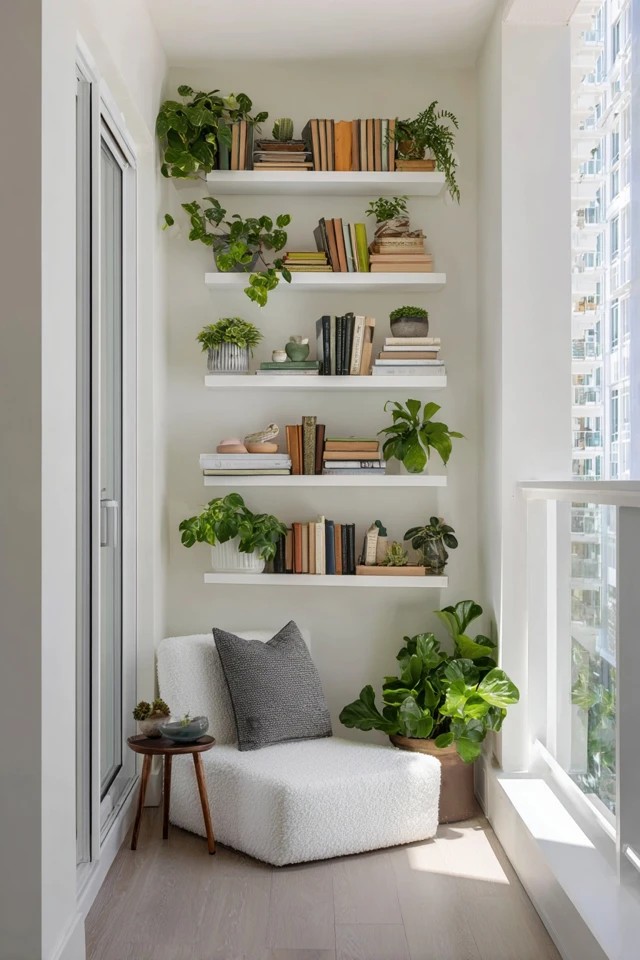
A compact folding bistro table and two chairs serve as dining spot, workspace, or casual seating when needed, then fold flat against the wall to open the entire floor. This adaptability transforms the small sunroom into a genuinely multi-functional space.
- Mount a wall hook specifically for storing folded chairs to keep them accessible and tidy.
- Choose powder-coated steel bistro furniture for durability in the sunroom’s UV-heavy environment.
- Add a small cushion tied to each chair for comfort without adding bulk to the folded storage.
6. Single Statement Plant as Botanical Focal Point
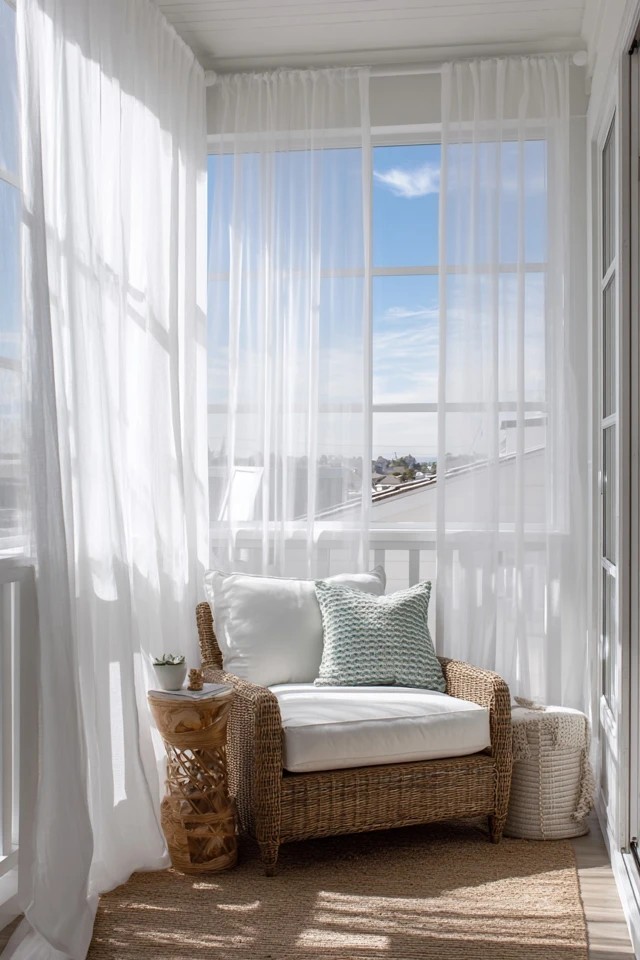
One large, dramatic plant — a fiddle leaf fig, bird of paradise, or tall palm — makes more visual impact than a scattered collection of smaller pots. The single statement plant creates a clear focal point and keeps the floor uncluttered.
- Choose a plant variety sized to eventually reach ceiling height for maximum drama.
- Use a single, substantial ceramic pot rather than a plastic nursery container for visual weight.
- Rotate the plant quarterly so all sides receive even light and grow symmetrically.
7. Wall-Mounted Shelving for Floor-Free Storage
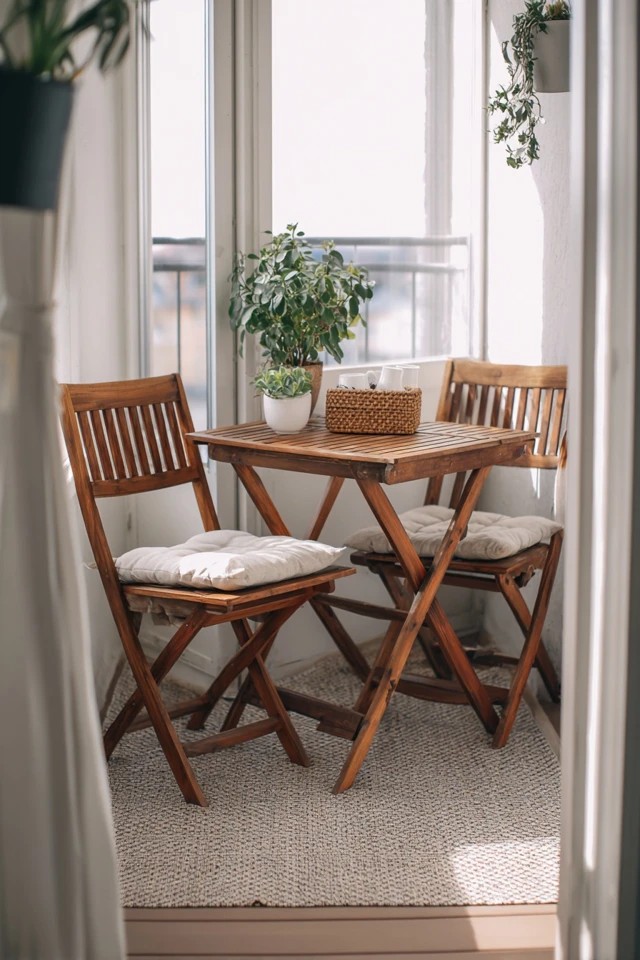
Floating shelves provide storage and display space without consuming floor area. They draw the eye upward, creating a sense of vertical height that makes the small sunroom feel taller and more spacious.
- Install shelves at staggered heights rather than in uniform rows for a relaxed, organic arrangement.
- Use brackets rated for significant weight — books and filled plant pots are heavier than they appear.
- Limit each shelf to three to five objects to prevent the display from feeling overcrowded.
8. Sheer Panels for Light-Maximizing Window Treatment
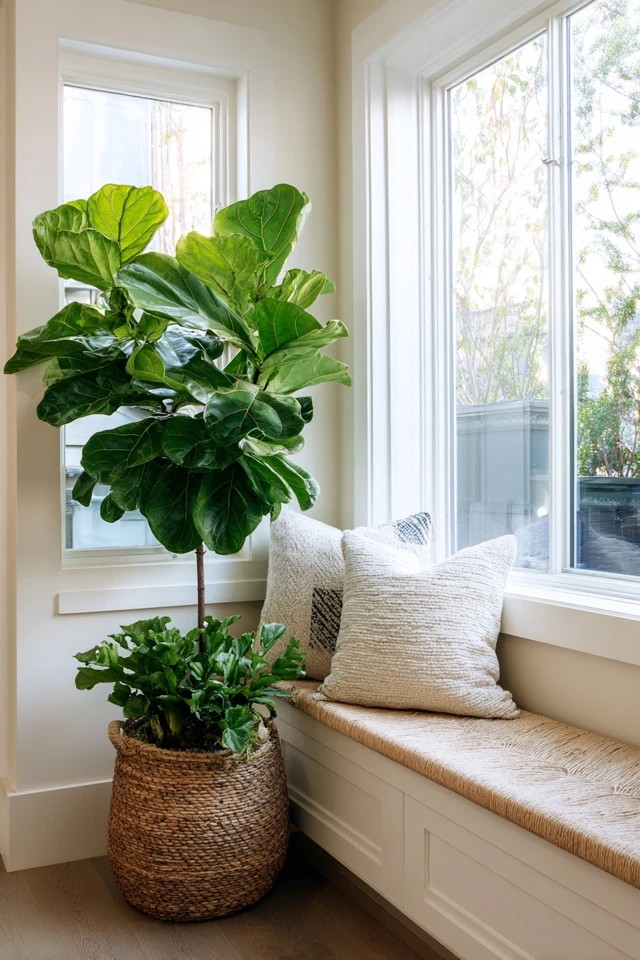
Sheer white panels provide gentle privacy and soft sun diffusion while preserving virtually all natural light. Heavy curtains would visually reduce the window openings and make the compact space feel enclosed — sheers create the opposite effect.
- Choose sheers in white or ivory — any color, even pale, reduces perceived light levels.
- Hang panels wider than the window so the glass is fully exposed when curtains are open.
- Use tension rod installations inside window reveals for a minimal, frame-free look.
9. Round Table for Circulation-Friendly Function
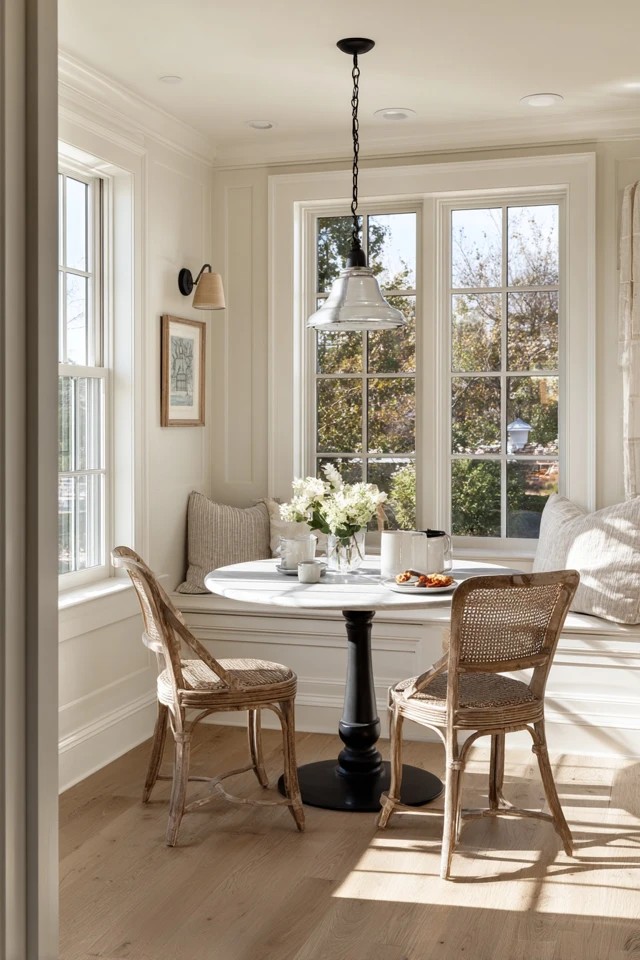
A round pedestal table eliminates sharp corners and allows easy movement around its entire perimeter. Paired with two simple chairs, it serves as a dining spot, workspace, or tea table without claiming disproportionate floor space.
- Choose a table diameter of 24-30 inches for seating two in a compact sunroom.
- Select a pedestal base rather than four legs to maximize legroom and ease of seating.
- Use lightweight folding chairs that can be moved or stacked when the table is not in use.
10. Wall Mirror to Visually Expand the Space
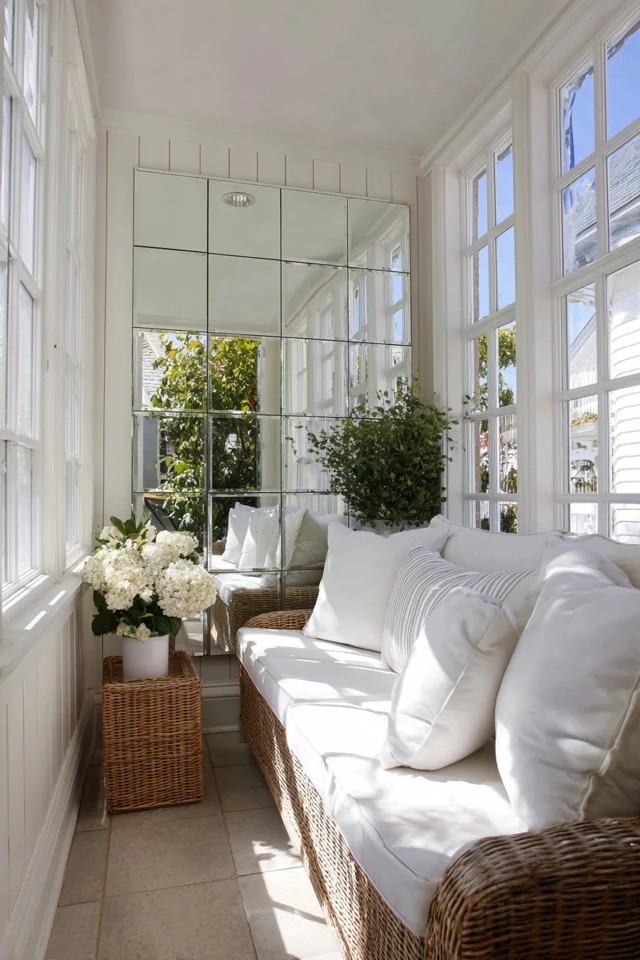
A large mirror positioned opposite the sunroom’s windows reflects light and the outdoor view back into the room, creating a convincing illusion of doubled space. The reflected image of greenery and sky makes the small sunroom feel connected to a much larger environment.
- Position the mirror to reflect the primary window for maximum light multiplication.
- Choose a frameless or thin-framed mirror to keep the visual effect clean and unobtrusive.
- Size the mirror generously — at least 24 by 36 inches — for meaningful spatial impact.
11. Storage Ottoman for Multi-Purpose Efficiency
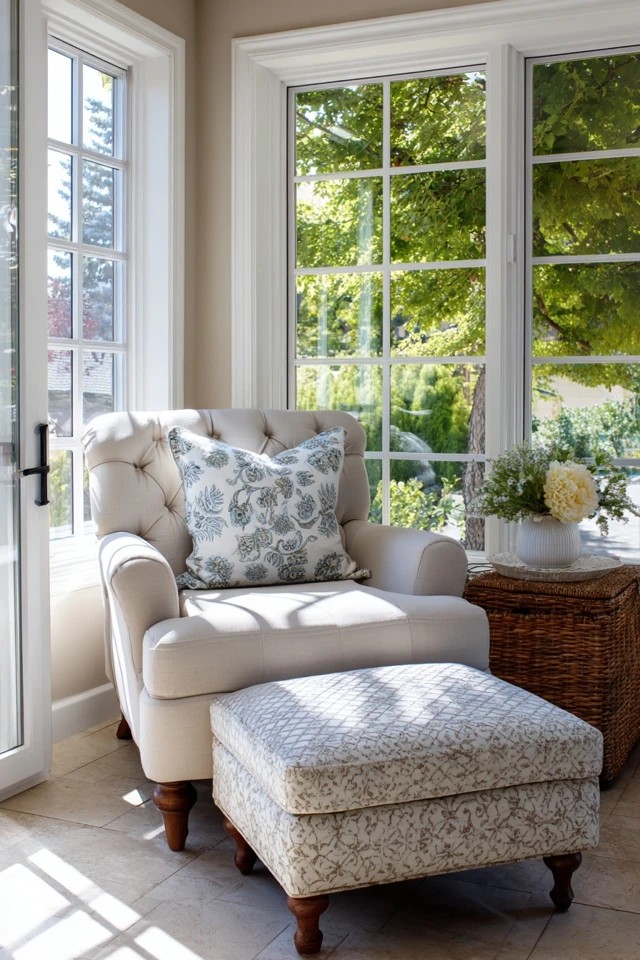
A storage ottoman functions simultaneously as extra seating, a footrest, a coffee table surface, and concealed storage — earning its floor space several times over. Its compact, armless form takes up minimal visual and physical space compared to a standard table or extra chair.
- Place a rigid tray on top of the ottoman to create a stable surface for drinks and books.
- Choose a hinged lid rather than a removable top for easier access to interior storage.
- Size the ottoman to the loveseat width for a proportional, intentional pairing.
12. Glass or Acrylic Side Table for Visual Lightness
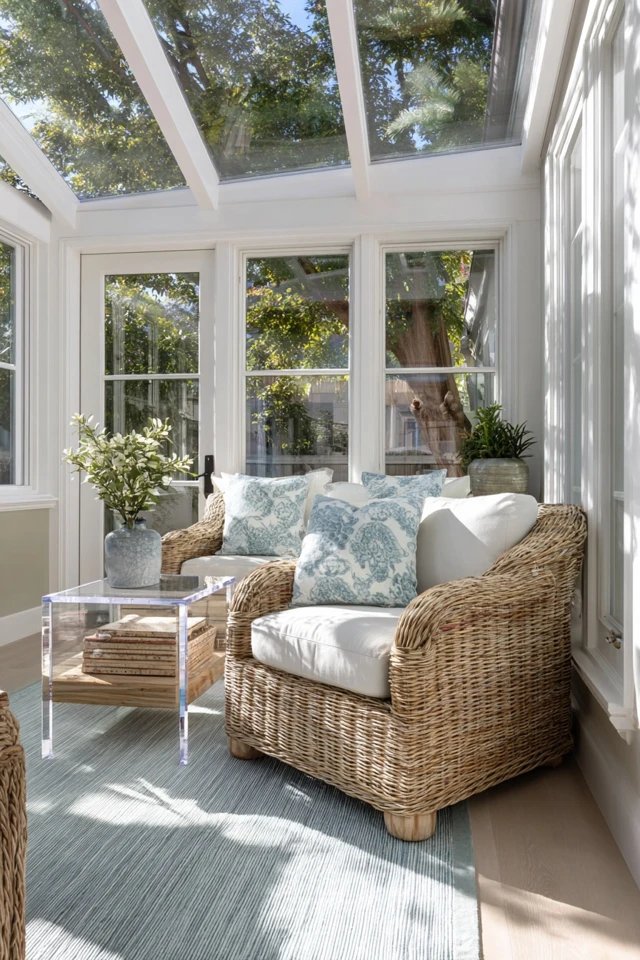
A clear glass or acrylic side table adds function without adding visual weight — the transparent material allows the eye to pass through to the floor beyond, keeping the space feeling open. Next to a loveseat or armchair, it holds a lamp or drink without the visual claim a solid piece would make.
- Choose tempered glass for safety and durability in a frequently used sunroom space.
- Opt for a simple geometric form — round or square — rather than an elaborate decorative base.
- Clean glass tables frequently in a sunroom — sunlight reveals every fingerprint and dust particle.
13. Single Armchair Reading Nook
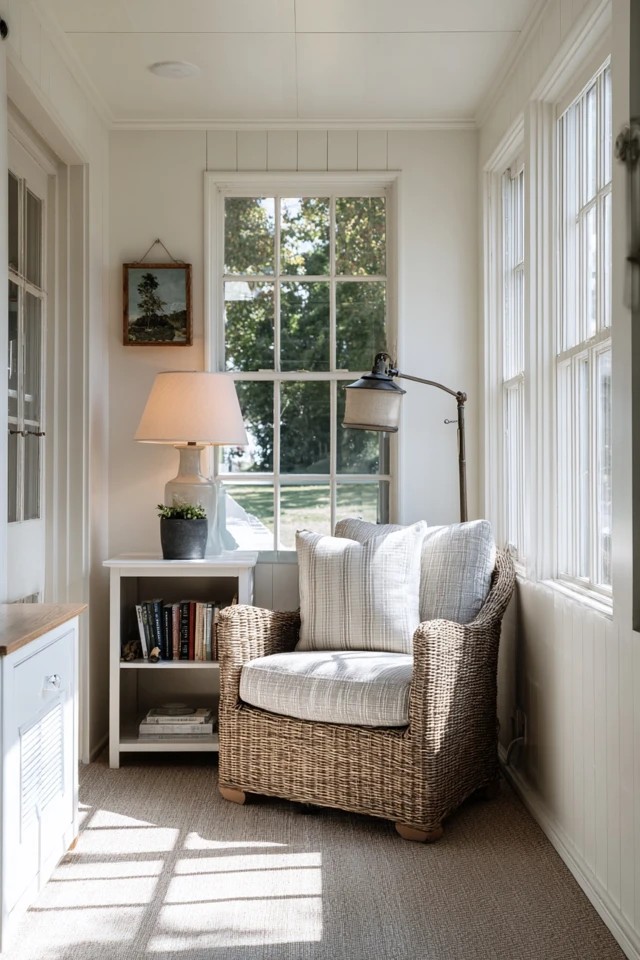
Dedicating the entire small sunroom to a single reading nook — one comfortable armchair, a floor lamp, and a compact bookshelf — creates a space with clear purpose and remarkable appeal. The focused, single-function approach avoids the visual confusion of trying to fit too many activities into a small room.
- Choose an armchair with a high back and armrests for extended reading comfort.
- Position the chair to face the garden view so the outdoor scene becomes part of the experience.
- Use a compact bookshelf — no more than three shelves — to keep the nook feeling open.
14. Scale-Appropriate Furniture for Harmonious Proportion

Selecting furniture scaled to small sunroom dimensions — a narrow-arm loveseat, a petite side table, slender-legged chairs — creates a space that feels harmonious rather than crammed. Every inch of clearance matters, and scale-appropriate choices preserve essential circulation paths.
- Measure the sunroom floor plan precisely before purchasing any furniture piece.
- Allow a minimum of 36 inches of clearance for main circulation paths through the room.
- Avoid any sofa or table larger than two-thirds of the wall it sits against.
15. Window Seat with Built-In Storage

A cushioned window seat built beneath the sunroom’s glass panels converts architectural space that would otherwise go unused into comfortable seating positioned in the very best light the room offers. Storage drawers beneath the seat keep the limited sunroom floor clear of baskets and boxes.
- Install the seat at standard bench height — 17 to 18 inches — for comfortable, unsupported sitting.
- Use a weatherproof foam insert to handle moisture from adjacent glass panels.
- Choose drawer hardware in a finish that coordinates with the sunroom’s window frames.
16. Monochromatic Color Scheme for Visual Cohesion
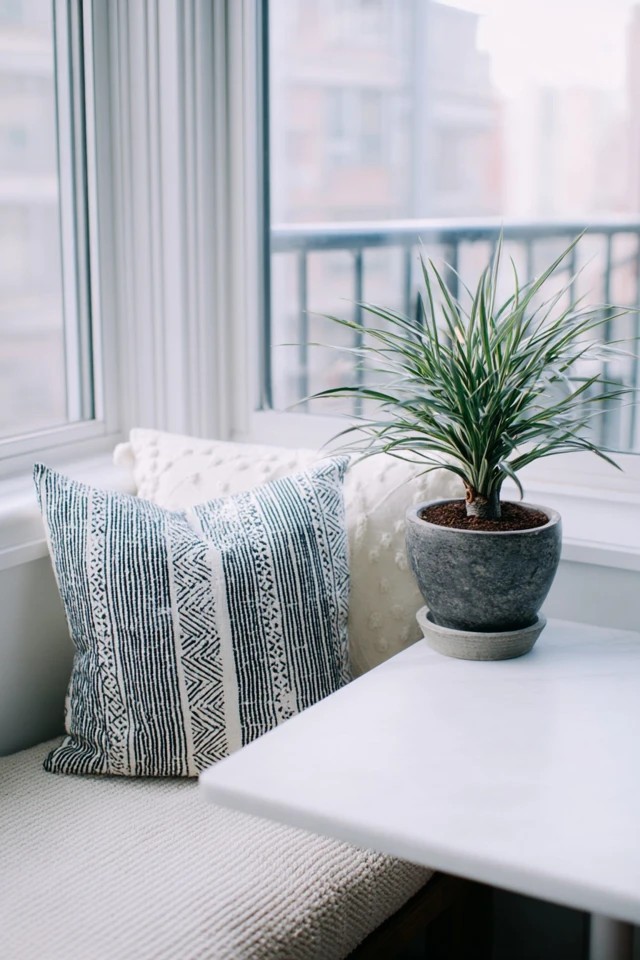
A monochromatic palette — varying shades of a single color family across walls, furniture, and textiles — creates a small sunroom that feels visually calm and larger than its dimensions suggest. When the eye encounters no contrasting colors competing for attention, it reads the space as continuous and unified rather than fragmented.
- Use the lightest tone on walls and ceiling, medium tones on large furniture, deepest on accents.
- Introduce texture variation within the palette — linen, wicker, ceramic — to prevent flatness.
- Add a single natural element — a branch, stone, or plant — as an organic break from the scheme.
17. Daybed for Flexible Day-to-Night Function
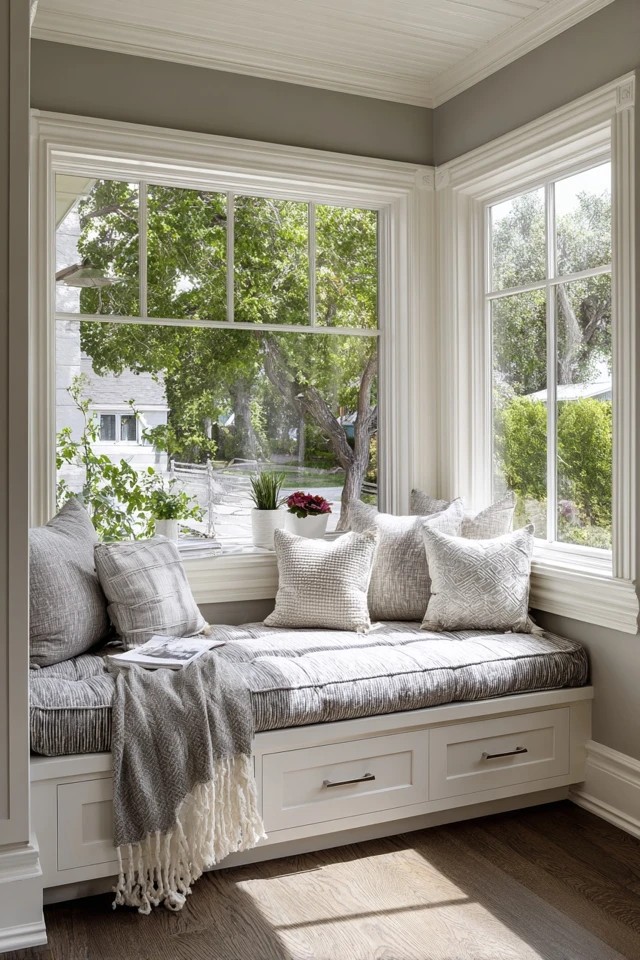
A daybed is the ultimate multi-purpose piece for a small sunroom — it serves as a comfortable sofa during the day when dressed with pillows and a throw, then converts effortlessly into a guest bed when needed overnight. This dual functionality means the sunroom earns its floor space twice over without requiring any additional furniture.
- Use Euro-square pillows along the back wall to create a sofa-like appearance during the day.
- Choose a mattress thickness of at least four inches for comfortable sleeping as well as sitting.
- Store extra bedding inside an ottoman nearby for overnight guest use without added furniture.
18. Minimal Accessories for an Uncluttered Aesthetic
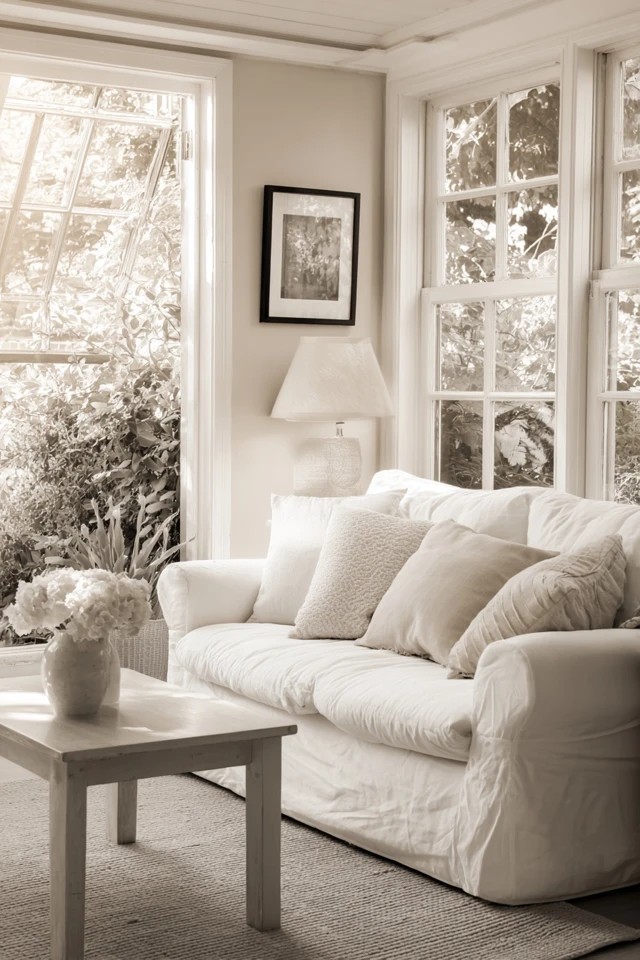
In a small sunroom, restraint with accessories is not deprivation — it is the design decision that makes all other decisions work. One well-chosen plant, two coordinating cushions, and a single piece of wall art create a sunroom that feels complete and considered rather than bare.
- Edit accessories down to a maximum of five items total visible in the sunroom at once.
- Choose one bold accessory — a sculptural pot, a striking print — rather than many small ones.
- Store seasonal accessories in the window seat or ottoman to rotate without permanent clutter.
19. Corner Furniture Placement to Open the Center

Positioning the primary seating in a corner of the small sunroom rather than floating it in the center preserves the middle of the room as open, unobstructed floor space — the single most effective layout strategy for making a small room feel larger. The corner placement also creates a natural sense of enclosure for the seating area, making it feel cozily defined without any additional walls or screens.
- Angle a corner chair or loveseat at 45 degrees rather than parallel to walls for a relaxed feel.
- Use a round rug beneath the corner seating to define the zone without blocking the open center.
- Keep the floor between the seating corner and the opposite wall completely free of furniture.
20. Open Layout to Preserve Visual Breathing Room

The most important design principle in any small sunroom is resisting the temptation to fill it. An open layout with minimal furniture, clear sightlines, and unimpeded natural light creates a space that feels genuinely spacious, calm, and purposeful. Natural light travels unobstructed from window to window, bouncing off light surfaces and filling every corner.
- Set a strict rule: no more than three pieces of furniture in a sunroom under 100 square feet.
- Remove any piece that interrupts the direct sightline from the doorway to the main window.
- Reassess the layout seasonally and remove anything that has accumulated without clear purpose.
Why These Small Sunroom Ideas Excel
Every idea on this list addresses the central challenge of small sunroom design: making limited square footage feel functional, beautiful, and open rather than cramped. The strategies fall into four categories — space-saving furniture choices, vertical space utilization, light-maximizing design decisions, and visual spaciousness techniques — and the best small sunroom designs combine all four.
Scaled furniture — the compact loveseat, folding bistro set, storage ottoman, and daybed — succeeds because it matches the room’s proportions honestly rather than forcing oversized pieces into a compact space. Each piece chosen for a small sunroom should pass a simple test: does it justify its floor footprint with genuine function? Multi-purpose pieces like the storage ottoman and daybed earn their space twice over, making them especially valuable in rooms where every inch matters.
Visual spaciousness through light colors, transparent furniture, wall mirrors, and open layouts is the other half of small sunroom success. These techniques do not change the room’s actual dimensions — they change how those dimensions are perceived. A well-lit small sunroom with a pale palette and a large mirror can feel as generous and inviting as a space twice its size, which is ultimately what thoughtful small sunroom decorating is designed to achieve.
The discipline of minimal accessories and open floor plans ties everything together. The small sunroom’s natural light is its greatest design asset, and it is best showcased in an uncluttered, purposefully arranged space where light moves freely and the connection to the outdoors remains clear and unobstructed through every window and glass panel.
Conclusion
A small sunroom well-designed is one of the most rewarding spaces in any home — intimate, light-drenched, and beautifully connected to the world outside. The twenty ideas in this article demonstrate that compact dimensions need not limit ambition, comfort, or style. Choose scaled furniture, embrace vertical solutions, keep colors light, and resist the impulse to over-furnish. Approach your small sunroom as a space to be curated rather than filled, and it will reward you with a retreat that feels far larger than its footprint every single day.

Andrew is the founder and lead writer at RoomBlossom, a home decor publication dedicated to practical, intentional interior design. With over 10 years of hands-on experience transforming real-world living spaces — from compact apartments to full attic conversions — Andrew specialises in room design that balances visual appeal with everyday function. His work spans living rooms, bedrooms, sunrooms, and attic spaces, always guided by the belief that great design should work for the people who live in it, not just look good in photographs.