
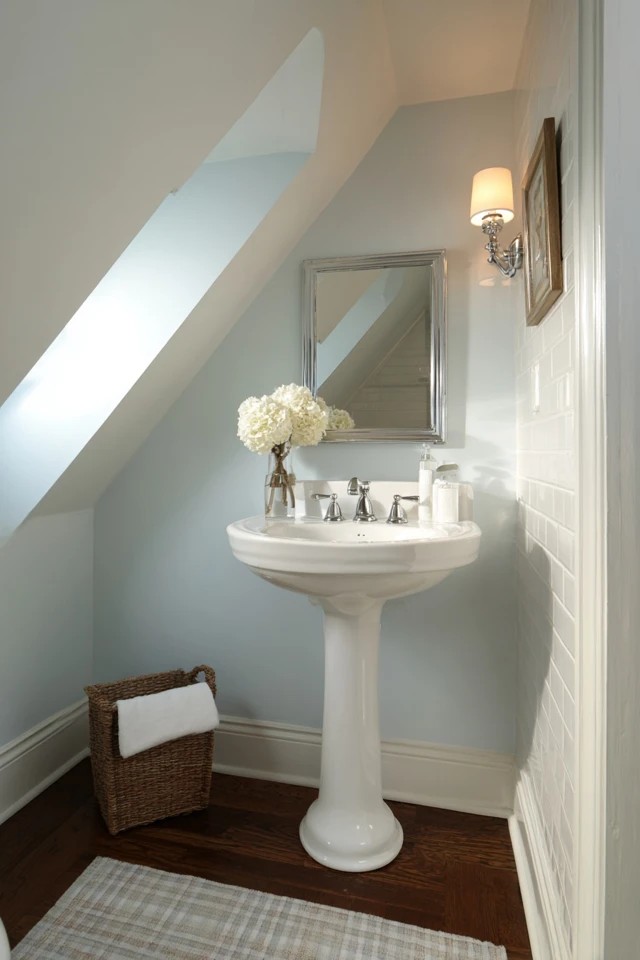
An attic bathroom is one of home design’s most rewarding conversion challenges — a space where sloped ceilings, exposed beams, dormers, and awkward angles that would frustrate conventional design become the very features that give the bathroom its unique charm and character. The key is embracing the geometry rather than fighting it, turning every constraint into a design decision.
Here are 20 attic bathroom ideas spanning skylight installation, freestanding tubs, custom cabinetry under eaves, vintage fixtures, and Scandinavian vanities — each one demonstrating how to make the most of a converted attic’s extraordinary architectural personality.
1. Sloped Ceiling with Skylight for Overhead Natural Light
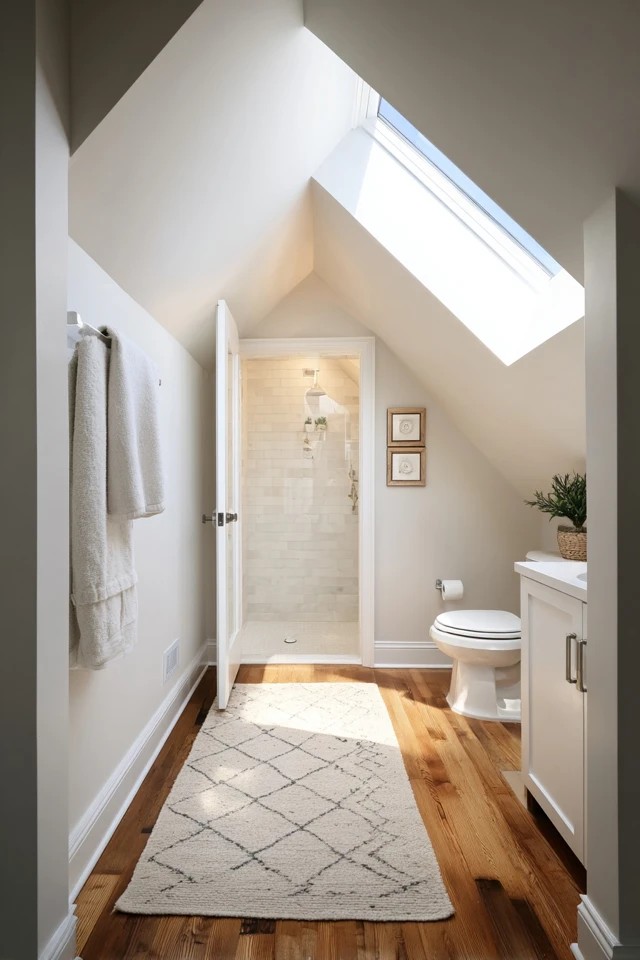
A skylight set into the sloped ceiling of an attic bathroom solves the space’s most fundamental challenge — natural light — by bringing daylight in from directly overhead where no windows would otherwise be possible.
- Install a skylight with a built-in blind for privacy and summer heat control directly at the glass unit.
- Choose a roof window rather than a fixed skylight so the attic bathroom can also receive fresh ventilation.
- Position the skylight above the shower or bath where overhead natural light is most dramatically appreciated.
2. Freestanding Tub Positioned Under the Sloped Roof
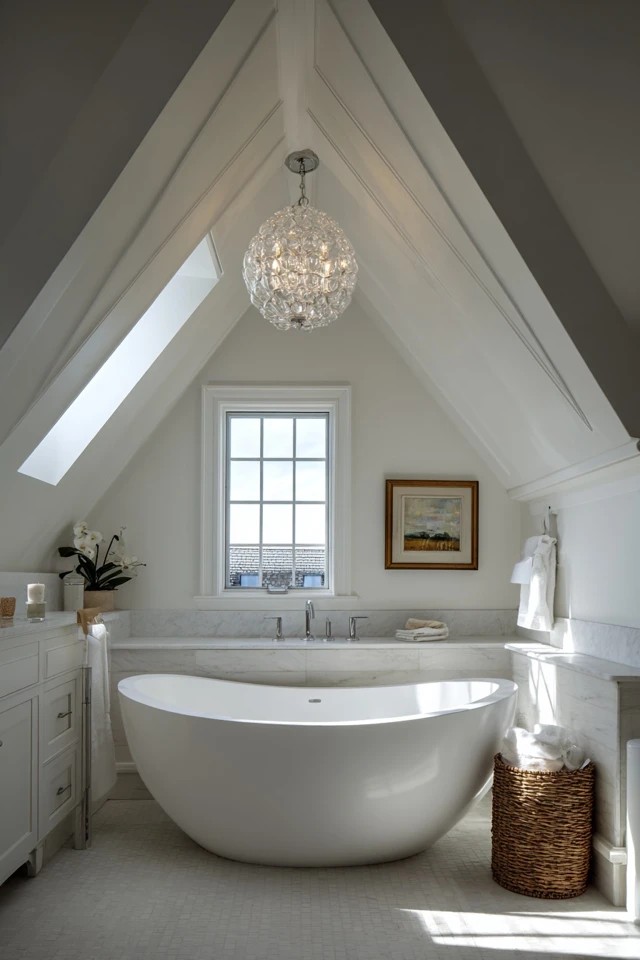
Positioning a freestanding soaking tub directly beneath the sloped roof — where ceiling height is lowest — is one of the most elegant solutions in attic bathroom design.
- Choose a compact oval tub no more than 55 inches long for attic bathrooms with limited floor footprint.
- Use a wall-mounted tub filler on the nearby knee wall to avoid floor-mounted fittings that conflict with slope geometry.
- Add a pendant light or small chandelier above the tub where ceiling height is greatest for a luxurious finishing touch.
3. Walk-In Shower with Glass Partition for Modern Function
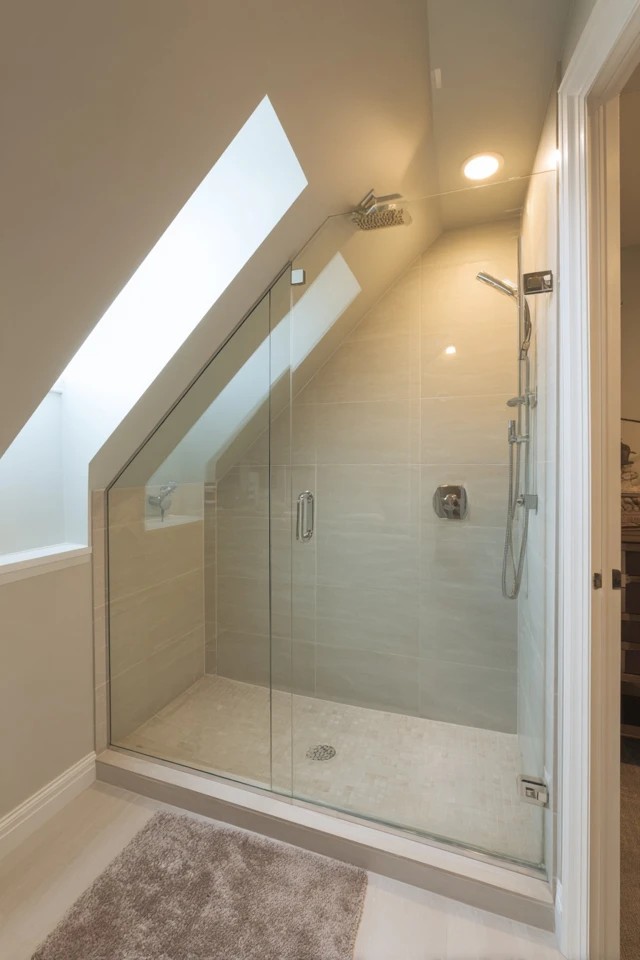
A walk-in shower with a frameless glass partition fitted beneath the slope of the attic roof creates a modern, space-efficient bathing zone that makes excellent use of the area where ceiling height transitions from tall to low.
- Ensure the shower head position is in the area with at least 78 inches of ceiling height for comfortable use.
- Use a linear drain rather than a centre drain in attic shower floors to accommodate any subtle floor slope present.
- Choose large-format tiles on the shower walls to minimise grout lines on the angled ceiling surfaces above.
4. Dormer Window Vanity for Natural Light Grooming
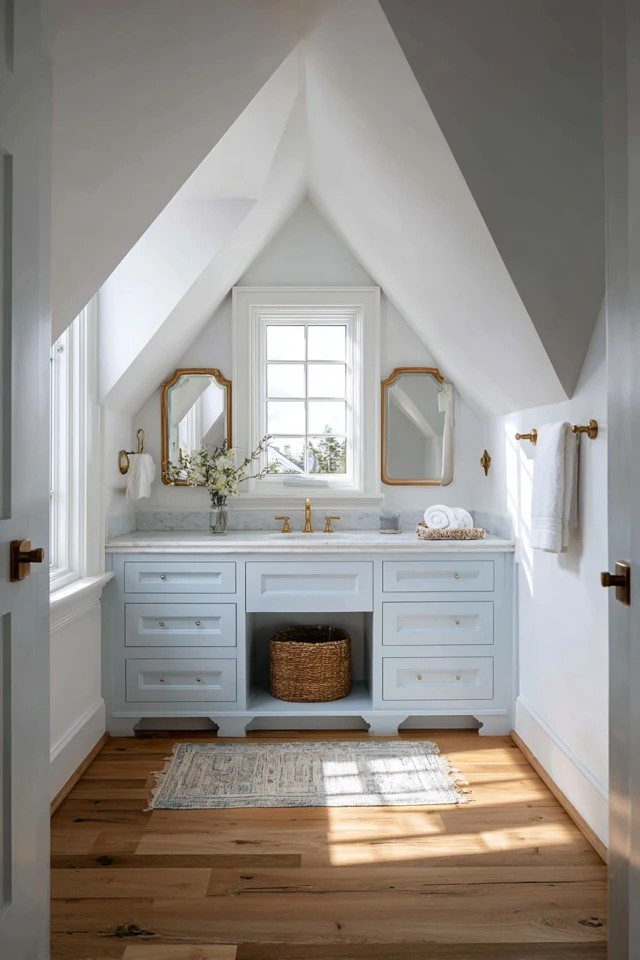
Positioning the vanity inside a dormer window alcove uses the attic’s most prominent architectural feature as a functional grooming station — the direct natural light from the dormer window illuminates the face evenly from the front, providing the most flattering and accurate grooming light available in any bathroom type.
- Build the vanity into the dormer alcove flush with the window reveal for a fully integrated architectural look.
- Use a shallow vanity depth — 16 inches maximum — so the window remains fully accessible above the sink basin.
- Mount the mirror on the wall beside the dormer rather than in front of the window to preserve the light source.
5. White Shiplap Walls for Cottage Charm
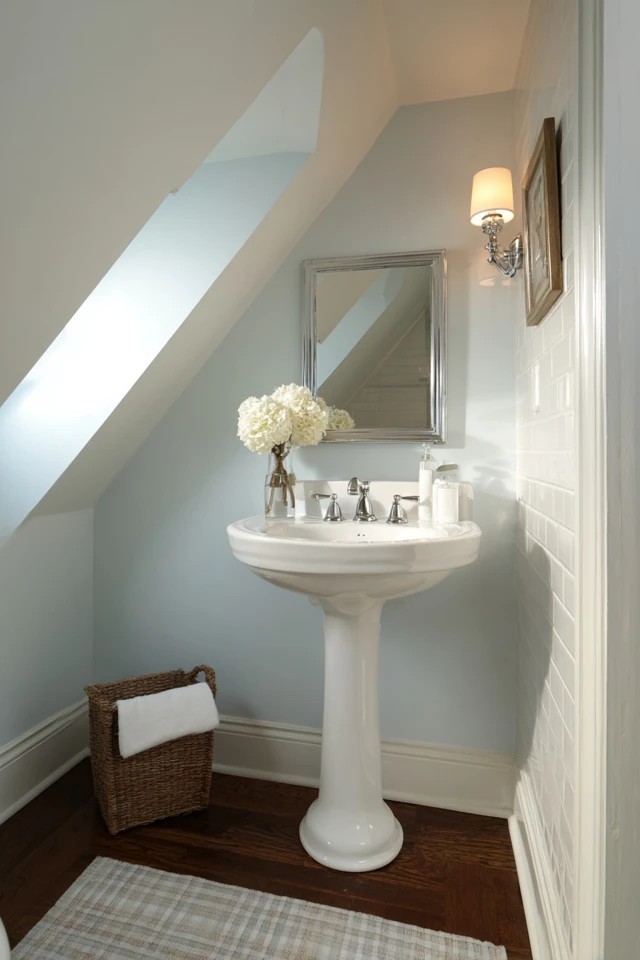
White shiplap planks on the sloped ceiling and angled walls of an attic bathroom create an instantly recognisable cottage character that suits the cosy, informal quality of converted attic spaces. The horizontal lines of the planks visually widen the room while the white finish reflects light back into what can be a low-ceilinged, somewhat dark space.
- Install shiplap with a 1/8-inch gap between boards and paint both surface and gap in the same white for a seamless look.
- Use moisture-resistant MDF or primed pine for shiplap in wet bathroom zones — standard timber expands in humidity.
- Extend the shiplap from floor to ceiling on sloped walls for the most immersive, fully cottage-wrapped effect.
6. Custom Cabinetry Under the Eaves for Clever Storage
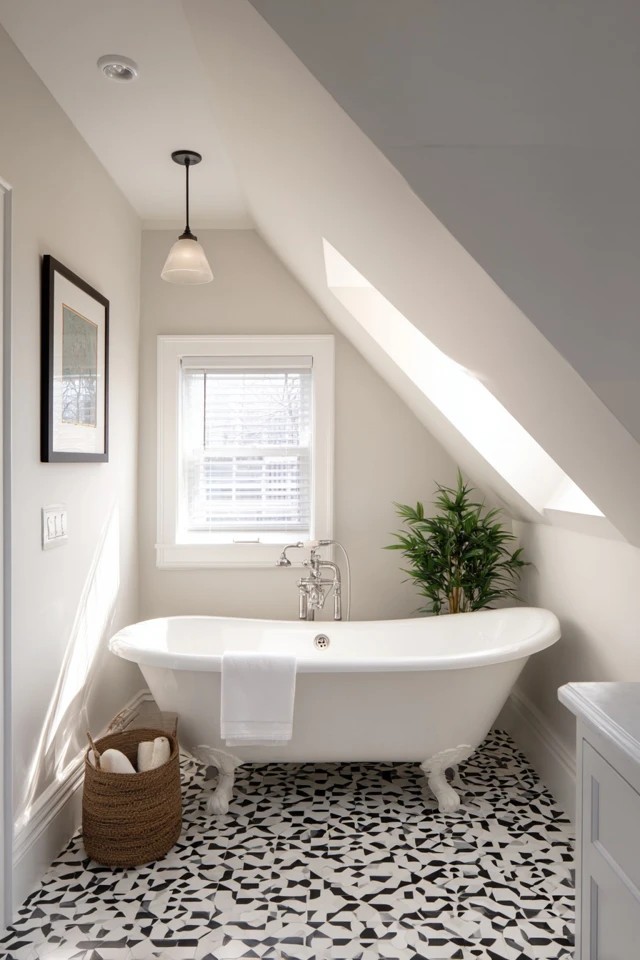
The low, triangular spaces beneath the eaves where the roof meets the floor — useless for standing but perfect for storage — become highly functional when fitted with custom drawers, shelves, or pull-out baskets sized precisely to the available geometry.
- Commission a joiner to build custom units that fit the exact angles of the eaves for perfect integration.
- Use full-extension drawer slides in eaves cabinetry so the full depth of each drawer is accessible without bending.
- Paint eaves cabinetry the same colour as the walls for an integrated, architectural rather than furniture-like appearance.
7. Exposed Wood Beams for Rustic Architectural Character
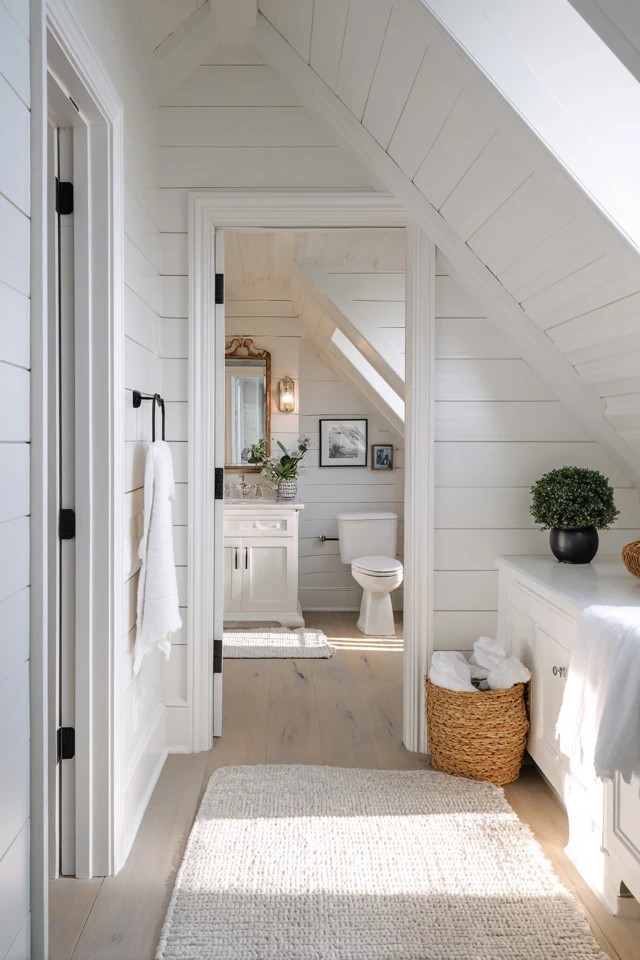
Original or reclaimed wood beams left exposed in an attic bathroom add historical authenticity and organic warmth that transform the converted space into something genuinely special rather than merely functional. White or pale walls and ceiling make the dark beams the clear stars of the composition.
- Clean and treat exposed beams with a penetrating wood oil rather than painting them — the natural grain is the beauty.
- Ensure all beams have been assessed by a structural engineer before any conversion work begins around them.
- Use the beam grid as a guide for recessed lighting placement so the artificial lighting echoes the structural rhythm overhead.
8. Pedestal Sink for Space-Saving Classic Elegance
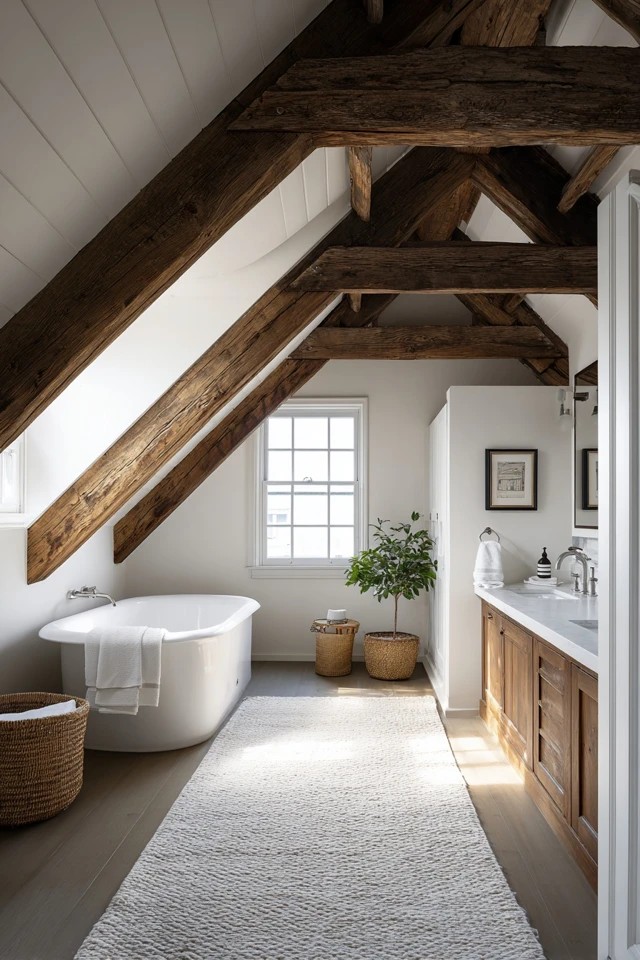
A pedestal sink is the ideal fixture for a compact attic bathroom where floor space is at a premium and visual lightness is essential — it occupies a minimum footprint, allows the eye to travel to the floor beneath it, and carries a timeless elegance that suits the vintage character many attic conversions naturally possess.
- Choose a wall-mounted mirror sized to the pedestal width for the most proportional, traditional bathroom composition.
- Install a small shelf beside or above the pedestal for toiletries that a vanity cabinet would normally provide.
- Use a skirted pedestal rather than an exposed column style in a vintage-inspired attic bathroom for period accuracy.
9. Hexagonal Floor Tiles for Vintage Pattern Character
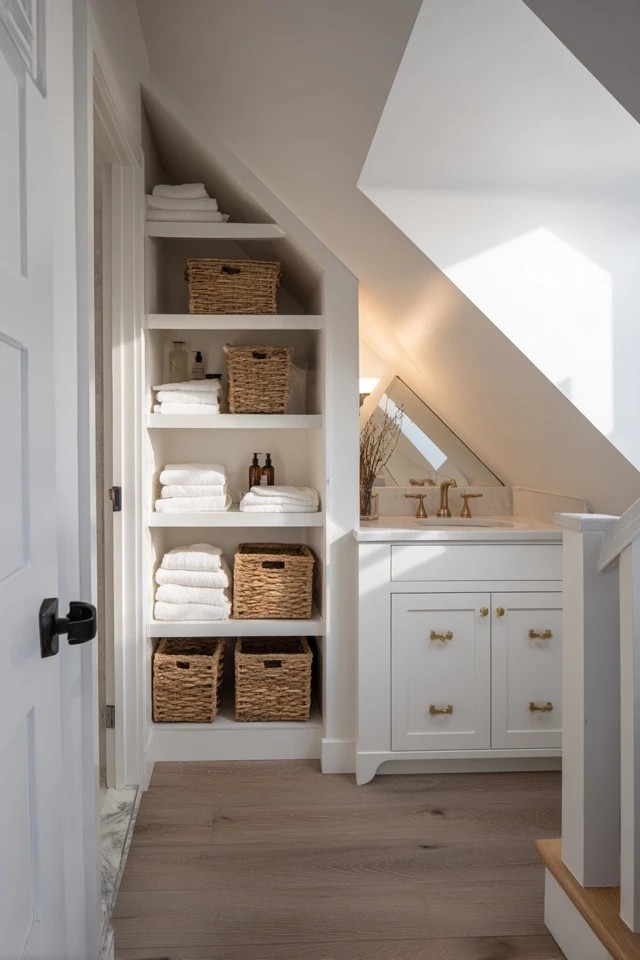
Small hexagonal floor tiles in a classic black-and-white pattern create a vintage foundation for the attic bathroom that connects the space to a century of bathroom tradition. The geometric pattern is visually rich at floor level without competing with the room’s architectural interest overhead, and the small tile format works well with the irregular floor boundaries that attic spaces often present where walls meet slopes.
- Use a 2-inch hexagonal tile scale for attic bathrooms — larger tiles look clumsy in compact converted spaces.
- Apply a grey or charcoal grout rather than bright white to reduce the visual intensity of a full floor pattern.
- Carry the hex pattern up the bottom 12 inches of wall as a traditional tile cuff for a fully period-appropriate detail.
10. Low Knee Wall Storage for Practical Space Utilisation
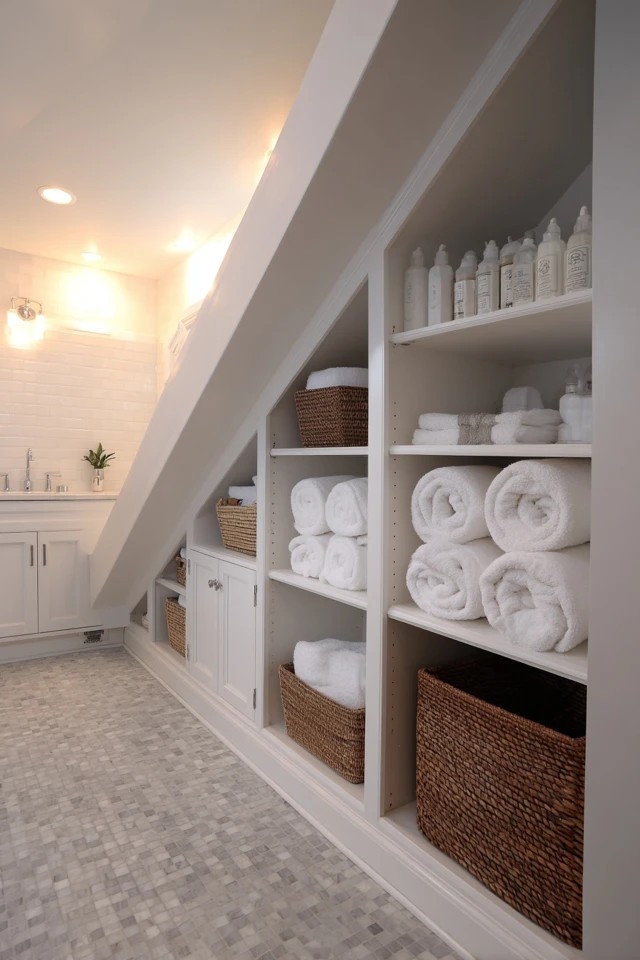
The knee walls of an attic bathroom — the short vertical walls where the floor meets the beginning of the roof slope — offer a natural opportunity for built-in shelving, towel storage, or open niches that use horizontal space efficiently without requiring standing height.
- Install open shelving in knee wall niches for towels and products you want to access easily without opening doors.
- Add small LED strip lights inside knee wall recesses to illuminate the storage and create ambient bathroom lighting.
- Waterproof knee wall niches that adjoin the shower zone thoroughly before installing any shelving or cabinetry.
11. Vintage-Style Fixtures for Period Bathroom Charm
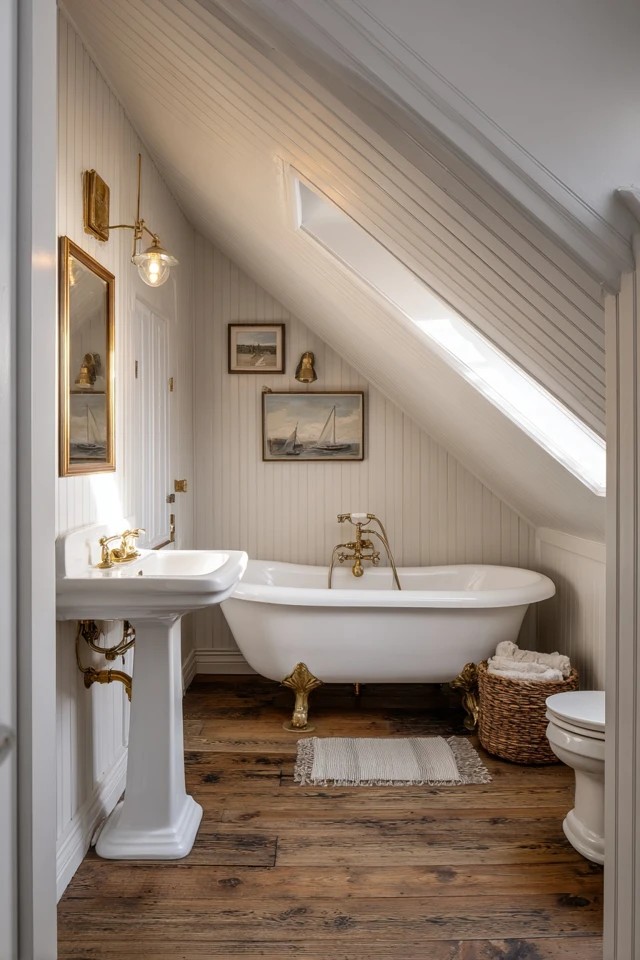
A clawfoot tub, pedestal sink, and polished brass or brushed gold fittings create an attic bathroom of genuine period character that honours the age of the building it inhabits.
- Source vintage clawfoot tubs from architectural salvage dealers and have them re-enamelled for the best combination of authenticity and function.
- Choose unlacquered brass fittings that develop a natural patina over time for the most authentic aged character.
- Add beadboard or wainscoting to complete the period aesthetic from the floor to the lower third of the walls.
12. Recessed Lighting in Sloped Ceiling for Even Illumination
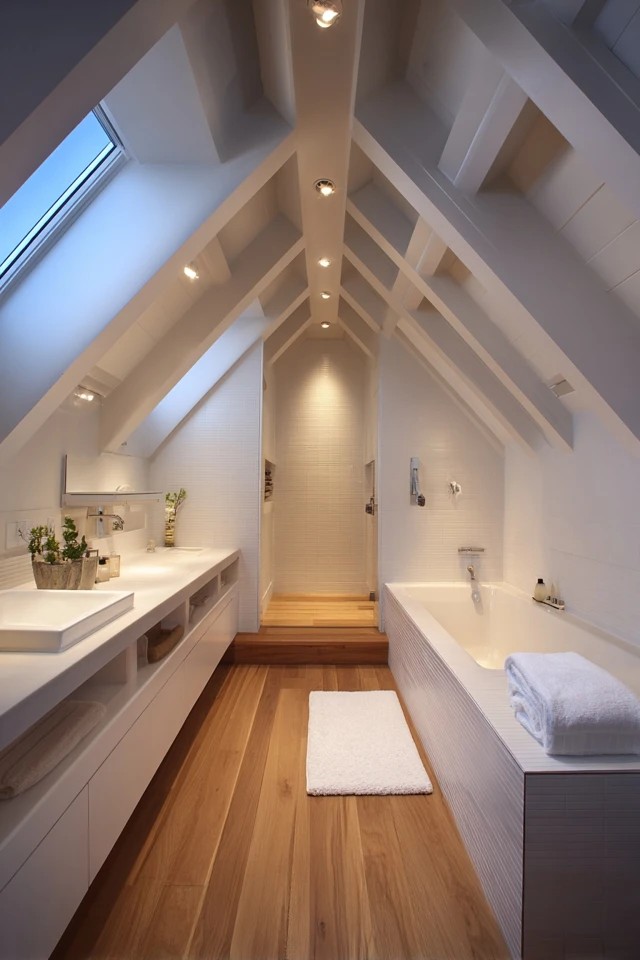
Recessed lights installed into the sloped ceiling surfaces of an attic bathroom provide even ambient illumination that tracks with the room’s angled geometry rather than fighting it.
- Use slope-rated or slope-adjustable recessed fixtures — standard downlights installed in a sloped ceiling project light incorrectly.
- Install recessed lights at regular intervals following the slope to create even illumination across the entire floor area.
- Add a separate circuit for the vanity area with a higher-output fixture for task-appropriate grooming light.
13. Tongue-and-Groove Ceiling for Cottage Textured Overhead
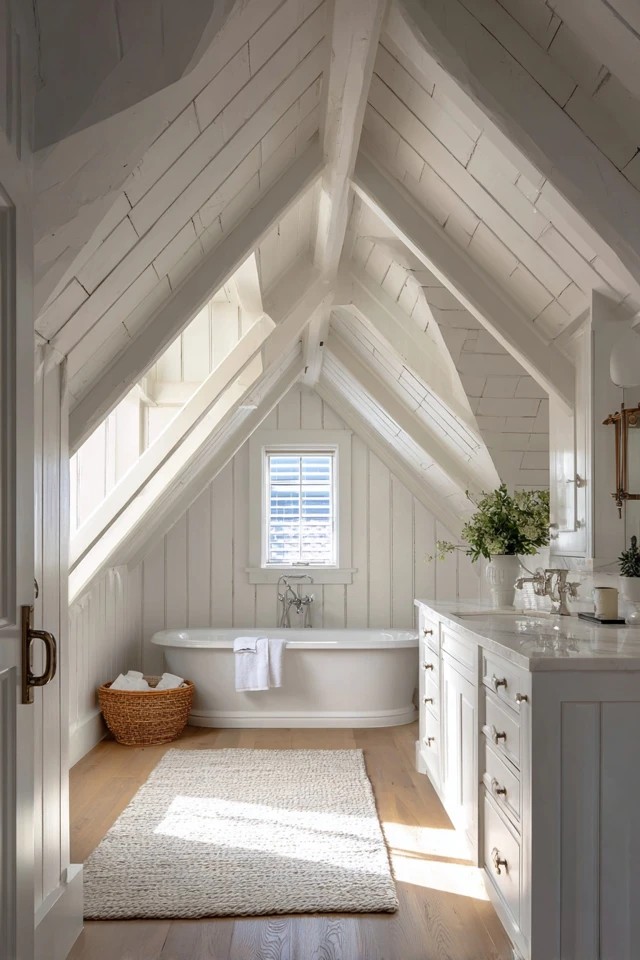
White-painted tongue-and-groove planks on the sloped ceiling surfaces bring a dimensional, cottage-style texture overhead that complements the attic bathroom’s inherent informal character. The result is a bathroom ceiling that feels designed rather than improvised — a feature rather than a surface.
- Use moisture-resistant MDF tongue-and-groove panels in humid bathroom environments rather than standard softwood.
- Paint both the tongue-and-groove and the gaps between planks in the same white for the most seamless finished appearance.
- Run the planks parallel to the ridge rather than perpendicular to it for the most visually balanced overhead pattern.
14. Marble Countertop for Luxurious Grooming Surface
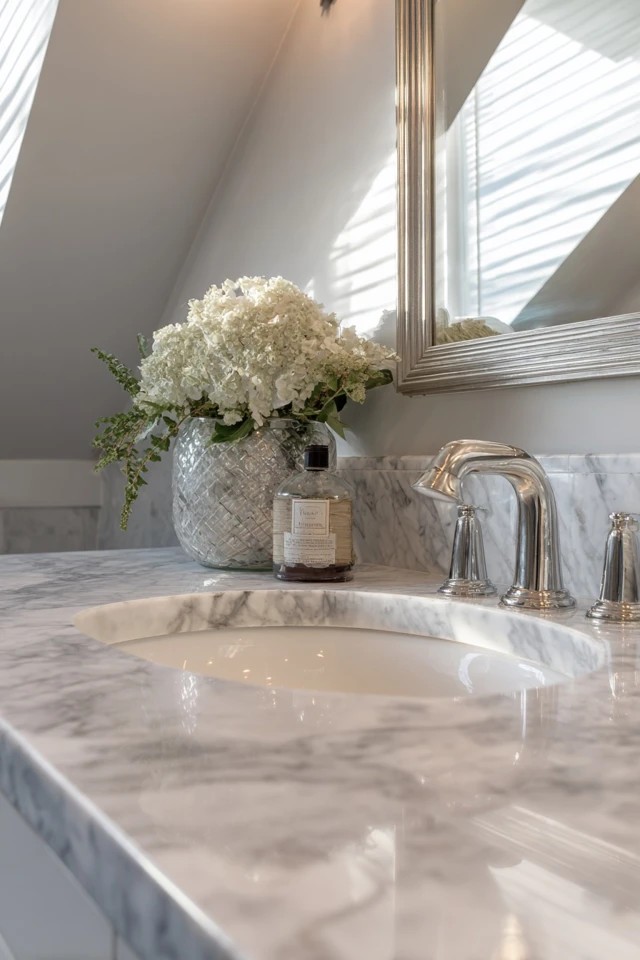
A marble countertop on the attic bathroom vanity introduces genuine natural luxury at the surface most closely examined and touched during daily use.
- Seal marble countertops with a penetrating stone sealer every 12 months to prevent staining from cosmetics and water.
- Choose a honed rather than polished marble finish for a bathroom vanity — it shows fingerprints and water marks less obviously.
- Use an undermount sink with marble to maintain the most continuous, clean countertop surface possible.
15. Vessel Sink on Custom Vanity for Contemporary Focal Point
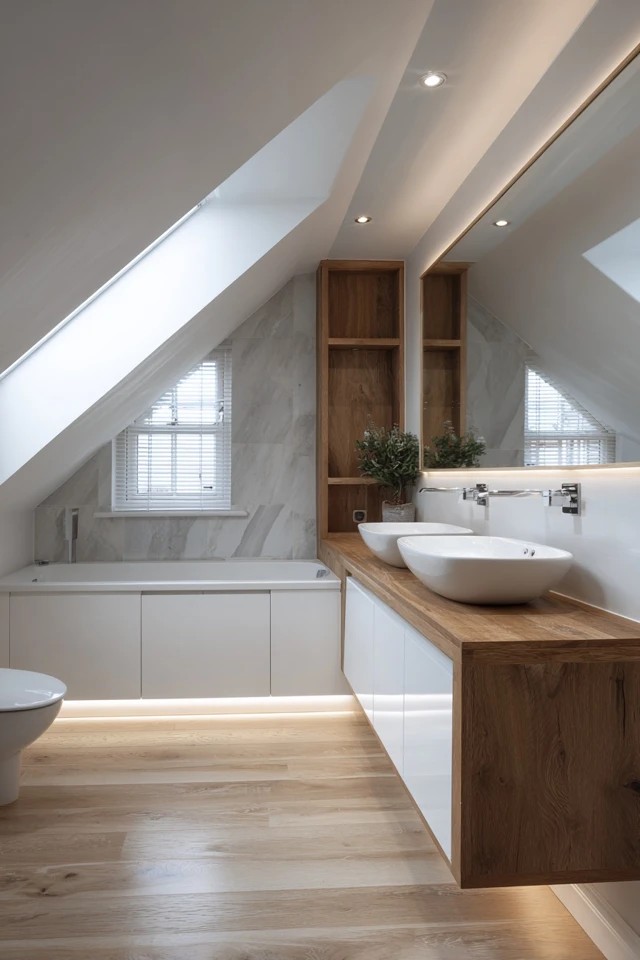
A vessel sink — a basin that sits above the counter surface rather than dropping into it — creates a sculptural contemporary focal point on the attic bathroom vanity.
- Design the vanity base height so that vessel rim plus base equals the standard 34-36 inch counter height for comfortable use.
- Choose a tall wall-mounted tap rather than a standard mixer to accommodate the vessel’s elevated position comfortably.
- Select a stone, ceramic, or concrete vessel in a material that coordinates with the bathroom’s overall material palette.
16. Heated Floor Tiles for Underfoot Comfort
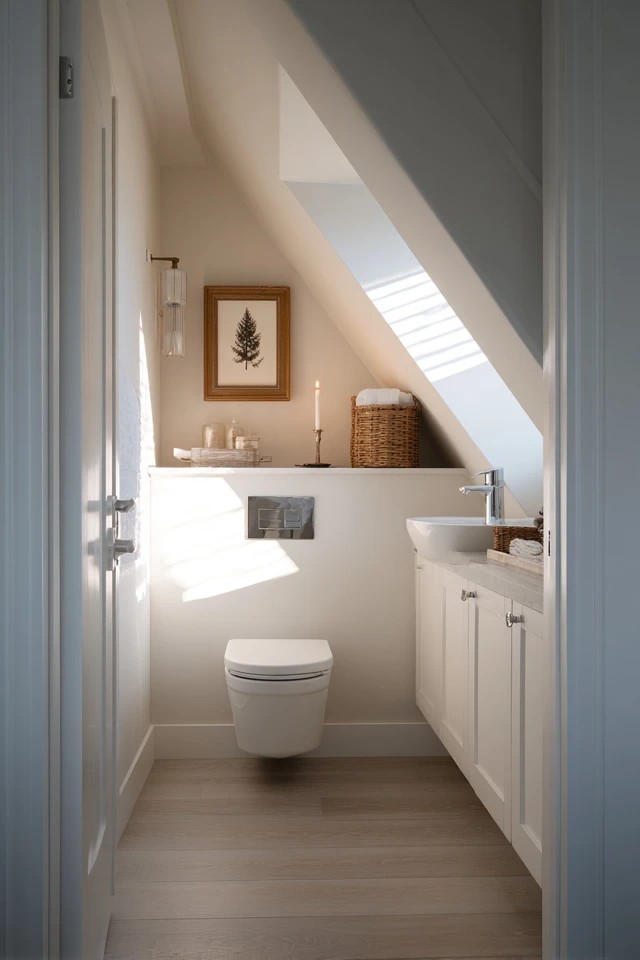
Radiant underfloor heating beneath the attic bathroom’s tile floor provides genuine luxury underfoot that is especially appreciated in an attic space where cold air sinks and floors can feel particularly cold in winter.
- Install electric radiant heating in an attic bathroom rather than hydronic — simpler, lighter, and easier to retrofit.
- Use a programmable thermostat to warm the floor automatically before the anticipated daily use time each morning.
- Choose porcelain or ceramic tile for heated floors — both materials conduct and retain heat efficiently throughout the day.
17. Frameless Mirror for Light Multiplication
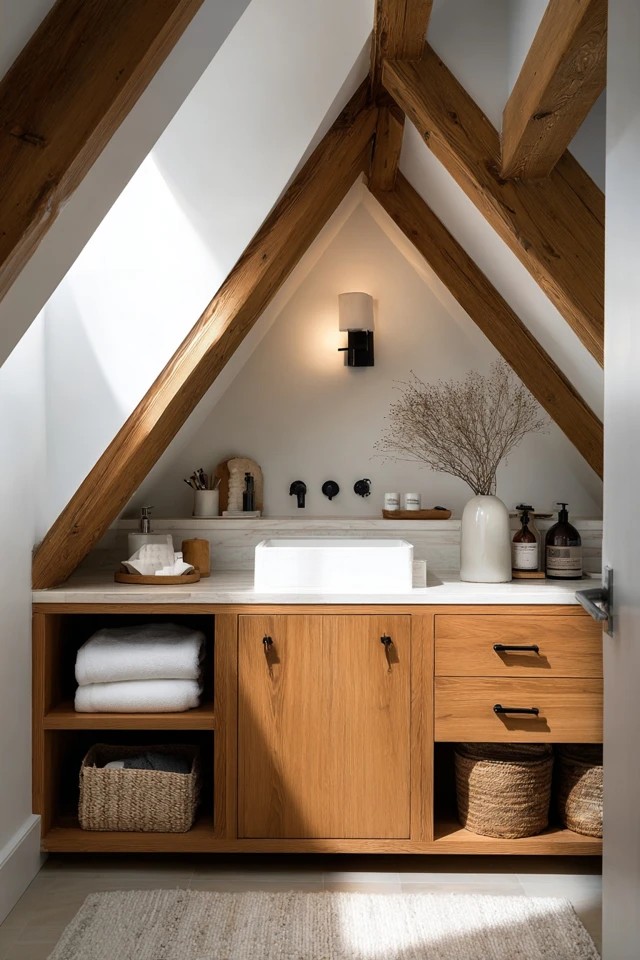
A large frameless mirror mounted on the flattest wall available in the attic bathroom multiplies natural and artificial light by reflecting it back across the room, making the space feel significantly brighter and larger than its actual dimensions suggest.
- Position the frameless mirror to directly reflect either the dormer window or the skylight for maximum light multiplication.
- Use mirror-safe adhesive or specialist mirror clips for installation rather than standard frame-hanging methods.
- Size the mirror generously — at least 24 by 36 inches — for meaningful spatial and light impact in the bathroom.
18. Toilet Positioned Under the Lowest Slope
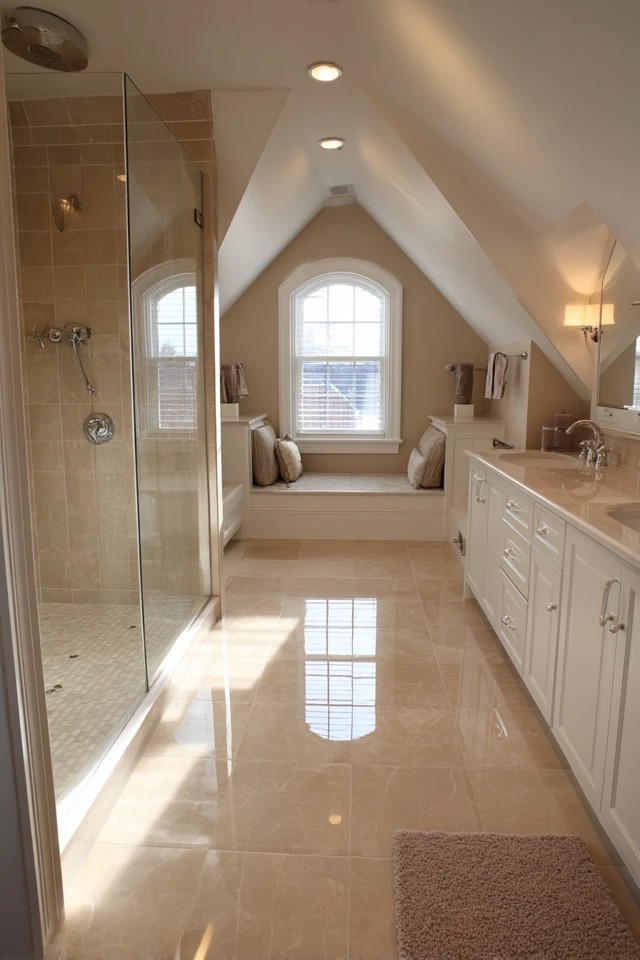
Positioning the toilet under the section of the attic bathroom where ceiling height is lowest — typically less than five feet — is one of the most spatially efficient solutions in attic bathroom planning.
- Ensure a minimum of 15 inches from toilet centre to any side wall or obstruction for comfortable seated use.
- Use a wall-hung toilet in a very low-ceiling zone — the cistern built into the wall removes the projecting tank overhead.
- Provide at least 48 inches of clear floor space in front of the toilet for comfortable access even under a low slope.
19. White Subway Tile for Classic Timeless Wall Treatment
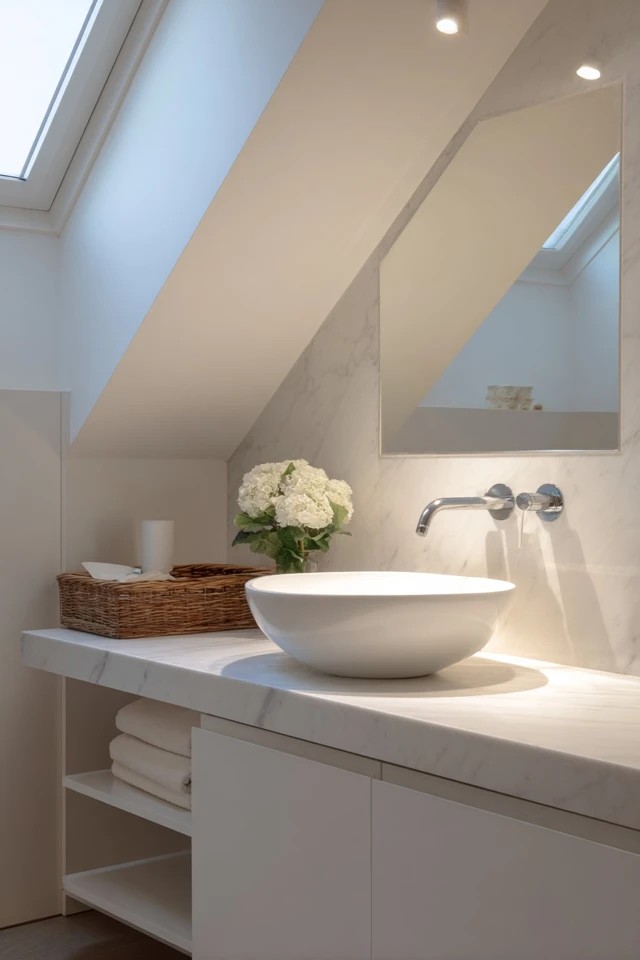
White subway tiles in a traditional running bond pattern create the most reliably timeless and widely appealing wall treatment available for an attic bathroom — clean, bright, easy to maintain, and equally appropriate in both vintage and contemporary settings.
- Use 3×6-inch subway tiles on walls and a different tile scale on the floor to create visual variety between surfaces.
- Choose a sanded grey grout at the mid-tone range — neither too dark nor too pale — for the most versatile finish.
- Carry subway tile from floor to ceiling on the shower wall for a fully resolved, seamless wet-zone treatment.
20. Natural Wood Vanity for Scandinavian Organic Warmth
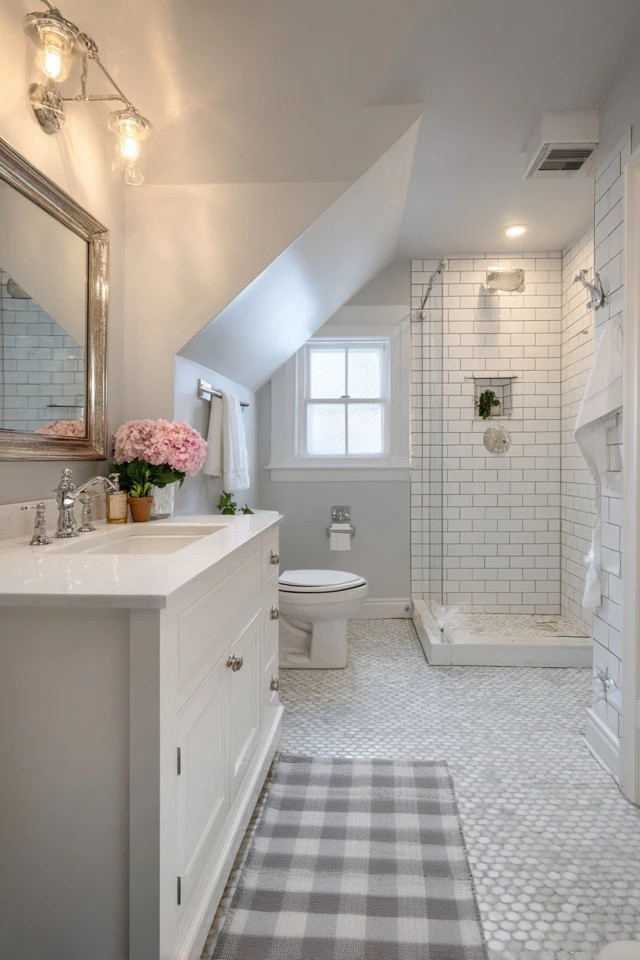
A vanity in light oak or pale pine brings Scandinavian-inspired organic warmth to the attic bathroom, balancing white walls and fixtures with the natural warmth of wood grain and honey tones.
- Apply a water-resistant hardwax oil finish to the wood vanity rather than standard varnish for a more natural, matte appearance.
- Choose a solid wood or wood-veneer vanity rather than a wood-effect laminate for genuine grain depth and authenticity.
- Pair the natural wood vanity with white wall tiles and brushed nickel fittings for the cleanest Scandinavian composition.
Why These Attic Bathroom Ideas Excel
Every idea on this list succeeds because it treats the attic bathroom’s architectural constraints as design opportunities rather than problems to be minimised. Sloped ceilings, exposed beams, low knee walls, dormer alcoves, and limited ceiling height — each of these features that would be considered defects in a conventional space becomes a distinguishing characteristic that makes the attic bathroom genuinely special and memorable.
Light strategy is the most critical design decision in any attic bathroom, where natural light is fundamentally different from lower-floor rooms. Skylights, dormer windows, frameless mirrors, and pale reflective surfaces all work together to create the bright, airy quality that prevents the attic bathroom from feeling like a dark, oppressive cave. The ideas on this list consistently prioritise light multiplication as the primary design goal after functional planning.
Custom fitting — the eaves cabinetry, the vanity built to slope height, the shower enclosure angled to the roof geometry, the toilet positioned under the lowest section — is what distinguishes a genuinely well-designed attic bathroom from a standard bathroom simply placed under a sloped roof. The investment in bespoke joinery and custom fixture placement pays the highest dividends in an attic conversion because the geometry demands solutions that off-the-shelf products cannot provide.
Material selection for an attic bathroom must account for the space’s unique conditions: higher humidity than ground-floor rooms, temperature fluctuations as the roof heats and cools, and the vintage or cottage character that sloped ceilings naturally evoke. White shiplap, exposed beams, vintage fixtures, marble, subway tile, and natural wood all appear on this list because they combine appropriate practical performance with the aesthetic qualities that make attic bathrooms the most characterful and sought-after bathrooms in any home.
Conclusion
An attic bathroom rewards the homeowner who embraces its constraints rather than apologising for them. The sloped ceiling is a feature. The exposed beam is a feature. The dormer alcove is a feature. Design around these elements rather than despite them, invest in custom cabinetry that fits the specific geometry, prioritise natural light through every available means, and choose materials that suit both the practical demands and the cottage or vintage character that attic spaces naturally express. The result will be the most memorable bathroom in the house.

Andrew is the founder and lead writer at RoomBlossom, a home decor publication dedicated to practical, intentional interior design. With over 10 years of hands-on experience transforming real-world living spaces — from compact apartments to full attic conversions — Andrew specialises in room design that balances visual appeal with everyday function. His work spans living rooms, bedrooms, sunrooms, and attic spaces, always guided by the belief that great design should work for the people who live in it, not just look good in photographs.